



New Delhi: The BJP-led ruling NDA took heart in 2025 with decisive wins in Delhi and Bihar – two states where assembly elections were held this year. 2025 was a year of disappointment for the opposition. While Arvind Kejriwal-led AAP lost in Delhi, the grand alliance of Congress, Lalu Prasad’s RJD and the Left parties lost in Bihar.But 2026 could be an opportunity for the opposition to make a comeback in the form of four states and one Union Territory – West Bengal, Kerala. Tamil NaduAssam and Puducherry – will vote to elect their new assemblies. Barring Assam, where the BJP rules, the opposition has an effective presence in the other three states.
PM Modi after Bihar victory
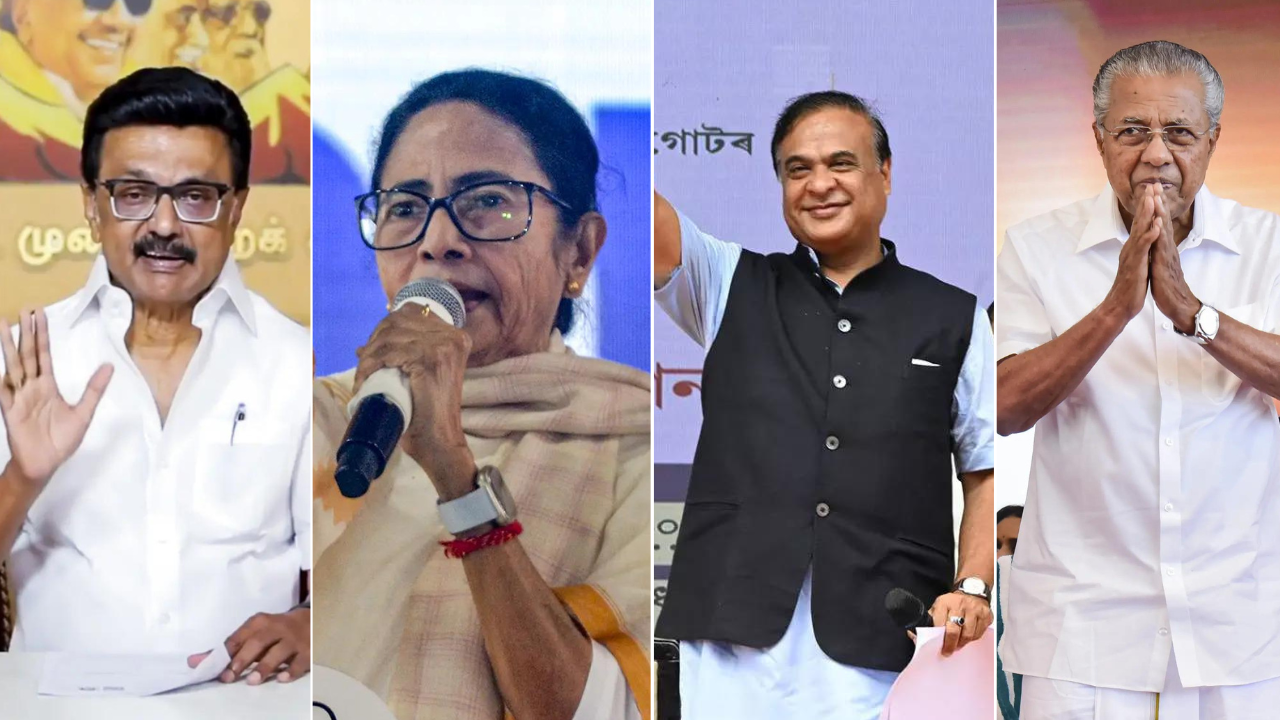
With elections scheduled between March and May 2026, parties have already started adjusting strategies and sharpening their pitch to voters.In West Bengal, Mamata BanerjeeThe Trinamool Congress will defend its fort as it seeks to fend off renewed BJP pressure, while the Congress and the Left parties will make another attempt to regain their lost political ground.In Kerala, the CPM-led LDF is looking to achieve an unprecedented third consecutive term – an unheard of feat in the state’s traditional pendulum-like politics.Tamil Nadu is gearing up for another round of Dravidian duel, with DMK and AIADMK once again in the political battleground of the state.BJP led NDA in Assam Himanta Biswa Sarma Will struggle to capture the state, while Congress is attempting revival.Meanwhile, in Puducherry, N Rangasamy’s AINRC-BJP alliance faces the challenge of putting together a fragile alliance against the DMK trying to expand its footprint and a weak Congress trying to make a comeback.A major stream in these competitions is the Special Intensive Revision of Electoral Rolls (SIR), which has been extended to several electoral states including West Bengal, Tamil Nadu and Puducherry. So the 2026 elections will unfold on updated voter lists – a factor that could change a lot of things.
west bengal
Buoyed by its landslide victory in the recent Bihar assembly elections, the BJP has made its ambitions clear: Bengal is the saffron party’s next battleground.Ahead of the 2026 elections, the BJP is working hard to convert the momentum into seats. Meanwhile, the TMC, which won 213 of the 294 assembly seats in 2021 with nearly 48% vote share, is back in full campaign mode having defended its fort for over a decade. With the Congress party struggling to regain its footing, the stage is set for a big political contest.
what’s at stake?
BJP’s growing influence
From a marginal presence with only 3 seats in 2016, the BJP grew to 77 seats and nearly 38% vote share in 2021. The 2026 elections will test whether this was a temporary surge or the beginning of a sustained challenge to TMC’s dominance in Bengal.
TMC’s power challenge
With 213+ seats and 48% vote share in 2021, Mamata Banerjee is entering 2026 with the biggest lead. They have already started mobilization and outreach, but the real challenge is to maintain this high ceiling in the face of anti-incumbency and an ever more aggressive BJP.
Congress fights for relevance
From being a major force before 2011 to almost being eliminated in 2021, the Congress is now struggling for visibility. The removal of Adhir Ranjan Choudhary and the appointment of Shubhankar Sarkar has not yet translated into a strong political message or campaign, leaving the Congress still searching for a place for itself.
India faction?
With the future of the Indian opposition faction uncertain and Mamata Banerjee repeatedly indicating that the TMC will contest the elections in Bengal alone, the Congress is in danger of being caught between two compulsions: forging an alliance at the national level versus countering the TMC at the local level.West Bengal Chief Minister Mamata Banerjee has already declared, “Bengal is ours, we will fight here alone.”
sir factor
Additionally, the 2026 elections will be conducted under special intensive vetting of voter rolls. Changes in voter registration, especially in minority-heavy or urban constituencies, can have a significant impact on margins in key swing seats.
Tamil Nadu
Tamil Nadu is preparing not only for another contest between the Dravida Munnetra Kazhagam (DMK) and the All India Anna Dravida Munnetra Kazhagam (AIADMK), but also for a potentially game-changing third force.The entry of TVK under the leadership of Vijay has made the Tamil Nadu Assembly elections in the state more interesting.
Tamil Nadu Assembly Elections 2021
what’s at stake?
DMK’s test of power
The ruling DMK is entering 2026 in a strong position, having won 133 seats on its own in the last assembly elections. However, the party faces a tough political scenario this time with the AIADMK-BJP alliance regrouping and looking to form a better alliance than in 2021. Tamil Nadu Chief Minister Stalin has already announced that the party will contest the state elections as part of the India Bloc, terming it an ideological partnership built on common goals.However, the real test lies in whether the DMK can fend off anti-incumbency pressures, protect its welfare and governance record, and manage voter expectations on issues like jobs, NEET relaxations and electricity tariffs.
AIADMK-BJP alliance
The 2026 Tamil Nadu Assembly elections are a high-stakes battle for the All India Anna Dravida Munnetra Kazhagam (AIADMK), which is looking for a comeback after two consecutive electoral defeats. The big question for 2026 is whether the renewed AIADMK-BJP partnership can translate into seats. In 2021, the AIADMK-led front won 75 seats, while the BJP remained a secondary force. However, together they remain the biggest challenger to the ruling DMK. Edappadi K. Palaniswami has already set the tone, vowing that the front will “shatter Stalin’s dream of winning 200 seats” and predicting that the alliance could cross 210.A major factor complicating the opposition arithmetic is actor Vijay’s entry with his party, Tamilaga Vetri Kazhagam (TVK), whose decision to contest the elections alone threatens to split the anti-DMK votes.
TVK factor
The 2026 Tamil Nadu elections mark a crucial electoral debut for actor Vijay’s TVK, who has boldly declared the contest as a “TVK vs DMK” fight and positioned himself as an alternative to “Stalin uncle”. Vijay has a massive youth following and has a potential surprise factor to disrupt the traditional bipolar contest. However, the tragic Karur stampede, in which 41 people lost their lives during one of his pre-poll road shows, casts a significant negative shadow. The incident was highly publicized by the opposition, forcing Vijay and TVK to defend their competence and win public confidence.
Assam
BJP led NDA in Assam under the leadership of Chief Minister Himanta Biswa Sarma. Joe, who has become one of the most prominent regional faces of the party, will fight to hold the state, with the aim of securing an unprecedented third consecutive term.
what’s at stake?
BJP’s regional dominance
Despite winning 75 seats in 2021, anti-incumbency wave remains a major underlying challenge. However, Chief Minister Sarma has set an aggressive target, confidently claiming that the NDA is capable of winning “104 out of 126 seats”.
Congress revival test
The Congress, which won 50 seats in 2021, is desperate to make a comeback under the leadership of newly appointed state chief Gaurav Gogoi. The party is trying to take advantage of the “10-year anti-incumbency wave” against the BJP, Gogoi said, adding, “After 10 years of corrupt and authoritarian rule by the BJP, the people of Assam want change.” The election is a personal test for Gogoi, who will have to prove that he can convert his Lok Sabha victory into a sweeping assembly-level revival for the party.
AIUDF dilemma
Badruddin Ajmal’s AIUDF performed strongly in Muslim-dominated areas in 2021, winning 16 seats. Separating from the Congress or contesting the elections alone may split the opposition votes, which will benefit the BJP in the triangular fight.
Kerala
Kerala is entering 2026 with one of the rarest scenarios in its electoral history – a ruling front attempting to win for the third consecutive time. The CPI(M)-led LDF broke the state’s election pattern in 2021, winning 99 out of 140 seats, while the Congress-led UDF slipped to 41, and the BJP once again failed to open its account.
Kerala Assembly Elections 2021
what’s at stake?
LDF’s third term bid
LDF has never won three consecutive assemblies in the democratic history of Kerala. For the CPI(M), which is in the lead, this election is important as Kerala is the only major state where the Left is currently in power on its own. Chief Minister Pinarayi Vijayan, who will take charge again, is campaigning on the theme of “continuity for progress”. Senior CPI(M) leaders such as KN Balagopal have publicly stated that “continuity was important to maintain the momentum” of development and welfare policies. However, the LDF faces a significant anti-incumbency challenge, which the opposition is taking advantage of to counter the government’s development claims.
UDF’s existential fight
The UDF, which dropped from 47 seats in 2016 to 41 in 2021, still has a large vote share but is struggling to change it. If an anti-incumbency wave forms, 2026 is the best chance for the alliance to regain its ground. A weak result could push the UDF into further inertia, leading to the Congress’ footprint shrinking in yet another southern state.
BJP – still on the sidelines?
The BJP has fought the elections aggressively in two cycles but has zero MLA seats in Kerala. If it breaks that barrier in 2026 — even with a 1-3 win — it changes the dynamics of the House. If it fails again, Kerala will remain one of the last major states outside the BJP’s electoral footprint.
Puducherry
In Puducherry, N Rangasamy’s AINRC-BJP alliance faces the challenge of putting together a fragile alliance against a resurgent DMK trying to expand its footprint and a weakened Congress trying to make a comeback.
what’s at stake?
NDA’s fragile alliance
The ruling NDA is led by All India NR Congress (AINRC) and BJP. In 2021, AINRC won 10 seats and BJP won 6 seats. This alliance is under immense pressure due to internal strife and anti-incumbency wave. The internal rift came to the fore with the resignation of the lone Dalit minister AK Sai J Saravanan Kumar over the decision of the high command.The move sparked strong reactions and exposed deep fault lines within the alliance and the local BJP unit.
DMK’s efforts to expand
DMK entered the 2021 Puducherry elections with limited ground presence, but still emerged with 6 seats, overtaking Congress to become the largest opposition party. For 2026, the main challenge for the DMK will be to increase its footprint in the Union Territory and translate influence into numbers.
Congress – survival, not dominance
Like many other states, Congress is fighting for survival in Puducherry too. The once ruling party here has been marginalized after the 2021 elections. For Congress, 2026 is not about winning power; It’s about preventing irrelevance. The 5-6 seat count keeps it alive; Anything below this accelerates the decline. The oldest party must survive before competing.The Election Commission’s SIR of voter lists in these states is already in the news, with the BJP strongly supporting the exercise, while the opposition has accused the Election Commission of helping the saffron party gain an edge over its political rivals. 2026 is clearly all set for interesting electoral contests.


