



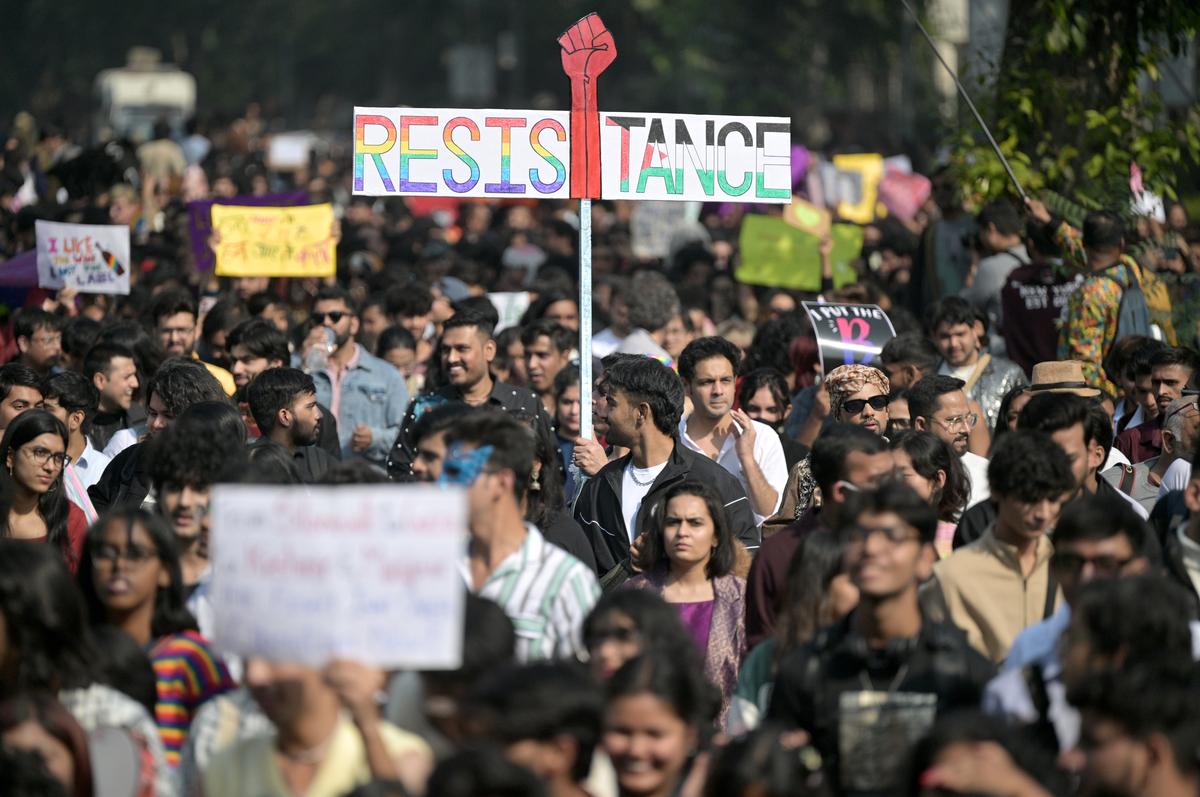
The Delhi Queer Pride parade in New Delhi on November 24, 2024.
| Photo Credit:
SHASHI SHEKHAR KASHYAP
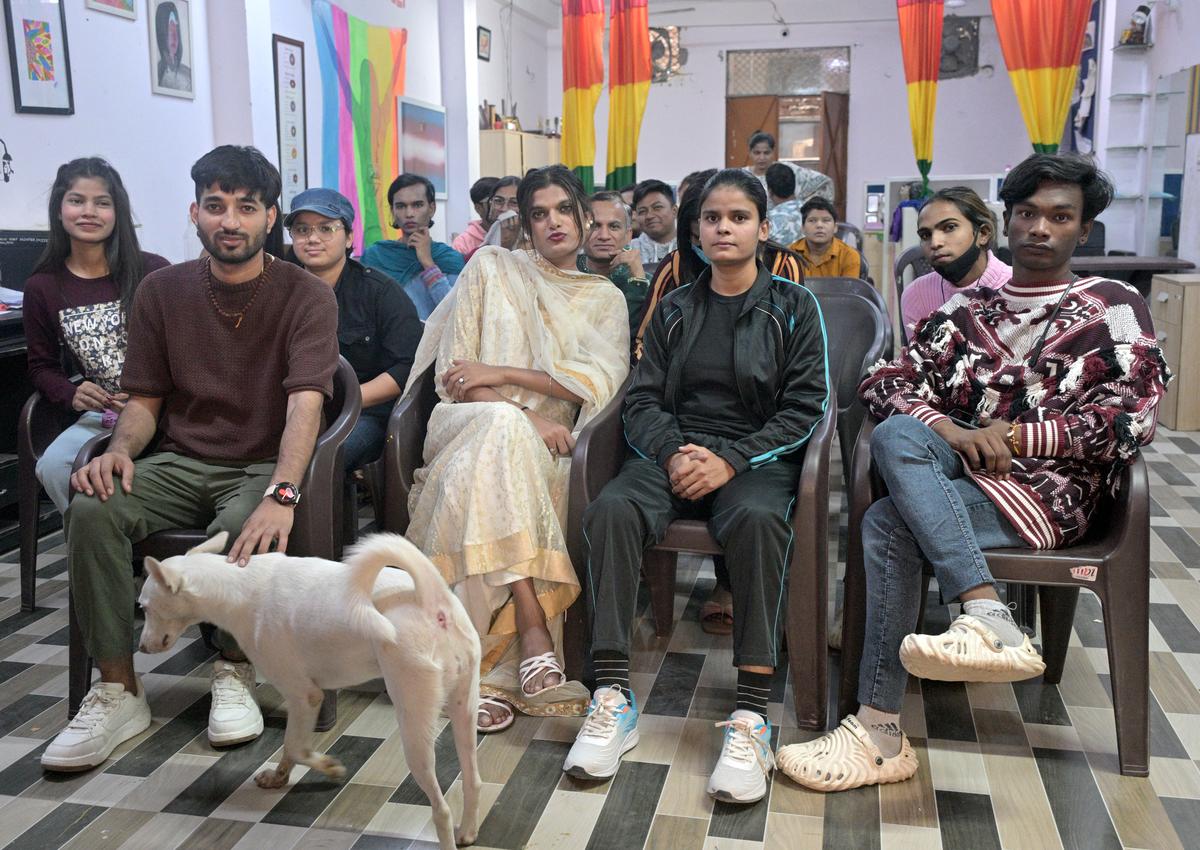
Inside the shelter home for transgender persons at Sitapuri in New Delhi.
| Photo Credit:
SHASHI SHEKHAR KASHYAP
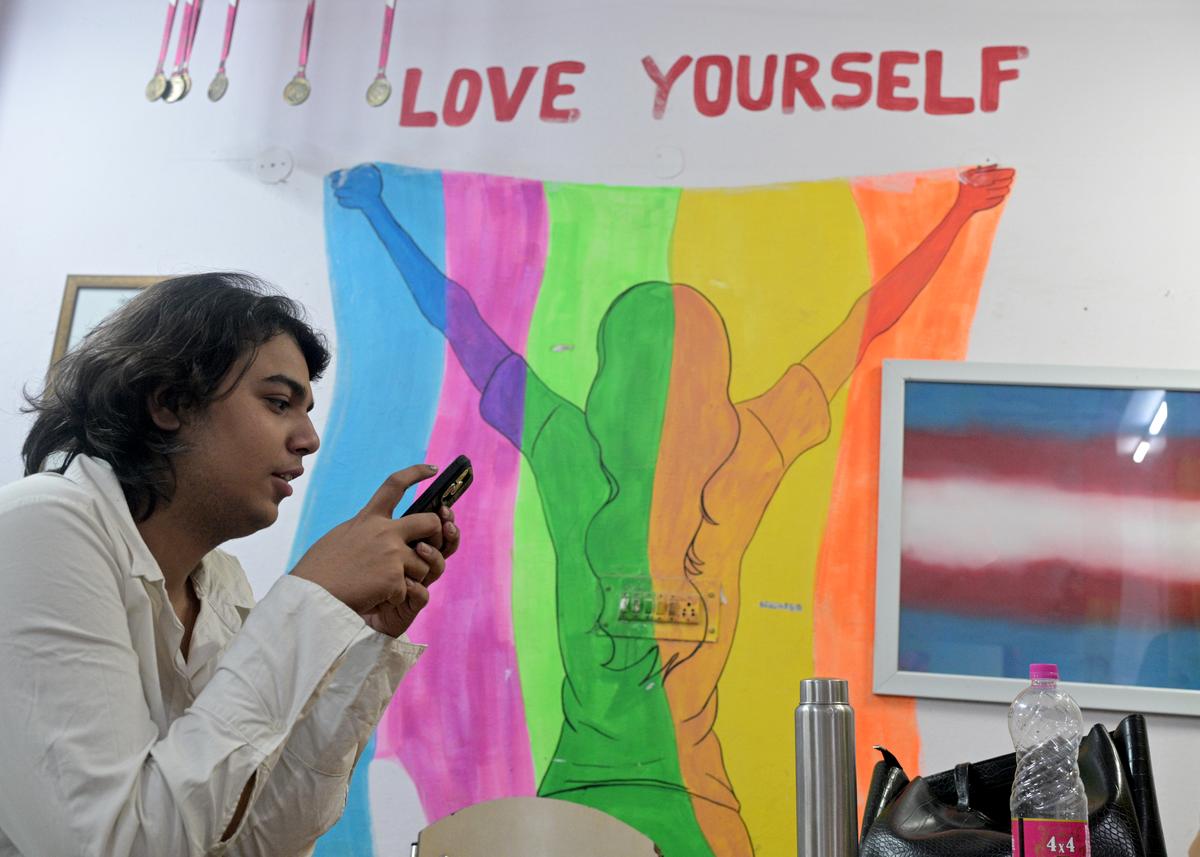
Artwork by residents at the shelter home for transgender persons at Sitapuri in New Delhi.
| Photo Credit:
SHASHI SHEKHAR KASHYAP
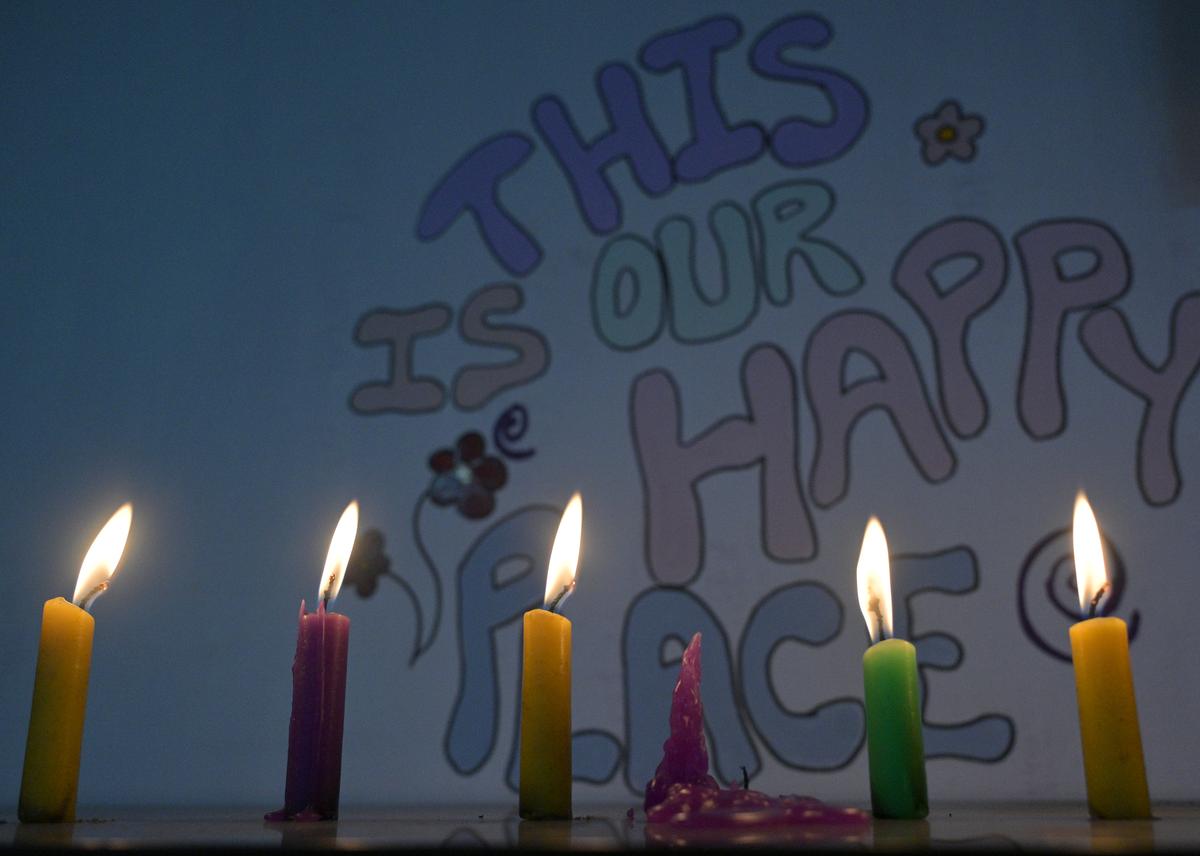
In the Capital’s lone Garima Greh, each step across its three floors is painted in the colours of the rainbow.
| Photo Credit:
SHASHI SHEKHAR KASHYAP
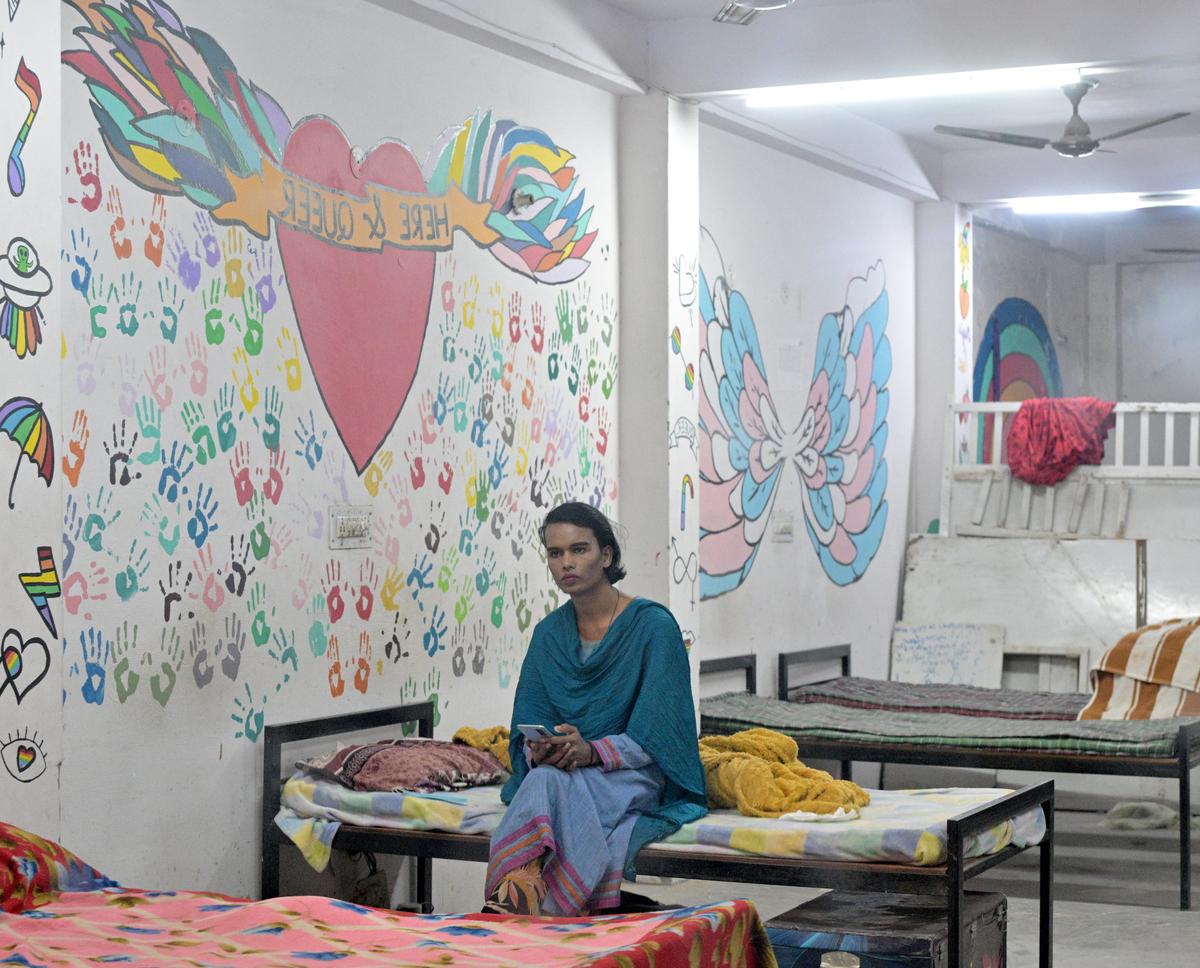
Each Garima Greh is to house 25 transgender people and have 12 staff members, including a counsellor, cook, manager, and director.
| Photo Credit:
SHASHI SHEKHAR KASHYAP
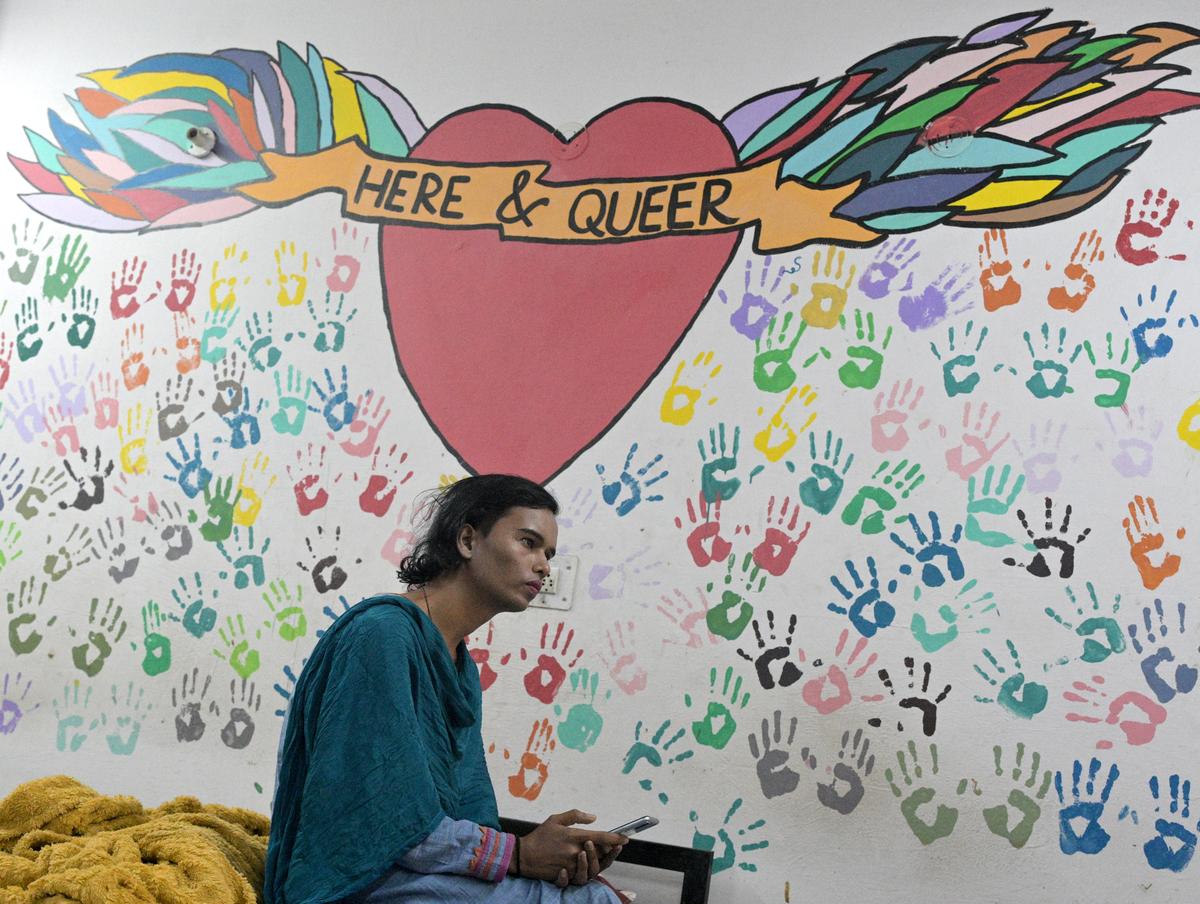
For many, the homes are the only solace they have as employment, education, and housing are still difficult to access due to stigmatisation.
| Photo Credit:
SHASHI SHEKHAR KASHYAP
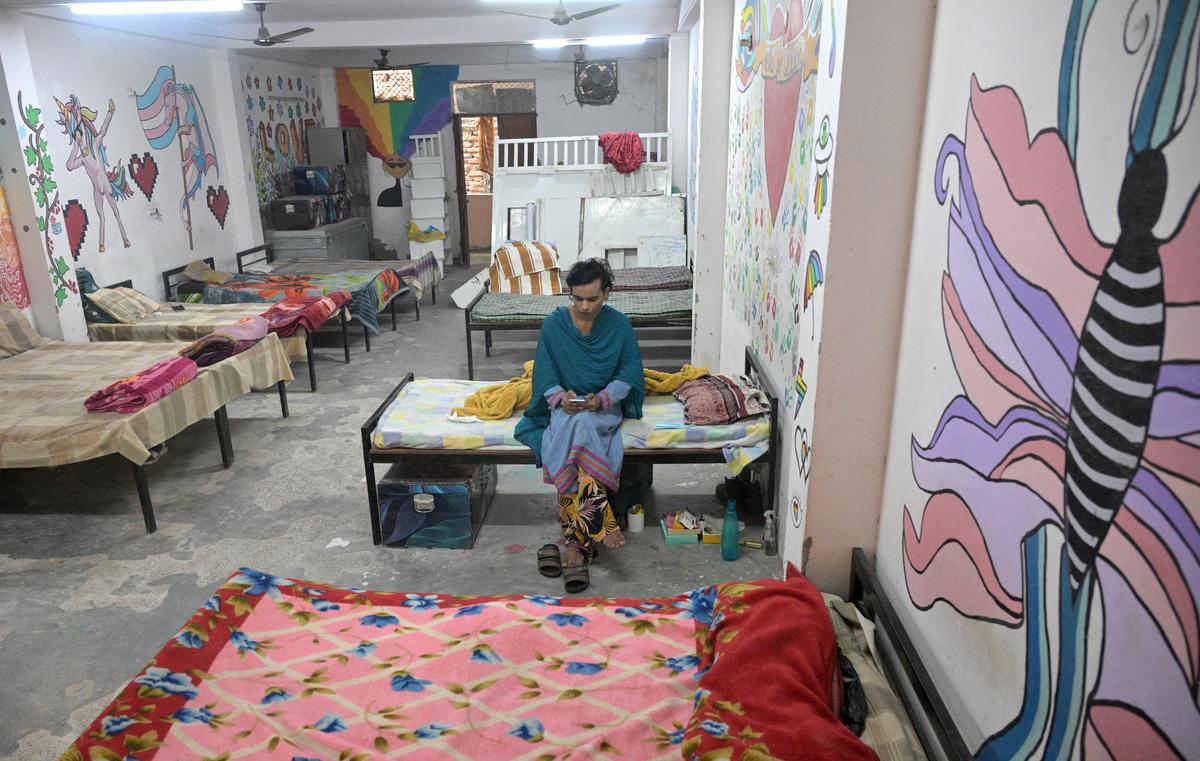
The days still begin and end on a positive note, punctuated with activities such as make-up classes from 2 p.m. to 4 p.m., and book reading from 11 a.m. to 12 noon.
| Photo Credit:
SHASHI SHEKHAR KASHYAP
Trigger warning: mentions of suicide and abuse.
Wearing ornate self-stitched skirts and colourful crop tops, five transwomen lock their Garima Greh and head to Dabri Mor metro station, Janakpuri, in working-class west Delhi on November 24. From here, they will take a train to Barakhamba Road, 16 stops away, to join the city’s Queer Pride parade, held since 2008. Their floral tiaras, colourful hair clips, and a headband with the devil’s horns don’t attract as much attention as they would have a decade ago.
For Anu, who is going to the parade for the first time, the trauma of running away from Haryana in search of a safe space is still fresh. But today, the excitement of being with her friends and an unexpected “Are you all going for Pride? Me too!” from a fellow metro passenger in the women’s compartment trumps all other emotions.
On reaching the venue, the transwomen hug their friends who are already there and blend into a sea of rainbows. They pose for selfies, make reels, and prepare for an after-party. For the past few years, Garima Greh, a Central government-funded shelter home for transpeople, has offered a roof, food, medicines, recreation, counselling, and a sense of camaraderie. Each year, transwomen display their make-up artistry for Pride, a skill they learn from workshops in the Garima Greh, where vocational training is part of the government’s employment facilitation thrust.
The event was attended by over 1,000 people. Geetanjali, 26, a resident of the home for the past few months, was attending her first Pride along with her partner and best friend, both of whom she met at the home. “Coming here from a village in Haryana, where only my elder sister accepted me, was like getting a new lease of life. I found a happier version of myself as the community in the Garima Greh allowed me to be the person I wanted to be and not the person I was expected to be,” she says. Samyra, 24, says excitedly, “I got to dress up and hold my head high with my community.” Away from the celebration of belonging to a larger community, the five transwomen are oblivious to the threat that looms.
A struggle against the odds
Rudrani Chettri, the Garima Greh project director in Delhi, is worried that the home may have to shut down soon for its 25 residents if funds do not come through. “I have been managing by taking loans from here and there; I get them only because people trust me. But I do not know how much longer we can sustain this way,” she says.
In November 2021, the Ministry of Social Justice and Empowerment said in a press release that it had initiated 12 pilot shelter homes or Garima Grehs for transgender people and provided financial assistance to community-based organisations for setting them up. The Centre has the SMILE (Support for Marginalised Individuals for Livelihood and Enterprise) scheme. This includes a sub-scheme, the Comprehensive Rehabilitation for Welfare of Transgender Persons, of which a component is the setting up of shelter homes. The idea was to run the pilot and progress to establishing at least one in each State.
According to SMILE guidelines, each Garima Greh is to house 25 transgender people and have 12 staff members, including a counsellor, cook, manager, and director. However, the 12 existing homes are facing the threat of shutting down as funds from the government have stopped. Nine project directors from across States that The Hindu spoke to say that they do not know how much longer they can source funds on their own. Many staffers have left or are ready to leave, there is no money for rent, rations, or other necessities, but they keep going because these homes are the only safe spaces for many transgender youth. According to the Ministry, the funds are on hold due to issues with documentation.
Finding home
When Shreya (name changed to protect privacy), 18, came out to her family as a transwoman, they locked her in a room for a month, opening the door only to give meals. “They burnt all my identity cards and I had nowhere to go. I turned to a Kinnar community (a group of intersex people) in Rajasthan, with whom I was begging for some time,” she says. Earlier in November, she had headed to Delhi in the hope of a new life.
Growing up, even as her ideas about identity were in flux, the dream of becoming a model was constant. “I tried another Garima Greh in Jaipur, but it was full. I came to Delhi after a friend told me about this shelter home,” she says, relieved to have finally found a place she can call home.
For Ritika, 23, reaching the shelter home was eye-opening: “Earlier, I was confused about my identity, but once I came here, I found a family, started speaking to others like me, and understood more about myself.”
In the Capital’s lone Garima Greh, each step across its three floors is painted in the colours of the rainbow. The ground floor, which is used to host workshops and skill development sessions, is covered in artwork by past and current residents. A section of the floor is partitioned into private rooms meant for counselling sessions, which are a mandated part of the Garima Greh’s guidelines set by the Ministry.
For Roshan, 25, the counselling sessions have been life-saving. Having run away from Chhattisgarh over two years ago after being beaten up by his older brother and receiving little support from his parents, Roshan had attempted suicide. This is his second stint here. “I had very little money and was broken physically and mentally when I came to the house for the first time after an older woman from the community found me begging for food at a railway station in Delhi. If not for her or the house, I would have ended things a long time ago. Now, things are looking up,” he says. Roshan now has access to hormones through the referral system of the home.
On paper vs in reality
In the administrative section of the shelter home, separated from the living quarters by a rainbow-coloured curtain, Rohit, seated behind a computer, says the last funds came in March 2023. The funds — ₹36,46,500 in all — are disbursed in three tranches through the year.
Chettri says when they were looking to rent a place in 2021, homeowners would shut the door on them. Eventually, they found this spot in Sitapuri. While there is acceptance from the people around now, it is far from smooth sailing. “We were given a skeletal framework. But to run it, we need flesh, blood, and veins,” she says.
Over calls with the Ministry, they have been told that their paperwork is not complete.
Project directors in other States have similar experiences. Ranjita Sinha, who runs one of the two homes in West Bengal’s capital Kolkata, had to put up gold jewellery passed on to her from her mother as collateral on a loan. “I have mailed the Ministry over 100 times, even bought my own ticket to Delhi to go and meet them, but it has all fallen on deaf ears. We were removed from our original home after the landlord took us to court because we had no money for rent. And now my staffers have also threatened to damage our home if salaries are not paid on time,” she says.
Taking such matters to the police is difficult as they don’t take complaints from transpeople seriously. In 2022, a video released by the Mitr Trust that works towards the welfare of LGBTQIA+ people allegedly showed the police picking up residents of the Delhi home, assaulting them, and making lewd remarks.
She adds that there was an inspection by Central government officials in October and they are hopeful that funding will come soon. The Delhi home, too, had an inspection in July. Out of the nine shelter homes that The Hindu spoke to, Sinha’s was the only one that received some funds ahead of Durga Puja this year.
Others have complained that their homes are surviving mostly on loans and goodwill of the people in the community. Puspa Mai in Jaipur says they have exhausted most of the friendly donors who have helped them over the last 20 months. “After imposing so many restrictions on us on how the home is to be run, they are not giving us funds. It would have been better for us to survive through private funding on our own terms.”
One of the restrictions is that each home must have a total built-up space of 3,000 square feet, with specifications for each room, including a kitchen with an attached storeroom.
The home in Thane, Maharashtra, is surviving on loans. Neeta Kene, the project director, says, “There have been issues while uploading our documents on the portal. The Ministry has told us that they will meet us soon and sort the issue out, but we are tired of waiting.”
The Garima Grehs in Chhattisgarh’s Raipur and Odisha’s Bhubaneswar also say they are not getting payment and the staff members are gradually leaving. The Garima Grehs are also supposed to identify training institutes for skill development; skills include catering, tailoring, artificial jewellery making, and driving. With a fund crunch, these efforts are also suffering.
There was no reply from the Ministry to queries from The Hindu.
Surviving the world
The homes continue to thrive as the community members put their heart and soul into building a safe space. The days still begin and end on a positive note, punctuated with activities such as make-up classes from 2 p.m. to 4 p.m., and book reading from 11 a.m. to 12 noon.
Survival in the world for many transpeople is a battle. While the Transgender Persons (Protection of Rights) Act, 2019 prohibits discrimination against transpeople in areas such as employment, education, health care, access to public facilities, and housing, the on-ground reality is different. Many are still unable to get access to TG cards, with reasons ranging from missing or lost documents to a lack of sensitivity among officials.
For many, the homes are the only solace they have as employment, education, and housing are still difficult to access due to stigmatisation. Many of the homes receive more than 25 applications a year, but have to turn people away.
Chettri says since they cannot take everyone in, they help them in other capacities such as securing jobs and scholarships. “This is the least we can do. All they are asking for is equal rights and dignity to live and work,” she says.
(If you are a transperson and need mental health support, please reach out to the Naz Foundation at +91 8800329176, 011-47504630; or Humsafar Trust at +91 9892940966.)
Published – December 01, 2024 07:04 pm IST


