



In December 2024, South Korea witnessed an extraordinary suspension of democratic norms when President Yoon Suk Yeol imposed martial law, citing imminent national security threats and allegations of election interference, in order to maintain order and sovereignty, according to the administration. Extraordinary measures were required. The government stressed increasing provocations from North Korea, including missile tests and psychological warfare tactics, as the catalyst for the decision. Additionally, officials argued that internal instability stemming from allegations of electoral fraud and widespread political discontent created an unstable environment, calling for a temporary militarized regime to prevent chaos and protect national integrity. Citing national security threats and allegations of election interference. The announcement reflects rising geopolitical tensions with North Korea and internal rifts within South Korea’s political establishment.
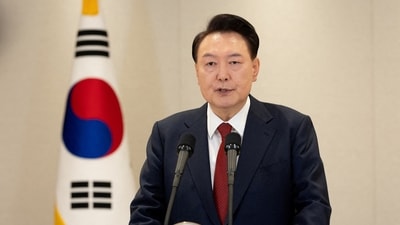
This sudden imposition of martial law raised concern among legislators and citizens, who regarded it as a constitutional subversion intended to strengthen executive control during a period of domestic and international instability.
The announcement triggered immediate constitutional and institutional pushback, underscoring the resilience of South Korea’s democratic structure in crisis mitigation.
The National Assembly initiated impeachment proceedings against President Yoon and passed the resolution by a vote of 204–85. The charges include rebellion, executive overreach and constitutional violations.
Prime Minister Han Duck-soo assumed provisional executive authority, immediately prioritizing stabilization of governance functions and restoration of civilian oversight. His administration focused on reducing tensions by initiating dialogue with opposition leaders and civil society organizations. Additionally, emergency legislative sessions were called to assess the legal framework for ending martial law and protecting democratic principles. Han’s provisional leadership also addressed the economic disruptions caused by the political turmoil, implementing short-term fiscal measures to reassure markets and maintain public services. These responses underlined the executive’s dual mandate of maintaining institutional continuity while moving toward constitutional normalcy. To enable continuity of governance while the Constitutional Court deliberates on impeachment proceedings.
Opposition parties condemned the imposition of martial law as autocratic and contrary to democratic principles and a gross betrayal of the public trust.
Global stakeholders issued mixed reactions, ranging from expressions of solidarity with South Korea’s democratic forces to measured calls for stability and institutional due process.
These developments demonstrated South Korea’s institutional agility in the face of constitutional crises, reaffirming its commitment to preserving democratic rule despite executive overreach.
In response to martial law, South Korean citizens mobilized en masse, turning urban centers into grounds of dissent characterized by inventive protest strategies and cultural symbolism.
Protestors emphasized non-violent resistance through mass rallies, demonstrations and public forums, while foregrounding democratic values and civil rights.
The protests prominently featured K-pop songs like BTS’s ‘Spring Day’ and EXO’s ‘Power’, which served as anthems for resilience and unity. The protesters performed choreographed performances on these tracks, symbolizing collective strength and hope. Fan clubs organized synchronized light stick displays, creating visually stunning spectacles that attracted global attention. These efforts exemplified how K-pop’s cultural appeal and organizational structure could be used for political expression and mass mobilization. At the center of the protests was the widespread use of K-pop light sticks—luminescent accessories that typically symbolize fan culture—as a tool of resistance and solidarity.
The protests included choreographed routines and performances of popular K-pop songs, taking advantage of cultural motifs to amplify political messages and maintain momentum.
The integration of K-pop artworks into protests highlighted multiple dimensions of modern activism by repurposing entertainment symbols for political purposes, with protesters exemplifying the confluence of cultural identity and socio-political engagement. The prevalence of youth participants underlined their important role in contemporary democracy advocacy, reflecting generational aspirations for transparent governance. The visually appealing demonstrations attracted widespread international media coverage, fostering international solidarity and expanding the reach of the movement.
The appropriation of K-pop within the protests underlined its evolution from an entertainment phenomenon to a medium of political expression and collective identity.
· Emotional resonance: Protestors received emotional nourishment from synchronized chants and musical performances, fostering a sense of unity and purpose.
· Symbolic lighting: The sticks of light serve as metaphors for hope and resilience, echoing the candlelight demonstrations of earlier civic movements.
· Digital amplification: Protest footage was disseminated across global social media platforms, leading to support from international celebrities and advocacy organizations. Notable celebrities like BTS’s RM and Blackpink’s Lisa expressed solidarity through social media, raising awareness. The hashtags #DemocracyLights and #StandWithKorea are trending globally, reflecting the scale of digital mobilization. These online efforts increased the visibility of the protests and underlined the growing intersection of pop culture and political activism. The footage was circulated on global social media platforms, garnering support from international celebrities and advocacy organizations.
This cultural and performative dimension of the protests emphasized the transformative potential of popular culture as both a mobilization tool and a medium for expressing dissent.
The martial law crisis left an indelible mark on the political and cultural landscape of South Korea, exposing both weaknesses and strengths within its democratic framework.
· Democratic fortification: The impeachment process underlined the strength of South Korea’s institutional safeguards against authoritarian drift, thereby strengthening public confidence in the constitutional system.
· Generational agency: The protests highlighted the agency of youth demographics in shaping political discourse, demonstrating their ability to mobilize innovative and culturally embedded strategies.
· Cultural diplomacy: The incorporation of K-pop aesthetics into political activism exemplified culture’s dual role as a unifying force and a soft power instrument, which had an impact on future advocacy movements.
Legislative reforms: Proposals include an Electoral Transparency Act, which would mandate strict auditing of vote counting and electronic voting systems to prevent fraud. Another important initiative was the Civilian Oversight in Military Governance Bill, which aimed to establish an independent review board to monitor military interference in civilian governance. Additionally, the Executive Accountability Framework proposed clear limits on emergency powers and required parliamentary approval for extensions of martial law. These reforms reflect a broader effort to restore public confidence and strengthen democratic safeguards. Broad governance reforms were indicated to increase electoral transparency, military oversight, and executive accountability.
· Global resonance: South Korea’s model of culturally integrated activism inspired international movements, demonstrating the adaptability of cultural frameworks in addressing political crises.
The Constitutional Court’s decision on impeachment remains important in determining South Korea’s political trajectory. Regardless of the verdict, the events of December 2024 provide instructive insights about crisis governance, citizen resilience, and the interplay between culture and politics.
Key ideas for the future include:
Strengthening legal safeguards: Institutional reforms aim to strengthen constitutional safeguards against executive overreach.
· Promoting cultural-political synergy: Leveraging South Korea’s cultural assets to sustain democratic engagement and international advocacy.
Youth Empowerment Initiative: Promoting platforms for youth participation in governance and policy making.
Ultimately, South Korea’s response to the martial law crisis demonstrates the enduring vitality of democratic institutions and the transformative potential of cultural solidarity in dealing with political disruptions. The legacy of these events continues to shape the country’s evolving democratic identity, offering a model for integrating cultural flexibility into global activism.
This article is written by Ananya Raj Kakoti, Scholar, International Relations, Jawaharlal Nehru University, New Delhi.


