Introduction: Delhi NCR’s Soaring Real Estate Market
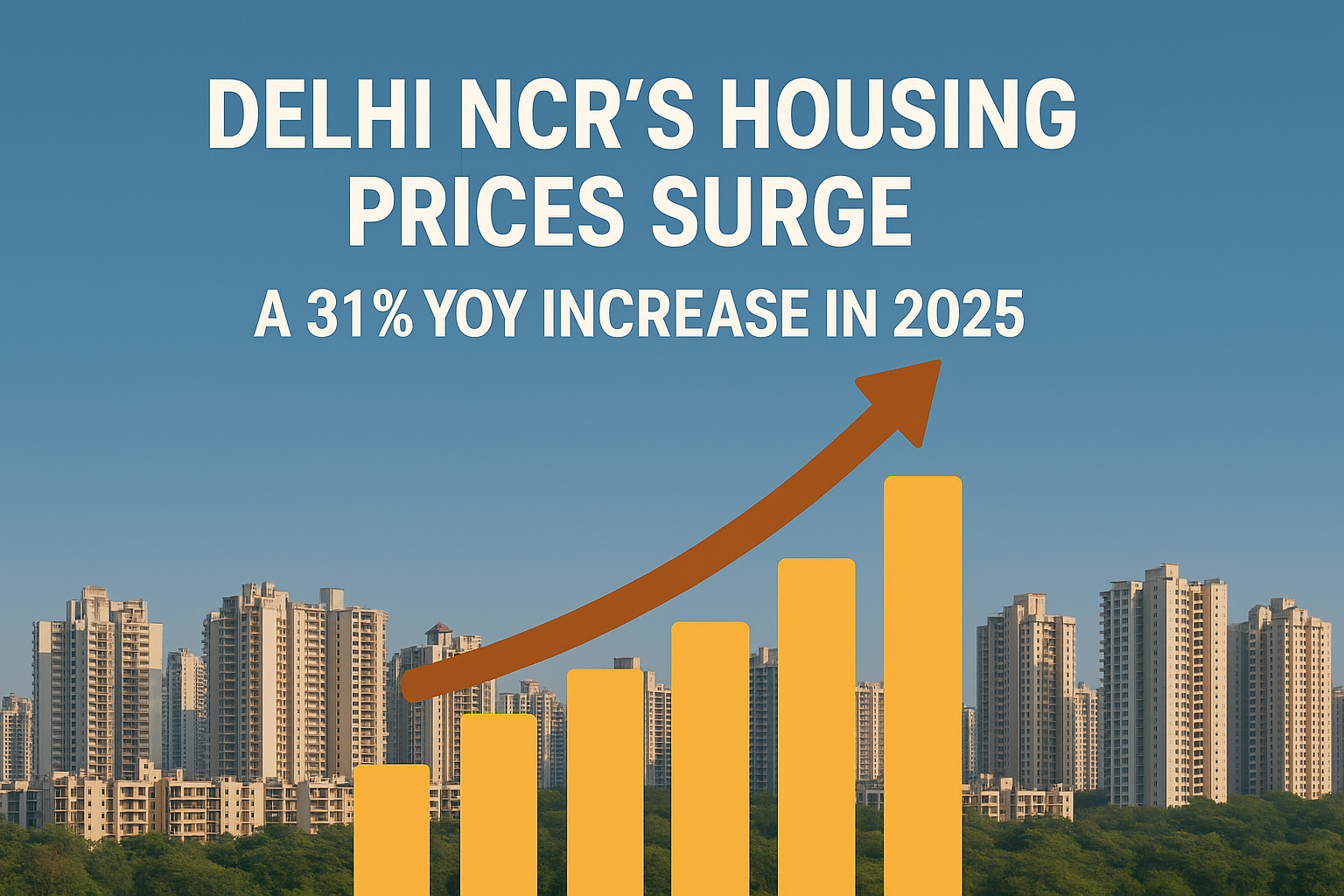
Delhi NCR housing prices have seen a dramatic 31% year-on-year (YoY) increase, creating ripples across the Indian real estate market. This remarkable spike, the highest in recent years, is reshaping buying trends, investor confidence, and urban development strategies. As of Q1 2025, Delhi NCR has outpaced other metro cities like Mumbai, Bengaluru, and Hyderabad in terms of price appreciation.
In this in-depth housing market analysis, we explore the driving factors behind this surge, the areas witnessing maximum growth, and what this means for homebuyers, investors, and developers in the National Capital Region (NCR).
Housing Price Growth: The Numbers at a Glance
According to recent data from CREDAI and Knight Frank India:
| City | YoY Price Growth (Q1 2025) |
| Delhi NCR | 31% |
| Mumbai | 19% |
| Bengaluru | 17% |
| Hyderabad | 15% |
| Pune | 12% |
Delhi NCR’s property prices averaged around INR 7,200 per sq ft in Q1 2024. As of Q1 2025, this has jumped to nearly INR 9,430 per sq ft. The growth is being witnessed across segments — from luxury apartments in Gurugram to affordable housing projects in Noida Extension.
Key Factors Driving the Price Surge
- Infrastructure Development
- Completion of key projects like the Dwarka Expressway, Noida International Airport, and Delhi-Mumbai Expressway has significantly boosted real estate demand in peripheral areas.
- Enhanced metro connectivity in Gurugram and Faridabad has also made suburban areas more accessible, fueling housing demand.
- Increased Demand Post-Pandemic
- Post-COVID hybrid work culture has increased the demand for larger homes with better amenities.
- Buyers are preferring well-connected suburbs over congested urban hubs.
- Limited Inventory in Prime Locations
- Central Delhi and South Delhi have limited new launches due to regulatory constraints and land scarcity, leading to price inflation in these regions.
- Investor Confidence and NRI Interest
- High rental yields in areas like Dwarka, Gurugram, and Sector 150 Noida have attracted institutional investors and NRIs.
- NRIs are investing heavily due to favorable exchange rates and long-term growth potential.
- Affordable Housing Policy Push
- Government incentives and PMAY (Pradhan Mantri Awas Yojana) subsidies have increased traction in affordable housing in zones like Ghaziabad, Greater Noida West, and Sohna Road.
Top Performing Areas in Delhi NCR
| Location | Avg. Price (INR/sq ft) | YoY Growth (%) |
| Sector 150, Noida | 8,500 | 38% |
| Dwarka Expressway | 9,200 | 35% |
| Golf Course Road | 14,300 | 28% |
| Sohna Road | 6,400 | 31% |
| Raj Nagar Ext., Ghaziabad | 4,900 | 27% |
These areas are witnessing a demand-supply mismatch, with more buyers entering the market than the current inventory can cater to. Developers are now fast-tracking project completions and launching new inventory to match this momentum.
What This Means for Buyers and Investors
- End-Users: Those planning to buy homes in Delhi NCR may need to act quickly before prices surge further. The increase in interest rates by banks is also influencing EMI affordability.
- Investors: With rental yields improving (ranging from 3.5% to 5.2% annually), investing in high-growth corridors like Sector 150, Dwarka Expressway, and Sohna Road remains attractive.
- NRIs: With the rupee remaining stable and the Indian economy showing robust signs of growth, NRIs are making long-term bets on premium and luxury real estate in Delhi NCR.
Future Outlook: Sustained Growth or Temporary Spike?
Market analysts predict that while the current growth might taper slightly in the second half of 2025, Delhi NCR property prices are likely to see sustained double-digit growth for the next 2–3 years. This is primarily due to:
- Massive infrastructure pipeline in NCR (urban extension roads, metro lines, elevated corridors)
- Greater transparency via RERA compliance
- Technological adoption in construction and property transactions
- Increasing urban migration and demand from Gen Z and millennial buyers
Expert Insights: What Industry Leaders Are Saying
Ravi Ahuja, Head of Residential Services at Colliers India, notes: “Delhi NCR’s housing market has matured significantly. The rise in prices is not speculative but driven by end-user demand, infrastructure growth, and economic fundamentals.”
Ritika Khanna, a leading property consultant in Gurugram, adds: “We’ve seen 20% more site visits this quarter compared to last year. Buyers are better informed and ready to invest in under-construction projects for future gains.”
Amit Sharma, Managing Director at UrbanSpaces Realty, commented: “The confidence shown by both domestic and international investors indicates that this surge is based on tangible demand, not hype. Developers who deliver on time and maintain transparency are seeing unprecedented trust and sales.”
Conclusion: Is Now a Good Time to Buy Property in Delhi NCR?
If you’re looking for long-term investment or a dream home in a well-connected, urban yet livable space — now may be the best time. The 31% YoY increase in Delhi NCR housing prices is not just a statistic; it’s a reflection of dynamic market demand, policy support, and a strong economic trajectory.
Whether you’re a first-time buyer, a real estate investor, or an NRI exploring opportunities, the Delhi NCR real estate market offers both stability and high returns. Keep an eye on real estate market trends, evaluate your financial readiness, and consult a professional advisor to make the most of this booming phase.