- Mexico’s steep tariff hike on car imports threatens nearly $1 billion of India-made vehicle exports, forcing automakers to reassess production, pricing and market strategy.
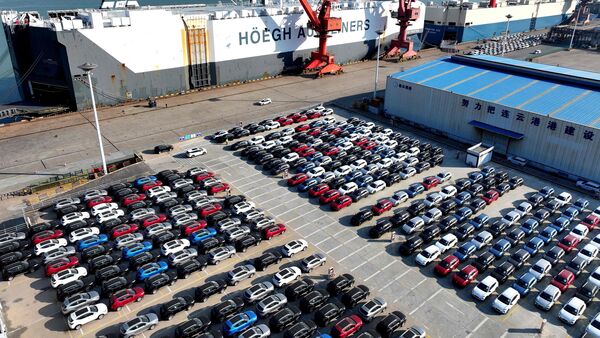
Mexico’s decision to raise import duties on cars from 20 per cent to 50 per cent next year has set off alarm bells across India’s automotive sector. The move targets countries without free-trade agreements with Mexico, including India, and places nearly $1 billion worth of Indian car exports at risk. For a manufacturing base that relies heavily on overseas markets to balance production cycles, the impact could be felt quickly and widely.


A direct hit to India-made exports
Mexico has emerged as India’s third-largest passenger vehicle export destination after South Africa and Saudi Arabia. For several manufacturers, it is more than just another overseas market; it is a volume stabiliser. Skoda Auto Volkswagen accounts for almost half of India’s total shipments to Mexico, followed by Hyundai, Nissan and Maruti Suzuki.
Also Read : How Toyota Bucked the Trend in China
These are largely small, sub-1.0-litre petrol cars engineered for Mexican buyers, not the North American market. That distinction matters because Indian automakers argue these products do not compete directly with Mexico’s domestic industry, which focuses on larger, higher-spec models aimed at the U.S.
The 30-point jump in duties, however, erases the cost advantage that made India-made cars attractive. Higher landed prices could sharply dent retail demand, pushing automakers to either absorb losses or cut back exports, both unattractive options in a competitive and margin-sensitive industry.
Industry concern and uncertain diplomacy
According to two sources and a letter from an industry group reviewed by Reuters, ahead of the decision, the Society of Indian Automobile Manufacturers urged New Delhi to persuade Mexico and maintain the existing tariff structure. The appeal stressed that Indian shipments accounted for only around 6 to 7 per cent of annual Mexican car sales and posed no threat to local manufacturing. With the tariffs now confirmed, industry players are waiting to see whether the government will pursue further talks or accept the new trading environment.
Also Read : Ford suppliers receive China’s new streamlined rare-earth licences
Wider implications for India’s manufacturing strategy
Beyond the immediate commercial impact, the tariff hike complicates India’s broader ambition to market itself as a stable, low-cost manufacturing alternative to China. Export-led automotive growth depends on predictable access to large overseas markets. A sudden policy shift in a key destination such as Mexico highlights the vulnerability of this approach.
Carmakers may now be forced to diversify export markets, reassess model strategies, or explore local assembly options abroad, all of which add cost and uncertainty at a time when global trade dynamics remain volatile.
Get insights into Upcoming Cars In India, Electric Vehicles, Upcoming Bikes in India and cutting-edge technology transforming the automotive landscape.
First Published Date: 12 Dec 2025, 08:36 am IST