



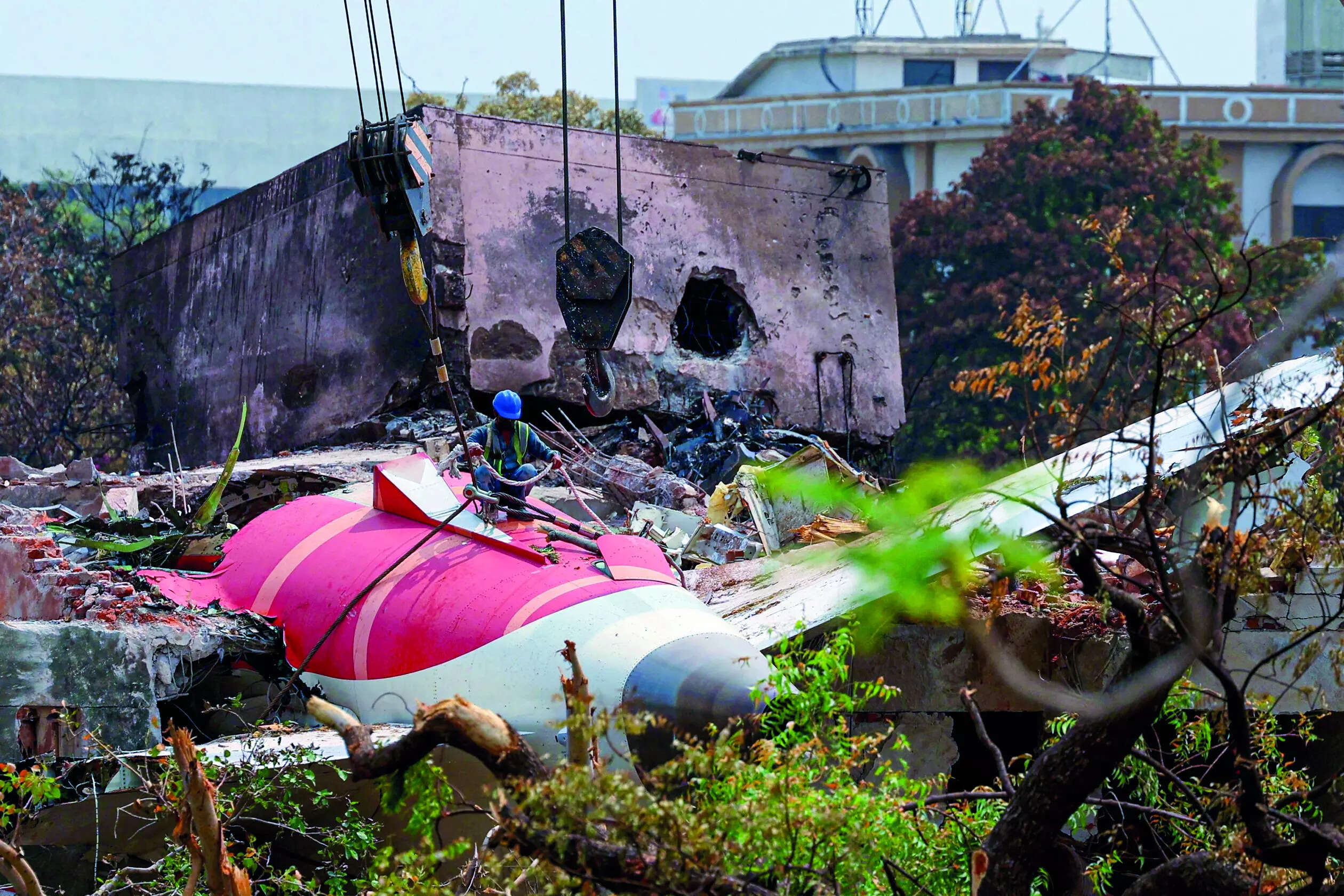
Covid-19 pandemic? Ancient history. The global aviation industry is on track to break the 10 billion passengers milestone – a huge win. But 2025 will forever be tainted as the year air indiaDevastating crash in Gujarat, India’s deadliest aviation accident in nearly three decades.Chaos reigned at Indian airports in December when IndiGo, the country’s top private carrier, succumbed to a brutal scheduling meltdown of delays and cancellations.Around the world, the boom caused great upheaval. Airbus grounded thousands of A320 jets due to a serious malfunction, while UK airports caught fire, the US government shut down and a strike by Canadian workers put dreams on hold everywhere.Buckle up – 2025 was the aviation sector’s biggest ever boom, facing its dire reckoning.
Aviation ‘boom’
Since 2022, as COVID-19 restrictions have been lifted around the world, global air travel has come back from the brink – as if a phoenix rising from the ashes of 2020’s unprecedented crash. That fateful year, the World Health Organization’s pandemic declaration in February led to widespread lockdowns, causing passenger numbers to drop to an all-time low of 3.61 billion from 9.16 billion in 2019.Airports Council International (ACI) figures show a surprising improvement: 4.65 billion passengers in 2021, rising to 6.66 billion in 2022, 8.69 billion in 2023 and 9.52 billion in 2024.ACI Director General Justin Erbachi wrote in the organization’s September report:
International travel remains the main engine of growth, but to sustain demand for air travel globally, regulators must promote policies and frameworks that enable better connectivity, long-term resilience and sustainable growth.
Justin Erbachi
Yet Erbachy’s words ring truer than ever: Unchecked expansion hides dangers – and 2025 exposed them in real time. What risks could stop this surge before it reaches its peak?
crisis
A number of major incidents highlighted the risks and pressures facing the aviation industry. The most prominent among them was the Air India crash, a tragedy that defined the year despite widespread improvements in the sector.
India
Accident: On June 12, Boeing 787-8 Dreamliner flight AI-171 from Ahmedabad to London crashed seconds after takeoff, killing 260 people.
Major air accidents in 2025
The accident claimed the lives of 241 people on board, including 229 passengers and all 12 crew members and 19 people on the ground. In a rare miracle, a passenger, Indian-born British national Vishvesh Kumar Ramesh, emerged as the sole survivor of the plane.
Vishwashkumar Ramesh, the only survivor of AI-171 crash
A preliminary investigation report released on July 12 said the fuel supply to both engines of flight AI-171 was “cut off” three seconds after takeoff – implying human error, a version that faces legal challenges by the pilots’ bodies and the father of the ill-fated flight’s pilot-in-command, Sumeet Sabarwal.
AI171 preliminary report
Recession: In its worst operational crisis to date, IndiGo canceled and delayed hundreds of flights as the company, which commands over 60% of the domestic market, found it difficult to comply with the new flight timing norms. The disruption left thousands of passengers stranded, causing chaos and anger at major airports.The first wave of mass cancellations was recorded on 2 December, with the situation rapidly deteriorating in the days that followed. With no immediate solution in sight and rising airfares of rival airlines, the government fined IndiGo but also gave it a one-time extension till February 2026 to implement the rules, which was later postponed with immediate effect.
Pile of luggage at Delhi airport during IndiGo crisis
Accused of leveraging its market dominance to put pressure on the government to suspend the norms, IndiGo denied that it “deliberately created this crisis”.‘GPS Spoofing’: In early November, nearly 800 flights were delayed at Delhi airport, the country’s busiest, due to GPS spoofing – an interference technique that feeds false signals to aircraft navigation systems. The government later confirmed spoofing but denied that it caused the delay, saying only that “several flights” en route to the airport had reported the interference.
World
While India has had its share of woes, 2025 also saw aviation across the world tested with technical glitches, strikes and operational disruptions challenging carriers.Airbus recalled planes: In the last week of November, French aerospace major Airbus recalled thousands of A320-family jets for urgent safety checks and software updates. This recall was made after analysis of an incident in which intense solar radiation was found to potentially corrupt data critical to flight control systems.The affected models include the A318, A319, A320 and A321 – about 6,000 aircraft worldwide. In India, more than 350 A320s operated by the two largest airlines, IndiGo and Air India, were grounded for two to three days for the update.US government shutdown: It was the longest shutdown in US history, lasting from October 1 to November 12. Reuters reported that 13,000 air traffic controllers and 50,000 Transportation Security Administration agents were forced to work without pay, and by November 6, at least 3.2 million passengers had already been affected by the lack of air traffic control.To ease matters, the Federal Aviation Administration announced a phased reduction of flights at 40 high-traffic airports across the country — 4% on November 7, 6% on November 11, 8% on November 13 and a planned 10% through November 14. Between November 7 and 12, more than 10,000 flights were cancelled, although the reduction did not exceed 6% after the shutdown ended.The disruption resulted in an estimated $200 million loss for Delta Air Lines.UK air traffic disrupted: On 30 July, a technical failure lasting less than 20 minutes caused widespread disruption at UK airports. National Air Traffic Services (NATS), which controls British airspace, blamed a radar-related problem at its main control center in Hampshire. Although operations were restored by switching to backup systems, approximately 150 flights were canceled and delays continued into the next day.Fire at Heathrow Airport: London’s Heathrow Airport, Europe’s busiest and one of the world’s busiest, was closed for nearly 24 hours on March 20 after a fire at a nearby electrical substation disrupted major power supplies. More than 270,000 passenger journeys were affected by the disruption. The London Metropolitan Police found “no evidence” to suggest that the incident was suspicious.Air Canada flight attendants strike: A month-long pay dispute at Canada’s largest airline has culminated in a strike that began on Aug. 16. More than 10,000 flight attendants walked out, causing severe disruption to operations, especially at Toronto Pearson, the country’s busiest airport. Protesters rejected a government order to return to work before reaching a temporary agreement subject to ratification on 19 August.
conflict, natural disturbance
India and Pakistan announced reciprocal airspace restrictions in late April, barring airlines from both countries from using each other’s airspace, following the terrorist attack in Pahalgam, Jammu and Kashmir. Since then the restrictions have been extended from time to time. Meanwhile, Iran and Israel engaged in hostilities in June, and closed their airspace before lifting sanctions following a US-brokered ceasefire.This impact was significant both financially and operationally, as airlines were forced to take longer and costly detours to reach their destinations. Pakistan’s Defense Ministry said that Pakistan Airports Authority lost PKR 4.1 billion (about Rs 1.30 billion) in revenue between April 24 and June 30. In India, Air India CEO Campbell Wilson had said in October that the airline had suffered a loss of about Rs 4 billion due to the closure of Pakistan’s airspace.Nature also played its role. Natural events – from the eruption of Ethiopia’s Hayeli Gubbi volcano after 12,000 years to Hong Kong’s Typhoon Ragasa, wildfires in France and other such events – led to widespread flight disruptions.
runway ahead
2025 was not all doom and gloom for Indian aviation. According to the latest DGCA data (till August), airlines carried 11.07 crore passengers from January to August, while 10.54 crore passengers carried during the same period in 2024, showing a growth of 5% year-on-year. India remains the world’s fifth largest aviation market (third according to the government). The Delhi-Mumbai corridor is the seventh busiest domestic route globally, while both airports are individually among the busiest in the world. Three new carriers (Al-Hind, Flyexpress, Shankha Air) have recently received NOC from the government. As the year comes to a close, flight operations have begun at the newly inaugurated Navi Mumbai International Airport, while services at Jewar International Airport are expected to commence in January. These are aimed at reducing congestion in Mumbai and Delhi, India’s financial and legislative capitals and two largest cities respectively.Globally too, passenger numbers increased despite repeated disruptions. Airlines reported strong demand in key markets, even as operations were challenged by technical issues, labor shortages and geopolitical tensions, underscoring the continued resilience of air travel.


