



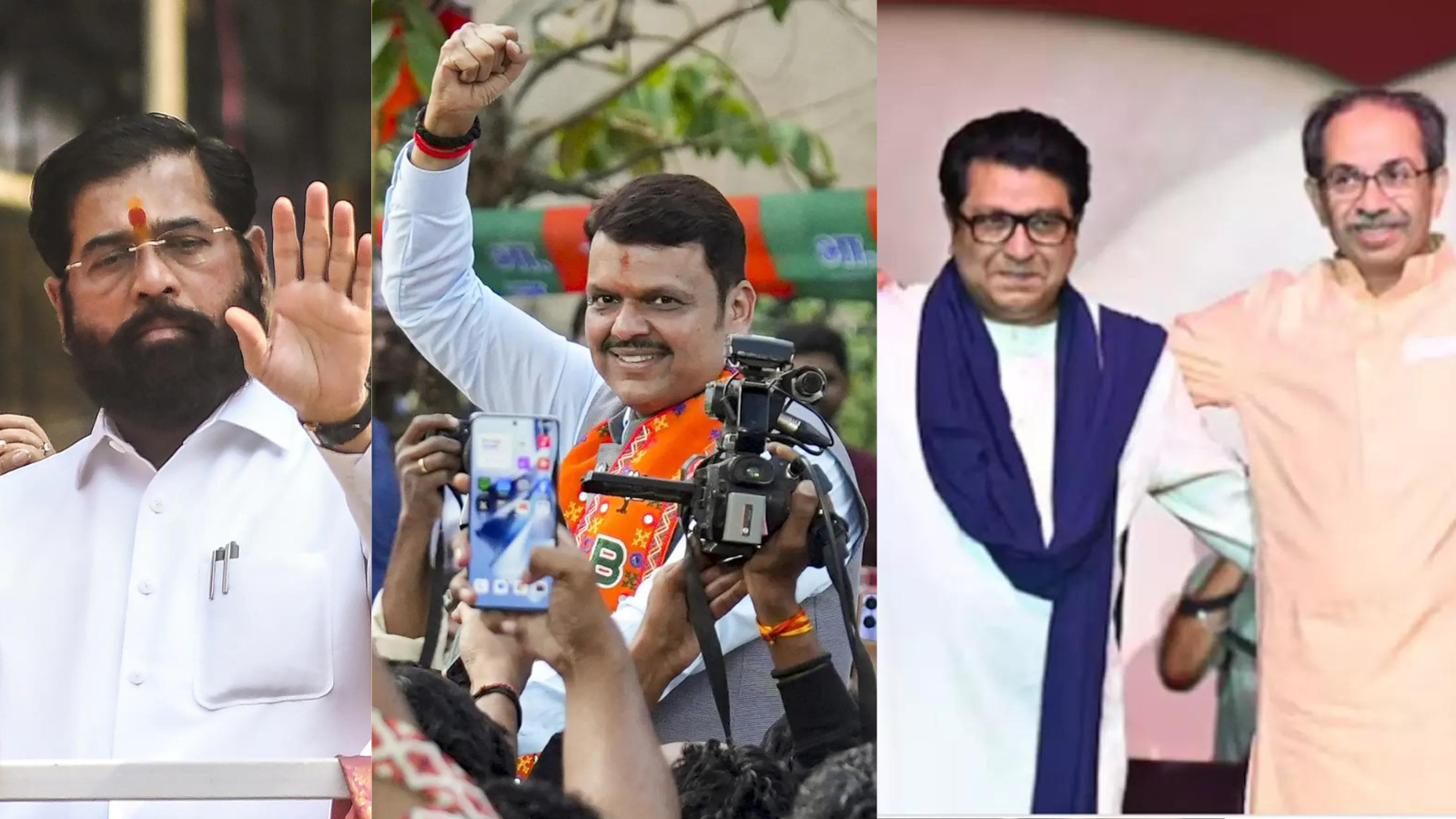
New Delhi: Brihanmumbai Municipal Corporation (BMC) and Maharashtra Civic elections 2026 mark a decisive shift in the urban political landscape. The elections, held across 27 municipal corporations and 2,869 seats after a delay of nearly four years due to legal challenges and lengthy administrator rule, were widely seen as a test of the regime’s credibility and, for some, survival.The decision was strong. The BJP-led Mahayuti alliance emerged as the dominant force in urban Maharashtra, projected to win over 1,800 seats across the state. In Mumbai, Mahayuti crossed the majority mark in the 227-member BMC, and the BJP alone won more than 90 wards in its favour. With this Shiva came to an end Shiv SenaUninterrupted control over the civic body since 1997 and the BJP’s first real takeover of India’s richest municipal corporation.
Here are the top 10 winners and losers of Maharashtra civic elections:
winners
1. Devendra Fadnavis and BJPThe biggest and clear winner in the decision of civic elections is Devendra Fadnavis and Bharatiya Janata Party.The BJP has won more than 90 BMC wards on its own, while in 2017 it had won 82 wards. In key wards like Mulund West (Ward 103), BJP defeated MNS by a margin of over 12,000 votes.
Statewide results reinforced this dominance. The BJP led with more than 50 seats out of 162 in Pune Municipal Corporation, won a majority in Navi Mumbai (40 out of 67), and crossed 80 seats in Nagpur’s 151-member civic body.Axis My India estimated BJP’s support among first-time voters (18-25 age group) at 47 per cent, while 44 per cent of women voters supported the party, influenced by welfare schemes like Majhi Ladki Bahin and the promise of strict audit of civic expenditure. With the BMC’s annual budget exceeding Rs 60,000 crore, control over Mumbai’s civic machinery also enhances the BJP’s long-term institutional advantage ahead of the 2029 assembly elections.
2. Eknath Shinde and Shiv Sena For the Eknath Shinde-led Shiv Sena, the civic results provided political recognition.Since the 2022 split, the central challenge of the Shinde faction has been legitimacy. The civil judgments, particularly in Mumbai and Thane, strengthened its claim. The party has won or is leading in 352 wards and has emerged as the second largest party in the Maharashtra civic elections.In Mira-Bhayandar and Ulhasnagar, the Shinde faction almost won, reflecting voters’ preference for continuity in infrastructure delivery over symbolic politics.3. Mahayuti Yuti The BJP-Shiv Sena-NCP grand alliance has once again confirmed victory in Maharashtra.Despite contesting elections separately in some cities, the alliance demonstrated effective vote transferability in Mumbai, Nashik and Nagpur. The alliance has won or is leading in more than 1,700 wards across Maharashtra.With a major victory, Mahayuti showed how to transform state-level power into grassroots and citizen dominance.4. AIMIMThe All India Majlis-e-Ittehadul Muslimeen (AIMIM) made a slight but consequential lead in the Maharashtra civic polls.The party has won/is leading on 94 wards, mainly in Muslim-majority areas like Bhindi Bazar and parts of Kurla and Mumbra. It crossed 15 seats in Aurangabad Municipal Corporation.Although these numbers are small, AIMIM’s presence has fragmented the opposition votes, particularly hurting the Congress and Shiv Sena (UBT). 5. K Annamalai and ‘Rasmalai’When the results of the Maharashtra civic elections were coming out, one of the most unexpected stories was not about the seats won or the wards lost. It was about narrative currency – how a BJP leader from Tamil Nadu emerged the winner without even contesting an election.And it all started with the ‘Rasmalai’ controversy, which started when while campaigning in Mumbai for the BMC elections, Annamalai had said that the city does not belong to Maharashtra alone as it is an international city.After this comment, a heated argument broke out at the United Shiv Sena (UBT)-MNS rally in Mumbai. MNS chief Raj Thackeray took a dig at Annamalai, mocking him by calling him ‘Rasmalai’ and questioning his right to comment on Mumbai. They also raised the slogan “Hatao Lungi, Bajao Pungi”, a phrase long used derogatorily against South Indians in the city.However, Mahayuti won and BJP MPs and supporters soon started posting pictures of ‘Rasmalai’ on social media and mocking Raj Thackeray.
lost
1.Uddhav Thackeray’s army Uddhav Thackeray suffered the biggest electoral blow. From over 130 BMC seats in 2017, the Army (UBT) fell to 72 seats. Even traditional strongholds like Gorai and parts of Mahim saw defeat. Losing control of BMC is a big blow for Uddhav, Shiv Sena has always maintained its control over the civic body.His long-awaited reunion with estranged cousin Raj Thackeray also failed to make any impact on the ground.2. Congress The Indian National Congress emerged as one of the biggest losers in the BMC and Maharashtra civic elections as the results exposed its almost complete erosion in urban politics.In the Brihanmumbai Municipal Corporation, the Congress was reduced to about 21 seats, a sharp decline from its already low presence in 2017, when it had crossed 30. In Maharashtra’s 27 municipal corporations, the party managed about 306 wards out of 2,869. In Pune, once a Congress-dominated city, the party was reduced to less than five seats out of 162, while in Mumbai it failed to emerge as a serious contender in most of the wards.In Pune it was reduced to less than five seats. The party, which decided to contest alone after Thackeray’s cousins came together, failed to make any impact in the BMC elections, where Uddhav’s forces won 72 seats. The lack of a city-specific agenda, factional infighting and minimal national leadership presence during the campaign seem to have exacerbated the decline.3. Raj Thackeray and MNSFor Raj Thackeray, the civic elections cemented the path to long-term decline.The leader joined hands with his cousin Uddhav to keep the BJP away. But the results show how he failed miserably. During the election campaign, he tried to appeal around the idea of the ‘Marathi manoos’, referring to Balasaheb Thackeray. This politics of emotion obviously has deep roots in the history of Maharashtra. He relied on fiery speeches, symbolic gestures, and cultural flashpoints to attract attention, often targeting immigrants, linguistic outsiders, or perceived cultural dilution in Mumbai. As opposed to public welfare or regime-driven politics, his appeal was rooted in ‘Marathi identity’.However, it failed to impress voters. MNS failed to score a major victory as it could get only 11 out of 227 wards in Mumbai. At the state level, the party managed to win only 18 out of 2869 wards.4: Sharad Pawar Sharad Pawar emerged as one of the biggest losers in the BMC and Maharashtra civic polls as the results exposed the continued erosion of his once strong grip on urban and organizational politics.For decades, Pawar was seen as Maharashtra’s master strategist, capable of shaping outcomes even if he was not in direct power. The civil judgment shattered that notion. The NCP (Sharad Pawar faction) failed to make any meaningful impact in the BMC, winning only 1 in Mumbai wards and being marginal in Pune, the city long considered the center of Pawar’s political influence.His strategy of joining hands with nephew Ajit Pawar for the Pune and Pimpri-Chinchwad Municipal Corporation elections also failed as the BJP swept these bodies.Across the state, the faction’s ward tally stood at 28 out of 2869 wards, well below the expectations of a party led by a veteran of his stature.Importantly, Pawar’s traditional role as a coalition-builder has also lost relevance. Fragmentation within the opposition and the emergence of a dominant Mahayuti coalition reduced their ability to act as power brokers. This time, though reports suggested that he wanted the Maha Vikas Aghadi to fight as a unit, he failed to keep the parties together, especially when Thackeray’s cousins joined hands, forcing the Congress to fight alone.10. Ajit PawarDespite being a part of the Grand Alliance, Ajit Pawar has emerged as one of the losers in this election. During the civic poll campaign, Ajit Pawar repeatedly attacked his own Mahayuti allies, Eknath Shinde and Devendra Fadnavis, highlighting visible flaws within the ruling coalition.As the election date approached, he finally decided to contest the Pune and Pimpri-Chinchwad elections by uniting with his uncle Sharad Pawar.His attacks were unusually sharp even for an alliance partner, with Pawar questioning why local bodies under BJP-Shinde control were still struggling with water supply, roads and urban planning. In several rallies, he presented his faction as a corrective force rather than a stakeholder in the government’s record. . However, civilian consequences show that the strategy backfired. Ajit Pawar’s faction performed poorly in Pune and Nashik, giving rise to the perception that public spats with allies during the elections diminished rather than strengthened his credibility and bargaining power within the grand alliance. Ultimately, Pawar lost his strongholds Pune and Pimpri-Chinchwad to the BJP by huge margins.


