



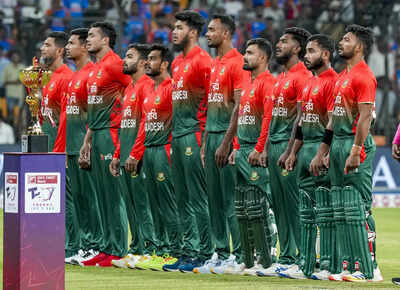
The International Cricket Council (ICC) has unveiled an updated schedule for the 2026 Men’s T20 World Cup, set to be co-hosted by India and Sri Lanka from February 7. The revisions follow the unprecedented removal of Bangladesh from the tournament after the Bangladesh Cricket Board (BCB) refused to travel to India, citing security concerns for players and officials. Scotland has now been invited to replace Bangladesh and has accepted the opportunity.
Why was the schedule updated? Scotland will take Bangladesh’s place in Group C alongside England, Italy, West Indies, and Nepal. Originally, Bangladesh were scheduled to play West Indies (February 7), Italy (February 9), and England (February 14) in Kolkata, followed by a match against Nepal on February 17 in Mumbai. With the new arrangement, Scotland will face the same four teams on the same dates and venues. The ICC confirmed that only the team has changed; all other elements, including match dates, timings, and group structures, remain unchanged. No other fixtures have been affected.Here’s the updated ICC Men’s T20 World Cup 2026 schedule:

ICC updated fixtures list
Why was Bangladesh removed? The ICC cited Bangladesh’s refusal to travel to India despite repeated assurances and independent security assessments showing no credible or verifiable threat to the team. The BCB had requested moving their matches to Sri Lanka, but the governing body declined such a change so close to the start of the tournament. An official ICC statement read: “The International Cricket Council has replaced Bangladesh with Scotland for the upcoming T20 World Cup because of an impasse over security concerns that Bangladesh raised about playing in India. In light of these findings, and after careful consideration of the broader implications, the ICC determined that it was not appropriate to amend the published event schedule.” The ICC also noted that the BCB did not respond to a 24-hour deadline to confirm participation, leaving the governing body no choice but to follow established procedures to select a replacement team. Over the past three weeks, ICC officials engaged with the BCB through multiple video and in-person meetings, sharing detailed security protocols and addressing concerns. Despite these efforts, Bangladesh remained firm in their stance, prompting the historic decision to replace them with Scotland.


