



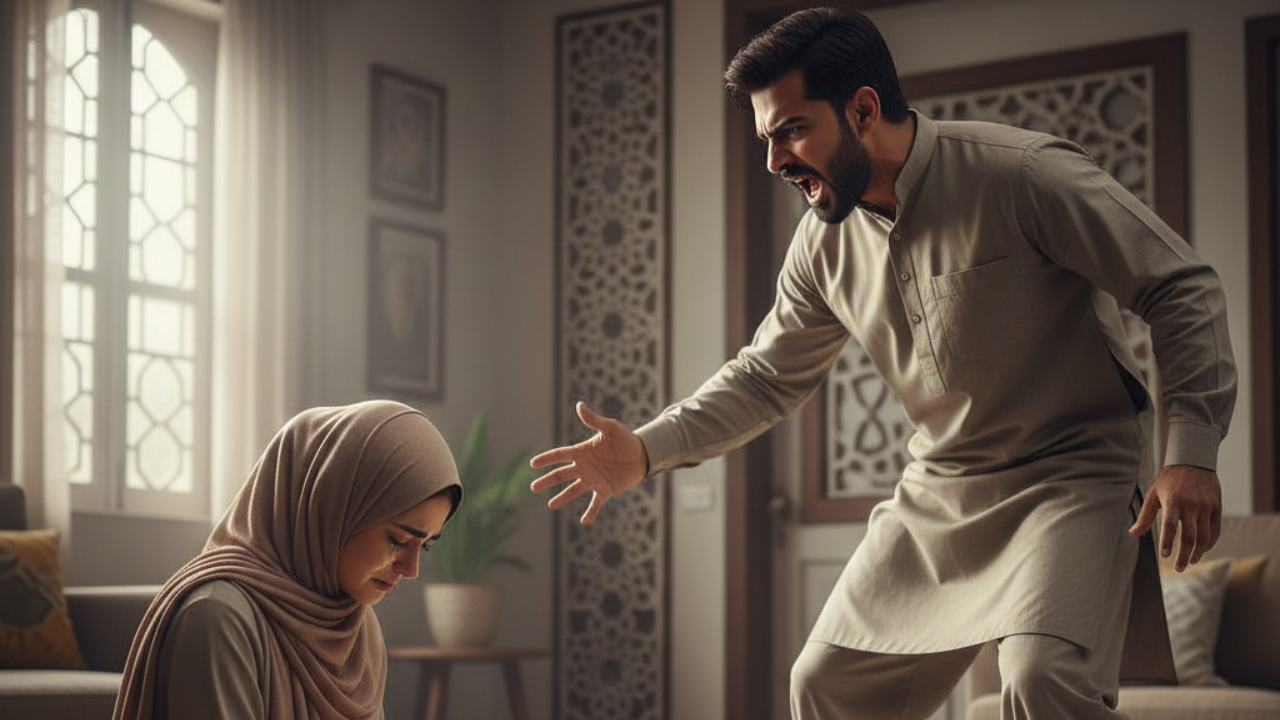
Instant triple talaq is not an abstract religious practice – it is a brutal game of power that shatters lives in a matter of seconds. A husband speaks three words and a woman loses her home, income and future. “Some marriages are 6 months old, but some are even 10 years old. It all ended in an instant,” says Nazreen Ansari, national president of the Muslim Women Foundation. “In one example, a husband living in Saudi Arabia divorced his wife via an email message. The woman was uneducated and helpless – she had no means of seeking justice.”When a marriage ends without any thought, women have to bear the brunt of it. Joint accounts get frozen, bills add up, and “adjustment” becomes code for quietly enduring to avoid scams. Even with adult children or parents, support is often lacking. Priyanka SharmaPeace Cooperation counselors, share: “Who bears the brunt of impulsive actions? The woman does. The man may separate, but his family may refuse to let him remarry.”The real question is not “What does the law say?” – This is “Where will she go?” and “Who will pay?” This is not courtroom theatre; This is a disaster on the doorstep. Picture ration lists being cut, a landlord hounding for rent, school fees not being paid, and phones buzzing with sympathy with the decision. At the heart of the churning is a simple idea that India has still not emotionally simplified: Maintenance is not charity. It is the legal recognition that unpaid labour, shared household and dependent life do not end the moment the husband says the marriage is over.Yet time and again, a woman’s claims to survival – food, rent, medicines, children’s fees – have been reframed as a political dispute about identity, community autonomy and the boundaries of the state.This topic has always attracted people’s attention, but with the release of the film ‘Haq’, this discussion has once again reached the masses.
A doorstep economy, not a courtroom debate
The loss in separation and divorce is immediate and material.Women in such disputes often describe sudden interruptions in cash flow. Joint accounts that become inaccessible, monthly expenses that stubbornly remain monthly, and social pressure to “adjust” because litigation is seen as a public scandal.Even when adult children are present, they are not always financially stable; Even when parents are present, they are not always willing or able to take their daughter back.“I remember a case where a woman had to face triple talaq in anger. Her husband had said it without thinking. Later, her parents pressured her to reconcile, but she had to endure a lot. In such cases, women bear the most. They are put under pressure from society and family alike.” Priyanka Let’s remember.For many people, the matrimonial home is not just a place – it is the only affordable roof.“Who bears the brunt of impulsive actions? Of course the woman does. The man in the relationship may opt out of the marriage, but in many cases, the girl’s family also does not want her to marry someone else,” says Priyanka Sharma, counselor and community mobilizer at Shanti Sahyog.While some families put pressure on their daughters to reconcile, in other cases the husband has a change of heart. Ansari shares the scenario of women who have to remarry their husbands.“If he later regrets it and wants to return, the practice of halala becomes another form of exploitation for women,” says Nazreen.She also explains in detail the other side of the case.“How long can a woman support herself after the marriage is completely dissolved? Or how long can her parents take care of her and her children?” Nazarene questions the fate of women whose future becomes uncertain.That’s why maintenance matters. For the woman who is not earning, or earns too little to restart her life overnight, alimony stands between dignity and poverty.Politics begins when this basic safety net is framed not as a welfare-like protection in a modern republic but as an intrusion into personal law.
Conflict
Both Nazreen Ansari and Priyanka Sharma have faced cases of women who had to undergo triple talaq. Many cases came after divorce; However, many came before the divorce as well.“We first ask the women what they want – whether they want to continue living with their family or not. Then, we call both parties for a counseling session. Many families reconcile after such sessions and continue to live together,” says Sharma.Nazreen shared two cases he witnessed. “In the first case, a woman I knew personally was expecting her first child when her husband stopped talking to her. Her family pressured her to divorce her,” she says.Sharing the reconciliation story, Ansari said, “We intervened and directed her to approach the family court. Over time, the couple reconciled and are now living happily with two children – a son and a daughter.”“In another case,” she adds, “a woman who had been abandoned by her husband had no means to support herself or her child.”In such cases, Ansari’s NGO helps women in counseling and guides them to get back on their feet.“Initially, she was dependent on her parents, but that was not sustainable. We counseled her and helped her open a small shop. Today, she is financially independent and raising her child on her own.”
Why did Section 125 become a flashpoint?
In the Indian legal system, Section 144 of the Indian Civil Protection Code (BNSS), formerly Section 125 of the Code of Criminal Procedure, has often been described in clear terms as an anti-poverty measure. Its purpose is to prevent dependents – wives, children, parents – from being left without support.Its logic is secular: the state steps in so that private abandonment does not become public poverty.But when women from religious minorities invoke a provision that appears “similar” in its application, the logic immediately leaves home and enters the field of identity. Critics see it as a state imposing one-size-fits-all morality; Supporters see this as the state finally doing what it should do – protecting vulnerable citizens regardless of faith.Meanwhile, the woman is usually asking for something less philosophical. She asks for so much money that the family can survive.
Shah Bano One woman, many worries
The Shah Bano case became a national turning point because it cast these questions in the harshest light.Shah Bano Begum, an elderly divorced Muslim woman, sought maintenance under section 125 of the Code of Criminal Procedure. The dispute moved through the courts all the way to the Supreme Court, which ruled in their favor – in effect, confirming that a religion-neutral maintenance provision could apply and that prevention of destruction was a constitutional and civil concern.The decision did more than decide a case. This indicated that the language of equality and welfare could extend to domains governed by religious personal law.To many women’s rights advocates, this seemed like justice overdue. For many in the community, it felt like an alarm bell: If the state can do this on maintenance, what’s next?Those “what next” concerns – never entirely legal, always political – helped transform a maintenance dispute into a referendum on minority identity and state power.
How politics weakened the decision
The reaction to Shah Bano was swift and swift.Protests, public mobilization and political messaging turned the case into a pressure test for the government of the day: stick to the court’s broad interpretation regarding women’s safety, or mitigate community anger by downplaying the impact of the decision.Parliament’s response – the Muslim Women (Protection of Rights on Divorce) Act, 1986 – was widely read by critics as a rollback that undermined the Supreme Court’s reasoning. Supporters defended it by saying it was necessary to respect Muslim personal law.Over time, courts have tried to interpret the law in ways that do not abandon the goal of preventing poverty.But the damage to the bigger idea had already been done. It told the country that even the Supreme Court’s gender-justice moment could be “managed” into something small, politically.
Triple Talaq: When a word becomes a weapon
Decades after Shah Bano, the conversation returned through a different door: instant triple talaq – talaq pronounced three times at once, which some interpreted as the immediate end of a marriage. For women, the complaint was not abstract theology; This was a loss of life.Marriages can be ended suddenly, often without due process, without meaningful conversation, and the woman is suddenly pushed into economic and social degradation.Ethical and political arguments predictably split. Reformers called it arbitrary and cruel. Defenders warned against state interference and majoritarian impulses. But again, the practical issue was urgent: in many cases, the immediacy of divorce multiplied the vulnerability – especially where women had limited income, limited family support, and limited access to legal help.
What changed, and when
The legal change came in two phases.First, in 2017, the Supreme Court struck down instant triple talaq, saying that the way it was being defended, it could not survive constitutional scrutiny. In clear terms, this practice was invalidated: a declaration could not, in itself, immediately dissolve a marriage in such a way that women would be left without protection.Second, in 2019, Parliament enacted a law that made instant triple talaq void and illegal, adding criminal penalties.Here a new—and politically charged—question emerged.Should civil vulnerabilities be addressed through criminal law?Supporters argued that strong resistance was necessary because women had been ignored for too long. Critics argued that criminalization could create new risks. It can increase family conflict, it can be abused, and it can complicate women’s maintenance and support by pushing husbands into the criminal justice system.
Unresolved ‘what now’
The law on paper is only the beginning. The lived reality depends on access: whether a woman can find a lawyer, whether she can afford frequent court dates, whether the police station feels like security or threatening, whether family pressure forces an out-of-court settlement that leaves her with no change, and whether the maintenance order is actually enforced.Politically, personal law reform remains high-voltage.Every intervention is interpreted from a partisan perspective. Every decision has been packaged in slogans. And every woman who steps into the system is silently asked to carry the burden of a national argument she did not start.
back to the door
The country’s big debates—personal law, religious law, minority rights—often reach a woman’s home in small, sharp ways: a neighbor’s whisper, a relative’s ultimatum, the landlord’s deadline.The question she is living with is not whether India will one day have uniform family law. It’s whether her kids will be in school, whether she can afford medicine, and whether she’ll have a bed to sleep in for the next month.In India’s personal-law battles, the loudest slogans are rarely the ones that keep a woman in the house.


