



Actors Sheezan Khan, Falaq Naaz, Sumbul Touqeer Khan, and Iqbal Khan reflect on the joy and spirituality the holy month brings. From childhood memories of eagerly waiting for Iftar to the evolving meaning of Ramadan over the years, the actors share their personal journey, highlighting the significance of family, gratitude, and self-reflection in the month of Ramzan.
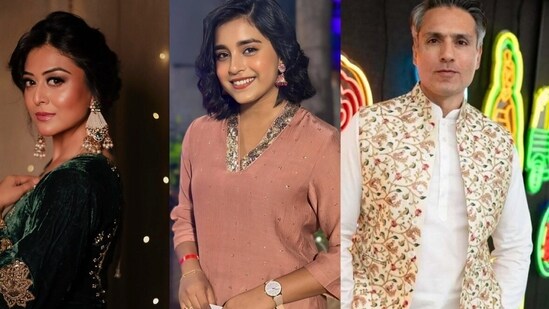
Falaq Naaz
Actor Falaq Naaz shares how she waits the whole year for the month of Ramzan as this month brings what she calls is a different ‘kind of serene peace’. “Getting up early in the morning and fasting together brings a lot of joy, so Ramadan is my favourite,” shares Falaq. Recalling her special iftar memory from childhood, Faalq shares, “Ramadan takes me back to my childhood with not a dish but a drink called Ruhafza. Even today when I smell its fragrance, all the childhood memories come alive. The festival feels incomplete without Ruhafza.”
For Falaq, Ramzan is about spending it with family. “We used to stay at our grandma’s place during Ramadan, and we miss her a lot now because she’s no more. She used to wake everyone up early in the morning, and even if no one had to fast, it was mandatory to get up. There used to be drums playing in the streets in the morning during this time of the month n to wake everyone up, and I miss that. For me, the meaning of Ramzan is patience, and my first Ramzan taught me that because the situation at home was very bad and there was nothing to eat; usually a child’s first fast is celebrated, but we were going through a financial crisis and couldn’t celebrate it. We were told, ‘It’s okay, if there is nothing to eat, keep the fast—Allah is with those who are patient,’ and that stayed with me.”
Sumbul Touqeer Khan
Sumbul Touqeer Khan says Ramzan holds a deeply special place in her heart, describing it as “a very special and peaceful time” that goes beyond fasting to embody gratitude, patience, and closeness to Allah. “The holy month is a chance to slow down, reflect, and reconnect meaningfully with my family, especially my father, Touqeer Khan, and sister, Saniya. Touqeer makes it even more special because we try to do everything together, from fasting to Iftar,” shares Sumbul. Recalling her childhood memories surrounding Iftar, she says, “I still cherish the memories of all of us sitting on the floor, waiting for the Azaan with a full Iftar spread in front of us, while my sister and I kept checking the time in excitement. I also clearly remember my first fast—I was very young and determined to complete it, and when I did, I felt so proud and grown-up. Over the years, the meaning of Ramzan has evolved for me.” Sharing how the meaning has changed over the years, she says, “As a child, it was about new clothes, tasty Iftar food, and staying up late with family, but now I understand its spiritual depth. It’s about prayers, self-discipline, and gratitude, and no matter how busy life gets, we always try to keep that spirit alive at home.”
Iqbal Khan
For Iqbal Khan, Ramzan is “basically the best month of the year”, a time that serves as a reminder of how one should live throughout the remaining twelve months. “The festival is about cleansing your mind, your body, your soul,” says Iqbal. His memories of Ramzan as a child are tender and filled with innocence. “As a child, Ramzan was all about time,” he recalls, smiling at the thought of his favourite treats at iftar. But more than the food, it was his mother’s quiet understanding that left a lasting impression. “I would feel hungry, and my mom would tell me she’d give me something to eat, but not in front of anyone. Everybody knew about it. Everybody knew about it, but I knew that nobody knew except Mom.”
In recent years, Ramadan has largely been a ‘working Ramzan’ for him due to professional commitments, but at home, he makes it special for his children. His little one insists on fasting, so he encourages her gently by breaking it into small intervals through the day. Over time, his understanding of the month has evolved. “It changes when you grow older, when you live more of life, that’s when you realize, if you’re lucky, what the true meaning of Ramzan is,” he reflects, adding, “It’s from just not eating food, it becomes devotion. It becomes realizing being human, and it’s much beyond just not eating food, and that only comes with living.”
Sheezan Khan
“Ramzan has always been very special in the sense that it’s a whole month where we live differently,” shares Sheezan Khan. Recalling his childhood memories, the actor shares, “When I was a kid, we used to wake up early in the morning. It was majorly about the food.” He says now that he has grown up, Ramzan for him is also about worshiping. “This festival will always be about sharing and enjoying happiness together. I don’t know how many iftars I have done, but I remember how we all used to sit in front of the Dasar Khan with just a couple of minutes left before breaking the fast, the food right there in front of us. In those moments, we would pray because we believed that if you sit in front of the Dasar Khan and pray, Allah listens and fulfils your prayers. We used to pray with so much intensity, hoping our prayers would be answered, and then we would hug each other.”
Sharing a memory of his first iftar, Sheezan says, “Though it was very different, it wasn’t celebrated, but it did have a meaning. My father was a broken man, and there was no food at home. Ramzan was going on, so we fasted—almost on the pretext of faith, but in truth because of starvation. That experience changed my understanding of life. Now, only the closest people remain around me, and festivals are about family. It feels good to celebrate with them. We don’t need to show the worldliness or gather 50 people; you only need your own people, your family, to truly celebrate any festival.”


