



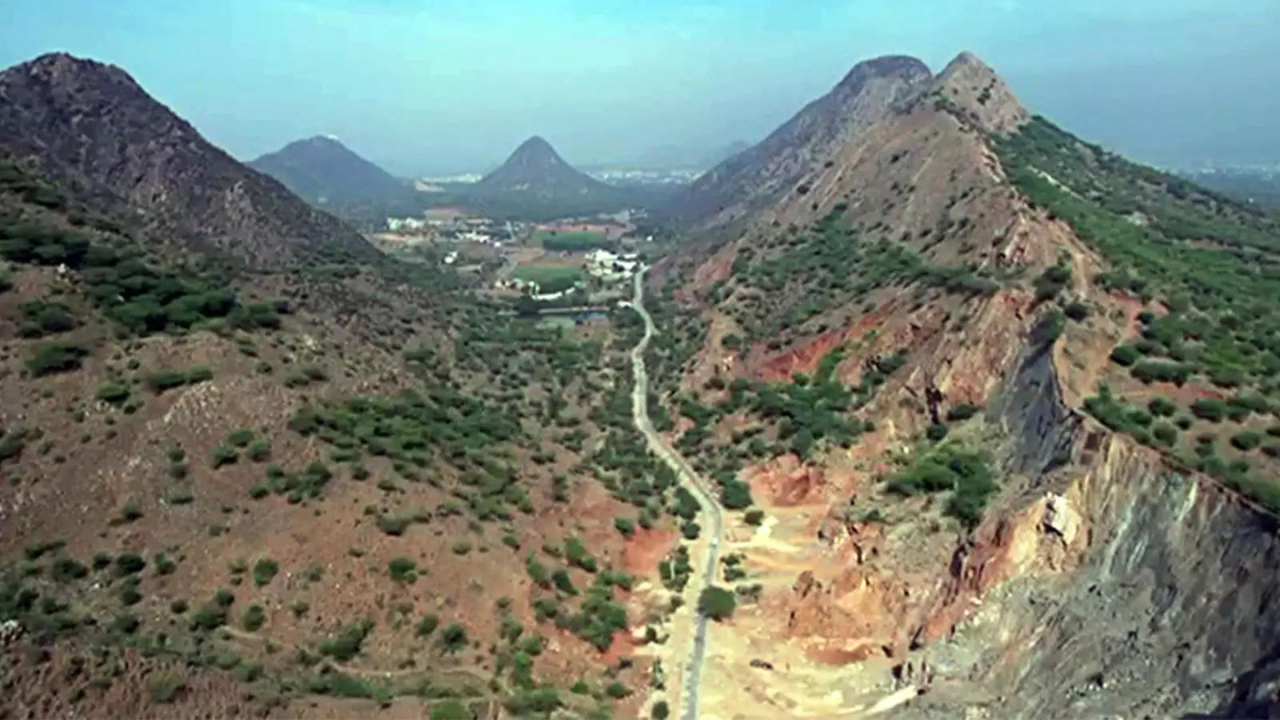
The chain has shaped everything – from livelihoods to culture, faith and language – for many communities and tribes. Even as controversy over an official definition has led to a Supreme Court review, voices on the ground say the same Aravali‘The impression is more than the physical dimensionsWhat are Aravali? The answer to this seemingly obvious question was blocked by the Supreme Court last December because its scope was too narrow, sparking a public outcry. The top court now wants a new yardstick to define the range, which extends 600 km across four states and, about 2 billion years old, represents India’s oldest fold mountains. But talking to people on the ground in Rajasthan, a state synonymous with the Aravalis, it becomes clear that the measure of these mountains lies not in their height, but in how deeply they have shaped the lives of the people who call this landscape home.The now postponed definition – which includes a height cutoff of 100 meters to demarcate the range and a proximity of 500 meters between hills – had prompted fears that a significant part of the Aravalis would be deprived of environmental protection. For the people living within its boundaries, the threats are immediate: if the map shrinks, so do forests, grazing lands, water systems, sacred groves, and the barriers between community life and mining, fragmentation, and forced migration.shelter and sustenanceTribal author and former IPS officer Hari Ram Meena says, “The Aravalis and our communities share a bond that is centuries old. These mountains are not just geography for us. They are a living deity, at the center of our identity and existence.”
The Aravalis are home to some of the oldest communities of Rajasthan. Before the rise of the Kachwaha Rajputs, the Meena tribe once ruled large parts of the Jaipur region and controlled the strategic passes of the Aravalis. In southern Rajasthan, Bhil chieftains dominated vast forest areas. Meena says, “The Bhils were known as ‘kings of the jungle’. Their role was so important that the royal emblem of Mewar depicts a Rajput warrior on one side and a Bhil warrior on the other.”The mountains also shaped the war. During Maharana Pratap’s resistance against the Mughals, the Aravalis enabled guerrilla tactics and hidden movement based on local knowledge of forests, mountain passes and water sources.Mountains protect and also nurture. Aravali is the ecological backbone of Rajasthan. It regulates climate, prevents desertification, feeds rivers like the Banas, Luni and Sabarmati and helps forests survive in largely arid landscapes. It is also a cultural watershed, which not only separates the river systems flowing towards the Arabian Sea and the Bay of Bengal, but also shapes traditions, languages and ways of life.
For communities like the Bhil, Meena, Garasia, Sahariya, Raika, Rewari, Mogia, Nath and Gurjar, the mountains are not a resource but a living presence. Temples, sacred groves, hilltop shrines and forest deities dot the landscape and the mountains are regarded as a ‘nature pilgrimage’, a sacred geography.embedded in everyday lifeLife in Aravali has always revolved around forest produce, livestock and water. The communities collect food, fuel wood, medicinal herbs, bamboo, tendu leaves and wild fruits from the forest. Rain-fed terraced farming supports robust crops such as millets and pulses, while the hill slopes provide grazing areas for cattle, sheep, goats and camels.Traditional water systems are central to survival. ‘Johads’, stepwells, nadis and stepwells – collectively constructed and maintained – harvest rainwater and recharge groundwater. “Our water structures are our lifeline. They are protected not by law but by community morality,” says Meena.Social activist Kunjbihari Sharma explains how deeply human and animal life are linked here. “The Aravalli forests are not just greenery,” he says. “They are sources of fuel, fodder, herbs and water. In summer, wild animals also depend on village wells and pastures. Humans and wildlife survive together.”But this balance is continuously deteriorating. For years, communities were told that the forests belonged to the state, not to them. “Earlier, people used to make johad through collective labour. Now, there is a ban on that too. Also, illegal mining and stone mafia are hollowing out the hills,” says Sharma.Nowhere is its impact more visible than on the Denotified Tribes (DNTs) and nomadic communities, whose livelihoods depend entirely on pastoral landscapes. Gopal Keshawat, former chairman of the Board for Development and Welfare of Denotified, Nomadic and Semi-Nomadic Communities, warns that mining has created a deep livelihood crisis. He says, “Pastoral communities survive on livestock, milk, wool and leather. When grazing lands are destroyed, their entire economy collapses.”Keshawat says that about 10% of India’s nomadic population and more than one crore people in Rajasthan depend on the Aravali ecosystem. He recalls that commissions like the Iyengar Committee and the Balakrishna Renke Commission had clearly recommended a ban on mining in the Aravalis and separate grazing lands for DNT communities. “These recommendations were meant to protect both people and nature. Ignoring them puts animals and humans alike at risk,” he said. But, where laws fail, cultural practices continue to protect biodiversity.living mountainThroughout Rajasthan, ‘Orans’, or community-protected sacred groves, remain untouched due to religious beliefs. Social acceptance rather than written rules prohibits cutting of trees and hunting in these forests dedicated to local deities like Bhadarva Dev and Pandurimata.One of the strongest expressions of this belief is the Gawari dance of the Bhil community. Dedicated to Shiva and Parvati and performed by men for 45 days in parts of Udaipur district, this dance is both spiritual and ecological – “it is not entertainment, but worship of nature,” says social activist Kishan Gurjar. “Cutting forests is considered a sin and Gawari spreads the message of conservation,” says Gurjar.Aravali is also deeply associated with nomadic communities like Sapera or Kalbeliya. “The Kalbelia have learned to live with snakes, treat snake bites and understand forest behavior,” says social justice researcher Naveen Narayan, who has worked with these groups for more than 20 years. Kalbeliya was once seen not as an entertainer but as a protector of villages. Amid mining and forest loss, Narayan warns that the shrinking Aravali is not only threatening their livelihoods, but also the traditional knowledge that has connected people to nature for generations.“The existence of the Aravalis is largely due to the indigenous communities. These hills have protected the people, and the people have protected the hills,” says Manish Barod, block president of the Scheduled Areas Reservation Morcha in Udaipur. It is a link that has been repeatedly stressed when considering the future of the Aravalis, with activists and stakeholders saying that protecting the mountains is more than a simple definition. The sociologist says, “Reducing the Aravalis to physical measurements denies its reality. It is a socio-ecological organism where folk culture, agriculture and community knowledge are deeply interconnected.” Shyam Beautiful lady.What is at stake is not just forests or hills, but the living memory of Rajasthan – its languages, customs, arts and lifestyles that have been shaped over millennia.Mountains that define art, cultureMolela village is situated on the banks of Banas river originating from Aravalli which is famous for terracotta statues of deities. Ask potter Prabhu Gameti, and he says the craft exists because of the mountains. He explains, “The clay of Banas is smooth and flexible. When it is burnt, it does not break. That is why idols have been made here for past generations.”Researcher and folk artist Madan Meena warns that environmental destruction directly leads to the destruction of culture. “When livelihoods disappear, people migrate. And when people migrate, languages die,” he says, referring to the more than two dozen languages and dialects, many of which exist only in oral tradition, that are spoken in the region. An art form has hundreds of words associated with seasons, tools, etc. “When an art form disappears, the entire vocabulary disappears with it,” he says.Communities like the Mogia, who collect medicinal herbs, and the Nath sect, whose temples like Pandupol are located within the hills, show how faith, livelihood and landscape seamlessly merge. Furthermore, Jain temples, Buddhist remains and folk temples together reflect the religious diversity of the Aravalis. CS Sharma, professor of history at Udaipur, says, “The Aravalis prevented cultural uniformity in Mewar. Its geography ensures the diversity of the region.”


