



MUMBAI: Sensex reversed its falling trend on Thursday and regained part of the 2,300-point fall recorded in the two previous sessions since the war started in West Asia. At the end of a volatile session the index was up 900 points or 1.1% at 80,016 points.The day’s session started on a strong footing after the US markets closed higher on Wednesday night. Sensex opened a little over 400 points higher, witnessed some volatility through most of the session and then rallied strongly in the last one hour to close slightly off the day’s high of 80,304 points.The strong up move in the stock market in the last hour came after Iran’s foreign minister told a news channel that the country was ready to move to the negotiating table with the US on its nuclear programme.
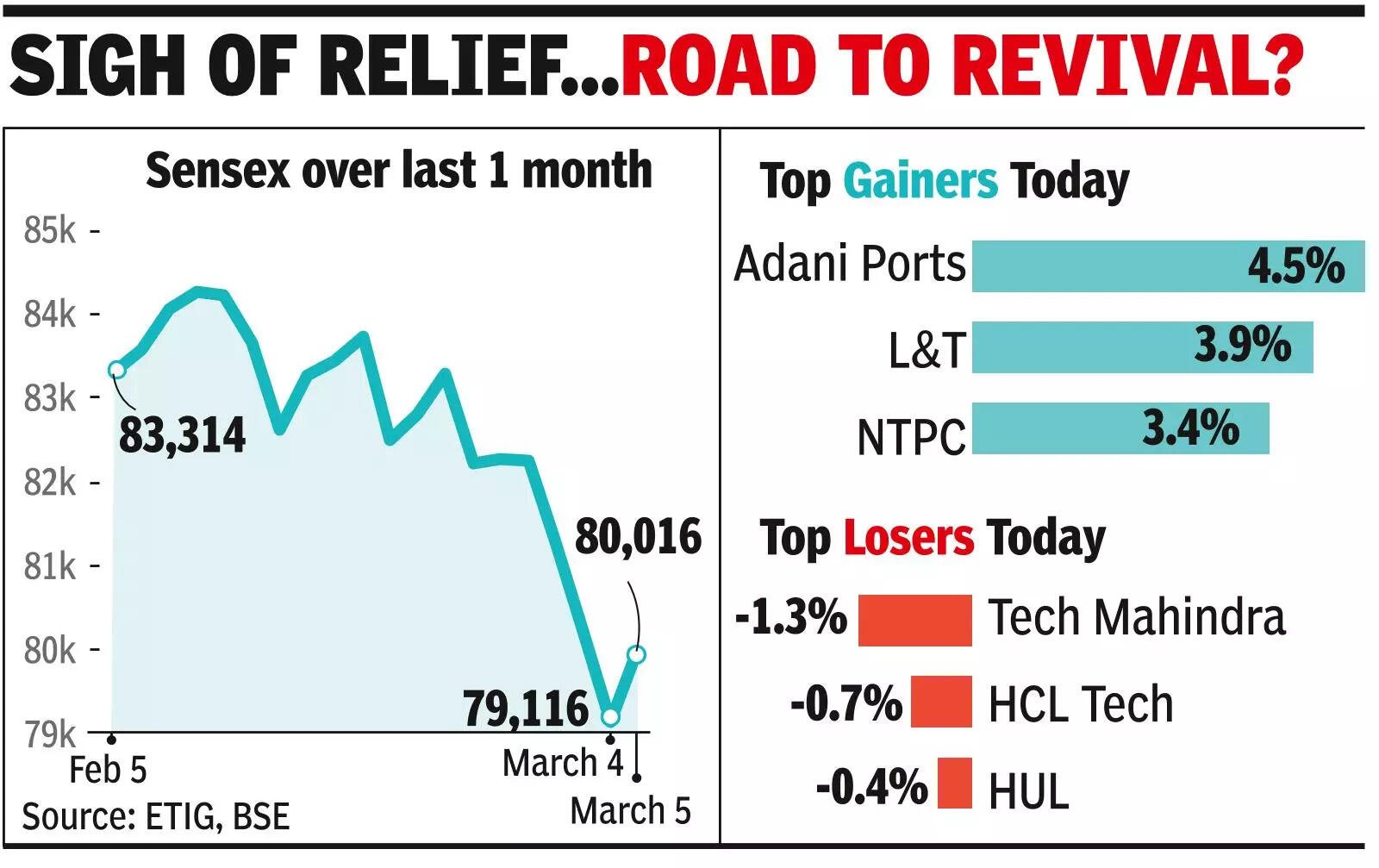
Earlier, the US guarantee to insurers covering ships plying in the war zone and security for those ships improved sentiment.Taking a similar path like sensex, Nifty on NSE closed 285 points or 1.2% higher at 24,766 points. The day’s rally added about Rs 5.7 lakh crore to investors’ wealth with BSE’s market capitalisation now at Rs 452.9 lakh crore, official data showed. According to Siddhartha Khemka, Head of Research – Wealth Management, Motilal Oswal Financial Services, the Indian market snapped its losing streak on the back of improving geopolitical cues. “Investors’ sentiment received a boost after the US announced security and insurance guarantees for commercial shipping through the Strait of Hormuz, including the possibility of military escorts for oil tankers to ensure uninterrupted global energy supplies amid tensions with Iran,” Khemka wrote in a note. Through this strait in the war zone, about 20% of the world’s crude oil is transported daily from Iran and the gulf countries. Since the war erupted on Feb 28, Iran has closed this important trade & energy supply channel, which in turn has led to more than 10% rise in crude oil prices globally. Khemka said some additional support for the market came from reports suggesting that Iran may be exploring possible terms to end the conflict with the US and Israel, raising hopes of a potential de-escalation, although officials remain cautious and regional tensions persist.Going ahead, the direction of the war in West Asia, the price of crude oil, the rupee’s strength against major currencies and foreign fund flows would decide the direction of the Indian market, analysts and dealers said.


