



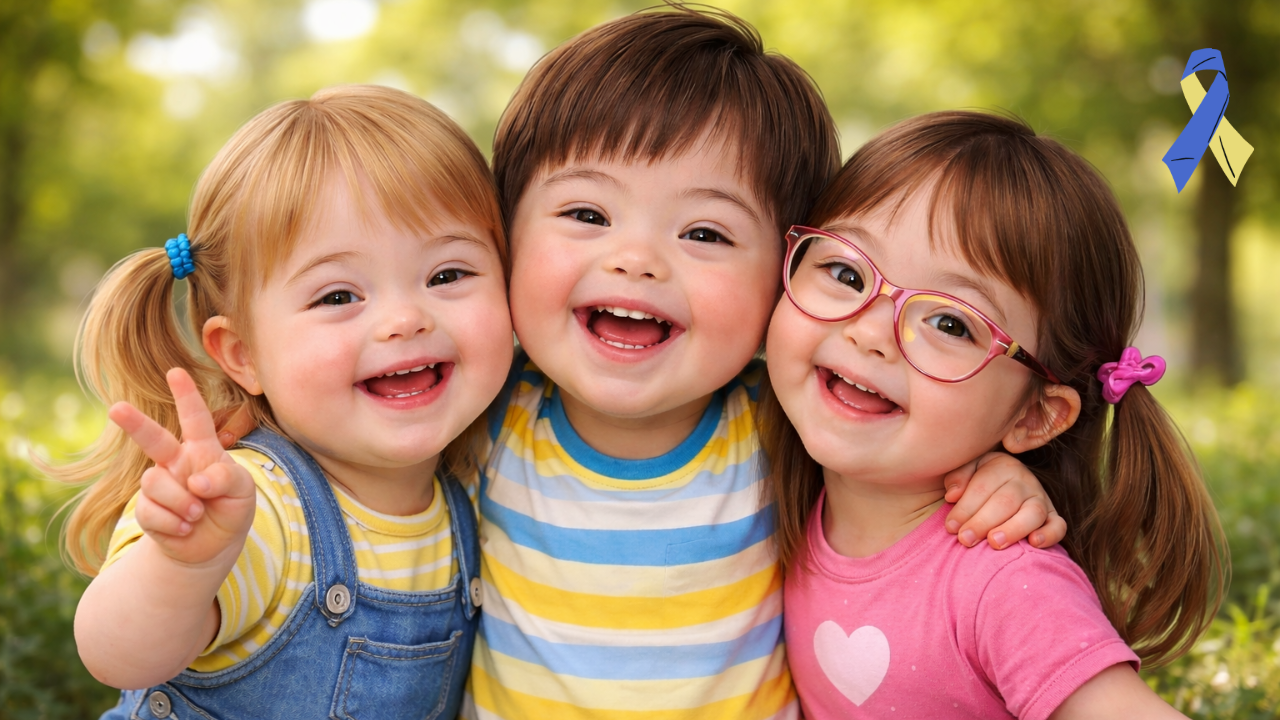
Every year on March 21 the world celebrates World Down Syndrome Day, a date that reflects the nature of the condition it represents. The symbolism of 3/21 refers to the presence of three copies of chromosome 21, a genetic variation that shapes the lives of millions of people around the world.Down syndrome, or trisomy 21, is the most common chromosomal condition worldwide. This occurs when a person has an extra copy of chromosome 21, resulting in each cell having 47 chromosomes instead of the normal 46, affecting aspects of physical growth, cognitive development, and social skill development. It is present from the moment of conception and occurs sporadically, meaning it is not caused by anything the parents did before or during pregnancy. Only a small portion of cases, about 1%, are hereditary, usually due to translocation, where genetic material is passed from parent to child.According to the Down Syndrome Federation of India, it affects about one in every 800 to 1,000 live births in India, that is, about 30,000 children every year.Yet, while its biology is relatively well understood, the story of Down syndrome is not defined by chromosomes alone. It is shaped by access to care, early intervention, inclusion and, perhaps most importantly, how society wants to see it.
What is Down syndrome?
understanding genetics
In about 95% of cases, Down syndrome is caused by nondisjunction, a process that occurs when two copies of chromosome 21 fail to separate during egg or sperm formation, resulting in a fertilized egg having three copies of chromosome 21 instead of two (trisomy 21). That is the main reason.However, there are two less common forms: mosaic And Transfer.Mosaic Down Syndrome – Here, the nondisjunction event occurs after fertilization in one of the early cell divisions. As a result, only a proportion of cells carry the extra chromosome. The degree of mosaicism can affect the severity of physical and cognitive symptoms, often making them less pronounced than with full trisomy 21.Translocation Down Syndrome – In this form, an extra copy of chromosome 21 attaches to another chromosome (often chromosome 14). Unlike nondisjunction, this form can sometimes be inherited from a parent who carries a balanced translocation, meaning the parents have no extra chromosomal material and may be unaffected.
3 forms of Down syndrome
Although less common, both forms highlight an important reality that Down syndrome is not the same.Recognizing early symptoms and confirming the diagnosisIn infancy, early symptoms are often present in the form of developmental delays or certain physical characteristics.“Early symptoms of Down syndrome in infants may include certain physical features and developmental delays, such as slowed head control or delayed responses to stimuli,” explains. Dr. Manish MittalSenior Consultant-Pediatrician.However, these signals may overlap with specific developmental variations.He says, “A definitive diagnosis cannot rely on observation alone. Genetic testing is necessary to confirm the condition.”Doctors usually confirm the diagnosis through karyotype testing, which is a chromosome analysis performed on a blood sample. During pregnancy, screening methods such as ultrasound markers and maternal blood tests may indicate the possibility, followed by confirmatory procedures such as amniocentesis or chorionic villus sampling (CVS).“Early detection, along with timely medical evaluation and intervention, plays a vital role in ensuring better health and developmental outcomes,” says Dr. Mittal.
.
Physical characteristics and developmental differences
Down syndrome is associated with a variety of physical characteristics, although not all individuals will exhibit all of these characteristics.Common characteristics may include a flat face, small head, flat nose, upward-slanting eyes, a small mouth with a relatively large tongue, and generally low muscle tone. Individuals may also have small, drooping ears, short stature, wide hands with a deep crease on the palm, a bent fifth finger, and a noticeable gap between the toes. An increase in joint flexibility is also often observed.Along with these physical symptoms, developmental delays are also common, such as mild to moderate intellectual disability.“Children with Down syndrome are delayed in achieving their motor and cognitive milestones,” says Dr. Ratna Dua PuriChairman, Institute of Medical Genetics and Genomics, Sir Ganga Ram Hospital.
.
However, she emphasizes that these delays should not be seen as limitations. “Children with Down syndrome are able to achieve all the major milestones in life and are increasingly participating in a wide variety of activities. “However, these children can do everything in life. They will walk, they can go to school and now they are doing different activities,” says Dr Ratna.Thus, it is important to recognize that developmental delays in individuals with Down syndrome should not be considered an absolute developmental limitation to their potential as the pace of development may vary, but progress is still made.Although some individuals do not achieve higher education, many attend school and acquire life skills, and increasingly find employment opportunities.
Critical Window: Why early intervention matters
Prenatal screening methods, including ultrasound markers and maternal blood testing, can help identify the possibility of Down syndrome during pregnancy, allowing families to better understand the condition and prepare for prompt care and support.Early intervention plays a decisive role in shaping the outcomes.“This involves helping their muscle tone so they can sit, stand and hold their head up,” explains Dr. Puri. “It is also important to help them develop language and communication.”Therapies such as occupational therapy, physical therapy and speech therapy are the backbone of this support, often provided through specialized child development centers that bring together multidisciplinary care.But these structured sessions are only part of the process.“These are just one-hour sessions. Parents get to incorporate what they learn into their daily interactions with the child in a fun and engaging way. “That’s what leads to the best results,” she says.She also emphasizes reducing passive screen exposure and encouraging direct engagement, talking, playing and stimulating the child’s senses.It is in these everyday moments that growth accelerates. united nations It is also emphasized that access to adequate health care, early intervention programmes, inclusive education and appropriate research is important for the growth and development of individuals with Down syndrome.
Pregnancy, fertility and recurrence
One of the most common misconceptions about Down syndrome relates to maternal age. While the likelihood increases with age, the broader picture is more complex.A significant proportion of children with Down syndrome, about 85%, are born to mothers under the age of 35, mainly because more children are born in this age group.In families who already have a child with Down syndrome, the chances of having another child with the condition are slightly higher than the general population, in addition to the baseline risk associated with maternal age.Reproductive patterns also vary among individuals with Down syndrome. Men with Down syndrome usually have a low sperm count and may experience infertility as a result. However, women can have regular menstrual cycles and can conceive and carry a pregnancy to term, making proper counseling and health care guidance essential.
Health Considerations Throughout the Lifespan
Individuals with Down syndrome may face a variety of related health conditions, especially if not monitored early.Congenital heart defects are the most common, often requiring medical or surgical management in infancy. Thyroid disorders, especially hypothyroidism, are also frequently seen. Loss of hearing and vision, frequent infections, and low muscle tone can further affect early development.The risk profile evolves as a person ages. They are more likely to develop cataracts and other visual problems, as well as obesity, diabetes and metabolic syndrome. Mental health concerns, including depression, may emerge, especially during life transitions.The risk of early-onset dementia also increases, with symptoms similar to Alzheimer’s disease. In many cases, early signs may first appear as subtle changes in behavior rather than just memory, making close observation necessary.Additionally, individuals with Down syndrome have a lower risk of some conditions that occur in the general population, including atherosclerosis and some solid tumor cancers.With continued medical care and monitoring, many individuals today live longer, healthier lives, with life expectancy now increasing to approximately 60 years and beyond.
Education, transition and adulthood
The education landscape is constantly evolving. Increasingly, children with Down syndrome are included in mainstream classes on the basis of individual abilities, sometimes partially, often completely.Many complete schooling, pursue vocational training, and, in some cases, engage in post-secondary education.As they enter adulthood, new challenges and opportunities arise. Some individuals move into supported housing or independent living arrangements, pursue employment, and form social relationships.However, this change requires careful support. What determines these outcomes is not just ability, but access to early support and inclusive environments.
Education and inclusion in society
The conversation about Down syndrome is rapidly shifting from care to inclusion.Children today are part of classrooms, playgrounds and communities. Adults are entering workplaces, contributing in a variety of fields and building independent lives.Yet, true inclusion is not just about access, it is about perception.Special teacher Ritika explains that many societal beliefs underestimate what individuals with Down syndrome are capable of achieving.She reflects this perspective beautifully, “If the world could see my students the way I do, we would shift our focus from their limitations to their incredible strengths. We will celebrate their resilience, creativity and infectious enthusiasm. Inclusion will no longer be an obligation but a natural choice, as they are valuable contributors to society.My students will be asked not only about their situation, but also about their dreams, their ideas, and their passions. We will learn from their unique methods of problem-solving, their ability to find joy in ordinary moments, and their deep capacity for empathy and love. Ultimately, we will realize that inclusion is not a favor; It is a mutual enrichment”, she adds.
.
As the conversation about Down syndrome continues to grow, the change that is needed is not just in awareness, but also in action and acceptance. Inclusion must move beyond policy to everyday practice in education, health care, workplaces and communities. Ultimately, the question is not what individuals with Down syndrome can achieve, but rather whether society is prepared to create the supportive conditions that allow them to reach their full potential and truly support and accept them for who they are.


