



The story of Kerala’s electoral politics is often told through binaries. Left vs Congress, secular vs communal, reform vs identity. But beneath these familiar frames lurks a quiet, decisive current that has shaped the results for decades and is now beginning to change in ways that could redraw the map ahead of the 2026 assembly elections. At the center of that churn stands the Ezhava community, a group whose journey from social exclusion to political centrality mirrors Kerala’s own transformation, and whose emerging political choices may determine who next rules God’s Own Country.All about Ezhava communityLong before electoral arithmetic began to matter, the Ezhavas were fighting for something more fundamental. Recognition, dignity and access. In 1896, a petition signed by 13,176 members of the community was submitted to the Travancore Maharaja, protesting their exclusion from government jobs. This was not just a complaint letter. This was an early expression of collective political consciousness.Classified as Avarna under the rigid caste hierarchy, this community faced restrictions imposed on every aspect of life. Access to temples, public roads and even education was limited. Yet, unlike many other marginalized groups, the Ezhavas began organizing early, using petitions, reform movements, and education as tools of resistance.
Demography of Kerala
This phase of mobilization found its most powerful expression in the teachings of Sri Narayana Guru. His philosophy rejected caste hierarchy and emphasized education, self-respect and social equality.In 1903, the formation of Sri Narayana Dharma Paripalana Yogam proved to be a turning point. The organization became the institutional backbone of the community’s transformation, promoting rational thinking and social reform in a region that was steeped in conservatism at the time.What happened next was not only social upliftment but also gradual politicization. T.K. Leaders like Madhavan formed alliances with broader national movements, including Gandhi’s non-cooperation campaign. By the beginning of the twentieth century, the Ezhavas had become one of the most organized and educated communities among the people who were once considered untouchable.
Ezhavas based on 1998 sample survey
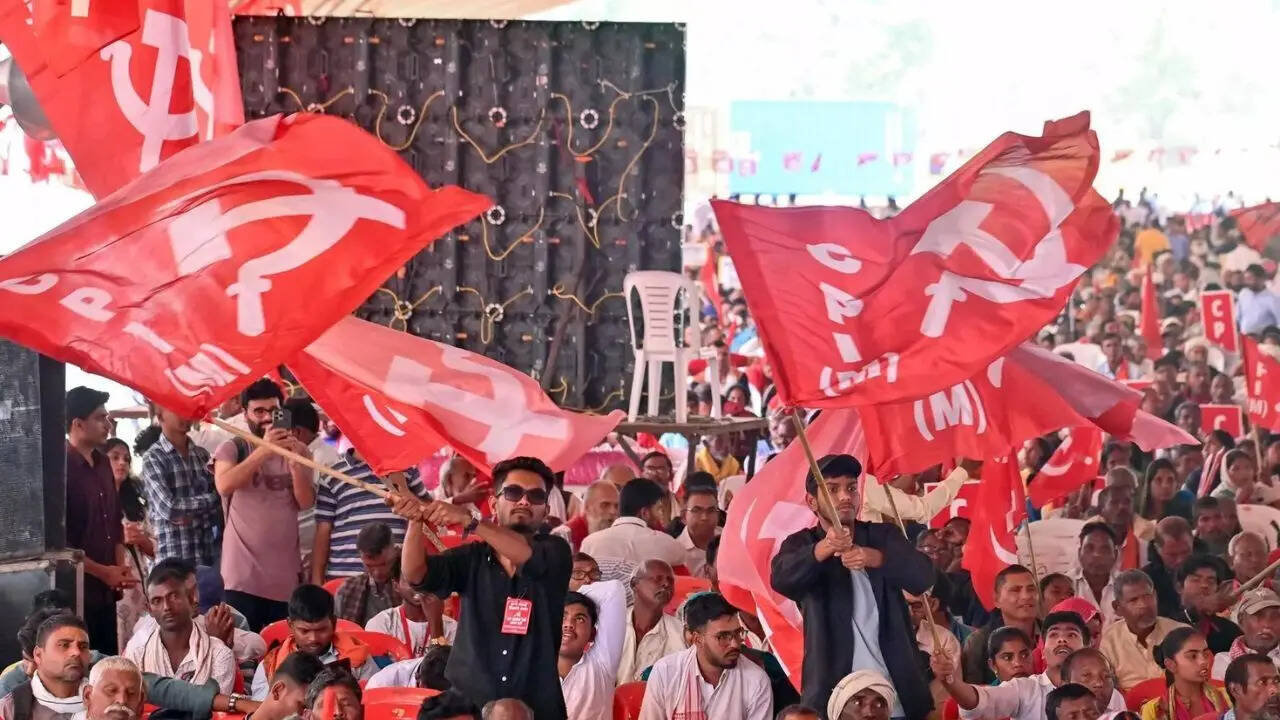
left connectionIt is no coincidence that the rise of the Ezhavas coincided with the emergence of Left politics in Kerala. Ideological overlap was almost natural. The community, shaped by a political movement rooted in anti-caste reform and class struggle, found common ground.By the 1930s and 1940s, many of Narayana Guru’s followers were actively involved in the early communist movement. Over time, the Ezhavas became the backbone of leftist parties, especially the Communist Party of India (CPI) and the Communist Party of India Marxist (CPM). His support was not episodic. It was structural.
2021 Representation of castes and communities in the Kerala State Assembly
The numbers highlight this relationship. This community constitutes about 23 percent of the population of Kerala, making it the largest Hindu caste group in the state. Their presence is geographically spread across Travancore, central Kerala and parts of Malabar, ensuring influence across entire regions rather than isolated localities.Electorally, this translated into continued support for the Left Democratic Front (LDF). Leadership positions within the Left also reflected this bond. Chief ministers like VS Achuthananathan and Pinarayi Vijayan emerged from the community, strengthening the notion of representation and alignment.The assembly structure further exposes their weight. Ezhava MLAs hold about 19 per cent of the seats, a significant share in a state where no single community dominates more than a quarter of the assembly. Their rise since the late 1980s has also coincided with the decline of other backward caste groups, strengthening their position as the most politically influential class within the OBC category.Stance towards union?What appears stable on the surface is undergoing slow but visible change. Recent election cycles, especially the Lok Sabha elections, have exposed cracks in the long-standing alliance between the Ezhavas and the Left.The rising vote share of the Bharatiya Janata Party (BJP) in Kerala, which has reached almost 20 per cent, has been partly attributed to infiltration into the Ezhava base. Constituencies like Thiruvananthapuram, Alappuzha, Attingal and Kottayam have shown signs of this change. The BJP’s victory in Thrissur, its first Lok Sabha seat in the state, has added symbolic weight to this trend.
Sub-regions of Kerala
In many assembly constituencies, the party has emerged as the leading force on the basis of vote share, a first in the political history of Kerala. Figures alone don’t tell the whole story, but they indicate a change that is no longer marginal.At the center of this realignment is the emerging role of the SNDP Yogam and its leadership. The allegation by Left leaders that a section of the organization is associating with the Sangh Parivar has met with both denial and defiance. Leaders within the SNDP argue that this change is a response to perceived neglect and political marginalization.This argument is framed in the context of betrayal. The community which was the backbone of communist movements has become a vote bank. That representation has not translated into equitable distribution of power or opportunities. Those policies are seen as favoring other communities at their expense.These assumptions, whether entirely accurate or politically amplified, have created fertile ground for alternative political narratives.
Distribution of castes and communities among MLAs of parties in 2021 elections
push factorMany factors are driving this shift, and they are not entirely ideological. Economic change is one of the most important.Kerala’s economy has moved away from agricultural structures towards services, migration induced remittances and emerging sectors such as information technology and tourism. Within the Ezhava community, this change has created divisions. A segment has climbed the economic ladder by becoming professionals, entrepreneurs, and part of the global workforce. Another large section is engaged in traditional occupations or informal labour, facing economic uncertainty.
In the elections of 2016 and 2019, parties got votes according to religion and caste.
This divergence has created new aspirations and frustrations. Young, educated members of the community often find limited opportunities within the state, leading to migration or dissatisfaction. Welfare schemes, while providing assistance, are considered inadequate to address structural challenges.Political messages have taken advantage of these sentiments. The idea that the Left has shifted its focus towards minority appeasement, whether accurate or not, has been a recurring theme in the rhetoric of leaders trying to attract the community to alternative platforms.role of identity politicsThe attempt to bring the Ezhavas into the fold of broader Hinduism represents a significant deviation from their historical trajectory. The reformist heritage of the community, which is rooted in anti-caste principles and universalism, is uncomfortable with identity-based mobilization.Critics argue that this change risks weakening the foundation laid by Narayana Guru. Voices within the community, including religious and social institutions such as the Sivagiri Math, have expressed concern over the politicization of the Guru’s teachings.At the same time, proponents of change argue that political realities have changed. Communities will have to adopt new alignments to secure their interests. That ideological purity cannot come at the cost of political relevance.This tension between heritage and practicality is ongoing within the community, making it far from a monolithic voting block.2026 election mathematicsAs Kerala heads towards the 2026 assembly elections, the importance of the Ezhava vote becomes even more evident. In a state where no one community dominates, even small changes can have a big impact.The distribution of Ezhava voters across different regions means that their influence is not limited to a handful of constituencies. They play a role in shaping the results in dozens of seats, especially in interior districts where their presence is strong.
Kerala party-wise seats
The Left Democratic Front has continued to field Ezhava candidates in greater proportion than its rivals, reflecting its awareness of this importance. However, candidate selection alone may not be enough if voter sentiment continues to change.The United Democratic Front, though historically less dependent on the Ezhava base, may indirectly benefit from any fragmentation of votes that weakens the Left.The strategy is clear for BJP and its allies. Consolidate incremental gains, deepen engagement through organizational networks such as SNDP branches and present yourself as a viable alternative. Even if outright victory remains challenging, increasing vote share and influencing seat outcomes could reshape the political landscape.
beyond the numbersLimiting the Ezhava community to mere electoral arithmetic would miss a larger point. Their importance lies not just in numbers but in the ideas they have historically represented.From early petitions against discrimination to leading social reform movements, from shaping leftist politics to now questioning it, the community has consistently been at the forefront of Kerala’s socio-political development.Their current intersection reflects broader changes within the state. The tension between welfare and development, identity and ideology, tradition and modernity. How the Ezhavas embrace these choices will determine the direction Kerala may take.A sudden, dramatic realignment is unlikely to arise in the 2026 assembly elections. Political changes in Kerala are gradual, layered and shaped by multiple factors. But the direction of the movement is becoming clear.
Party-wise seat share per year in Kerala
If the Left can address the economic and representational concerns of the Ezhava community, it can retain its core support while adapting to the new realities. If not, erosion may deepen, creating space for competitors to expand.The challenge for the community is equally complex. Balancing historical legacy with contemporary aspirations, resisting divisive politics while demanding greater influence, and ensuring that political choices translate into concrete benefits.It is certain that the Ezhavas will remain at the center of Kerala’s political story. Not as passive voters, but as active participants shaping the outcomes.And as April 9 approaches, the question is no longer whether they matter or not. This time they will choose the case in a similar manner.


