



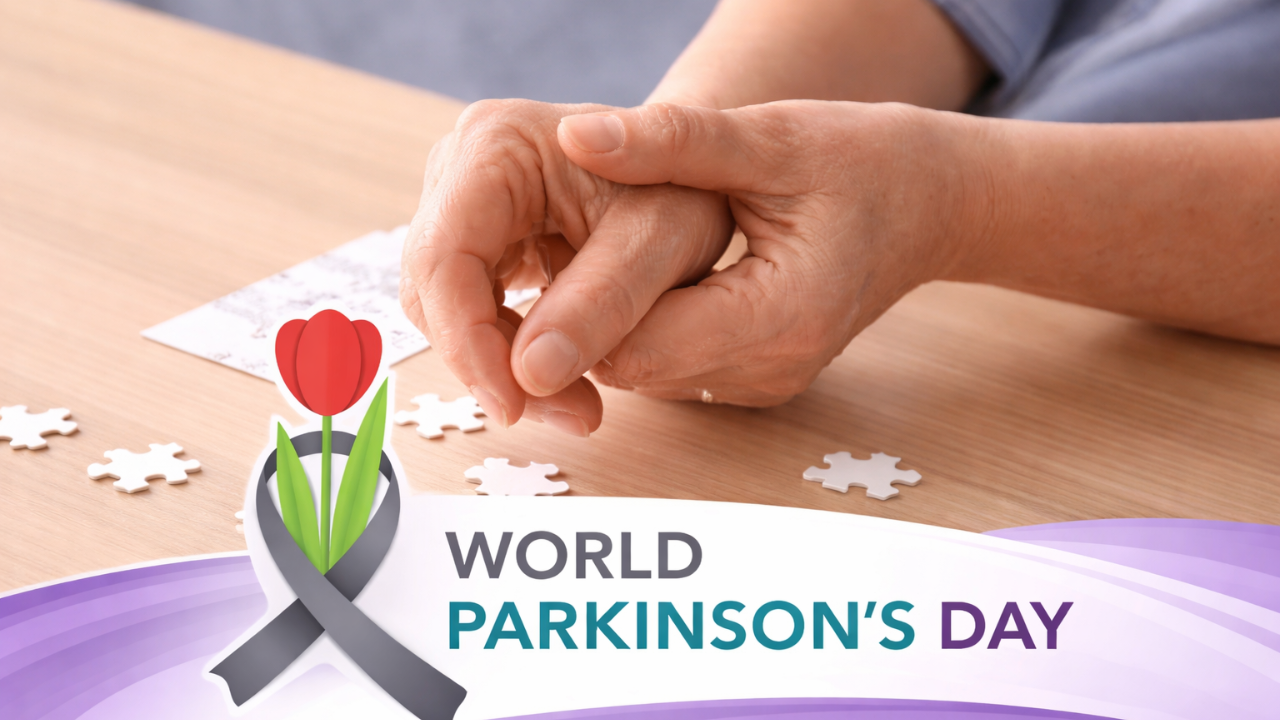
Meet Mr. Bipin. He is about to turn 62. These days, he pauses before signing his name, his hands trembling as he tries to hold the pen. The work which was simple earlier, now requires a lot of hard work. His gait has slowed, his steps have become shorter, and sometimes he stumbles or loses balance without warning.Mr. Bipin, who never forgot to take a walk around the house in the evening, now skips it almost every day. Their body often feels stiff, their face less expressive than before. At night, his sleep is restless, and during the day, constant fatigue and anxiety leave him constantly restless and tired.At first, it’s easy to dismiss the signs as aging, stress, or just “weakness,” as some people say. Sudden tremors draw curious glances, slowness draws impatience, sometimes even from members of his family. The conversation begins to feel natural and gradually he begins to withdraw, reluctant to explain what he himself does not fully understand.For months, the symptoms remain unknown, often dismissed as stress or aging, until a clinical diagnosis brings difficult clarity: He has Parkinson’s disease, one of the fastest growing neurological conditions globally, affecting approximately 10 million people worldwide.
What is Parkinson’s disease?
According to WHO, Parkinson’s disease (PD) is a progressive neurodegenerative brain disorder that causes problems with movement, mental health, sleep, pain and other health problems.It develops when nerve cells in a part of the brain called the substantia nigra gradually become damaged or die. These cells normally produce dopamine, a chemical that helps coordinate smooth and controlled movement of muscles. As dopamine levels decrease, the brain’s ability to control movement is impaired.This condition usually affects motor skills, coordination, and causes tremors (involuntary tremors), slowness of movement (bradykinesia), muscle stiffness, and problems with balance and coordination. Over time, people may also experience changes in posture, decreased facial expression, slowed speech, and shortened handwriting. In addition to activity-related symptoms, Parkinson’s can also affect sleep, cognition, hearing, mood, memory, and overall energy levels.Parkinson’s disease is long-term and progressive, meaning that symptoms generally worsen gradually over time, although the rate of progression varies widely from person to person.
What causes Parkinson’s disease?
The exact cause of Parkinson’s disease is still not fully understood. It is now widely accepted that the condition develops over time due to a combination of genetic and environmental risk factors, as well as biological changes that occur in the brain.At the heart of the disease is the gradual destruction of dopamine-producing neurons in an area of the brain called the substantia nigra. This reduces dopamine levels, which disrupts the brain circuits responsible for smooth and coordinated movement.Another key feature seen in Parkinson’s is the abnormal accumulation of a protein called alpha-synuclein. This protein forms clusters inside nerve cells known as Lewy bodies and is strongly linked to nerve cell dysfunction and degeneration.Researchers believe that several factors may contribute to these changes, including age, genetic susceptibility in some cases, and environmental exposures such as pesticides and certain toxins. However, no single cause has been identified, and in most patients, the disease appears to develop sporadically without a clear trigger.
Beyond the tremors: the hidden side of Parkinson’s
Parkinson’s is often associated with visible symptoms: tremors, stiffness, and slowed movements. But medically, it is a progressive neurological condition that starts deep within the brain. It develops when nerve cells that produce dopamine, a chemical needed for smooth, coordinated movement, gradually degenerate. As dopamine levels drop, the brain’s ability to control movement and coordination weakens.
parkinson’s disease
While motor symptoms are the most recognizable, the disease extends far beyond movement. Non-motor symptoms, often subtle and easily noticed, may appear years before tremors or stiffness. These include sleep disturbances, fatigue, mood swings, loss of smell, and cognitive slowing, making Parkinson’s as much a behavioral and psychological condition as it is a physical one.
Non-motor symptoms: missed early warning signs
Speaking to TOI, Dr Riaz Ahmed Syed, a pediatrician with over four decades of experience, pointed out that Parkinson’s is often misunderstood as only a movement disorder, while a large part of its burden comes from symptoms that are less visible.“Most people think of tremors, stiffness and slowness. But a large part of the disease lies in non-motor symptoms, which often go overlooked,” he said.According to him, mood changes such as anxiety, depression and apathy as well as slowing of thought and cognitive decline are common but less recognized. Patients may also experience loss of smell, constipation, urinary urges, sleep disturbances, and difficulty swallowing, symptoms that may appear years before classic motor signs.
.
“These symptoms are not specific and are often ignored. But if identified early, we can start treatment sooner and manage the condition better,” he said.
Treatment and management of symptoms
Parkinson’s is a progressive and degenerative condition, meaning symptoms get worse over time. Currently, there is no definitive cure, but treatment can significantly improve quality of life.“In younger patients, we may start with dopamine agonists, which help increase dopamine activity in the brain. After the age of 50, drugs like levodopa are more commonly used,” said Dr Syed.Other medications, including MAO inhibitors and amantadine, may also be prescribed depending on the patient’s condition. In more advanced cases, therapies such as deep brain stimulation can help control severe tremors.“Instead of looking for a permanent cure, the focus should be on consistent medication, regular follow-up and proper management,” he said.
Who is at risk?
Age remains the strongest risk factor, with most cases developing after age 60. However, Parkinson’s is not just a disease of the elderly; Early cases may appear, sometimes even before age 50.The exact cause is unclear, but experts believe a mixture of genetic predisposition and environmental exposures plays a role. The risk may be higher in individuals with a family history of Parkinson’s, as well as in people who are exposed to certain toxins or pesticides over time.Men are slightly more likely to develop the condition than women, although the causes are still being studied.Despite these risk factors, many patients like Mr. Bipin develop Parkinson’s without any apparent warning or identifiable cause.
The invisible burden: caregiving and social stigma
Beyond the physical symptoms lies a deeper, often unspoken challenge: social and emotional isolation.Patients may gradually withdraw from social interaction, not because they want to, but because the disease makes communication and movement difficult. Slurred speech, reduced facial expressions, and physical limitations may be misinterpreted as disinterest or aloofness.“Patients become withdrawn and families sometimes don’t understand why,” Dr. Syed said.Where awareness remains limited, this can lead to stigma, misunderstanding and delayed care. At the same time, it can also have an increased emotional and physical impact on families taking on the role of caregiver, managing medications, maintaining daily routines, and meeting emotional needs.
everyday challenges
Parkinson’s affects even the most simple daily activities. Tasks like getting up from a chair, turning while walking, going to the washroom or swallowing food may become difficult.“A misconception is that patients should try to walk faster. This may actually increase the risk of falls,” warns Dr. Syed.He stressed the need to adapt to the environment, from the use of assistive devices to modifications in diet. Soft or semi-solid foods can help people with difficulty swallowing, while fiber-rich diets can reduce constipation, which is a common problem.Physiotherapy and rehabilitation are essential to maintain mobility and independence, he said.
“The Million-Dollar Question”: Can Parkinson’s disease be cured? ?
Dr. Syed addressed one of the most frequently asked concerns, what he referred to as the “million-dollar question” asked by patients and families, is whether there is a permanent cure for Parkinson’s disease. He explained that it is a progressive, degenerative disorder that worsens over time and there is currently no definitive cure, although treatment can help manage symptoms and improve quality of life.“The million-dollar question is, Doctor, can I have a permanent cure? We all know that Parkinson’s disease is a progressive disorder, a degenerative disorder, and as the years go by, patients get worse. There are staging procedures for Parkinson’s. But the million-dollar question is: Can I have a permanent cure? Unfortunately, at this time, there is no specific cure for Parkinson’s disease.“Although there is currently no cure, a combination of medications, physical therapy, lifestyle adjustments, and, in some cases, surgical treatment can help manage symptoms and improve quality of life.
Why does this conversation matter now?
On World Parkinson’s Day, the focus is not just on the disease, but also on awareness, early detection and support systems.According to a study titled Neuropalliative care for Parkinson’s disease in IndiaThe prevalence of Parkinson’s disease (PD) in India accounts for approximately 10% of the global burden, making it an important public health concern.India is expected to see a rise in Parkinson’s cases in the coming years, which could increase the burden on families and caregivers, experts said at the 6th International Annual Symposium-2026 in Kerala. Yet awareness of early symptoms and non-motor signs remains low.What is needed is not only better treatment, but also earlier detection, reduced stigma and stronger support networks, so that patients do not have to suffer in silence.
looking ahead
Although there is no cure yet, ongoing research offers cautious optimism. New drug delivery systems and emerging therapeutics are being explored in stem cell research, particularly induced pluripotent stem cells and human pluripotent stem cells.For now, doctors emphasize a holistic approach combining medication, mental health support, physiotherapy and family involvement.“Parkinson’s is not just about tremors or movements. It affects the entire life of the patient and family,” said Dr. Syed.Parkinson’s disease is increasingly being recognized as a condition that begins long before visible symptoms such as tremors appear. Evidence suggests that as many as half of the dopamine-producing neurons in the brain may already be destroyed before a clinical diagnosis is made, underscoring how quietly the disease progresses in its early stages.This makes early recognition of non-motor symptoms such as sleep disturbance, loss of smell, mood changes, and constipation particularly important. Greater awareness among families and caregivers can help ensure prompt medical attention, timely diagnosis, and better symptom management.At the same time, experts emphasize that medical care alone is not enough. Social acceptance and understanding play an important role, as patients often face isolation due to slow speech, lack of facial expression, and difficulty with movement, which is often misunderstood. Reducing stigma can go a long way in improving mental well-being and quality of life.


