



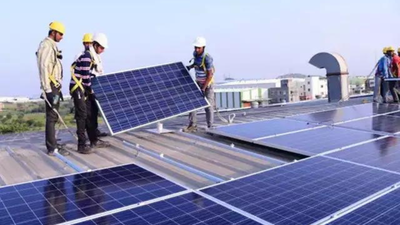
New Delhi: More than 40 lakh households now benefit from rooftop solar systems under PM Surya Ghar Yojana, contributing to the nation’s clean energy transition, against a target of having one crore homes covered by March next year.Launched in Feb 2024, the scheme aims to bring rooftop solar to one crore Indian homes by March 2027. Officials said the scheme has picked up an “unprecedented” pace of adoption, with more than one lakh households benefiting from it every eight days in the month of May. Gujarat has the highest number of installations at 6.8 lakh, followed by Maharashtra with six lakh and Uttar Pradesh with 5.6 lakhWhile the total installed solar power capacity in the country is estimated at 154 GW, rooftop systems contribute 11.8 GW with over 32 lakh rooftop solar installations.The difference between the number of installations (physical panels mounted) and households covered occurs because multiple residential units can share a single, larger rooftop system, which is common in apartment complexes, cooperative housing societies and joint-family homes.With the installation of a 3-kilowatt (kW) rooftop solar system, households can get up to 300 units of free electricity per month. The Centre provides a subsidy of up to Rs 78,000 for a 3 kW rooftop solar system, while most states also offer separate subsidies. Although consumers can install higher-capacity rooftop systems, the subsidy component is restricted to installations of up to 3 kW. The Centre has so far released subsidies worth Rs 22,600 crore.Gujarat has the highest number of installations at 6.8 lakh, followed by six lakh in Maharashtra, and 5.6 lakh in Uttar Pradesh.The ministry said homeowners can also earn income by feeding surplus electricity back into the grid through net metering, effectively turning rooftops into income-generating assets.“More than a renewable energy initiative, this transformative scheme is turning citizens from power consumers to power producers, enabling families to reduce electricity expenses, benefit from govt subsidies and move towards zero electricity bills,” new and renewable energy minister Pralhad Joshi said on X.


