



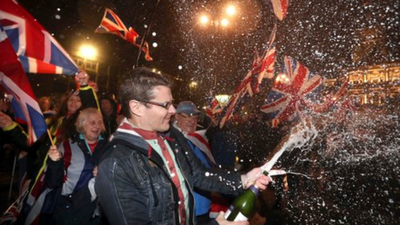
Ten years after Britain voted to leave the European Union, the debate over Brexit remains as intense as ever with questions over economic growth, immigration and Britain’s global standing continuing to divide the country.On June 23, 2016, 52% of voters backed leaving the EU, triggering the biggest political and economic shift in Britain since World War II, according to AP. While Brexit formally came into force years later after lengthy negotiations, its consequences are still being debated.
Economic promises meet reality
Supporters of Brexit argued that Britain would thrive outside the EU, regain control over policymaking and strike new trade deals around the world.But economists say the expected economic boost has not materialised.Businesses continue to face customs paperwork, border checks, certifications and other non-tariff barriers while trading with the EU, which remains Britain’s largest trading partner. Several trade deals championed by Brexit supporters, including one with the United States, have yet to emerge.Experts estimate the British economy is between 4% and 8% smaller than it would have been had the country remained in the bloc.“Brexit has made the UK economy smaller than it otherwise would have been,” said Jonathan Portes, professor at King’s College London, AP quoted.“The effect has not been a sudden collapse, but a gradual and cumulative drag on trade, investment and productivity,” he wrote in an article for The UK in a Changing Europe think tank.Brexit supporters argue that the project should be judged over decades rather than years and say greater control over domestic policies will eventually outweigh short-term economic disruption.
Immigration at the heart of the debate
One of the central promises of the Brexit campaign was tighter control over immigration.While migration from EU countries has fallen sharply, arrivals from non-EU nations increased after changes to visa rules designed to address labour shortages in sectors such as healthcare and elderly care.Net migration has since fallen from more than 900,000 in 2023 to 171,000 last year.However, public anger has increasingly focused on asylum seekers arriving in small boats across the English Channel. The issue has become one of Britain’s most contentious political debates despite accounting for only a fraction of overall migration.
Brexit reshaped British politics
The referendum also transformed Britain’s political landscape.The Conservatives, who spent years battling divisions over Europe, were voted out of office in 2024 after 14 years in power. Prime Minister Keir Starmer’s Labour government has also struggled to win over voters, while support for Reform UK, led by Brexit campaigner Nigel Farage, has surged.At the same time, public opinion appears to be shifting.According to Ipsos surveys, 52% of Britons would support rejoining the EU, while 33% oppose the idea. The polling firm also found that 48% believe Brexit has gone worse than expected, compared with just 9% who think it has gone better.Nearly half of respondents said they would support another referendum on EU membership.
Can Britain reverse course?
Despite changing public sentiment, reversing Brexit remains politically difficult.The Labour government has ruled out rejoining the EU or returning to the bloc’s single market, opting instead for a “reset” in relations with Brussels focused on reducing trade friction.Andy Burnham, viewed as a possible future Labour leader, recently dismissed suggestions that Britain should reconsider EU membership.“I am not proposing that the U.K. considers rejoining the EU,” Burnham said.“I respect the decision that was made at the referendum and it is going to undermine everything I have said about strengthening democracy if we don’t respect that vote.”A decade after the referendum, Brexit may be legally complete, but its economic, political and social consequences continue to shape Britain’s future


