



What do the assembly election results in Maharashtra and Jharkhand mean for the country’s top leaders? Prashant Jha is analyzing the decision and its impact.
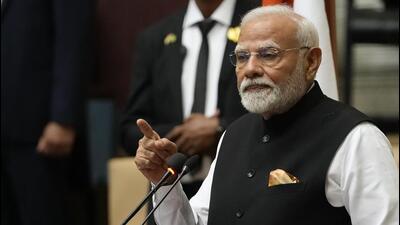
Narendra Modi
Maharashtra The Lok Sabha election results have upended the political landscape and removed any doubt about who will remain the most influential person in Indian politics. Calling it a comeback is a misnomer because Narendra Modi Didn’t go anywhere; He returned to office for the third time that summer; And the victory in Haryana had already boosted the morale of the party. But the comeback still perhaps captures the spirit of what has just happened, as Modi’s political capital has been largely replenished following the assembly election results in Maharashtra, India’s most important state in terms of economic weight and political In terms of weight, it is at second place after Uttar Pradesh. , One victory would have been enough but the scale of the victory really makes Modi strong.
This restored political capital strengthens Modi’s control over the government and the party. It silences those who might have notions of secretly or publicly challenging Modi’s political choices in the party or the broader Sangh Parivar. This gives the Prime Minister political space for at least another year until the elections. Bihar By the end of 2025, to focus on implementing its agenda without major electoral hurdles (till then only Delhi has elections). This ensures that the BJP’s influence over corporate India in Mumbai remains intact. And this has once again disappointed Modi’s rivals, especially the Congress. Winning Jharkhand would have been icing on the cake for the party and there will be regret of not winning Ranchi, but the real victory is Maharashtra. And now it is up to Modi to shape the future of the state and give it the direction of political stability and governance that it has lacked for the last five years.
Devendra Fadnavis
Very few leaders have gone through such political changes Devendra Fadnavis Have experienced in the last decade. A rising star from Nagpur, chosen and made chief minister largely because the Rashtriya Swayamsevak Sangh liked him and the BJP national leadership wanted to choose a young leader in 2014, Fadnavis honed his political and administrative skills, only To become a victim of BJP – Shiv Sena broke down on the issue of who will be the CM in 2019.
After failed political experiments, a stint in the opposition, an active role in dividing two regional parties, a return to power, a demotion to the post of Deputy Chief Minister (ostensibly for the party but perhaps because others wanted to pull him down a notch or two) Were), and setback in Lok Sabha elections, Fadnavis is back – and how. The nature and scale of Maharashtra’s victory has again put Fadnavis in the top echelon of state leaders in the BJP along with Yogi Adityanath and Himanta Biswa Sarma. This prepares them for leadership in Maharashtra or an important political post at the Centre. His strong Sangh roots, access to capital due to his continued influence on power in Mumbai, his tenure in the government and now his proven ability to survive politically adverse times while remaining a disciplined soldier, will make him the target when the race for national leadership comes around. Everything will be in his favor. The BJP will launch at some point in the next decade.
Sharad Pawar
When? Sharad Pawar Entered the Maharashtra Assembly for the first time, Indira Gandhi had just become Prime Minister, and the opposition was attempting its first broad anti-Congress coalition under the leadership of Ram Manohar Lohia. It was 1967. It is quite incredible that Pawar, now 83, remains such a central actor in state politics even after 57 years. But while his longevity and shrewdness have often been praised, this will likely be the last election in which he will play such a central role, posing a crisis for Pawar, his family and his party.
The scale of the damage and losses establish Ajit Pawar – not Supriya Sule – as the true heir to Sharad Pawar’s legacy, at least as far as state politics is concerned, despite Sule’s high profile in Delhi. yes. This leaves the father and daughter with the option of either merging with the Congress, which Pawar has mentioned, or attempting to revive the party, a task Sule is considering considering his older brother Pawar. Will have to be done in view of, or an effort will have to be made. Reconciliation with nephew, an exercise that will seal Ajit Pawar’s leadership position! Sharad Pawar, the boy from Baramati who became the biggest politician of Indian politics, has to take some tough decisions ahead. And he doesn’t have time on his side.
Uddhav Thackeray
Uddhav Thackeray In 2019 he had a choice. He could have let Devendra Fadnavis become chief minister, accepting the fact that the terms of the alliance his father had forged with Pramod Mahajan decades ago had changed and the BJP was now the senior partner, and continued to exercise power from Matoshree. And prepared his son Aditya to lead the party in the government as a minister and waited to see a change in politics. Instead, Thackeray decided that he would make the same claim that he had said the BJP had promised him the chief ministerial post. In the process, he broke the saffron alliance, sided with ideological opponents, formed the government (and became CM), saw his party disintegrate and was left in the opposition again. This election was a referendum on their 2019 decision.
And people have spoken. Was it because Eknath Shinde’s army was stronger, or because he had the advantage of power, or because he was seen as the true ideological heir to Balasaheb’s legacy, or because Thackeray Sena cadres did not work for the alliance? , or whether it was the shift to a moderate urban party that separated the party from its roots, the truth is that Uddhav and Aaditya Thackeray have led to a humiliating defeat. This will have an impact on maintaining their party structure, retaining workers, fighting the BJP or even becoming a strong opposition. The toughest political test of the father-son duo is about to come.
Eknath Shinde
Those who did not understand the intricacies of Maharashtra politics probably had no idea of this. Eknath Shinde Unless he decides to part ways with Uddhav Thackeray, forge an alliance with the BJP and lead the Maharashtra government in 2022. Then the Lok Sabha results emboldened those who believed Shinde had made a mistake; He was, at best, a fleeting political phenomenon; And that Sena workers will never leave the Thackeray family. And yet, proving that politics is not linear and predetermined and that it is not always smart to make lazy assumptions about political leaders, Eknath Shinde had proved his doubters wrong in the most effective way possible – by winning an election. Which makes his army the real inheritor of the army’s legacy in Maharashtra, at least for now.
Shinde’s party actually performed relatively well in the Lok Sabha elections as well, with a higher strike rate than any other ally in the grand alliance. He pushed welfare schemes, including cash transfers for women, which many see as a gamechanger in this election. An old party organizer from Balasaheb’s time, Shinde had a stronger hold on the Sena’s local networks than many anticipated. And BJP cleverly allowed him to remain the face of the alliance so as to garner as many votes as possible. What happens next is unclear and will depend on power negotiations within the alliance as to who becomes CM, but Shinde is now a strong regional leader in his own right.
Ajit Pawar
Under the guidance of his uncle Sharad Pawar, Ajit Pawar Formed the Nationalist Congress Party in Maharashtra. He became the face of both the good and the bad of the party – good in terms of the NCP’s strong organizational network in western Maharashtra and its absolute loyalty among supporters who had seen the solid economic good done by Pawar for the region; Bad in the context of the perceived, alleged and real machine of corruption and patronage that the NCP presided over. And that’s why when Ajit Pawar formed an alliance with the BJP, Sharad Pawar’s NCP had a clear objective – to stop the nephew from snatching away the good (organisation), and blaming him for the bad (corruption).
It didn’t work. Ajit Pawar, good and bad, has no bearing on him, as was the case during the Lok Sabha elections, when elements within the larger Sangh Parivar were unhappy with the BJP forging an alliance with a man who practiced that kind of politics. It represented the kind of politics the Sangh had claimed to fight. Come to work for Mahayuti. But differences within the Union have been resolved, and it is possible that in its centenary the larger objective of maintaining power in the Union’s home state will prevail. This gave Pawar the necessary external enabling environment to focus on the internal – and here lies the fact that he had a clear edge over Supriya Sule in terms of experience and hold on state politics and its networks. The victory allows Ajit Pawar to establish himself as the heir to the Pawar legacy and remain in power, while also ensuring that the corruption cases against him remain dormant.
Hemant Soren
Voters may not like corruption. But voters also don’t like it when they feel that a leader has been selectively targeted for corruption. And if the leader is from a marginalized social group that has often been victimized by the state and is familiar with the distortions in implementing the rule of law, the reaction is even more intense. This has happened repeatedly in Indian electoral history. Hemant SorenHis remarkable political comeback will be recorded as a part of this history – as a political leader who, after being politically persecuted, braved the legal hurdles that came in his way to follow the political path of democratic mandate. Was seen coming back to power through.
But Soren’s victory is not just a reflection of his political flexibility; It is also a reminder that in politics, merely engineering division, plotting communal divide and trying to impose one’s ideology on a community that has its own history and struggles and issues does not always work. This is what BJP was doing with the tribals. And Soren endured it all, thanks to his father’s legacy among tribal voters, his wife’s courage in standing up when he was arrested, his party’s organizational roots and his colleagues. The Jharkhand victory is an affirmation of Soren’s legacy and gives Hemant an opportunity to convert popular goodwill and newly acquired political power into focused governance.
Rahul Gandhi
Perhaps no leader has wasted political opportunities so many times Rahul GandhiIt was only a matter of summer when a better-than-expected performance in the Lok Sabha cemented the Congress’s position as the other pole in Indian politics, allowed Gandhi to become leader of the opposition, made his fans feel innocent and even That even his critics were forced to make proposals. His utmost praise. It was all based on the Congress winning 99 seats, its third-worst performance in history, but only because the bar had fallen so low the previous two times, the defeat felt like a victory. Yet, within six months, Gandhi presided over a return to business as usual.
If, in Haryana, the defeat was due to factional trouble within the Congress and fights among its caste leaders, in Maharashtra, there was trouble within the alliance. Certainly, Congress was one of the three pillars of the MVA. But as a party that ruled Maharashtra 15 years ago, from 1999 to 2014, and now has less than a tenth of the seats in the assembly, the national leadership cannot shirk responsibility. Gandhi should have managed differences within the alliance, strongly countered the government’s new welfare efforts and strengthened the organization on the ground. If the Congress can’t even seize the political opportunity in India’s richest state, having delivered a stinging rebuke to the BJP just six months ago, the impression is that Gandhi is out of touch, or not serious, or not in control. Are, or not coherent, bound to re-emerge. This will also reduce his ability to unite the opposition in Parliament. And this weakens their position in making a case against the government. Jharkhand consoles. But the task of rebuilding the Congress became more difficult.


