



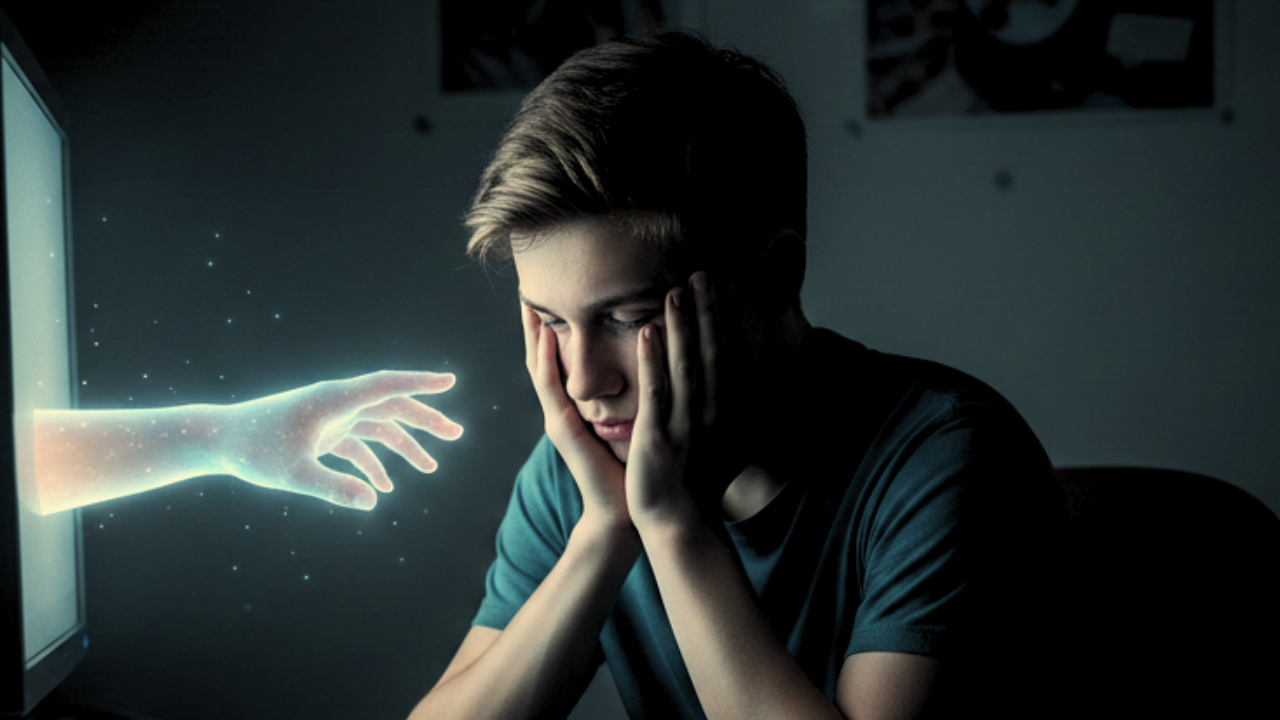
They swear it’s harmless – just curiosity, just another discussion on the phone. But somewhere between the late-night answers and the ethereal comfort of “listening,” a quiet shift has begun.AI assistants, once designed solely for utility, are gradually becoming mirrors, confidants, and emotional anchors. People now talk to chatbots like therapists, partners, and best friends, creating bonds that feel sticky, addictive, and extremely comforting.In cities and bedrooms, people are forming strange, sticky bonds with their AI “best friends,” connections far deeper and more personal than they will ever admit. In that quiet space between code and confession, the line between fantasy and reality begins to blur.And as this revolution settles into everyday life, one question becomes harder to ignore: Who is shaping whom?dawn of a different futureAll those sci-fi movies promised us flying cars, holograms, and robot butlers.What we actually got was something that was quieter – and far more aggressive.Instead of machines that lift our physical burden, we have systems that pick up, rearrange, and sometimes even replace our mental load. What once seemed miraculous now has a strange psychological flavour.Supraja Jayasankaran, founder and counseling psychologist at Mind Tattva, explains how people are developing emotional dependency on AI chatbots. “I’ve got customers who are chatting and trusting AI as their companion or therapist. It’s very common to see such customers day in and day out,” she shares, “Customers have shared that when they’re bored, when they’re in crisis, when they’re confused they want immediate attention and answers from AI, just because AI apps are now at the tap of your finger and give realistic answers and sometimes help them face their feelings, thoughts and emotions. Let’s comfort them instead of asking for it.,impulse of urgencyWhatever was in your mind can appear on your screen without any friction. Need a 3,000-word article by midnight? Just describe it. Is the college assignment way past its due date? Is there any need to panic? Offload the stress to your AI. Then came the wave of image creation which has not stopped till date. Be it the pioneering Ghibli trend, the Nano Banana or a Polaroid of your younger self. Simple signs being actively shared in public discussion opened up the universe of seeing oneself in anything the mind could imagine.Undoubtedly, this is the Artificial Intelligence revolution.The gap between attraction and spectacle was bridged when one request made each beloved memory a part of the Ghibli universe.
Ghibli version of Kim Jong Un and Vladimir Putin
After some time, the trend of nano banana started. People recreate their photos as these 3D sculptures, creating real-life action figures.
People create their own images as 3D models in nano banana trend enabled by Google Gemini
The pictures with his younger self created a bridge that had only ever been imagined. The scene became a quiet, healing conversation.
Portrait with Younger Self
This is what artificial intelligence enables.However, when we look beyond these trends, AI also shows its ability to craft false realities. Image creation has become so precise that people now question the authenticity of almost every photo they find online.So how did we travel so far, so fast and where exactly are we going?Before attempting to answer, let’s pause for a little experiment. Here’s a bunch of images. Try and decode which one is AI and which one is a real image.
(@Arminn_A)
(@shulian)
(@RomainHedouin)
(@joonmts)
(@techdroider)
How many did you get right? Let us make it a little easier for you. Every single one of these was AI generated.When everything seems real, nothing seems believable.Somewhere along the way, the term “AI” itself moved into slang territory, being a shorthand for something supernatural, unreal or ‘too true to be true’. Those comments you see online that say, “I showed this to my dad, he says it’s AI,” capture the absurdity of it all. The same tool that was supposed to bridge imagination and reality is now becoming shorthand for something that feels completely unreal.Imagination, Image and IllusionOver time, artificial intelligence that stood out for its distortions began to gain momentum. Technology was accelerated, enhanced and spread. Just like the boom of social media is redefining the idea of individuality, sending people to extremes in the pursuit of that picture-perfect life. AI also distorted realities.Today, people aren’t just interrogating chatbots for answers about history or code. They have a partner who can play a role in any conversation. Yashashvi Vashishtha told why he talked to AI.“Recently, while planning a trip to Jagannath Puri, I created an itinerary with ChatGPT after doing my own research. But since it was my first time traveling so far, I still felt unsure about whether the plan would actually work,” he said, “To feel more comfortable and confident, I asked ChatGPT to advise and guide me in the form of Lord Jagannath. That experience helped me so much that now I do the same thing whenever I plan an important trip.,Psychologists explain that artificial intelligence provides the space that people seek to have unfiltered conversations. “AI provides a space where they can be honest without feeling guilty, and they can be heard without the risk of conflict, frustration or misunderstanding,” Supraja says, “It’s attractive because it’s a low-effort outlet.”oh psychosis: reach or abyssDespite awareness of reality, not all interactions with AI are on this light note. People also often rely on AI for their psychological support and diagnosis. “I have seen customers with disorders like OCD, bipolar and even customers with emotional turmoil take the help of AI to identify the symptoms of their condition, take help from AI to make a diagnosis and also look at their prognosis,” shares Jayasankaran. She says it is becoming common for people to seek help from AI without knowing the long-term consequences for their mental health and overall well-being.Recent data shows that nearly 70% of teens have tried using AI companions, and half of them regularly rely on these bots – for homework help, emotional support, or everyday decisions. Unfortunately, heartbreaking results have already emerged.A 14-year-old boy in Florida who was emotionally attached to a “Daenerys”-style AI bot has died by suicide. His mother filed a lawsuit against Character.AI.In another case, a 16-year-old boy named Adam Raine from California reportedly spent several months interacting with an AI companion who not only helped him deal with suicidal thoughts but also allegedly drafted his farewell note and isolated him from real people; Her parents are now suing OpenAI.In a separate incident, a man already fragile after a breakup was told by an AI chatbot that if he “believed strongly enough,” he could fly. A suggestion that led him to attempt a 19-story jump after talking for about 16 hours a day.These cases stand as a stark reminder: while AI companions provide convenience and comfort, they can also have devastating consequences when vulnerable individuals become emotionally dependent on them.Psychologists call this “AI psychosis.” It is not a medically diagnosed term, but with increasing cases of AI distorting people’s realities, it becomes important to discuss the consequences of relying on artificial intelligence for emotional support.People aren’t just entertained by these chatbots. They are falling prey to them. They name them, draw their pictures, become fascinated by them. It features fan art of impossibly attractive AI partners, the entire fantasy arc built around the ‘perfect chatbot boyfriend or girlfriend’.Supraja later explained the behavioral patterns of these customers looking for a friend in AI. “Many of them have experienced emotional unpredictability or feel that they can’t fully express themselves in their real relationships,” she says.AI seems to be an easy way out for people in trouble. They find instant acceptance for their unfiltered self in the positive nature of AI. There are past traumas and failures in relationships or difficult phases to endure that have kept people away from finding the relationships they desire in humans.“They may have a history of betrayal, inconsistency, or being rejected when expressing emotions, which makes the AI’s continued presence comforting,” Jayasankaran elaborated.Stepping outside the AI echo chamberTo what extent can AI fill the gap? What happens when the limit is reached?User Yashasvi pointed out how reactions become dull and lack depth after a time.“In later attempts, the reactions weren’t always as impressive; some felt somewhat AI-like and lacked the emotional engagement of the first one,” he explains. “However, after receiving these responses I still feel more confident, blessed and assured.”This reveals the facts stated by psychologists. AI cannot replace human intervention. It may not respond with the same empathy or tone of voice as a therapist or best friend.“Humans bring texture, warmth, sometimes experience or direct experience and presence. A real person is sitting with you in your pain, your silence, your successes. A human can challenge you, comfort you, and genuinely care about your well-being in a way a model or machine never can. This connection heals on many physical, mental levels, and emotional levels,” says Supraja.In the end, the story of AI is not just about technology taking over us, but about us bringing it into our lives.What we are left with is a quiet paradox: a technology powerful enough to simulate connection, yet ultimately incapable of offering the depth, nuance, and incompleteness that make real relationships meaningful.AI can soothe, support, and sometimes even surprise. But it cannot sit with us in our silences, understand our history, or heal the wounds inflicted by human hands.This revolution is reshaping our imaginations, our behaviors, and our emotional landscapes faster than we realize.


