



Kashi I played,Played in the ghat,Play Holi in Masane.It’s not just a line from a song that resonates across India, it’s a feeling that Banaras lives and breathes every year. In most parts of the country, Holi arrives with a riot of colours, gulal in the air, water splashes and laughter echoing in the narrow streets. But Holi does not erupt in pink and yellow colors on the ancient ghats of Kashi. Instead, it appears in pale grey, where devotees gather not with pitchkaris and gulal, but with sacred ashes lifted from cremation pyres, symbolizing the ultimate truth of life.Here, the color transforms into cinder. The laughter turns into resounding slogans of Har-Har Mahadev. The celebration sheds its carnival skin and turns into something contemplative, less frolic, more reckoning.This is Masaan Holi also known as Bhasma Holi or Shamshaan Holi, it is the Holi of the crematorium, where faith dances in the shadow of fire and mortality.
where fire never sleeps
Masan Holi is celebrated mainly at Manikarnika Ghat and Harishchandra Ghat, two holy places where funeral pyres burn almost continuously.The word “masan” comes from the Sanskrit “shamshan”, meaning cremation ground. In this city of salvation, where life and death co-exist without apology and where funeral pyres burn for eternity, the ashes of the departed become a medium of celebration.Ashes from cremation pyres are used in Holi of Masan. Rooted in Shaiva traditions, Masan Holi attracts Aghori sadhus, ascetics and devoted followers of Shiva – seekers who choose to face death rather than run away from it. Devotees apply ashes slowly, or Vibhuti (sacred ashes) upon each other, symbolizing the unbroken cycle of birth and death.
But Why is Masan Holi celebrated? ?
To understand Masan Holi, one has to first step into mythology.The festivities begin a day after Rangbhari Ekadashi at the Kashi Vishwanath temple. It is believed that this day symbolizes Goddess Parvati.Gauna” After her marriage to Shiva on Mahashivratri. While the divine marriage was celebrated grandly, legend says that certain divine beings, Yakshas, Gandharvas, Kinnaras were not part of the special guest list.
So what did Shiva do?
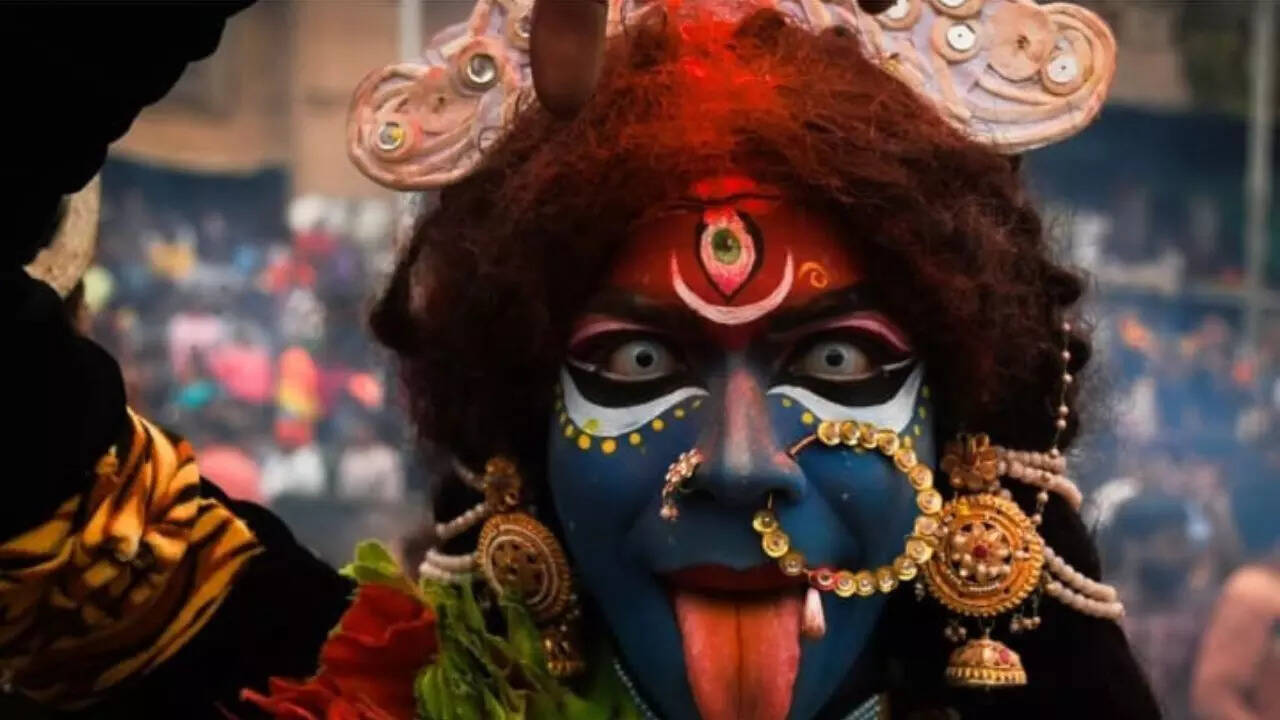
According to legend, the ascetic deity, dancer, mystic and original rule breaker decided to celebrate with himself by wrapping a live serpent as an ornament in a leopard skin. friends of the underworldHis companions at the cremation ground. But crematoriumThey played Holi with the ashes of burning pyres, dancing amidst the fire and smoke, chanting “Har Har Mahadev”.And thus this tradition began.
entering the gray zone
In my mid-20s, having been raised on stories of India’s layered spiritual traditions, I had long been curious about this practice, this raw, unclean ritual. Social media has turned Masaan Holi into a viral sensation. Aesthetic reels of ashen faces, slow motion chants, spirals of cinematic smoke. But what’s beyond the filtered frames?Determined to find out, I reached Banaras a day after Rangbhari Ekadashi. With only two days of a journalist’s week off at hand, I wrapped myself in all my clothes, ready for what most people call “the color game”, except here color was missing!The mood changed as we walked towards the ghats. The closer I came to Manikarnika, the denser the crowd became. The surging sea of humanity was moving in waves, devotees, children sitting on shoulders, saffron clad ascetics, Aghori sadhus with ash stained foreheads. The air echoed with chants and anticipation.And then the strange chaos began.
human whirlpool
What seemed like spiritual excitement from a distance turned into a human traffic jam when closer. I couldn’t see the headcount storm, but oh my god, it existed!Side by side a brigade is moving towards the same holy point. Neither could I get out nor could I move!The crowd went out of control. Elbows shook, slippers slipped and personal space evaporated into thin air. I found myself trapped in a swirling whirlpool of bodies, a buzzing swarm where neither retreat nor forward seemed possible.Were they all devotees? A seeker of God? Some, definitely. But others seemed to be thrill-seekers, more intoxicated with spectacle than purity. There was a scuffle. The chanting became louder. For a moment, I felt less like a pilgrim and more like a driftwood on a restless tide.There came a time when I had two options, either hold my breath or take off my slippers.Slipper lost.To this day, they rest somewhere on the ghats of Manikarnika, an unexpected gift from the ghats of Kashi.In that crush, I remembered reports of stampedes, of families separated, of devastating chaos. The thin line between devotion and perversion felt frighteningly real.Yet, just as suddenly as the chaos reached its peak, peace appeared.Freed from the human crowd, I finally reached the pier. The Ganga continued to flow with its usual indifference to human madness. I dipped my feet in the cool water, letting its calming rhythm steady my racing thoughts.Nearby, the rituals began at the Mahashamshan Nath temple, where the aarti flame flickered against the smoky backdrop. Devotees rubbed ashes on their foreheads and chanted “Har Har Mahadev” in unison, but not as a noise, but as an invocation.The ashes collected from the pyres were handled with quiet reverence. The atmosphere echoed with the steady rhythm of the drum, hymns echoed on the ghats. The procession passed through the narrow paths of the cremation ground, less a parade and more a pilgrimage.The symbolism is harsh yet profound, everything turns to ashes. Ego, beauty, status, ambition!playing holi together VibhutiDevotees symbolically give up pride and embrace mortality. It is purification not through color, but through confrontation.Death has not been ruled out here. It is accepted as a change, even celebrated.
A festival, transformed?
Local people talked openly about the change.“Ever since social media made it famous, the essence has changed,” an elderly resident told me. “Now there are fewer monks, more artists or performers who prepare for the event.”He wasn’t completely dismissive, just reflective.The performers now danced around the sacred fire, their movements indicated by the constant flickering of camera flashes. What was once an intimate, internal ritual is now unfolding before an eager audience, its stillness occasionally interrupted by the click of lenses and the blaring of recording phones.Was he right? Maybe yes. Probably not. After all, traditions evolve. But the tension between purity and spectacle was clear.This year, for the first time, the celebrations were confined within the Mahashamshan Nath temple premises. The authorities did not allow the public to play with pyre ashes directly on the ghats. Overcrowding, objections from members of the Kashi Vidvat Parishad and sections of the Dom Raja family as well as ongoing development works made the situation difficult to manage.The concerns were about adhering to scriptural norms and ensuring safety. With funeral processions going on simultaneously with the festivities, it became challenging to manage the space. Standing there with the ashes floating in the air like ghostly confetti, I realized something. Social media captures moments but there’s a big difference between seeing something online and actually experiencing it.Masaan Holi seeks immersion” meaning the festival cannot be understood through a quick video. it must happen felt !A one minute reel can beautify the smoke. But it cannot express the burden of mortality that hangs in the air. It cannot replicate the discomfort of being crushed in a crowd or the peace of being touched by the Ganga afterward.Masaan Holi is not entertainment. It is an existential encounter.You come curious. You stop thinking.
why would i go back
Despite the chaos, the lost slippers and the human crowd, if someone asks will I return? The answer is yes!Because beyond the huge crowds and demonstrative excitement, there was beauty. Raw, unsettling beauty.If the myths are to be believed, Shiva himself dances here every year, carefree, covered in ashes, unconcerned with worldly decorum. And in fleeting moments, amidst the chanting and smoke, you almost feel that presence.Banaras has a way of dissolving certainties. It reminds you that life is fragile, the ego is temporary, and death is not an end but a way.Masaan Holi is the paradox of Kashi! Chaotic yet peaceful, terrifying yet glorious. This is where colorless ashes become the brightest metaphor of all.And somewhere between the fire that never sleeps and the river that never stops flowing, you understand why this city plays Holi differently.Not with colors. But with impermanence.


