According to some mythological beliefs , Basant Panchami brings the approach of spring. The distribution of Indian festivals over a variety of seasons is characteristic of all religious observances in India. Basant, meaning spring, is derived from the Sanskrit word, while ‘panchami’ is thought to stand for the fifth day, meaning basant Panchami falls on the fifth day of the Hindu lunar month of Magha, i.e., late January-February. The festival of basant Panchami is one of cultural sorority and spiritual bondage, celebrating the winter going away and the awakening of nature.
This Year, Basant Panchami will be celebrated on January 23, making the occasion even more special as several auspicious astrological yogas align on the same day, enhancing the spiritual and cultural significance of the festival.”
“As per the Panchang, the Panchami Tithi of Magha month will commence at 2:28 AM on January 23, 2026, and conclude at 1:46 AM on January 24. The most शुभ (auspicious) time for performing Saraswati Puja on Basant Panchami will be between 7:15 AM and 12:50 PM.
Such a day is to be purposely established for the goddess and all of nature-and for education and creativity, as are most festivals-etc. The beauty as one human-edged dimension has now been made a little more divine by its counters of spirituality by which the seasons are brought about.
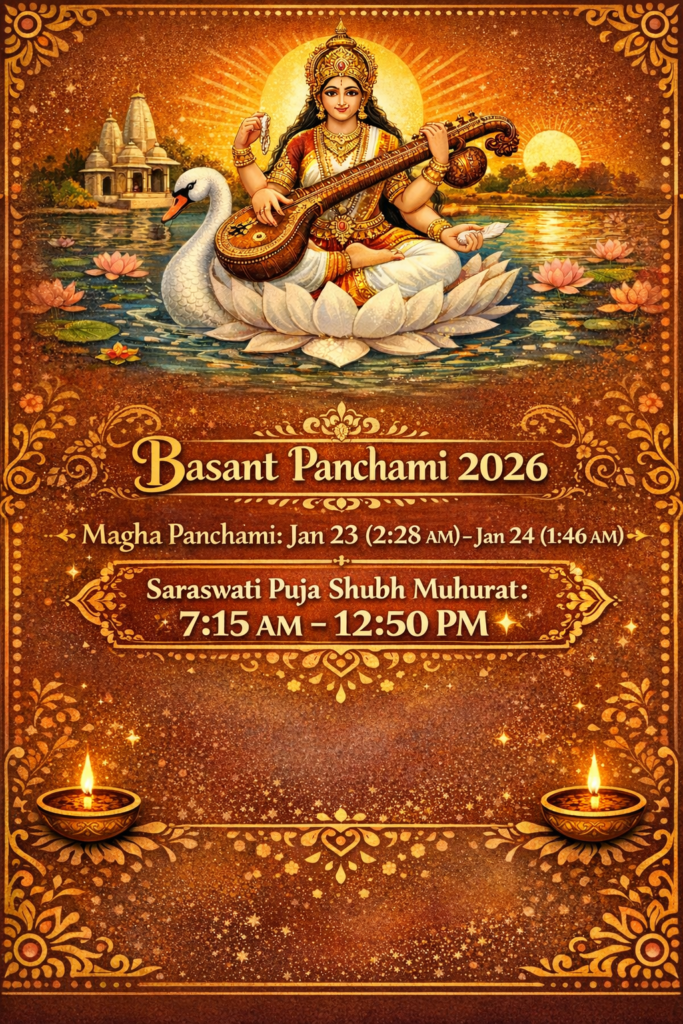
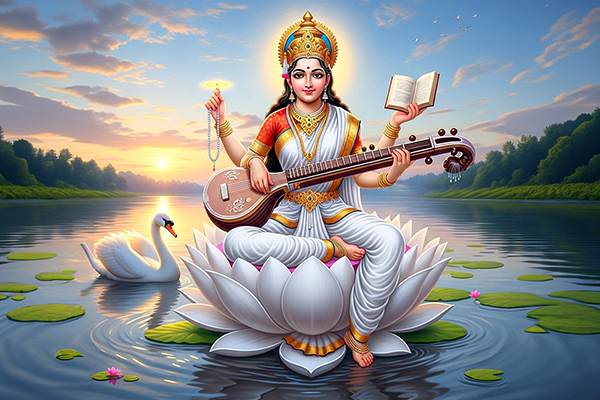
On this very day, Saraaswati rose from the very waters of the cosmos; the cosmos itself bore her divine knowledge and consciousness for the universe. Clad in white, she used to be sitting on a white lotus, holding a veena, book, and rosary and a pot of water symbolizing purity, knowledge, discipline, and spiritual wisdom.
And to this end, and this meaning, was the very creation of Goddess Saraswati by Lord Brahma when there was chaos and disorder in the world. Hence comes the significance attributed to the day of Basant Panchami, that on this day, it is the birth day of Goddess Saraswati where we worship that goddess.
Almost associating with the joy of spring for the love of Lord Krishna and Radha, Basant is thus interpreted as awakening. The satin yellow mustard fields and flowering flowers must be offered to Krishna who always wears yellow.
Thus Basants Panchami may be popularly characterized as the dawn that ends winter and brings to life and color the most pleasant weather around the time of the year. It is here that a wonderland is created; life meets and lives with creativity in betterment of that very season. Traditionally, for farmers, this is the time of Kalanji or first initiation of new growth of mustard or wheat.
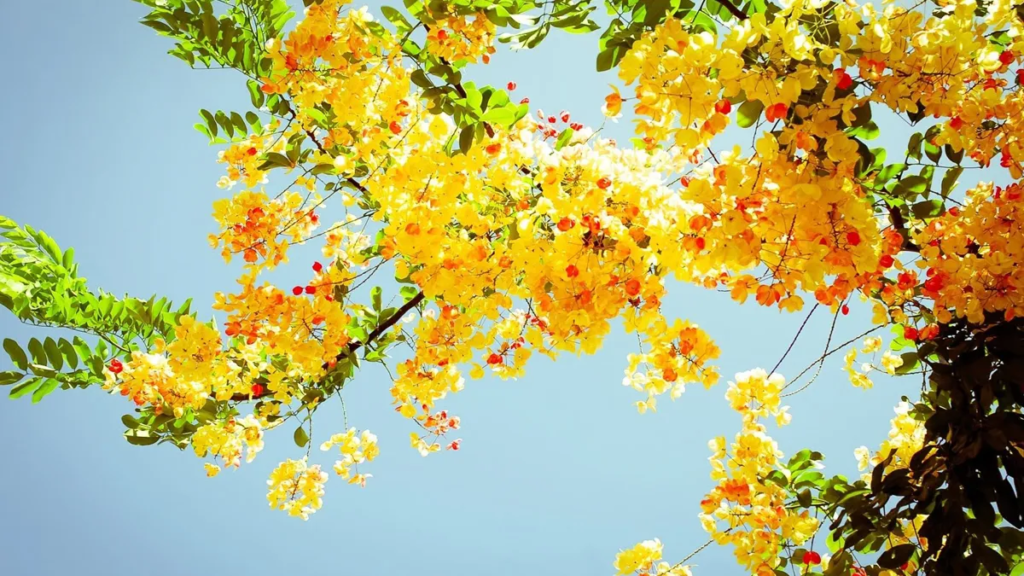
Golden yellow flows in many mustard fields; birds loudly become noisy singers; flourishes abundantly floral beauties. The rest, then, is kind of a change of every sort within nature and condition to make Basant Panchami one of those festivals of renewal, hope, and prosperity.
This festival will, therefore, be celebrated with all bright colors representing:
● Strength and enthusiasm
● Knowledge and learning
● Wealth and harvest
● Benevolence and happiness
Wake up early on festival day, take a holy dip, adorn yellow clothes, and worship Goddess of knowledge Devi Saraswati. Special prayer meetings and worshipping ceremonies of Saraswati are held in homes, schools, colleges and temples.
Books, musical instruments, pens, and notebooks are piled up in front of the goddess for a prayer to bless them with success through education and creativity. This day sees the maximum devotion poured by students, teachers, writers, musicians, and artists.
The day welcomes the holiest vidyarambha sanskar, especially in homes with very young children, hoping to introduce a little engagement between the toddler and some sort of writing, though perhaps done in chanting of the Lord’s Name.
Food and Sweets:
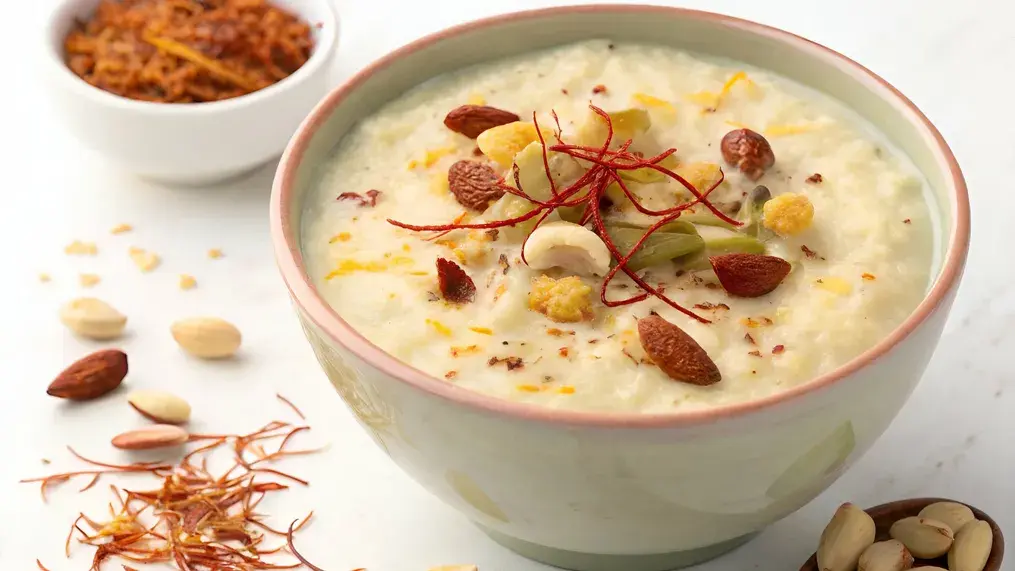
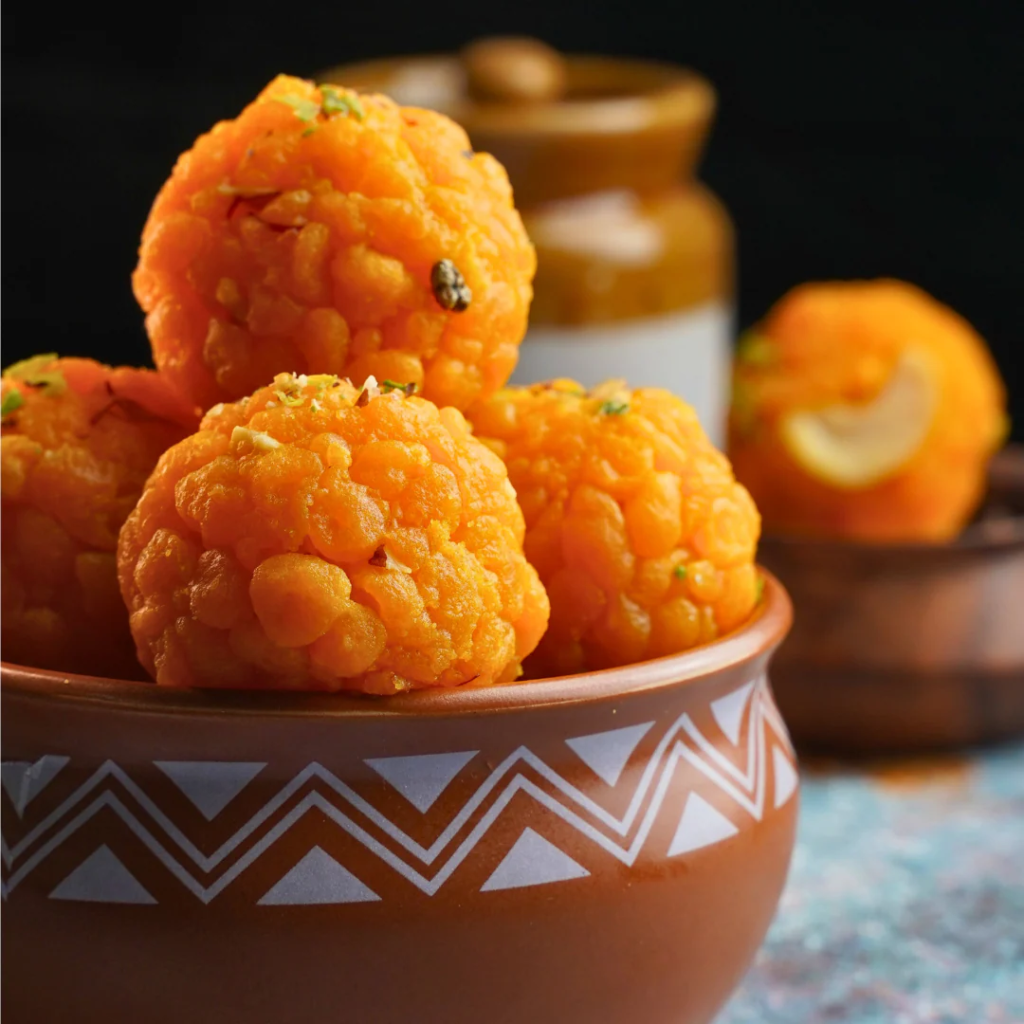
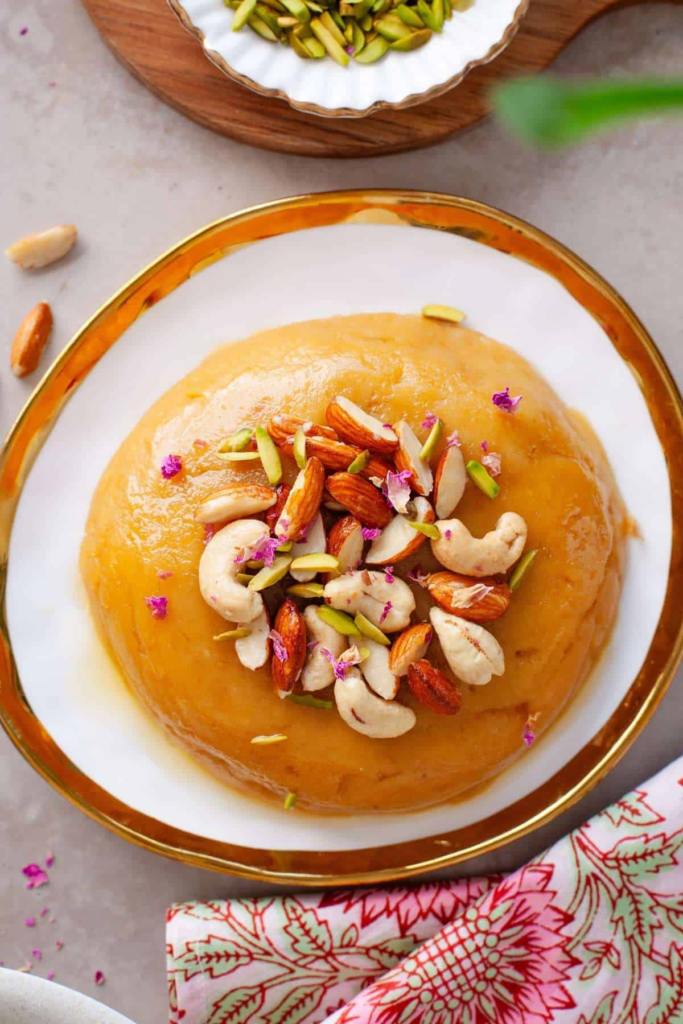
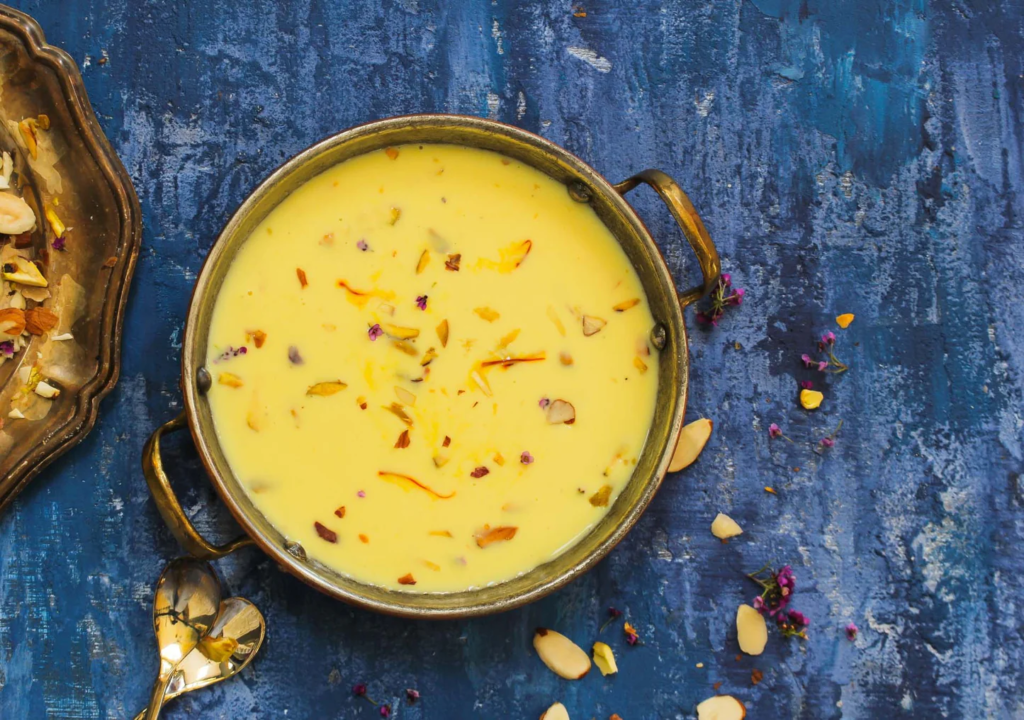
Food occupies pride on the day of celebration. Most of the dishes prepared are yellow in color. Here goes the list of some of the yellow foods:
● Saffron rice kheer
● Fruits such as (banana, oranges and plum)

● Boondi Laddoo
● Besan Halwa
● Milk with saffron
● Rasmalai
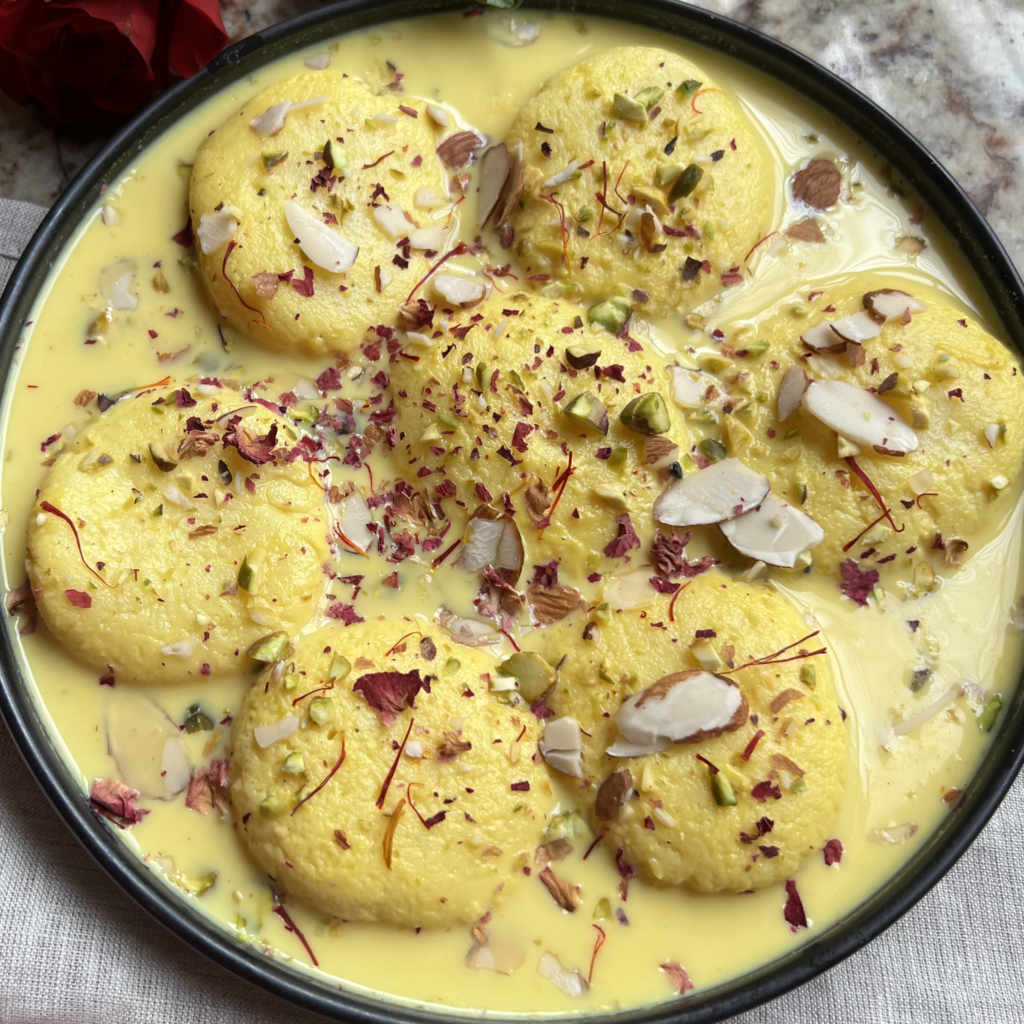
All these treats create a vibe of prosperity, warmth, and joy. Sharing sweets further strengthens family bonds, ensuring happiness is shared amongst relatives and the society.
All-India Celebrations
Celebrations for Basant Panchami vary widely in different regions. In Bengal, Odisha, and Bihar, Saraswati Puja is celebrated with the gaiety of colors-school and college students decorate the idol, organize cultural programs, and finally pray for blessings. Punjab and Haryana would look up toward a sky full of kites, while everything else is quite colorful. In Uttar Pradesh and Madhya Pradesh, Goddess Saraswati is worshipped, along with the advent of Spring. In Rajasthan, women wear yellow, and men wear yellow turbans. But things can be different; the essence lies in wisdom, purity, and rejuvenation.
Importance in Education
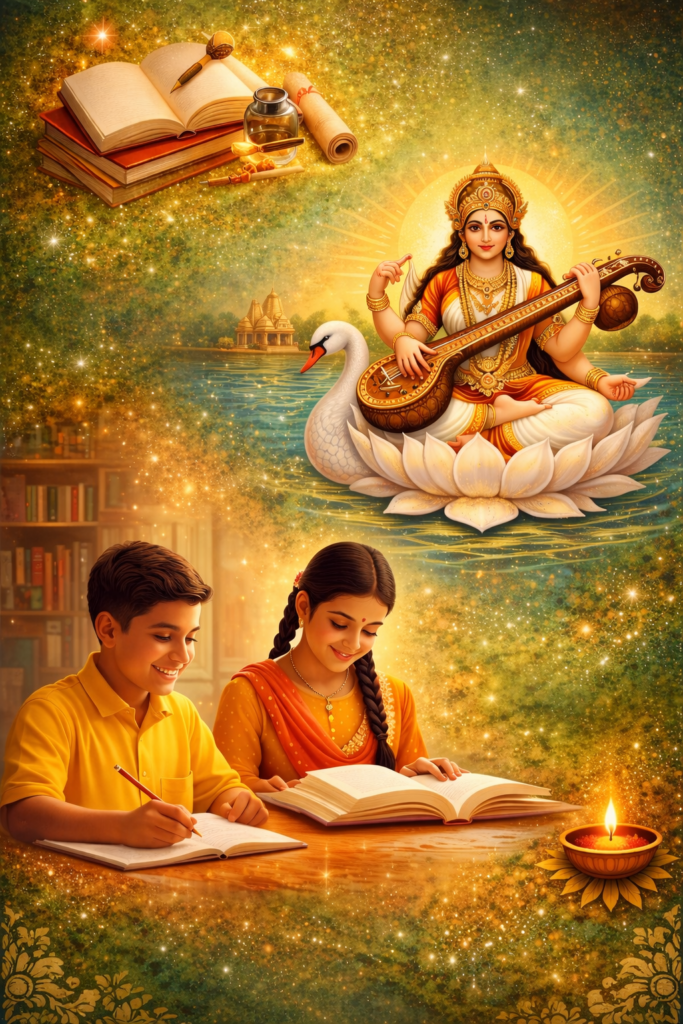
In fact, the importance of Basant Panchami goes to education. Saraswati is the goddess of learning, worshipped on that day. To:
● for starting new education
● for the opening of schools and colleges
● for commencing learning in arts
● for launching educational enterprises
The festival reminds society that education is the strongest foundation for progress and enlightenment
Symbolically Meaning
● Victory over ignorance
● Light over darkness
● Advancement over stagnation
● Hope over despair
Messages that true beauty lies NOT ONLY in nature but in wisdom and discipline as well.
Relevance in Modernity
● Considering the fast-paced digital age, Basant Panchami enjoys great relevance in the following perspectives:
● Respect for education and educational personnel.
● Value for creativity and art.
● Maintain harmony with nature.
● In humility seek knowledge.
For today’s students, Saraswati Puja is an occasion to reconnect with cultural values and spiritual anchor.
Environmental Message
Basant Panchami bears with it an environmental theme. The spring season, with its equilibrium, renewal, and sustenance, reminds humans to act upon nature in line with seasonal cycles and live in sync with the environment.
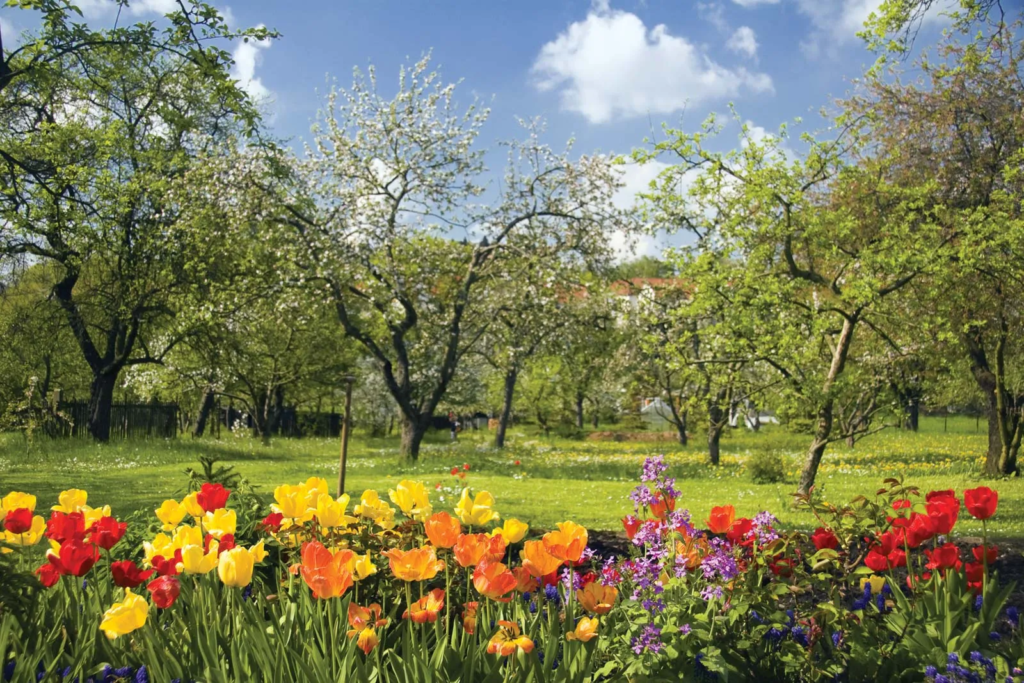
Basant Panchami is much more than rituals; it is the celebration of life, learning, and nature. It creates a harmonious occasion for integrating the religious-political-cultural atmosphere with the environment through a diversity of symbols and emotions. Through this festival, fertilization of one’s intellectual, spiritual, and emotional growth is nurtured.
Full of the beauty of yellow flowers and brightened by gentle breezes, the Basant Panchami tells humanity that knowledge is the greatest wealth and wisdom is the ornament of life.
This festival is both about spring and the beauty of knowledge.