



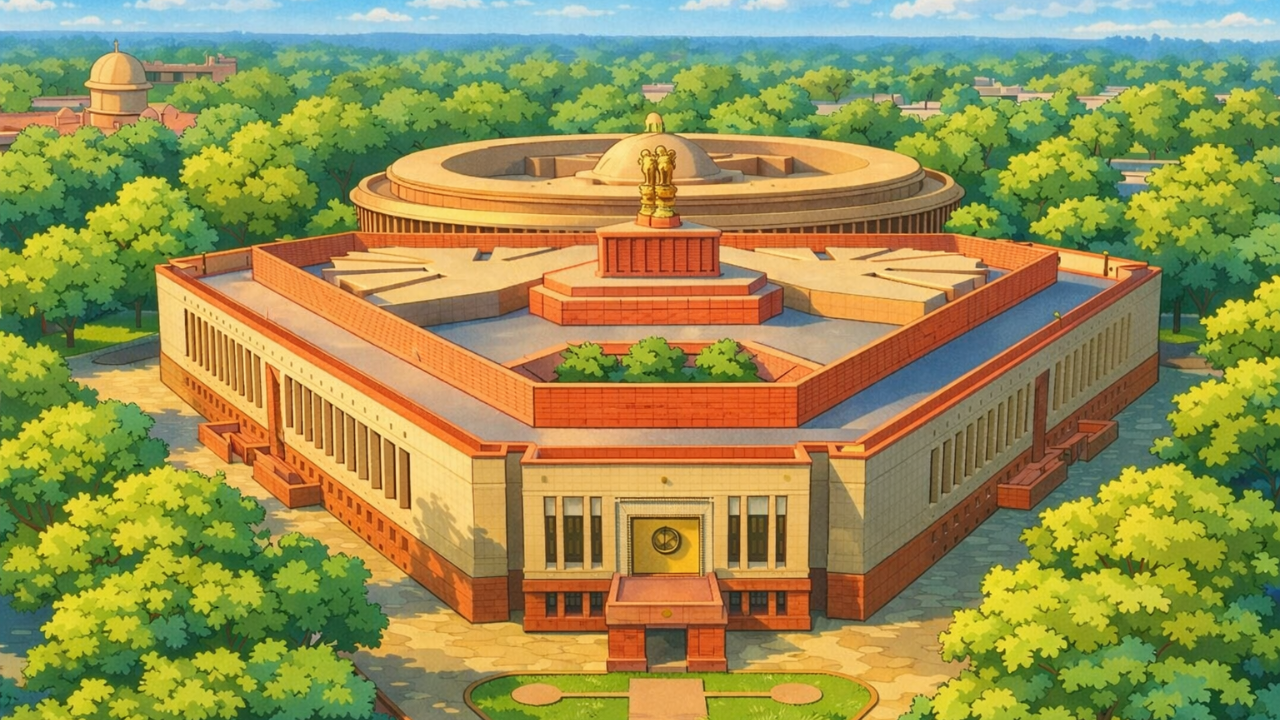
As the dust of 2025 settles, Parliament will be left with unfinished business, unresolved disputes, and reforms still seeking their final shape.The winter session reorganized key pillars of governance, but many high-risk bills were postponed, weakened or sent for further scrutiny.It is expected that the 2026 Budget session will move beyond diagnosing problems to implementing solutions – laying the governing blueprint for the government’s vision of a “Developed India”.With a focus on higher education reforms, electoral realignment, capital markets restructuring and bankruptcy resolution, the 2026 budget session sets the stage for high-level legislative action.
What’s next in 2026
While the government pushed through several landmark reforms during the winter session, several bills were formally introduced but got stuck in procedural hurdles.Many were referred to joint parliamentary committees or put on hold for further reform, effectively shifting the legislative battleground to the 2026 budget session.
Securities Market Code Bill, 2025
Hailed by the government as a “constitutional moment” for India’s financial markets, the bill seeks to streamline three key laws governing investors and market regulation.For more than three decades, investors and companies have had to comply with three different laws – the SEBI Act (1992), the Depositories Act (1996) and the Securities Contracts (Regulation) Act (1956).Given its scale and potential impact on market assets worth trillions of rupees, the bill was referred to the Standing Committee on Finance in late 2025 for detailed scrutiny, before coming back to Parliament in 2026.Critics argue that the merger of these laws risks turning SEBI into “judge, jury and executioner” with broad enforcement powers.However, the government has argued that unified regulation is necessary to reduce overlap, regulatory arbitrage and compliance confusion in a rapidly growing market.
Insolvency and Bankruptcy Code (IBC) Amendment Bill, 2025
The Bill seeks to strengthen India’s corporate bankruptcy exit framework.The bill aims to speed up resolution so that companies do not have to lose the value of their assets during lengthy legal proceedings. It also introduces a “cross-border insolvency” framework to help banks recover money from defaulting companies that have hidden or held assets abroad.Critics argue that banks stand to lose big in recovering a very small percentage of the original loan, and that the bill does not hold large promoters adequately accountable.They also highlight the pending judicial cases due to vacant seats of judges for proceedings in the National Company Law Tribunal (NCLT).The opposition has also flagged delays caused by vacancies at the National Company Law Tribunal, arguing that legislative reforms alone cannot address the systemic capacity gap.
One Nation, One Election (ONOE)
One Nation One Election (ONEE) reform proposes to hold simultaneous elections for the Lok Sabha and State Legislative Assemblies, thereby consolidating the voting process by taking place at the same time instead of at different intervals.The government launched the scheme with the introduction of the Constitution 129th Amendment Bill in late 2024. Although the bill received majority in the Lok Sabha, it was not passed. This is because amending the Constitution requires a special majority where at least two-thirds of the members present in the House must vote in favor of the bill.Lok Sabha approved the proposal to send both the bills paving the way for “One Nation One Election” to a 39-member Joint Parliamentary Committee. This committee has been given extension to submit its report till the first day of the last week of the budget session 2026.The primary objective of the Bill is to hold simultaneous elections – initially for the Lok Sabha and State Assemblies, and later potentially for local bodies – so as to reduce election expenditure and prevent repeated invocation of the Model Code of Conduct.The opposition dismissed the bill as a “heinous conspiracy” against federalism, arguing that it attacks the basic structure of the Constitution and undermines regional autonomy.
Developed India Education Foundation Bill, 2025
The bill is a key part of the government’s plan to modernize higher education by bringing multiple regulators under one system.It was introduced in the Lok Sabha on December 15, 2025, and later referred to the Joint Parliamentary Committee, whose report is expected to be presented by the last day of the first part of the Budget Session 2026.The Bill proposes to set up the Bharatiya Shiksha Aastha or VBSA as a single umbrella regulator, meaning a single main authority that will replace the UGC, AICTE and NCTE. The government has described this system as one with less control but strict enforcement in line with the National Education Policy 2020.However, the opposition argued that it gives too much power to the central government and could undermine the independence of universities, especially because the power to award financial grants would be transferred from the regulators to the ministry.
Digital personal data protection (implementation)
Although the Digital Personal Data Protection Act was passed in 2023, it came into force only in late 2025, when the government notified the detailed rules needed to put it into practice.After extensive public consultation, the rules were officially notified on November 14, 2025.
With implementation now in place, parliamentary oversight is expected over regulatory amendments, institutional capacity and funding for the Data Protection Board.Also, while the law was already in force, civil society groups and opposition voices focused their criticism on the rules, particularly the 18-month compliance period, which they felt was too long and delayed actual protection.
Umeed Act, 2025 – Waqf (Amendment) Act
One of the most socially and politically sensitive legislations in recent sessions, the bill was first introduced in August 2024 and was immediately referred to a joint parliamentary committee after widespread protests.The committee headed by Jagdambika Pal submitted its final report in late January 2025 after several contentious meetings. The report recommended mandatory registration of all Waqf properties on a centralized online portal and proposed 44 amendments to the original Waqf Act of 1995.
The law introduces several legal changes, including renaming the Waqf Act as the UMEED Act – Integrated Waqf Management, Empowerment, Efficiency and Development Act, 2025.Although the bill has not been formally listed on the agenda of the 2026 budget session, its implementation starting this year is expected to trigger a fresh uproar.Basically, the law seeks to overhaul the governance and management of Waqf properties across the country.
Bills passed: session of disruption and change
If Parliament were a 75-year-old house, the 2025 session would have been a noisy renewal. The government did not limit itself to cosmetic changes: labor laws were redrafted, nuclear policy was redrafted, welfare delivery was redesigned and decades-old laws were scrapped. The result was a modern legal framework – albeit in the face of continued opposition.The session concluded with the passage of several laws, with debates on worker rights, accountability and foreign involvement in the proceedings, but many political and social questions remained unresolved as the Parliament moved forward to 2026.
VB-G Ram G Bill, 2025: Welfare reset
Replacing MNREGA, the VB-G RAMG Bill – Guarantee for Developed India-Employment and Livelihood Mission (Rural) – was introduced on December 15, 2025, and was passed through voice vote three days later amid opposition demands for record bifurcation.
The law increases guaranteed workdays from 100 to 125 annually, but replaces MNREGA’s demand-driven funding model with fixed, state-wise allocations. Critics argue that this risks weakening the program’s role as an anti-crisis program.The removal of Mahatma Gandhi’s name became a major issue along with concerns over the use of AI and biometric attendance systems, which could exclude workers in areas with low connectivity.
peace bill 2025
Passed by voice vote in both houses, the Peace Bill replaces the Atomic Energy Act (1962) and the Civil Liability for Nuclear Damage Act (2010), which allow private and foreign participation in nuclear power generation.This law gives statutory status to the Atomic Energy Regulatory Board and paves the way for small modular reactors. Opposition parties staged a walkout objecting to the weakening of supplier liability provisions and warning that the public risk would shift to the state in the event of an accident.
Insurance for all, Defense for all, Bill for all
The bill, passed on December 16, 2025, increases the FDI limit in insurance from 74% to 100%, with the aim of achieving universal insurance coverage by 2047.While the government argues this will lead to deeper penetration and lower costs, critics have warned of foreign dominance, less focus on rural markets and potential pressure on domestic players like LIC.
Health and National Security Cess Bill
Passed unanimously, the Bill introduces capacity-based cess on pan masala manufacturing machinery to meet public health and national security needs.By taxing production capacity rather than declared sales, the law aims to curb under-reporting. However, manufacturers argue that the model is inflexible, especially during machinery downtime, while opposition parties raise concerns over the Centre-state fiscal balance.
Repeal and Amendment Bill, 2025
Touted as a clean-up campaign, the bill repeals 71 obsolete laws, some of which date back to the 19th century, including the Indian Tramways Act (1886).While the government said this would simplify compliance, the opposition criticized the wholesale repeal approach, arguing that many laws recently enacted in the last decade were removed without adequate scrutiny.
labor code
Although passed earlier, the four labor codes entered the operational phase in November 2025, consolidating 29 laws into four frameworks covering wages, social security, industrial relations and workplace safety.The new 50% base pay rule strengthens retirement benefits but reduces immediate take-home pay. Trade unions argue that the codes tilt the balance in favor of employers, while the government says they modernize labor regulation for a changing economy.
spoken but not concluded
Many issues dominated the debate without resolution.
Voter List Revision (SIR)
The opposition alleged selective exclusion of voters in the special intensive vetting process in nine states and three union territories. The 10-hour debate ended in deadlock, with no changes to election procedures.
Manipur crisis
Despite repeated demands, there was no dedicated discussion in Parliament on Manipur, where President’s rule is in place. Consensus on a peace roadmap was replaced by political blame-trading.
air pollution
Acknowledged as a national health emergency, air quality was debated but left without legislative follow-up or a national clean air framework.As Parliament heads towards the 2026 budget session, the legislative record of the past year provides both momentum and caution. Many reforms have been passed, others have been postponed, and many are now entering the more difficult phase of implementation. Whether the upcoming session provides clarity, consensus and course correction – or repeats the disruptions of 2025 – remains to be seen.


