



Associations representing gig workers in India have called for an all-India strike on Christmas Day and New Year’s Eve—two of the busiest days of the year for the likes of Swiggy, Zomato and Blinkit—over what they claimed were worsening working conditions and reduced commissions.
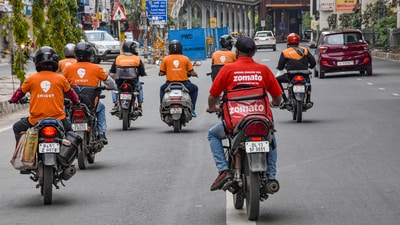
“Despite being backbone of last-mile delivery—especially during peak seasons and festivals—delivery workers are forced to endure long working hours…in the absence of basic welfare protections,” the Telangana Gig and Platform Workers Union said in a statement posted on their Facebook profile.
Their key demands are:
- The immediate withdrawal of unsafe “10-minute delivery” business model that endanger workers’ lives.
- Fair and better pay through transparent wage structures and incentives reflecting real working hours and costs.
- Assured and consistent work allocation without algorithmic discrimination, while ensuring reasonable working hours.
- Job security and social security, including health cover, accident insurance, and pension benefits, etc.
- Stronger technical support for grievance redressal, and end to arbitrary ID blocking and penalty without due process.
“Delivery workers are being pushed to breaking point by unsafe work models, falling incomes, and total absence of social protection,” Shaik Salauddin, the national general secretary of the Indian Federation of App-Based Transport Workers, said in the statement.
“The gig workers strike is a collective call for justice, dignity and accountability. The government can no longer remain a silent spectator while platform companies profit at the cost of workers’ lives.”
Labour laws for gig workers in India
The government has formally implemented India’s four new Labour Codes, replacing 29 fragmented labour laws, in what is seen as a pivotal moment for gig workers in the world’s fourth largest economy.
India’s new labour codes, particularly the Code on Social Security, 2020, finally defines who a gig worker and who employs them.
- A gig worker works outside a traditional employer-employee setup.
- A platform worker provides service via access to online platforms.
- An online aggregator connects a service provider to the customer.
This lays the foundation for extending welfare benefits to an estimated 40 crore workers in the unorganised sector.
The biggest and most immediate obligation is social security contribution for gig workers. Under the Code on Social Security, 2020, aggregators are required to contibute 1-2% of their annual turover to social security of the gig workers they employ. This amount is capped at 5% of the total amount paid or payable by the aggregator to the gig workers.
ALSO READ | The wage and bonus rules under India’s new labour codes
This shifts the responsibility of providing basic social security to the companies that benefit from their services.


