



How did you feel when you were declared the winner of this year’s Shakti Bhatt Award? What did you do to celebrate this special moment?
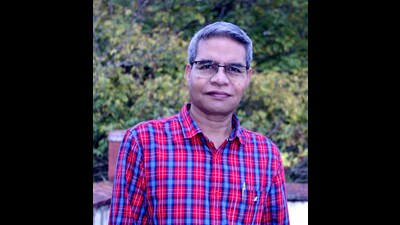
I feel truly humbled and honored to have been selected among so many renowned writers from India. I understand that the prestigious authors of Shakti Bhatt Foundation do their own research and selection. For that reason the honor is all the sweeter.
I am even more happy because I believe that this award is a recognition not only of my work but also of Khasi literature, since a part of my work is in Khasi.
I did not celebrate. As a quiet thanksgiving, I’m thinking of traveling to the sacred forests of Sohra, my hometown, to live with the ancient trees and commune with the spirits of my wise ancestors. If they had not been there, our greedy generation would have destroyed all our forests.
How do you look back and assess your journey and growth as a writer?
I always thought that my first poem was to a lovely divorced woman, several years older than me, who I fell in love with. I had just written my matriculation examination and was waiting for the results when this abandoned woman came with her baby daughter to live in the premises where I was a tenant. She was beautiful beyond belief. I couldn’t understand how something so beautiful could be treated so cruelly. In her loneliness she seemed to me like a bright girl in the dark streets of those nights: someone who gave hope and joy, a soulmate, a fellow sufferer with whom I could share my hardship and loneliness. Something stirred inside me. I was suddenly seized with a desolate longing, something fierce and unsettling, a gnawing, aching desire to reach out, to touch her. And I wrote my first few lines of poetry, something I never knew I’d ever done, addressed to the woman I loved, for the first time.
But I couldn’t bring myself to address him openly. I suffered from a terrible lack of self-confidence, the result of my long poverty, and yet my passions would allow me neither to eat nor sleep in peace. So, one night, quietly, as if committing a crime, I crept up to her two-room apartment and slipped a piece of paper through the door. That was my first poem – naked, mad in love and extremely prayerful.
I expected the poem to be both billet-doux and petitioner, but, in my foolishness, I didn’t even write my name. And later, too late, I learned that my beloved had searched in vain for the man who called her, my first love, my first poem, night lightBut by then I had lost my courage. I remain a mystery to him. She remains an inspiring light for me.
However, now that I look back carefully, I realize that I actually started my writing career by writing hundreds of love letters to hundreds of girls in high school. At that time, I did not know whether he had any literary merit or not. All I knew was that girls liked them, and my classmates, for whom I wrote, never failed to be accepted. Much later – when I re-read some of the letters that I had – I realized that there was a lot of poetry in them.
After my first poem addressed to my first love, I wrote several more poems in Khasi and English, which I preserved carefully in my diaries with many scratches and cancellations. But I never got them published. I thought they were private things written to soothe my lonely hours. When I was doing my MA, after meeting some poets, who later came to be known as Shillong poets, I started sharing my poems. Eventually, I mustered up the courage to show them to one of my teachers, who told me to get them published somewhere as soon as possible.

Did you follow your teacher’s advice?
At that time, Jayanta Mahapatrada as I came to call him) was editing the poetry page of The Telegraph’s Sunday magazine – The most widely read English language newspaper in the North-East in those days. I decided to try my luck. I was surprised and extremely pleased when I sent six poems, one of them, fungusHas been published. After this another one came, parking lotIn the next issue. Then imagine the excitement that overwhelmed me! The great man I had admired for years, who seemed so distant, a great name among great poets, had actually selected and published two of my own poems! And I was going to be read by everyone who knew me! Think of their surprise! Infallible and inconspicuous Kinfam published by Mahapatra! My nostrils flared with pride, and I was not embarrassed by it: as far as I was concerned, this was my first achievement as a poet.
My first two books of poetry, moments And strainerwere published by Writers Workshop in 1992 on payment of a fixed sum. But later, I decided that I would not pay anyone to publish my poetry. And, since it was difficult to find poetry publishers who didn’t ask for money, I decided never to submit my poetry manuscript anywhere. I felt very happy when my poems got published in newspapers and magazines in India and abroad.
And then, in 2008, the Kovalam Literature Festival took place. By a quirk of fate, I was on the same stage with celebrities like Satchidanandan and Shashi Tharoor, reading my self-composed poems after Tharoor recited Mahmoud Darwish. After the session, a woman, glowing with excitement, came up to me and said, “I must publish your poems!” She introduced herself as Karthika VK, who was at HarperCollins at the time. I was stunned! It was very rare to be approached by a publisher in this way. I said, “Please, do it! Please do!”
One of the poems I read in the session was condemnable lines for motherIt contains a line that reads, “Those days in Chera”, referring to Sohra or Cherrapunji, where I was born and spent a significant part of my childhood. Karthika was intrigued by “those Chera days” and suggested I write a memoir. Instead, I promised her a book that would challenge some of the big and bad genres. This was my epic novel funeral nights Came into being and that’s how I became a novelist!
When you sit down to write, do you feel equally comfortable in Khasi and English, or is your equation different with each language?
I believe in what I call “literary bisexuality,” which is a fundamental discourse on the virtues of knowing two languages and writing well in them. In a vast and complex country like India, these languages would mean one’s mother tongue and language of conversation. In my case, that would mean Khasi, the language of my tribe, and English.
It is neither desirable nor beneficial to limit one’s writing to one’s own language or the language of conversation. The work of a native author with any literary merit should be “sung throughout the world” as Pablo Neruda said. For this the writer must be able to translate his work into conversational language. But if he is not bisexual in this sense, his work will risk remaining hidden forever in the dark corners of its own little world.
If he writes only in colloquial language, he must be able to translate his work into their mother tongue or risk being cut off forever from the hearts and minds of his people.
Avoiding these risks requires, to quote Dylan Thomas, in my poetry and prose as a bilingual writer, “the power that drives the flower through the green fuse”.

What was the starting point of your book? dislike for earth,
I was fascinated by the true and tragic love story of Manik Raitong, or Manik the Wretched, and Lieng Makau, the wife of a legendary king who ruled the ancient Khasi kingdom. Therefore a book inspired by tragedy can easily be called the queen and the pauperBut what is known about the story is merely an outline that would barely fill two pages. Inspired by what happened to Manik, I wrote a short story and included it in Around the Hearth: Khasi Legends. Soon, many of my readers wrote to me to confess, ‘Your Manik story made me cry.’
It excited me to write a short play, Manik: A Play in Five ActsSo that I could further explore the troubling themes of the tragedy. The drama is not going too bad. Some universities have included it in their curriculum and Setu Prakashan has published its Hindi version.
I feel that drama as a genre lacks scope and flexibility. Only a work of fiction, I thought, would allow me to fully explore the dark universe of the story. That’s when I decided to create an ancient fantasy world of kings and queens, princes and princesses, warriors and robbers, and describe the special travails of a young man, with no kith or kin, who got trapped in that world, and Through him, raise deep existential questions about worldly powers, divine order and themes such as greed and oppression, revenge and justice, love and tragedy, conflict and peace.
But that was not all. Manik was said to be an empath with the unique ability to communicate with all beings. This inspired me to create Part II of the book, where the animals tell Manik the stories of their plight against man. The most remarkable thing about this animal volume is that it could very well stand alone: a book within a book. Within the novel, this section raises the question of where our anthropocentric attitude is taking us.
Because of all these interconnected issues, it would be a big mistake to read the book as merely a love story. It is an existential exploration, which helps me re-imagine a world where man is an autocrat, where God is conspicuously absent, underscoring issues, just like ours, mythological and contemporary at the same time. .

What are you working on?
my upcoming book is in english Lapbah: Stories from the Northeast. Those being presented by my friend Kanishk Gupta (a literary agent) include my seventh poetry collection, Nameri: A Verse RomanceMy eighth poetry collection, A letter to the sky and other poemsMy ninth poetry collection, A Midsummer’s Tale and Other Verse Narrativesand a book called Why are girls so cute: Narrative essay on Khasi cultureThe upcoming books in Khasi include a collection of one-act plays ki sawangka shi byanta and a poetry collection called including the schedule ofI am also working on my next novel, a collection of short stories and a poetry anthology. Unless I create, I am never happy. Plus, I feel like I’m running out of time.
Chintan Girish Modi is a freelance writer, journalist and book reviewer.


