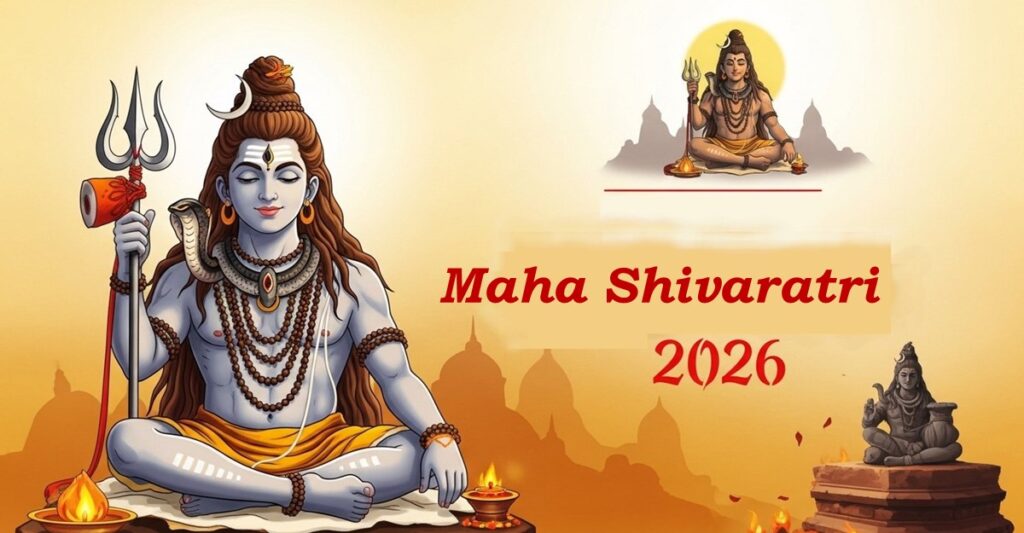
The Hindu festival of Maha Shivratri which means The Great Night of Shiva represents one of Hinduism’s most sacred festivals. The night dedicated to Lord Shiva shows respect to the supreme yogi who serves as the universal dancer and the power who eliminates all darkness. Shivratri takes place at night because its timing represents the path which leads from ignorance to self-realization. The Hindu lunar calendar designates Sunday February 15 2026 as the date for Maha Shivratri celebrations in 2026. The Chaturdashi Tithi remains active until 16 February 2026 so the rituals and night-long worship activities continue until early morning of that day.
The mythological significance of Maha Shivratri originates from timeless stories about its sacred rituals. The Cosmic Marriage of Shiva and Parvati The belief that Maha Shivratri marks the celestial marriage of Lord Shiva and Goddess Parvati constitutes one of the most cherished beliefs among devotees. Parvati achieved her objective through deep meditation practice and devotion which led to Shiva falling in love with her and their marriage on that special night to occur. The relationship between Shiva and Shakti establishes the fundamental elements which compose the totality of existence.
The Union of Shiva and Shakti, the untold story
Goddess Parvati is known as the reincarnation of Goddess Sati, the first wife of Lord Shiva. After Sati sacrificed herself due to her father’s insult to Shiva, Lord Shiva became very sad and left the world to live as an ascetic in deep meditation.
Parvati was born again with one strong wish in her heart — she wanted to marry only Lord Shiva. To win his love, she performed very hard penance for many years. She left all comfort, stayed in forests, and prayed with full devotion.
At first, Lord Shiva did not accept her proposal because he was detached from the world and still in pain after losing Sati. But Parvati never gave up. Her pure love, patience, and devotion finally touched Shiva’s heart, and he agreed to marry her. This is why their marriage is considered the purest love story in the world, based on devotion, sacrifice, and spiritual connection, not just attraction.
Their wedding was very unique. Gods, sages, demons, spirits, and ghosts all attended the ceremony. Lord Shiva welcomed everyone because he is known as Pashupati, the Lord of all beings. Their marriage shows the union of opposites — Shiva represents pure consciousness, and Parvati represents energy and power. Together, they symbolize balance in the universe.
Maha Shivratri is believed to be the night of their divine wedding. On this night, devotees keep fast, stay awake, chant mantras, and pray to Lord Shiva. It is considered very auspicious for women, who pray for a good husband or the long life and happiness of their husband, as Shiva and Parvati are seen as the ideal husband and wife.
Staying awake on Shivratri night is believed to increase spiritual awareness. Devotees meditate, chant Shiva mantras, and try to purify their mind and body by avoiding negative thoughts. The calm and silent night helps them connect with their inner self and the divine energy of Lord Shiva.
Shubh Puja Muhurat – Maha Shivratri 2026
The Hindu community will use the 2026 Panchang traditional data to determine the auspicious Muhrats which they will follow to celebrate Maha Shivratri at designated times according to Indian Standard Time. The 2026 Maha Shivratri festival will start on 15 February 2026 (Sunday) when Chaturdashi Tithi begins at sunset. The window of deep midnight Nishita Kaal operates as the main worship time for Shiva through both meditation and Abhishekam and mantra chanting activities. The followers start their ceremonies after they determine local time through either regional Panchang or temple schedule because different areas of the world have different timing systems. The Maha Shivratri observances function through their two main activities which involve performing the rituals and following the sacred traditions of the festival. The deep symbolic meaning of Maha Shivratri practices leads to spiritual growth for participants who practice them.
The day begins with dedicated devotees who will perform a special sacred bath after they choose their bathing location. The main ritual procedure consists of Abhishekam which involves bathing the Shiva Lingam using holy items such as water and milk and yoghurt and honey and ghee and sugarcane juice. The four offerings which represent purity and nourishment and devotion and surrender show their importance. The Bel Leaves (Bilva Patra) serve as sacred leaves which Shiva holds in special regard. The traditional offerings include flowers and fruits and incense. The chanting procession begins with the phrase “Om Namah Shivaya” which creates a personal relationship with divine energy. The devotees conduct their nighttime worship by chanting and praying because they believe this continuous watching helps them find their genuine self. Different Indian regions celebrate Maha Shivratri through their distinct festivities which demonstrate the various ways people observe this special day. The sacred Shiva temples of Kashi Vishwanath and Mahakaleshwar Jyotirlinga draw many pilgrims who come to the temples to conduct their worship activities and to participate in the traditional aarti and the ceremonial processions that happen in the area.
The Hindu temples of Chidambaram and Rameswaram perform intricate temple ceremonies. The Tamil Nadu cultural tradition includes classical music and dance performances which show honor to Shiva who acts as Nataraja the universal dancer. The unique rituals the Kashmiri Pandit community practices during their festival combine their spiritual customs with their specific regional traditions. At Pashupatinath Temple in Kathmandu, one of the most revered Shiva shrines, thousands of sadhus and devotees congregate for night-long vigil and worship. The contemporary world maintains the Maha Shivratri festival through its ongoing cultural importance.
The festival provides essential human values which extend across all religious practices.
The festival community allows non-fasting people to participate through their positive actions and meditation practice and self-reflection. Lord Shiva embodies paradoxes because he represents the destructive power and the protective nature and the ascetic existence and the cosmic dancer role. He shows us that he exists as both destroyer and benefactor. The state of ignorance keeps knowledge hidden from us. The mind understands through practicing total silence and stillness. The moment people achieve complete detachment from everything they experience inner peace.
The practice of Maha Shivratri establishes devotion as the fundamental method to reach self-realization through direct self-awareness. The Maha Shivratri festival serves as a complete spiritual experience which extends beyond its festival activities. The fundamental understanding of existence can be reached by devotees through their devotional practices which include nighttime meditation and chanting and sacred matter reflection. The Shubh Puja Muhurat marks the starting point of devotional practices when devotees engage in authentic practices to receive Lord Shiva’s blessings which bring them peace and wisdom and renewal. The sacred night chant of “Har Har Mahadev” protects its dedicated singers from all harm because it expresses their inner devotion while revealing the eternal truth that consciousness emerges from darkness into life.