



September 2025 saw varied trends in India’s PV market. Maruti Suzuki posted record exports but weaker domestic sales, Hyundai rode SUV demand, Tata Motors led domestically with EVs and CNG cars, while Mahindra maintained SUV dominance amid GST 2.0 changes.
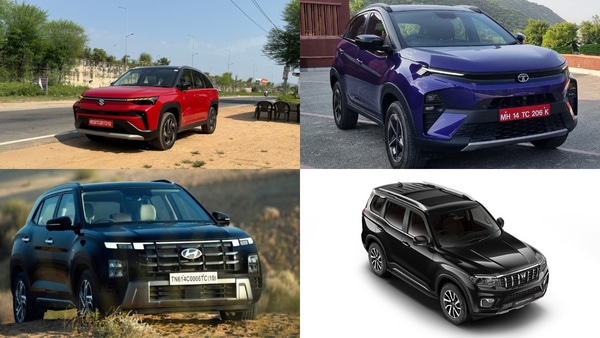
The September 2025 sales chart for India’s passenger vehicle (PV) market isn’t just a list of numbers; it’s a strategy ledger. Beneath the surface of early festive cheer and GST 2.0 nudges, a complex, almost defensive game is being played by the top four, and what stands out is the growing anxiety about domestic growth. Here’s the true read on what the Big Four are signaling.


Maruti Suzuki: The great offshore diversion
Let’s get to the point: The 8 per cent domestic sales decline of Maruti Suzuki is the key takeaway, a clear indicator that the ground is indeed slipping from under their feet as competition is heating up. The golden days of easy volume growth in the domestic market are behind us.
But to regard their export boom to an all-time high of 42,200 units as a footnote, or a mere ‘red flag’, is to overlook the long-game strategic genius. Maruti is not merely exporting excess inventory abroad; they are proactively leveraging their gigantic production scale to de-risk the entire business model. This export boom is a very efficient, scripted hedge against volatility in the domestic market.
The 4 per cent month-on-month (MoM) uptick in total sales from August is proof that this dual-focus strategy is working as intended. While the workhorses like the Brezza, Dzire, and WagonR continue to keep the domestic lights on, the global market is providing the necessary structural buoyancy. The question isn’t whether they’re slowing down, but how effectively they’ve engineered a safety valve for when domestic momentum inevitably softens.
September 2025 Sales Overview
Automaker |
Domestic Sales |
Exports |
Total Sales |
YoY Change (Domestic) |
Key Highlights |
| Maruti Suzuki | 132,821 | 42,204 | 175,025 | -8.4% | Record exports; Brezza, Dzire, WagonR strong |
| Hyundai | 51,547 | 18,800 | 70,347 | +10% | SUVs accounted for 72.4% of domestic sales |
| Tata Motors | 58,000 | 4,500 | 62,500 | +12% | Led domestic market; strong EV and CNG demand |
| Mahindra | 56,200 | 500 | 56,700 | +5% | SUV dominance; rugged and premium models drove sales |
Hyundai and Mahindra: The SUV monoculture risk
Hyundai and Mahindra are essentially in a race to see who can build the better SUV fortress.
Hyundai’s numbers are staggering: SUVs now account for over 70 per cent of their domestic sales, powered by the Creta and Venue. This is a brilliant, opportunistic pivot that capitalizes on both buyer preference and the GST 2.0 benefits. Their 3.3 per cent MoM growth is clean, steady, and entirely driven by utility. The risk? They are becoming dangerously dependent on a single body style. What happens when, inevitably, the Indian buyer’s preference swings back, even partially, toward sedans or premium hatchbacks? Their portfolio breadth, once a strength, is now being overshadowed by this SUV obsession.
Mahindra, meanwhile, is content in its domain. The brand is built on rugged, premium SUVs, and they are holding the line with a solid 3.5 per cent MoM growth and 56,200 domestic sales. Their low export numbers (500 units) reaffirm their ultra-focused domestic strategy. They aren’t trying to be all things to all people; they are purely the SUV specialist. It’s a high-margin, stable model, but it lacks the scale-up potential of their rivals.
Tata Motors: The true domestic leader steal
The real story of September belongs to Tata Motors. They didn’t just sell well; they overtook Hyundai and Mahindra with 58,000 domestic units, executing a strategic masterpiece powered by EVs and CNG. Their 4.2 per cent MoM rise is the strongest and most strategically sound of the group.
This is the sound of market consolidation, not just cyclical buying. Tata is winning because they have correctly identified two things: first, that alternative fuels are the growth engine (aided by policy and discounts), and second, that they can command domestic loyalty. The single-day record of 10,000 sales proves that pricing, green technology, and festival timing create a demand multiplier that their rivals are struggling to match. Their strategy is firmly rooted in transforming the Indian buyer’s vehicle choice, not just selling them another car.
Automaker |
Domestic % of Total |
Export % of Total |
Takeaway |
| Maruti Suzuki | 76% | 24% | Strong global demand; domestic dip contrasts export boom |
| Hyundai | 73% | 27% | Balanced growth; SUV exports contributing significantly |
| Tata Motors | 93% | 7% | Domestic-focused; EV/CNG segment driving growth |
| Mahindra | 99% | 1% | Predominantly domestic SUV sales; minimal exports |
The final takeaway
September 2025 shows us an industry shedding its old skin. Volume is secondary to strategic alignment.
- Maruti is paying the price for domestic complacency by leaning on exports.
- Hyundai is riding a single, massive trend (SUVs) and hoping it doesn’t break.
- Mahindra is holding a niche and consolidating its high-margin territory.
- Tata Motors is arguably the most strategically well-positioned, successfully leveraging policy and product differentiation (EVs/CNG) to capture domestic leadership, a feat that speaks volumes about the future direction of the Indian PV market.
Get insights into Upcoming Cars In India, Electric Vehicles, Upcoming Bikes in India and cutting-edge technology transforming the automotive landscape.
First Published Date: 03 Oct 2025, 11:18 am IST


