



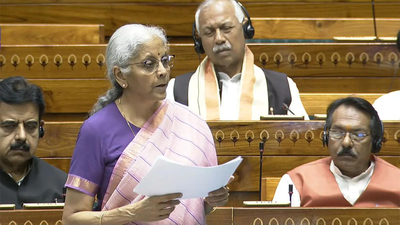
Parliament on Wednesday passed amendments to the Insolvency and Bankruptcy Code (IBC) aimed at expediting resolution of stressed companies and reducing case backlogs, with Finance Minister Nirmala Sitharaman underlining that the objective is to revive firms rather than liquidate them, according to PTI.The Rajya Sabha cleared the Insolvency and Bankruptcy Code (Amendment) Bill, 2026 by voice vote, after it was passed by the Lok Sabha on March 30.Replying to a discussion in the Upper House, Sitharaman said the IBC is designed to preserve enterprise value and resolve financial stress in a market-driven manner.“It (IBC) was never intended to be a debt recovery tool. Recovery values are incidentally a by-product. The IBC process is market-driven.“Recoveries are reflective of underlying asset quality and commercial viability of the distressed enterprise,” she said, responding to concerns over haircuts and recovery rates.As of December 2025, the IBC has facilitated resolution of 1,376 companies, enabling recovery of Rs 4.11 lakh crore, with financial creditors recovering over 34 per cent of their claims.Sitharaman said recoveries depend on sectoral conditions and asset quality, adding that the code realises 94.95 per cent of fair value at admission, while recoveries exceeding 171.54 per cent of liquidation value reflect the distressed nature of firms entering the process rather than shortcomings of the framework.She said the IBC has strengthened the banking sector by enabling asset recovery and improving balance sheets.“One concrete thing that I can say for India is that the Code actually has contributed to improving the health of our banking sector. One of the reasons why India’s banking sector has actually gotten better in itself is because of the way in which IBC has recovered assets and gone through the process and given back money to the banks,” PTI quoted her as saying.Banks have recovered Rs 1,04,099 crore through various channels, of which Rs 54,528 crore, or 52.3 per cent, came via the IBC route.Citing a World Bank report, Sitharaman said reforms in India’s insolvency regime improved creditor recovery rates from 26.5 cents to 71.6 cents per dollar.“Even just after a few years of its introduction, it has been recognised world over,” she said.The minister said the amendments are aimed at making the law more responsive to evolving economic needs.“IBC was not brought with the intention of liquidating companies. It was brought in to address the stress that the companies are facing and give a resolution which will make them come back to some form and then attain the status that they were earlier running with quite a few guardrails,” she said.Key changes include faster admission of insolvency applications, with adjudication limited to establishing default and increased reliance on information utilities.Applications will need to be admitted within 14 days if default is established, while appeals before the National Company Law Appellate Tribunal (NCLAT) must be resolved within three months.The amendments also aim to strengthen the liquidation process through greater creditor oversight, ensure independence of liquidators and remove procedural overlaps.An enabling framework for group insolvency and cross-border insolvency has been introduced to improve investor confidence and align with global best practices.The bill replaces the underutilised fast-track process with a creditor-initiated insolvency framework that allows out-of-court initiation and follows a debtor-in-possession and creditor-in-control model, with safeguards.Stricter timelines and penalties have also been proposed to deter frivolous litigation and delays.Sitharaman noted that MSMEs have been exempted from disqualification under Sections 29A, 29AC and 29AH, allowing promoters to participate in the resolution process and helping preserve smaller businesses.The Insolvency and Bankruptcy Code, enacted in 2016, has undergone seven amendments so far as the government seeks to refine the framework in line with industry requirements.


