



In December 2024, France faced an unprecedented political rift as Prime Minister Michel Barnier’s government fell on a motion of no confidence in the National Assembly. This development is the first such incident since 1962. The incident symbolizes a broader crisis of confidence in the political establishment and has significant implications for the country’s financial stability, social cohesion and geopolitical position within the EU.
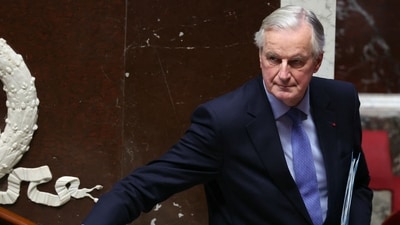
Barnier’s term, scheduled to begin in September 2024, was immediately beset by partisan divisions and conflicting economic priorities. The flagship policy of his administration – a comprehensive fiscal consolidation plan designed to address a projected deficit of more than 6% of gross domestic product (GDP) – faced sharp resistance from both ends of the ideological spectrum. The proposal to cut public spending by €60 billion, along with tax increases, was said to be necessary to restore fiscal discipline and comply with EU budgetary rules. However, opponents criticized these measures as regressive and punitive, disproportionately affecting working- and middle-class families while weakening social protections.
The government’s reliance on Article 49.3 of the French Constitution to bypass parliamentary scrutiny in the ratification of the social security budget prompted discontent. This constitutional maneuver inspired opposition coalitions and triggered widespread protests in urban centres. Mobilization by labor unions and civic organizations further increased public discontent, culminating in a vote of no confidence on December 4, 2024, which succeeded by a narrow margin.
Soon after, President Emmanuel Macron appointed veteran centrist and Democratic Movement head François Bayrou as the new prime minister. Bayeru’s mandate is both urgent and formidable – securing parliamentary legitimacy, stabilizing fiscal policy, and restoring public confidence in governance. While dealing with the complexities of coalition-building, Bayeru has prioritized bridging the ideological divide through consultation with moderate factions. However, these negotiations have proven difficult, reflecting long-standing rifts and suspicions toward compromise-driven policy making. His efforts to pursue a pragmatic agenda face fierce opposition from both far-left and far-right factions, whose differing priorities hinder consensus building.
This crisis has had far-reaching economic impacts. Moody’s cut France’s credit rating to Aa3 from Aa2, citing concerns over governance instability and fiscal flexibility. The downgrade increased borrowing costs and capital outflows, further increasing economic instability. At the same time, domestic markets have seen a decline in investor confidence, leading to urgent discussions about structural reforms to restore fiscal credibility. Analysts have warned that France’s prolonged instability could spread throughout the eurozone, undermining collective economic resilience and exacerbating vulnerabilities within interconnected financial systems. International observers remain fixated on France’s fiscal trajectory, underscoring the broader implications of governance instability for European cohesion and global market confidence.
By the end of December 2024, Bayeru’s administration remained entrenched in its efforts to ratify interim fiscal measures and avert a government shutdown. Opposition leaders, notably National Rally’s Marine Le Pen, have stepped up calls for early presidential elections, citing the government’s collapse as evidence of Macron’s declining authority. Le Pen has tried to harness populist sentiment by positioning her party as a vanguard of structural reform and national renewal.
Simultaneously, Bayeru has formulated a centrist agenda that aims to reconcile fiscal prudence with socio-economic equity. Proposed reforms include targeted investments in public infrastructure, expansion of the social safety net, and recalibration of tax policies to distribute the burden more equitably. Yet these initiatives have made limited progress, given widespread polarization and skepticism toward elite-driven policymaking. Polling data shows that support for both far-left and far-right factions is growing, indicating that voters are disillusioned with establishment politics and receptive to populist rhetoric.
The collapse has widened the ideological gap within the political spectrum. The left-wing parties, who led the vote of no-confidence, presented the result as a refutation of austerity and neoliberal orthodoxy. Prominent leaders, including Jean-Luc Mélenchon of La France Insomies, described the fiscal consolidation plan as an affront to social justice, calling for increased wealth taxes and public spending to combat economic inequalities. He stressed alternative strategies such as progressive taxation and green energy investments to balance fiscal discipline with sustainable growth. His statements resonated with labor unions and grassroots movements, solidifying broad-based support for the movement and their vision of a more equitable economic structure. In contrast, far-right leaders have described the turmoil as a symptom of Macron’s systemic failures, bolstering their calls for regime change. Marine Le Pen and other leading figures of the National Rally have stressed the need to roll back strict immigration controls, protectionist economic measures and EU financial regulations in order to restore national sovereignty. His rhetoric portrays the collapse as validation of populist demands for radical institutional reforms, including greater executive authority and direct democratic mechanisms, which he argues are necessary to address France’s governance crisis. As polarization deepens, centrist voices advocating incremental reforms and coalition-building appear to be becoming marginalised. His struggles largely stem from perceptions of ineffectiveness and indecisiveness, as his proposals often lack the sweeping changes demanded by an electorate polarized between calls for austerity and radical reform. Additionally, centrist leaders face difficulties in garnering grassroots support because of their emphasis on pragmatic compromises rather than bold ideological stances, making them vulnerable to criticism from both ends of the political spectrum.
Civil society is completely divided. While some constituencies celebrate the government’s ouster as a victory for democratic accountability, others fear prolonged instability and economic stagnation. Protests and strikes continue, with demonstrators demanding policy reforms to address unemployment, inflation and inequality. Many labor unions and grassroots organizations continue to rally for reforms that prioritize increased social spending, wealth redistribution, and public welfare. In contrast, conservative groups have expressed concern over the perceived erosion of authority and governance, and have called for stronger executive powers to stabilize the nation.
Meanwhile, advocacy groups have stepped up calls for electoral reforms to ease legislative gridlock and increase proportional representation. Media coverage has highlighted widespread disillusionment with traditional political elites, reflecting broader concerns over institutional paralysis and policy inconsistency.
Economic stakeholders, including business associations and multinational investors, have stressed the urgency of restoring policy coherence to prevent further capital flight and market volatility. The broader public discussion reflects an underlying current of concern about France’s ability to deal with complex fiscal and geopolitical challenges amid an erosion of institutional trust. While some constituencies celebrate the government’s ouster as a victory for democratic accountability, others fear prolonged instability and economic stagnation. Protests and strikes continue, with demonstrators demanding policy reforms to address unemployment, inflation and inequality. Meanwhile, advocacy groups have stepped up calls for electoral reforms to ease legislative gridlock and increase proportional representation.
Economic stakeholders, including business associations and multinational investors, have stressed the urgency of restoring policy coherence to prevent further capital flight and market volatility. The broader public discussion reflects an underlying current of concern about France’s ability to deal with complex fiscal and geopolitical challenges amid an erosion of institutional trust.
The fall of Barnier’s government through a motion of no-confidence marked a turning point in contemporary French politics. This highlights the structural weaknesses inherent in France’s semi-presidential system, which are exacerbated by ideological polarization and procedural barriers. Bayeru’s appointment represents a temporary attempt to restore stability, yet enduring divisions and economic unrest make the prospects for long-term solidarity uncertain.
Looking ahead, the pace of French governance will depend on the ability of its political leadership to form bipartisan coalitions, implement credible reforms, and rebuild public trust. Failure to address these imperatives risks not only perpetuating domestic instability, but also undermining France’s stature as a pivot of European integration and economic leadership.
This article is written by Ananya Raj Kakoti, Scholar, International Relations, Jawaharlal Nehru University, New Delhi.


