



India stands at the cusp of an energy revolution, with batteries playing an essential role in driving sustainable development across various sectors. As the country aims to reduce its dependence on fossil fuels and transition towards clean energy sources, the battery manufacturing and recycling ecosystem is likely to emerge as a key component of this transition.
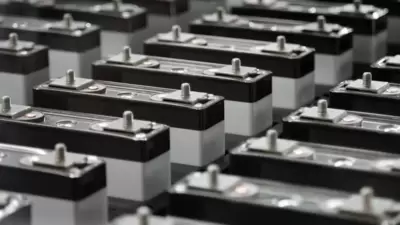
Currently, two primary types of batteries dominate the market, namely lead-acid batteries and lithium-ion batteries (LIB). While lead-acid batteries have been used in consumer electronics for decades, LiBs, on the other hand, have gained significant popularity due to their higher energy density and longer lifetime. The Mines Ministry had identified 30 critical minerals as being at risk in the supply chain in 2023. Among them, lithium (Li), cobalt (Co) and nickel (Ni) are important for electric vehicle batteries under the clean energy initiative. The government’s further budget announcement of exempting 25 critical minerals from customs duty is likely to boost the production of these advanced battery types, especially LIBs which are heavily dependent on such minerals.
As of 2020, the estimated cumulative stock of LIBs in India was about 15 GW, with consumer electronics at 61%, followed by stationary applications and transportation applications respectively. India will be a major LiB consumer by 2030, with battery storage demand of 34GW in 2023 expected to reach 450GW by 2030. Currently most of the demand for rechargeable batteries is driven by 90% automated applications.
The consumer electronics sector, which includes tablets, laptops and smartphones, represents the largest share of LIB demand in India and this market is projected to double over the next two to three years, reaching an estimated value of Rs. 2 trillion. Demand for electric vehicles (EVs), LIBs for electronic gadgets, linked and IoT-based devices, and automation and battery-powered material-handling equipment are the drivers for growth. Major demand in EVs is being seen due to LIB (80%) due to government pressure to replace 30% existing vehicles with EVs by 2030.
This dominance is expected to continue in the coming years and given the increasing dependence of consumer electronics on LIBs, these batteries are critical in achieving these projected growth figures. The exponential demand for LIBs system is expected to drive considerable investment in cumulative cell manufacturing capacity of 30GWh, as cell manufacturing cost is lowest in India at $92.8/kWh, China at $98.2/kWh, Korea at $98.1/kWh.
Having said that, the current manufacturing focus in India is on assembling battery management systems (BMS) and battery packs, of which, except for some BMS components and key elements like thermal pads, most of the sub-components are produced domestically. Which are mostly imported from China. Currently, Li-ion cells or battery packs in India are mainly imported from China, South Korea or Taiwan. However, challenges including shortage of key raw materials and limited research and development hinder scaling up domestic battery cell manufacturing.
70% of the world’s lithium is extracted from brines in Bolivia, Argentina, Australia, the United States, Chile and China and extraction is a water and energy intensive process. Recently, deposits have been found in the Salal-Haimana area of Reasi district in Jammu and Kashmir. About 47% of cobalt reserves are in the Democratic Republic of the Congo, about 23% in Australia, about 10% in Indonesia and about 20% in the rest of the world. By changing battery chemistry, manufacturers balance cobalt supply with demand. Cobalt prices have fallen by more than 31% recently. Nickel-based lithium-ion batteries show higher energy density than cobalt-based batteries. Nickel reserves amount to 100 million metric tons, where Indonesia and Australia have the largest shares (21 million metric tons).
Due to limited reserves of critical materials, circular economy (CE) is the preferred business model for creating alternative sources. Urban mining gives high returns with effective extraction efficiency, for example one ton of battery grade lithium can be extracted from 750 tons of brine or 250 tons of ores, while 1T battery graded lithium can be easily extracted from 28 tons of discarded LIB. Could. Similarly, one tonne of battery grade cobalt can be obtained from 300 tonnes of ore, while the same amount of lithium may require five-15 tonnes of waste lithium ion batteries. However this scenario will only be true if there is battery grade recycling.
Looking ahead, the total cumulative capacity of battery storage in India is estimated to reach an impressive 600 GWh by 2030. Furthermore, the projected energy savings from recycling materials in consumer electronics is estimated to be 14.7 GWh between 2022 and 2030. As a result, dedicated efficient recycling technologies for consumer electronics batteries are increasingly becoming paramount. While the EV segment is anticipated to contribute a large segment, the consumer electronics sector will also play an essential role in the recycling ecosystem due to the shorter lifespan and higher turnover rates of these devices compared to cars.
Recognizing this importance of battery recycling, the government had enacted various regulations including the Battery (Management and Handling) Rules, 2001 and Battery Waste Management Rules, 2022 to promote responsible disposal and recycling. These rules outline the responsibilities of producers, dealers, consumers. or entities involved in ensuring the proper collection, transportation and recycling of used batteries, including consumer electronics. Additionally, the recent budget announcement on National Critical Mineral Mission (NCMM) further emphasizes this commitment. As announced by Finance Minister Nirmala Sitharaman, the mission will focus on domestic production, recycling of critical minerals and foreign acquisition of critical mineral assets. In implementation of this Mission, a proposed Production Linked Incentive (PLI) Scheme for Critical Mineral Recycling is under consideration by the Ministry of Mines. The scheme seeks to promote a circular economy by encouraging the recovery and re-use of critical minerals, thereby reducing dependence on imports and supporting the development of domestic supply chains. However, despite these initiatives, challenges remain, including ambitious recycling targets, inadequate infrastructure, and a cumbersome compliance process. Issues such as daily uploading of sales and purchase data and marking of EPR registration numbers are likely to disrupt global chains and make compliance cumbersome. Additionally, the regulations’ emphasis on using recycled materials domestically adds complexity, as India’s manufacturing and recycling systems are still in the early stages of development.
Effective solutions to these challenges require implementation of specialized recycling facilities and research into recycling technologies. This should be complemented with consumer awareness campaigns on proper battery disposal. Additionally, encouraging manufacturers to design devices with easily removable batteries is another essential component.
Strategic public-private partnerships (PPPs) could be important to further strengthen the battery ecosystem. By fostering collaboration between government bodies, industry leaders and research institutions, India can accelerate innovation and establish stronger supply chains. Investment in local manufacturing capabilities and R&D can reduce dependence on imports, thereby increasing self-reliance.
On the international front, India can explore opportunities to engage with global initiatives and frameworks focused on sustainable energy and battery technology. Participation in international collaboration can provide access to advanced technologies, best practices, and funding opportunities.
Furthermore, India must prioritize the development of a skilled workforce capable of driving the battery revolution. Educational and vocational training programs focused on battery technology, recycling processes and sustainable practices can equip the workforce with the skills needed to support the industry’s growth.
India’s journey towards sustainable India requires collaboration of stakeholders from all sectors including government, industry and academia to overcome technological barriers, establish efficient recycling infrastructure and create a circular economy. Developing a comprehensive ecosystem for battery recycling will meet India’s needs and position the country as a global and self-reliant hub for sustainable technology.
This article is written by Sandeep Chatterjee, Senior Advisor and Assistant at Sustainable Electronics Recycling International. Professor, IIT, Mandi and Dhawal Gupta, Business Director, Chase India.


