



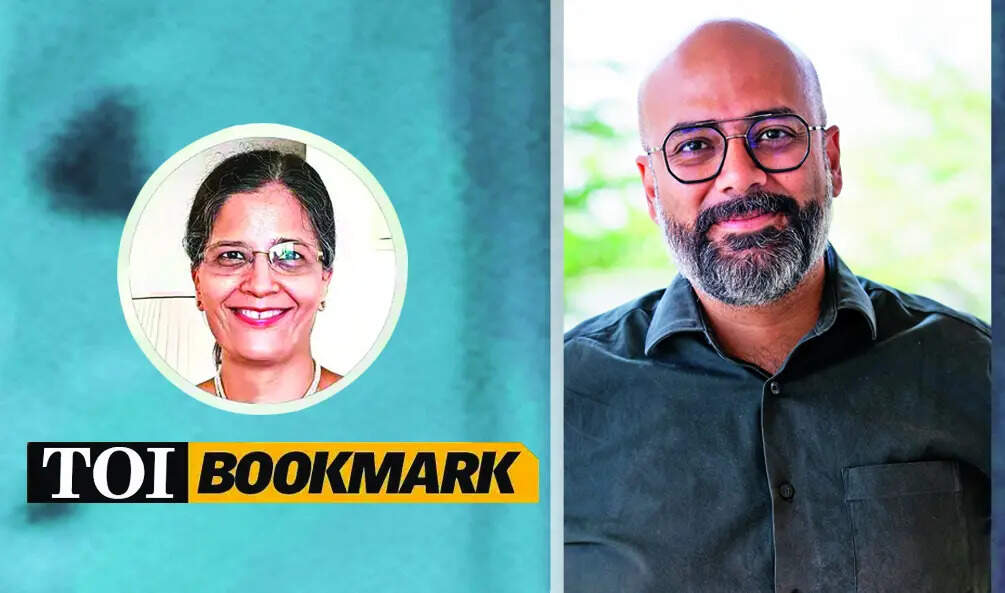
Why: : wCap made you Write ‘meet the upper castes‘? A: : To some extent, this also comes from my life experiences because I did not grow up in an upper caste family. I come from an inter-caste marriage between a Scheduled Caste mother and an OBC father. And neither of those sides of the family had a tradition of intergenerational literacy and what you would call high culture. But he was an immigrant from Punjab. They were raising their children in Kolkata. So I was exposed to a world that was not native to me. And as I grew up, I realized that there was a world that was all around me, but I didn’t have access to it. And that world always seemed much bigger than my own world. It seemed full of very interesting people talking about books, culture, art, the ‘higher orders of things’. When I looked at my family and the people around me, the concerns were very mundane, very existential. And as a young person…, I really wanted to escape that world orbit. And over time I began to realize that much of that world revolved around politics and the display of caste. This was the world of the upper castes. It was a world where they decided what was legitimate, what was worth talking about, what was authentic and what was fake. And no matter how hard I tried, I couldn’t fit into that world… Eventually I moved into academia and got into cultural studies and studied a fair amount of cultural anthropology as a method. I understood that when it comes to caste, sociology and anthropology departments in India are full of these books and theses that center Dalit communities, tribal communities, even OBC communities. A lot of interesting work has been done on that. But the world of the upper castes...Not much anthropological work has been done there. And one reason for this is that it is very inaccessible. For example, it is easy to go to a city slum and do research, do field work there, and interview people. You can’t try to do this by going to a gated community in Gurgaon or Bangalore…. But more importantly, it was like this academic blind spot where you have all the great writers, thinkers, intellectuals in civil society, in media, in academia, and they are all writing about caste, but they are not writing about their own castes and communities. And it’s almost as if their gaze is always outward, never inward. And I think it’s the culmination of these different aspects that brought me to this place where I started writing and theorizing about the upper castes. And it started with articles for various digital media platforms, where I was trying to create a series called ‘Like a Savarna’… and one of the articles there, ‘Dating Like a Savarna’, I felt I had written a very non-controversial article. This is just a little bit about how race, dating, and intimacy overlap. And I got an overwhelming response. A tremendous campaign was run on social media. I was called different names. And it affected my professional life, my university where I was working. I also had to suffer some consequences for this. And part of that response also made me realize that this is actually a very engaged conversation. It made me a little more determined to write it. Why: : Yyou are Now I am taking this book around Your domain location. How do you navigate it? A: : This is very challenging. The book begins very close to a memoir because I was focusing myself and my eyes on the book. As you go deeper into it, it becomes more social. This is not just a book about caste. It is also a book about this period of time… from the late 90s, early 2000s to Covid, 2020, 2022, because this was the period where the broad consensus was that India was doing well as a story, that we were on the rise, that this was our rise to superstar superpowerdom. And it was almost everywhere that you couldn’t say anything negative or you couldn’t say that the emperor had no clothes. Because then they will yell at you and say that you are being disagreeable. I’ve tried to theorize about this through the idea of the glass floor in the book. So if I am under the glass floor and what you are calling the story of shining India is happening above the glass floor in the upper caste world, then that world looks very different to us… But there is almost a cost involved. My career as an academic has suffered a setback. It’s almost as if you’re always carrying a target on your back. Any right-wing reactionary group can take the title of the book and create all kinds of discussions around it. So it certainly comes with a challenging, loaded responsibility… I also want to say that a lot of understanding and love has been received from the upper castes also. A lot of people have read the book and then come back to me, not out of anger or bitterness, but through some kind of idea that, OK, I’m going to do some soul-searching now and I’m looking at myself. Why: : Iit Great moment in history that you catch From modern India, but you too make visible a young and modern audience using their penises. A: : When I was in college in the early 2000s, we were told that the 21st century was the century of Asia, India and China… There were jobs, the tech sector was booming, real estate was booming. Hollywood was paying attention to us. By every conceivable popular narrative. It seemed as if we were moving. And we had to achieve superpower status by 2020, because that is what APJ Abdul Kalam told us. Now that date has been shifted back to 2047... When 2020 comes, forget about being a superpower, it is going to be one of the most challenging years for the republic. It opens with the Shaheen Bagh protests, it goes into Covid. That positivity has completely disintegrated. And on the other hand, it seems like we have emerged and we are starting to ask ourselves where did we go wrong? And I think the mistake we made was that over this 20-25 year period, the steering wheel of this story was put in the hands of a very specific group of elites who don’t even understand their own blind spots very much. So what I am trying to explain through this book is why the Indian story does not work, why while creating this system it has replicated these pocket enclaves of extreme privilege, where our cities are not livable, our policies are impractical, there is a political and existential crisis, there is a climate change crisis, all these things have intensified and all the fruits of this great success story that we thought we would get, we have not got. And I have tried to answer some of those questions, without saying ‘this is the way it is in India.’ The system is broken. Many times the analysis is hidden behind these sweeping statements – ‘everything is broken, everything is corrupt’. No, what does broken mean? who is in charge? Who are the people who are benefiting from these types of systems? What is his politics? What is their social and cultural inner life? And I think in this book I have tried to connect both of these things. This is not just a description of the upper castes, this is not just a book on caste. It’s about both of those things and also how they connect with policymaking and the larger trajectory of this moment that we had in India and it seems like we’ve kind of wasted it. So in many ways it’s also a book about the tragedy of a post-colonial state that had it all covered and promised itself it was going to transcend itself and reach higher levels and couldn’t do it. Why: : Teais here so a lot is being said which Needed be told in classes, In drawing room conversation, In fragments of public opinion. A: : In these places wherever knowledge is produced and wherever knowledge is distributed, there is almost an absence of any kind of ethnic diversity. As a result, what has happened is that the structure has become unaware of itself. Many well-intentioned upper caste intellectuals, thinkers, progressives often misdiagnose and misunderstand what they themselves are presenting. So then the criticism just becomes right versus left, progressive versus conservative. Whereas if you look at it from the caste structure, in many of these cases, conservatives and progressives are often people from the same family WhatsApp group… The way we think about caste is fundamentally through stories of oppression, through the idea of suffering and exclusion. And don’t get me wrong, these need to be documented and talked about again and again endlessly. But the system through which it mediates, through which it operates, is the upper caste system. And there is a kind of compassion in that. There’s a kind of absurdity to it… one way to deal with the pitifulness and tragedy of caste and the absurdity of it is to resort to a little bit of humor because otherwise it becomes too heavy and too intense and you can’t deal with it. So it is also a symbol of a certain dysfunction in society. This is the code that has gone wrong on which the system operates. And you see all these efforts to write it and get it right and make it work right in xyz, but the code is somewhere else. The system is working at a different level… and my effort in writing this book is to hopefully make the upper castes look at themselves a little, meet themselves a little, so that they can understand themselves a little and so they can understand the systems that they have created a little better.


