



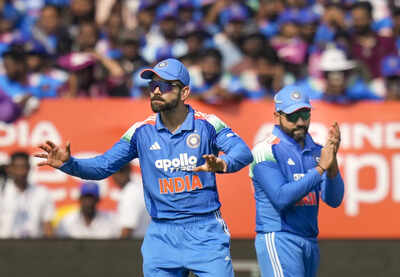
Virat Kohli and Rohit Sharma returning to the Vijay Hazare Trophy has injected renewed buzz into India’s premier domestic one-day competition. While the tournament may not enjoy the spectacle or financial scale of the Indian Premier League, it remains the backbone of India’s white-ball domestic structure. The presence of two of the country’s biggest stars has naturally drawn attention not only to the matches themselves, but also to how the competition is organised and how players are compensated. Unlike the IPL, where player salaries are shaped by an auction, earnings in the Vijay Hazare Trophy follow a clearly defined framework. For the 2025–26 season, match fees are governed by a tiered system based on the number of List A appearances a player has made. Experience, rather than star power, determines pay, which places veterans like Kohli and Rohit in the highest bracket.
Players with more than 40 List A matches fall under the senior category and earn Rs 60,000 per match if they are part of the playing XI, and Rs 30,000 if named among the reserves. Those with 21 to 40 List A games are classified as mid-level players, receiving Rs 50,000 per match in the XI and Rs 25,000 as reserves. The junior bracket, comprising players with up to 20 List A appearances, earns Rs 40,000 per match when playing and Rs 20,000 when on the bench. In the current season, Kohli, representing Delhi, and Rohit, turning out for Mumbai, earn the same match fee as any other seasoned domestic cricketer. Having comfortably crossed the 40-match mark, both fall into the senior category and are paid Rs 60,000 per game. This figure stands in stark contrast to their international earnings, with the BCCI paying them Rs 6 lakh per ODI. Match fees, however, are not the only source of income in the Vijay Hazare Trophy. Players also receive daily allowances that cover travel, food and accommodation during the tournament. On top of that, individual performances can bring additional rewards, with Man of the Match awards typically carrying a cash prize of Rs 10,000. Teams that progress deep into the competition also benefit from prize money, which is shared among players and support staff.


