



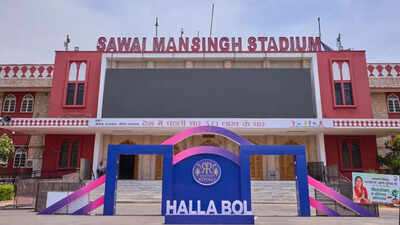
JAIPUR: The Rajasthan Royals are standing firm on prioritising fan safety ahead of IPL 2026 and will only proceed with hosting home matches at Sawai Mansingh Stadium (SMS) here only if the Rajasthan government provides an indemnity waiver. This formal assurance would protect the franchise from liability in the event of any untoward incident, accident or loss of life during their home games, ensuring accountability remains with the venue authorities for any pre-existing safety shortcomings beyond the Royals’ control.This demand stems directly from a comprehensive 700-page independent audit commissioned by the Royals and conducted by Tata Projects, which assessed the stadium’s condition and identified serious deficiencies.
The Rajasthan State Sports Council (RSSC) has largely dismissed most of the audit’s safety concerns, maintaining after its own review that issues are minor and fixable with routine repairs, and that the stadium is fully prepared for IPL duty.A source in the know said that in light of the tragic crowd crush outside Bengaluru’s M Chinnaswamy Stadium in June last year, it is entirely reasonable for the Royals to exercise extreme caution. “It’s obvious to refuse to overlook potential risks at their home venue in the wake of such a recent and devastating incident,” the source said.The BCCI has faced venue uncertainties for both the Royals and Royal Challengers Bengaluru (RCB) ahead of IPL 2026. However, while defending champions RCB have now received formal clearance from the Karnataka government to host their matches at M Chinnaswamy Stadium, Royals continue to be locked in a standoff over their Jaipur base.A BCCI source has underscored ongoing issues at SMS Stadium, calling it ‘significantly lagging behind all other IPL venues in terms of modern facilities, overall fan experience and essential amenities’.The source added that RSSC received a one-time dispensation to host matches in 2024 due to the absence of a functional Rajasthan Cricket Association (RCA), with this extended for 2025, but this cannot become a permanent arrangement. “It’s the franchise, the state cricket body, and the IPL Governing Council that collectively organise and take responsibility for IPL matches. They need to recognise this reality,” the source added.


