



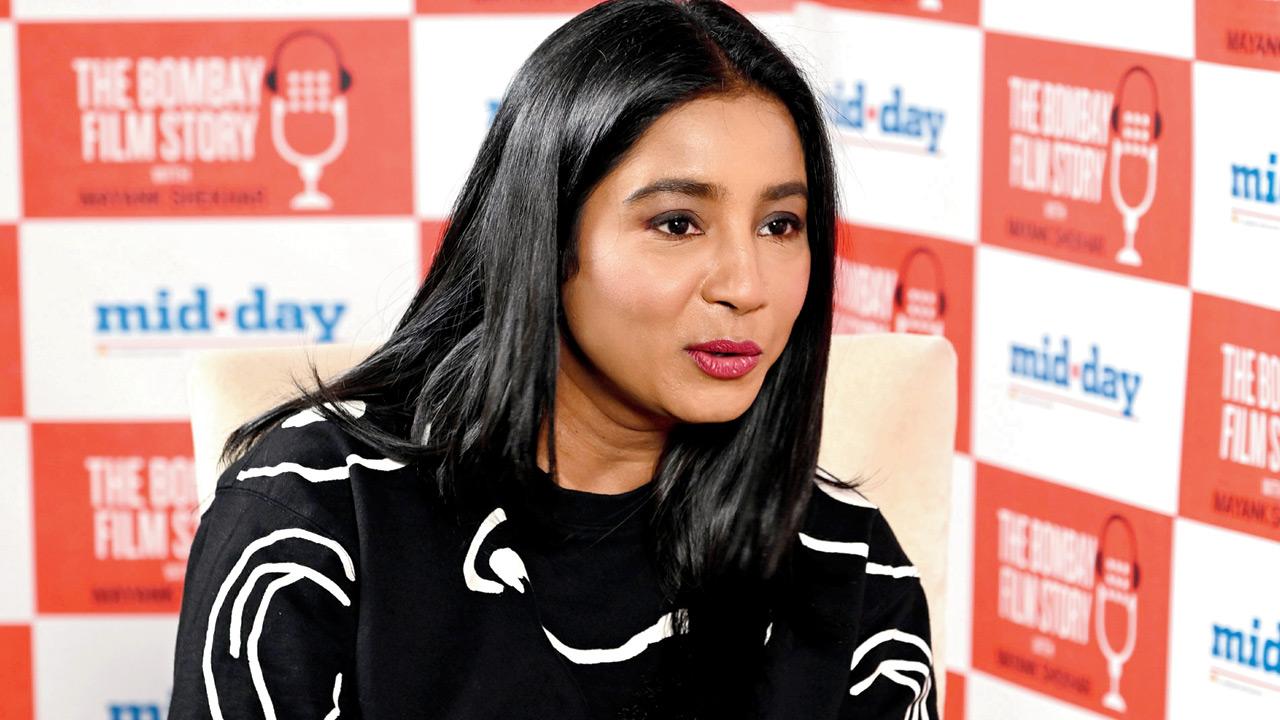
Navigating two names and many worlds, Shilpa Rao has existed in a state of contradiction — classically trained yet instinctively contemporary, intensely disciplined yet emotionally fluid, present everywhere in popular memory and almost invisible as a personality. Her voice has travelled further than her face, from the haunting minimalism of Tose Naina in Anwar (2007) to Chaleya from Jawan (2023). Sitting down for mid-day’s The Bombay Film Story, the National Award-winning singer speaks about choosing music as a way of life rather than hobby.
Excerpts from the interview.
You were born Apeksha Rao. So how did Apeksha become Shilpa?
Shilpa Rao: I was actually born Shilpa. That’s what everyone at home always called me. Apeksha came later, when I went to school and had to fill out official forms. So, that became the name on my school records and 10th standard certificate. But when I got my passport made, everything officially became Shilpa Rao again. Apeksha literally means expectation. It felt heavy. I’ve always been someone who prefers being in the background, doing things at my own pace, and not carrying the burden of expectations. Shilpa felt lighter.
You hail from Jamshedpur. That city has produced Imtiaz Ali, R Madhavan, Priyanka Chopra, and Abhishek Chaubey. What’s it about that city?
Rao: Jamshedpur is a unique place. It’s a Tata township, and most people there are professionals — engineers, doctors, teachers. The only flex parents have is education. That creates an environment where ideas matter. You have XLRI [Xavier School of Management], Loyola School, film clubs, and theatre culture. We grew up watching classical maestros like Parween Sultanaji and Ustad Bismillah Khan sahib. There were no phones, no distractions, just conversations. That’s what shaped us.
Was music internal or external to your home?
Rao: It was my first education before the alphabet. My brother Anurag is the better musician; he’s a jazz pianist. He knew what he wanted at three years old. I didn’t want to do anything! But music became my safety blanket. My father always said, ‘There are two lives — one with art and music, and one without. Always choose the one with art.’ Even if you don’t make a career out of it, it enriches your life. Music becomes a friend.
Your father S Venkat Rao trained you. Was he a taskmaster?
Rao: He could be strict. Once he tore down posters of Led Zeppelin and Leonardo DiCaprio in my room because I hadn’t practised for a week. He said, ‘The point is you didn’t even realise you hadn’t practised.’ What truly made him happy wasn’t success or awards, but my desire to learn. He believed music isn’t a hobby. Once I had said music is my hobby, and he was furious. His thinking was that anything that would deter me from pursuing my music should not exist in my life.
Your father isn’t a professional musician, yet he trained you deeply.
Rao: He is an engineer, he also has an MA in music. He heard Ustad Amir Khan live in 1972, and it transformed him. He believed in being an educated musician.
At 13, you met Hariharan. That was your first Bombay film story, wasn’t it?
Rao: Yes, we were visiting Mumbai on a holiday. My mother got his landline number through a friend and called him. It was my birthday, and he invited us home. No industry connection — just kindness. I sang a ghazal he had composed in Raag Durga, written by Bashir Badr. He corrected me line by line, teaching me the ebb and flow of the ghazal right there. For a 13-year-old, it was magical. At that time, my stand changed. That meeting made me start taking [my music] seriously.


