



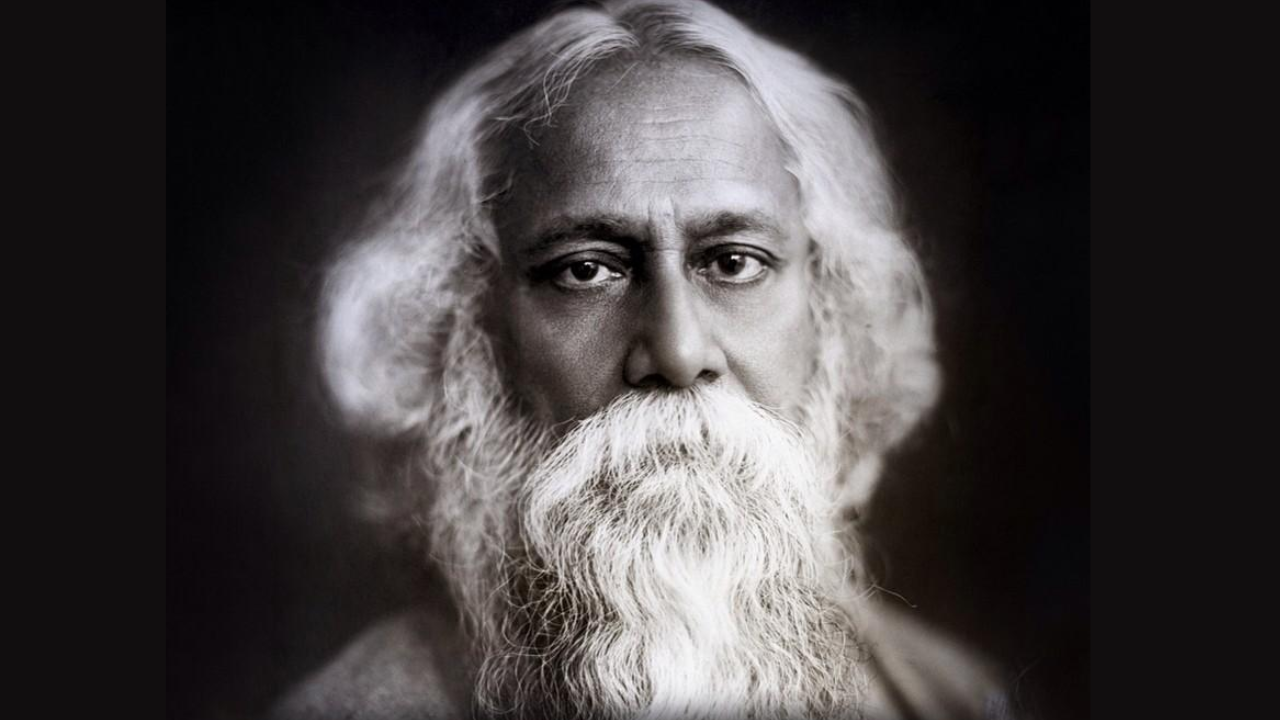
December 27, 1911 – The day a song was first heard at the Congress session in Calcutta began a chapter that culminated in India’s national anthem, and became a shared national voice.composed by Rabindranath TagoreOriginally in Bengali, this hymn would, almost four decades later, be adopted as the national anthem of India. At the time of its first presentation, it was presented as a patriotic composition at a gathering of a political organization that was still shaping its role in India’s anti-colonial movement.
Calcutta session of 1911
The Congress session of 1911 was held in the Bharat Sabha, a one-storey building on Bowbazar Street, Calcutta, in the presence of the then Congress President, senior liberal leader Bishan Narayan Dhar. Other prominent figures there were Ambika Charan Majumdar and Bhupendra Nath Bose.At this point in its history, the Indian National Congress was not a political party in the modern electoral sense, but a national organization that brought together leaders, intellectuals, professionals, and activists demanding constitutional reforms and rapid self-rule. Its annual sessions were forums for political resolutions as well as cultural expressions linked to the emerging nationalist sentiment.
first performance
Jan Gana Mana Sung before the assembled delegates 114 years ago, it was the second day of the Calcutta session. The demonstration was led by Tagore’s niece Sarala Devi Chaudhurani along with a group of students. Contemporary Congress records referred to the composition as “Janganaman Adhinayak”, describing it as a patriotic song.The lyrics were written in highly Sanskritised Bengali, using a register familiar to audiences associated with the Brahmo Samaj and the emerging Bengali intelligentsia. The song was addressed to “Bharat Bhagya Vidhaata”, a phrase that refers to India’s guiding force or destiny.
Political context of 1911
The Congress session took place immediately after the Delhi Durbar of December 1911, held on the occasion of the coronation of King George V and Queen Mary as Emperor and Empress of India. This was also in the backdrop of the British government announcing the annulment of the partition of Bengal and the transfer of the imperial capital from Calcutta to Delhi.While Jana Gana Mana was being performed in this politically tense environment, it was suggested in some newspapers of the time that it was intended as a welcome or tribute to the British monarch.
Tagore’s explanation
Rabindranath Tagore did not immediately respond publicly to these claims. However, in later years, he flatly rejected the suggestion that the song praised George V. In a letter written in 1937, Tagore recalled refusing an acquaintance’s request to write a song in honor of the British king, and described his reaction as “anger mixed with surprise”.In a more forceful letter written in 1939, Tagore said that he found it insulting to suggest that he would write in praise of a temporary ruler. He clarified that the “Adhinayak” of Jana Gana Mana refers to an eternal guiding spirit of the Indian people, and not to any colonial sovereign. These letters have since been cited in official and scholarly accounts addressing the controversy.He said, “I should only disgrace myself if I cared to answer to those who thought me capable of such infinite folly as singing in praise of George the Fourth or George the Fifth as the eternal charioteer carrying the pilgrims on their journey through the countless ages of the infinite history of mankind.”
Publication as Bharat Vidhaata
Within a month of its first performance, the song was published in Tattvabodhini Patrika, the magazine of the Brahmo Samaj, in January 1912. This magazine was edited by Tagore himself. In print, the song appeared under the title “Bharat Vidhaata” and was classified as Brahmo Sangeet.At the time of publication, the composition consisted of five verses. Each poem discusses different aspects of India’s geography, people and collective experience. The published text confirmed that the song was conceived as a hymn rather than a political chant.
Subsequent initial performances
On January 25, 1912, less than a month after the beginning of the Congress, Jana Gana Mana was performed again at a public meeting celebrating the Hindu month of Magha in Calcutta. This performance took place under the direct guidance of Tagore.In the following years, the song circulated mainly in cultural and nationalist circles, without any official political position. It co-existed with other patriotic compositions, notably Vande Mataram, which had already gained wide popularity during the Swadeshi movement.
English translation
In 1919, Tagore traveled to southern India and stayed at the Theosophical College in Madanapalle, in what is now Andhra Pradesh state. It was here that he translated “Jana Gana Mana” into English in his own handwriting. He titled it “The Morning Song of India”.This translation was not to replace the original text written in Bengali language, but to present its meaning in other languages. The handwritten manuscript has since been preserved and reproduced in various archives.
English translation of Jana Gana Mana by Rabindranath Tagore (Image credit: Nobel Prize handle on x)
song during freedom struggle
During the 1920s and 1930s, Jana Gana Mana continued to be performed at cultural functions, although it did not displace Vande Mataram as the most widely recognized nationalist song. Both compositions occupied separate places in the symbolic repertoire of the independence movement.The song gained additional political resonance during World War II, when it was adopted by Subhash Chandra Bose’s Indian National Army (INA) as one of its songs. It was sung by INA units in Southeast Asia and later by INA members in Japan. This further mainstreamed the song’s association with anti-colonial resistance.
1947: International demonstration
Jawaharlal Nehru, the then Prime Minister of India, reported in a letter that the performance of “Jana Gana Mana” received positive reviews, with delegations from various countries requesting a copy of its sheet music.However, at that time, India had not yet adopted a national anthem, and no official alternative was even considered.
debate in the Constituent Assembly
After independence, the newly established government was faced with the question of choosing a national anthem. This decision was basically of constitutional and symbolic importance. Thus, the matter was referred to the Constituent Assembly for consideration.Both Jana Gana Mana and Vande Mataram were considered. While Vande Mataram played a central role in the freedom struggle, there were some apprehensions about its suitability for performance at international events as well as its musical adaptability.The matter was raised in Parliament by Prime Minister Nehru on August 25, 1948. He said, “It was thought by some people that the tune of “Vande Mataram” with all its great charm and historical background was not easily suitable to be played by orchestras in foreign countries, and that it did not have enough movement. Therefore, it was felt that Vande Mataram should remain the quintessential national song in India, but the tune of the national anthem should be the tune of Jana-Gana-Mana.,
adopt as national anthem
On January 24, 1950, two days before India became a republic, Dr. Rajendra PrasadThe Speaker of the Constituent Assembly formally announced the adoption of Jana Gana Mana (Hindi version) as the national anthem of India. The declaration specified that, “The composition of words and music known as Jana Gana Mana is the national anthem of India, subject to such changes in the words as the Government may authorize when occasion arises; and the song Vande Mataram, which has played an historic role in the struggle for Indian independence, shall be honored equally with Jana Gana Mana and shall have equal status with it.” I hope this will satisfy the members.”Only the first stanza of Tagore’s original five-stanza composition was adopted. The playing time of the officially recognized version is approximately 52 seconds.
Consequences and legacy
Rabindranath Tagore did not live to see his composition accepted as the national anthem. He died in August 1941, almost nine years before the Constituent Assembly took its decision.Notably, Tagore is the only person in world history to have written two national anthems. His song “Amar Sonar Bangla” was constitutionally adopted as the national anthem of Bangladesh in 1972.With time, the last four stanzas of ‘Jana Gana Mana’ gradually died out. However, the national anthem has been performed in its entirety on special occasions. The musical composition of the national anthem of India was standardized to accommodate orchestral performances during official or international ceremonies.
From its initial performance in a small auditorium in Calcutta in 1911 to its eventual adoption as the national anthem in 1950, Jana Gana Mana followed a long and documented journey shaped by political change, cultural debate and the constitutional process.


