



The average dairy cow in the US produces 30 liters of milk per day; A cow in Africa, only 1.6. This 19-fold difference – call it the dairy divide – has huge consequences. Stopping even some of this would reduce poverty, provide better nutrition to children, reduce greenhouse gas emissions and perhaps even reduce the likelihood of civil war. The good news is that cows can become more productive due to the proliferation of old and new technologies. But unhelpful traditions—and climate change itself—make this difficult.
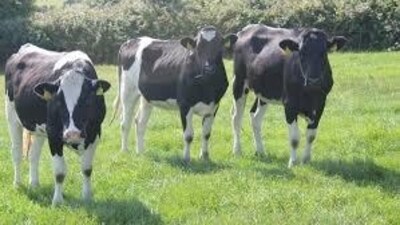
Cows are not fashionable in rich countries. Health-conscious people are abandoning red meat and switching to plant-based milk. The environmentally conscious concern is that cattle account for 7% of man-made greenhouse-gas emissions – far more than any other type of livestock. And techno-optimists have predicted, ever since lab-grown beef was first unveiled in 2013, that cruelty-free cultured meat, as cheap and tasty as it gets, will replace meat harvested from slaughtered animals.
Maybe that day will come. But for now, cows are becoming more important, not less (see Chart 1). The Food and Agriculture Organization of the United Nations (FAO) expects global beef consumption to increase 11% by 2033, and milk consumption to increase 17% by 2033, as the human population grows and more people can afford more animal protein.
There are two challenges before the farmers. First, to meet the growing demand for bovine bounty, even warmer, less predictable weather makes their work harder in many areas. Second, to stop our cows from belching so much planet-cooking methane.
In the first area, progress has been impressive, albeit uneven (see Chart 2). In India, home to the world’s largest herd, selective breeding and better husbandry could increase milk yield per cow from 3.8 liters per day in 2013 to 5.3 in 2022. The global increase was more modest: from 6.4 to 7.4 litres. FAO’s Dominic Visser says livestock in poor countries lag far behind their rich-world counterparts, meaning “the opportunity to catch up to growth is huge.”
Sadly, bovine emissions are increasing. Farmers have little incentive to reduce these. Governments are unwilling to impose regulations that could drive up food prices, consumers are wary of feed additives like bower that curb methane, and emissions from cows are harder to monitor than power stations, because 1.5 of them Billions and their owners. Are generally nomadic.
Yet, increasing productivity – which farmers are strongly encouraged to do – reduces emissions per glass of milk. Sonja Leitner of the International Livestock Research Institute (ILRI) in Nairobi says one cow producing ten liters of milk per day emits much less methane than two cows producing five liters of the gas. FAO considered 11 ways to cut bovine emissions: Before tampering with cows’ genes and diets, it would be important to increase productivity.
The first step is ridiculously low-tech. Alfred Kering, a smallholder near Eldoret in Kenya, increased his daily production from one liter to eight liters by reducing the number of cows he had per cow. He kept as many cattle as possible because among his people, the Kalenjin, a man is judged by the size of his herd. The problem was that he did not have enough land to feed all ten of them properly. An agricultural extension officer suggested he sell something. Now she only has three, but they are well nourished and produce more than twice as much milk as ten. He sells the surplus and is apparently less poor. His children, he says, get better food and get sick less; And he will no longer have to struggle to pay school fees.
The next step in increasing productivity—selective breeding—is more sophisticated. One cannot simply take a high-yielding American cow, drop it into Africa and expect it to thrive. The heat and insects will definitely kill it. Farmers need hybrids that are good milk producers, but also flexible to local conditions. One problem is that small owners like Mr. Kering generally do not keep any records of their cows’ bloodlines. Some people rent a neighbor’s bull when they need to impregnate, leading to inbreeding and unhealthy offspring. Others have tried to create better hybrids, but have been hampered by not knowing what to start with.
So since 2016, scientists at Africa Asia Dairy Genetic Gains (AADGG), a project run by ILRI and supported by the Gates Foundation, have been collecting data on cow genetics and productivity in developing countries. They have extracted hair from 15,000 cows in Ethiopia, Kenya and Tanzania and used the DNA to create a database of bovine genomes.
Additionally, AADGG works with a mobile app that lets farmers collect and relay data about each cow’s milk, health, location, etc. It then uses models to predict which genetic combinations may work best in specific locations. At first, it was hard to persuade smallholders to share information – many thought it would be used to make them pay taxes. But eventually, working with a firm called iCow, AADGG got farmers accustomed to receiving advice digitally. The project in Tanzania saw a 50% increase in productivity among those enrolled.
Knowledge is spreading slowly. Daniel Kemboi, another Kalenjin farmer, says he finds the right bull semen by searching on Google. He browses a website that lets him choose traits ranging from higher milk yield to greater heat tolerance. Their yield has increased from 12-15 liters per cow five years ago to 26. They have also built a cow shed for shade to escape the rising temperatures – a problem that all the local farmers complain about. He says that now he earns ten times more money than he did when he drove trucks in his childhood.
At the national level, productivity per Kenyan dairy cow is expected to increase from 1.8 liters in 2013 to 2.3 in 2022. This is higher than the African average, but potentially much lower than what farmers have shown in the AADGG project. This is much less than the needs of the local people. About 35% of Kenyans are undernourished. The extra protein and iron needed for brain development will come in handy – and indeed for the 22% of the world’s children under five who are stunted due to lack of good food. A study by Baillieu Hailey and Derek Headey of the International Food Policy Research Institute in Washington found that increasing milk consumption in a country was associated with larger reductions in stunting, even after controlling for income.
The pressure to adapt is particularly intense among nomadic pastoralists. “After the rain we would move from one place to another,” recalls Daniel Sinkit, a 59-year-old Maasai herder from southern Kenya. The severe drought in 2021–23 made them realize that their lifestyle is not sustainable.
When local pastureland dried up, they tried to protect their cows in the traditional way – taking them on a 200 km journey to find fresh grass and water, and turning in at night to escape the heat. Many died of thirst or disease. He had to sell to others at depressing prices to buy fodder for the survivors. His herd dwindled from 300 head to 200 head.
If the drought becomes more severe, conflict between herders and sedentary farmers may increase. In good years herders graze their cows on marginal land until farmers harvest their crops. Then, with the farmers’ permission, they would let their cows eat the stubble and pay the farmers in cash and cow dung. But when there is no rain, herders have to leave before the harvest arrives and their cows often destroy unharvested crops. This may instigate conflicts, which may turn into ethnic conflict. A study by Eoin McGuirk of Tufts University and Nathan Nunn of Harvard found that drought in pastoral areas accounted for a “large proportion” of conflicts, including civil wars, in Africa between 1989 and 2018.
Mr. Sinkitt reluctantly concludes that the solution is to settle down. Instead of letting his cows wander far and wide, he now brings most of his food to them. He grows corn, alfalfa and Napier hay and feeds them into troughs. As a proud Maasai man, having to stop traveling is a psychological crisis for him. But if herders’ productivity increases and they become more stable, a major cause of war in Africa could finally end.
Smallholders struggling to feed their children rarely think about their contribution to global warming. But ILRI is helping some countries better estimate their bovine emissions, so they can one day be cut. In an experiment in Nairobi, cows are placed in a metal box called a respiration chamber, equipped with instruments to measure how much methane they belch. Researchers are testing whether altering their diets with locally available beans would make them produce more and emit less.
man’s best enemy
Even rich countries do little to curb livestock emissions. A partial exception is the state of California, which has a goal of reducing methane emissions by 40% below 2013 levels by 2030, and has designed regulations and subsidies to encourage farmers to make their contribution. One technique is to capture methane and sell it as fuel (which is less harmful than letting it float away).
“It’s just feces,” says Simon Vander Woude, a dairy farmer from Merced, near Sacramento, pointing to a tube filled with thick brown liquid. Water currents wash the dung from their 3,200 cows into a pit beneath the tarpaulin. It is an anaerobic digester, a device that uses bacteria to break down organic waste into methane. Walking on a tarp filled with gas feels like jumping on a bulbous trampoline. Biogas is refined and sold. Before 2017, there were fewer than 20 digesters in California; Today at least 149 are in operation or under construction. Private companies offer to build and maintain digesters to earn a cut of state subsidies and the income from selling gas.
Mr Vander Woude’s digester cost $4 million, but is now making a comeback. And there are other promising technologies, too. Studies show that adding red seaweed to cattle feed can prevent methane emissions, although estimates by how much vary widely.
A Texas firm, STGenetics, sells a device to help farmers raise cows that produce more milk while eating and thus emit less. The firm’s chief scientific officer, Pablo Rosse, says “there is still a lot of work to do” to convince farmers that this will save them money (on feed) without sacrificing other qualities.
If cow burps and farts were taxed in a way that reflected their harmful impact on the climate, farmers would have incentives to curb them, and consumers would have incentives to cut back on emissions-heavy foods. will get. In June the Danish government said it would impose a levy on emissions from livestock. So far, this is the only one.
Sign up for climate change coverage climate issueOur fortnightly subscriber-only newsletter, or visit our Climate Change Center,


