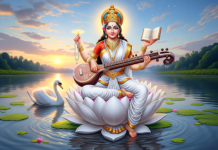
A little journey of sunlight through Capricorn brings the sun to the entry of Makara on the day of Makar Sankranti. Its solar characteristics are what distinguishes this great festival of astronomy among the Hindus from other myriad lunar festivals across the country. The actual solar entry into the constellation of the Makara or Capricorn is marked astrologically to imply that this is the upsurge, or actual beginning of the journey, of the Sun in the north.
Makar Sankranti means new beginnings and the bounty of material comforts and light over darkness- traditionally observed on or about January 14.
The word ‘मकर’ denotes for the Capricorn zodiac sign,which is represented by-goat, and ‘संक्रांति’ symbolizes change. Hence this special celebration, when the Sun enters the Capricorn sign, is Makar Sankranti.
That’s how the festival denotes the Sun’s transition into Capricorn status, which announces good beginnings and positive changes.This marks for Hindus the end of the inauspicious phase of Daksinayana and the beginning of the auspicious phase in Uttarayana.
As per Hindu texts, divine spirits wake up during Uttarayana; souls departing during this time o achieve mukti.
As emphasized by Bhisma Pitamah in Mahabharata, on such a very auspicious moment the glorious sun started its northward journey to Uttarayana; he was to leave his physical form.
In different parts of the world, Makar Sankranti is observed as a festival with different names and each name represents a different cultural background with its own significance.
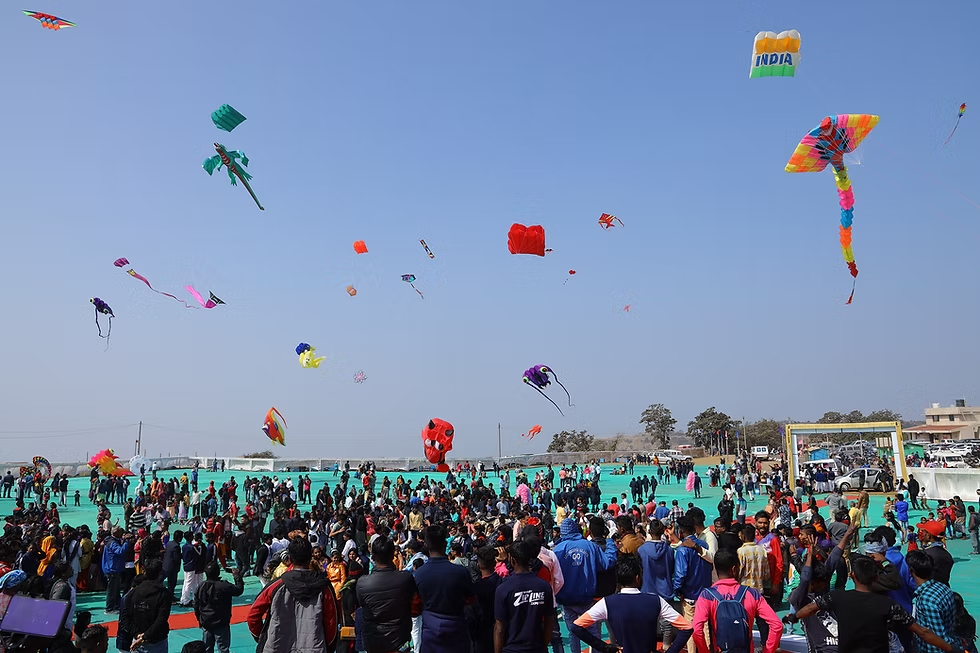
Uttarayan in Rajasthan and Gujarat
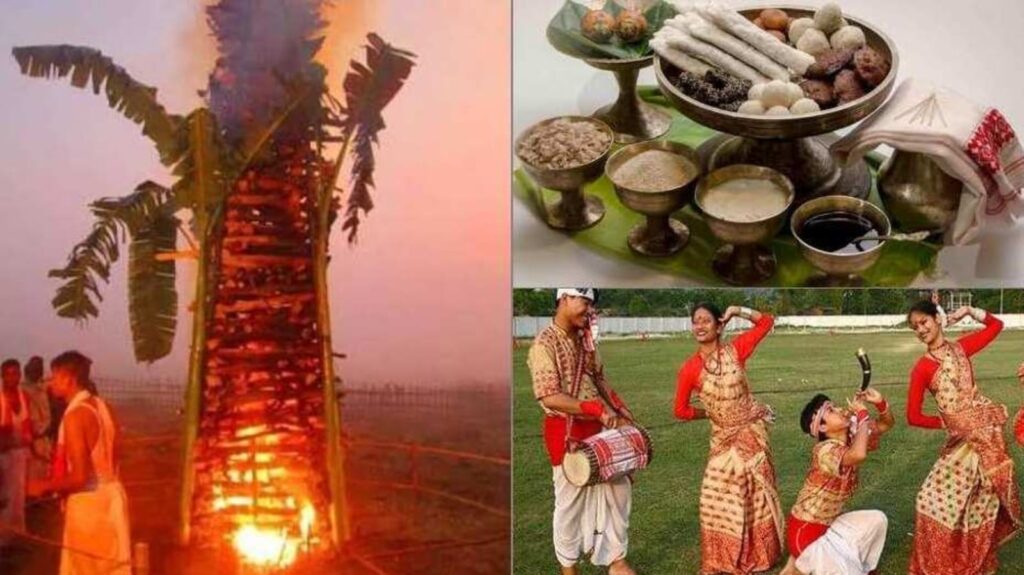
Magh Bihu/Bhogali Bihu-Assam
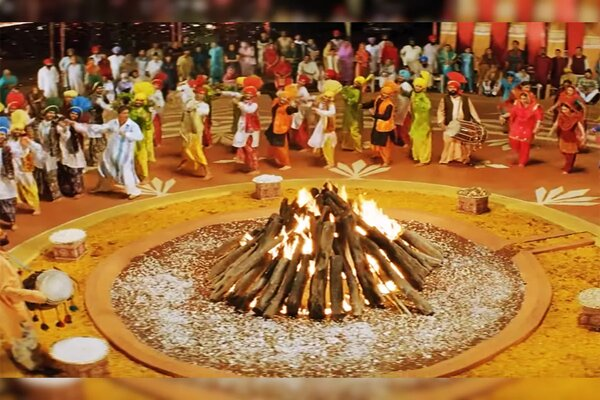
Lohri- in Punjab
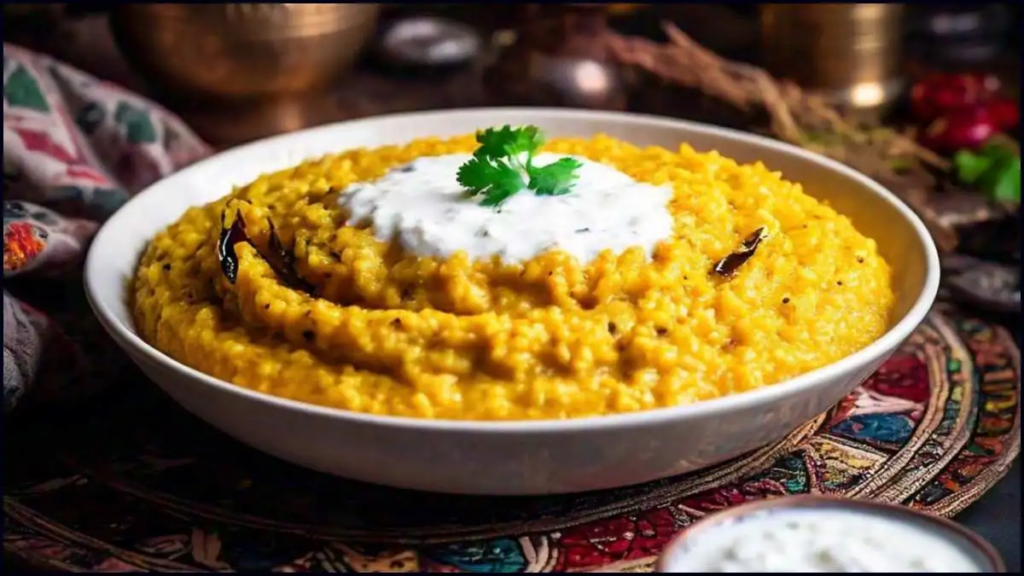
Khichdi Parv- in Uttar Pradesh and Bihar
Beyond the Indian Subcontinent, this is known as:
Maghe Sankranti in Nepal
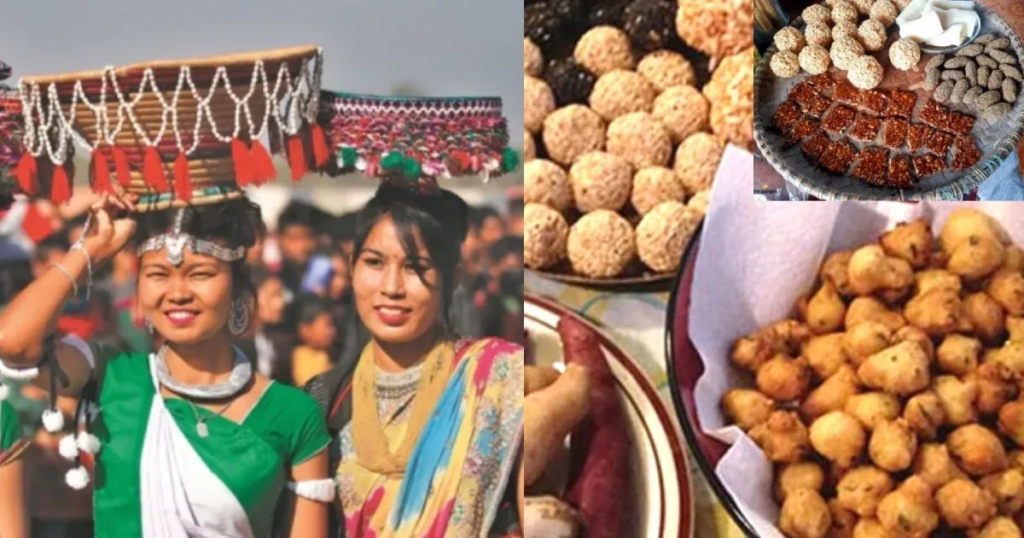
Names may change but the spirit of newness, thanksgiving, and harvest endures. Makar Sankranti-Rituals of Holy Bathing and Charity
Bathing on this day is believed to wash away sins; hence on the auspicious day, holy bathing takes place in rivers like Ganga, Yamuna, Godavari, and Narmada. The next and perhaps the most important ritual is to perform charity by feeding the poor and giving things like clothes, grains, or even money.
Tradition of Til and Gud-Exchange of sweets made of til and gud in Maharashtra with the words “तिल गुड़ घ्या, गोड गोड बोला” which means, “Eat sweet and speak sweet words.” It spreads a message of friendship for the festival sweetened with harmony.
Kite Flying: The skies over Gujarat and Rajasthan are alive with colorful kites. Flying kites stands for liberty and happiness-man having his try over all chains.
Harvest Celebration: Giving thanks to Nature and the Sun God-victuals get symbolically offered, freshened with a successful harvest before being eaten.
Food for Makar Sankranti
A food of tremendous spiritual and scientific importance. Most famous food items include:
Til laddoos, Gur chikki, Pongal rice, Khichari, Sweet rice, Peanuts, and jaggery sweets
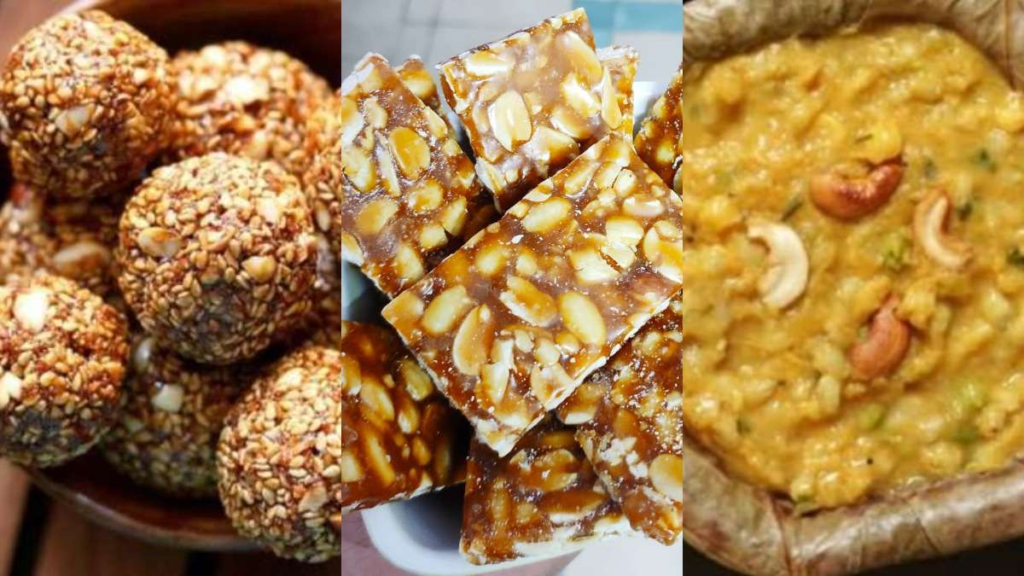
Sesame seeds warm the body and build immunity, while jaggery cleanses blood and aids digestion-just what the body requires in winter.
Scientific Importance of Makar Sankranti
Makar Sankranti is far from a festival, for the sun along this path is not joined with warmth; there could be scientific explanations for this.
1. Astronomical Importance: It marks the position of the sun changing from the southern to the northern hemisphere; days will start lengthening gradually, which will lead to the fading away of winter.
2. Health Importance: It is obvious that during winters, there is less immunity and almost no digestion, due to which all these desserts are prepared mainly from sesame, jaggery, ghee, and grains. They are all energy-giving and warming foods.
3. Psychological Imperatives: More sunlight is needed; it is important for mood and productivity; thus it is a boon for mental health. Such wisdom must have been concocted by ancient Indian scientists aeons ago.
4. Eco-Equilibrium: The festival importance brings seasonal foods, supporting agriculture and rendering gratitude to nature cycles. In Hindu belief, planets (Grah) are not only heavenly bodies. They are living energies that influence human life..
Makar Sankranti is the feast extending prognostication to Lord Sun-the Sun God, who is considered to be life-giver. Surya is associated with knowledge and power unto health; therefore, it is said that those who worship this God on this day can cleanse their lives from darkness and ignorance and also from diseases.
Makar Sankranti dwells across every community-caste, language, or region-and unites everyone into one collective whole. Each community celebrates it in its own way but is, nevertheless, filled with equal emotions-thankfulness, happiness, and renewal.
Social Unity and Cultural Unity.Makar Sankranti is the festival that unites people regardless of class, language, or region. These celebrations know no bounds; varied communities pay homage in uncountable ways. Still, a singular spirit runs through the modern-day gratitude, joy, and renewal.
Reminds people that eminent diversity does not divide for Indians but rather is their strength.
Makar Sankranti in Modern Times
Looking into the 21st century, Makar Sankranti will still remain a day to cherish. Increasingly kite festivals are proving to attract tourists from all over the globe; Pongal celebrations are just one among so many Indian traditions titled by an environmentally conscious spirit; and social media is really guiding the science of India to the back of the mind.
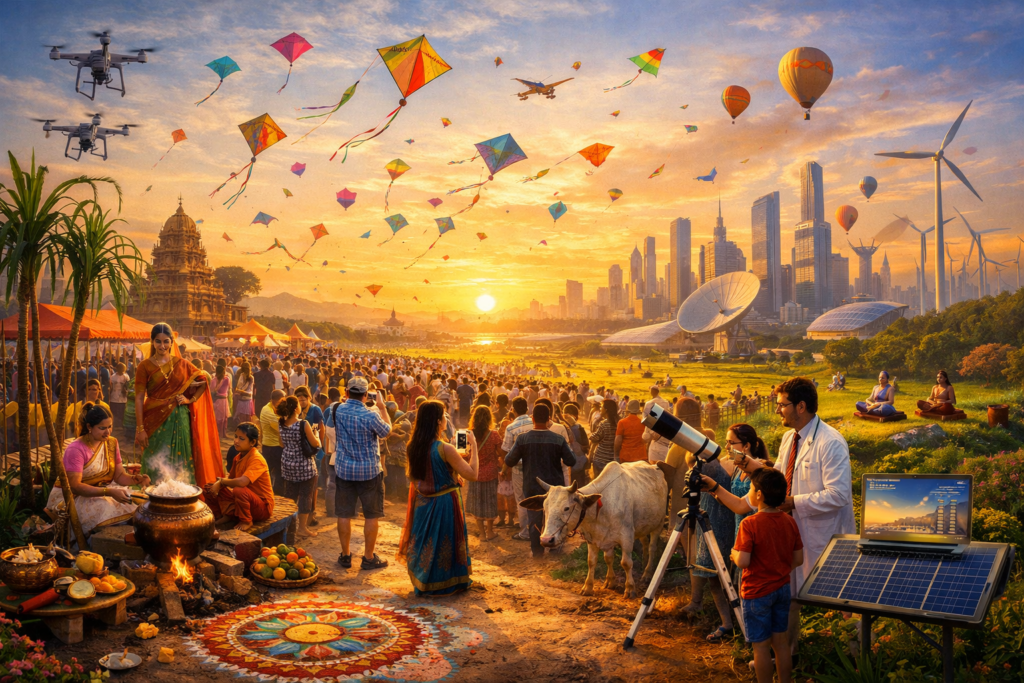
The festival reminds man to slow down and appreciate nature, gives back, and rejuvenate their ties to their origins.It has merged the cosmic order with agricultural prosperity, scientific knowledge, and the awakening of spirit. The event was to show that Hindu culture has never made a division between science and spirituality; it has always kept them together in co-existence and grace.
The ancients now have to repeat the momentum generated by the northward movement of the sun as a portent presenting through Makar Sankranti how man can rise above negative thinking into light carefully trodden in the path of knowledge, compassion, and equilibrium.
Even the very Makar Sankranti that shall channel ancient India to this very modernity puts the whole world on a seesaw of two extremes.