



“Gar firdaus bar-rue zameen ast, hami asto, hami asto, hami ast” – The timeless line, attributed by many to Amir Khusro and famously used by the Mughal emperor Jahangir, resurfaces every winter as Kashmir enters its most difficult but most charming period – Chillai Kalan. And as the valley embraces 40 days of bitter cold, this Persian phrase seems more apt.
A valley wrapped in white
With snow covered roofs of houses, snow covered deodar and chinar trees, Kashmiri people wearing pherans and smoking kangris hidden inside, the valley turns into a beautiful postcard during Chillai Kalan. Srinagar‘Jewel’ – Dal Lake freezes around the edges, its shikaras gently scratching thin sheets of ice, while cracks form across the vast expanse of Wular Lake in Bandipora. Migratory birds fleeing frost-bitten areas in Siberia, China and Central Asia take refuge in the wetlands of Kashmir, adding life to the peace of winter there.
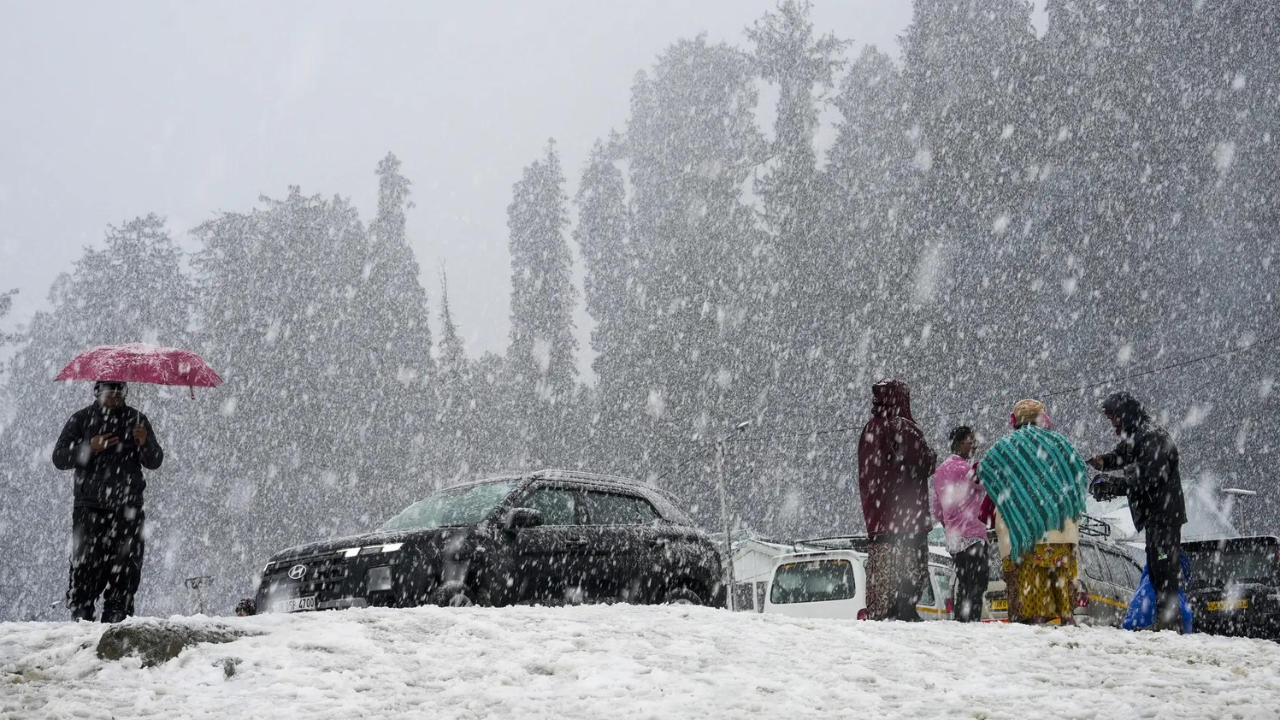
Tourists taking pictures in Gulmarg, Kashmir
As 2026 begins, the grandeur of the Kashmir Valley comes under the grip of Chillai-Kalan, the harshest 40-day and most decisive phase of winter that the region experiences every year.
Kashmir’s winter unfolds in three distinct phases: Chillai Kalan, Chillai Khurd, and Chillai Bachha. It begins with the 40-day Chillai Kalan (21 December-31 January), the harshest period of winter. This is followed by the 20-day Chillai Khurd (January 31–February 19), or “little cold”, and ends with the 10-day Chillai Bacha (February 20–March 2), or “baby cold”. Each stage brings extreme temperatures, snowfall, and frozen rivers and lakes, which play a vital role in replenishing the valley’s water resources.The valley takes on a new dimension of beauty beneath the pristine blanket of snow, with lush green meadows, apple orchards and winding highways up to the upper reaches of the Great Himalayas and Pir Panjal range, all painted white.Kashmir, already one of the most sought-after tourist destinations in the world, becomes even more picturesque during this period. Travel enthusiasts come to see fresh snowfall, feel the intense cold of winter and hear the rustle of icy winds passing through the mountains, adding a dramatic rhythm to the serene landscape.
Tourists return in full force
Winter is traditionally Kashmir’s most dramatic season, but this year the valley is seeing a notable influx of tourists. Gulmarg is reporting almost 100% occupancy, with the tourism department organizing events in Gulmarg, Sonamarg, Pahalgam and Dodhpathri to meet the demand.Hotels in Srinagar, Pahalgam and Gulmarg are full for the first time in months.“This time we are completely sold out,” Altaf Ahmed, general manager of a hotel in Gulmarg, told IANS.
‘Chillai Kalan rules like a king’
For many locals, this winter is not just a season but an opening of opportunities to earn livelihood as Kashmir sees a huge influx of tourists during this period.Taufiq Butt, a resort owner in Pahalgam, contemplates Chillai Kalan and describes it in Kashmiri.“Chillai Kalan Gov Panun Hukmabar,” meaning Chillai Kalan rules like a king.In their resort, like other resorts located in the beautiful town of Pahalgam and on the banks of river Lidder, there are no vacant rooms left.“Sir, the situation here is very bad. Tourists are coming from all over India to see the snow… All our hotels, resorts and lodges are overbooked. People are coming with online pre-booking.”The scars of the terrorist attack in Baisran last April had slightly affected the tourist flow, especially around Pahalgam, he said. But Aru, Betaab and Chandanwari – the ABCs of Pahalgam, which are the major destinations, soon started attracting tourists in large numbers.Fresh snowfall after New Year added to the excitement especially in Aru and Betab Valley, known to many as the filming locations of Bajrangi Bhaijaan.
winter tale
Ujjwal Kant, from Sonpur in Bihar, had just returned from skiing and a Gondola ride in Gulmarg when he described the mysterious morning at Chillai Kalan:“Often the sun remains hidden behind a blanket of dense fog in Chillai Kalan.”
Many times the sun remains hidden under a blanket of dense fog in Chillai Kalan.
Ujjwal Kant, tourist
He said: “I came really hoping to experience Chillai Kalan, and it has been unforgettable…frozen streams, quiet valleys and almost postcard-like mornings. We had to change our plans a bit as the roads opened late and there were traffic jams on the highways, yet that didn’t stop tourists.”
The snowfall Kashmir is waiting for
For Kashmiris, Chillai Kalan or the intense winter is as much about celebration as it is about survival. Seasonal snowfall fills the high altitude water reservoirs that feed the valley’s rivers – Jhelum, Indus, Chenab etc., springs and lakes during summer. This makes daily life and survival challenging. After 30 January the snow melts too fast to serve the purpose, which is why the first snowfall of Chillai Kalan is welcomed like a festival.
Life slows down, culture runs deep
Srinagar resident and shawl seller Shafiq Chaudhary says that this season brings a special kind of happiness.“Chillai Kalan has really taken hold this year. The daily routine has become slow as it is very cold in the mornings and water lines often freeze. But people here are used to adjusting – we build layers, start work later, and trust the Kangris more.He further added, “The harsh cold also brings a kind of peace to the city that only winter in Kashmir can produce.”He described the familiar winter scene: pherans, kangariyas, streets filled with locals bundled up, and frequent cups of kahwa and afternoon tea keeping people engaged.
Frozen Dal Lake, and curious travelers
Gulfam Begh, a shikara operator at Dal Lake, captures the essence of winter in Srinagar through the eyes of both locals and visitors.“Chillai Kalan means fewer hours on the water as ice begins to freeze early in some parts of Dal Lake. But tourists still come for the experience. They are mesmerized by the thin ice sheets on the banks,” he said.
Dal Lake at Chillai Kalan Charan, Srinagar
He said, “The work is hard – hands go numb quickly – yet this season has its own magic. The stillness of winter attracts serious travelers.”
driver on slippery roads
Anantnag-based driver Mohammed Zaheer feels the winter both helps and challenges him: “For us drivers, Chillai Kalan is both a challenge and a boost… the roads are slippery in the morning… but the number of tourists has increased as they want to explore the snow spots.”
“Business remains steady, although we spend more on heaters and maintenance. Cold tests everyone, but it also brings tourists who appreciate Kashmir’s winter charm,” he said.
within freezing boundaries
As the bone-chilling cold is increasing in the Himalayas and the grip of the 40-day Chillai Kalan is increasing Jammu and KashmirDefense establishment sources told ANI that the Army has intensified anti-terrorist operations in Kishtwar and Doda districts in the south of the valley. Undeterred by cold temperatures, difficult terrain and heavy snowfall, Army units have ventured into high, snowy terrain to pursue Pakistani terrorists trying to take advantage of the harsh weather to hide.
“This winter marks a decisive change in the operational approach,” one source said. “Instead of reducing activities, the Army has adopted a proactive winter stance, setting up temporary bases and observation posts within snow-covered areas to maintain sustained pressure on potential terrorist hideouts.”A key feature of this year’s counter-terrorism strategy is an integrated approach. The Army is leading a coordinated effort with multiple security and law enforcement agencies including the civil administration, Jammu and Kashmir Police, CRPF, SOG, Forest Guards and Village Defense Guards. “This inter-agency collaboration ensures seamless intelligence sharing, resource optimization and faster operational execution,” the source said.Intelligence from multiple agencies is carefully analyzed to detect terrorist activities and hideouts. Once verified, coordinated operations are initiated, minimizing overlap and maximizing impact. About 30 to 35 Pakistani terrorists are currently in the Jammu region, and intelligence suggests that they have shifted to the higher and mid-mountain areas, which are now largely uninhabited. “These terrorists are believed to be seeking temporary winter hideouts to avoid detection,” the source said.Reports indicate that remnants of these groups are attempting to force out villagers for shelter and food, but their local support has declined rapidly. Constant security vigilance and isolation have limited their ability to regroup or plan attacks.
The forces are focused on two goals:
The Army’s focus this winter is on two goals – eliminating the remaining terrorist hideouts and ensuring they are confined to inaccessible high altitude areas. “Security forces have launched concurrent operations in the valleys, mid-altitude areas and high peaks to maintain overlapping control and deny any possible movement corridor,” the source said. Each operation is followed by continuous surveillance, creating the “surveillance-sweep-surveillance” cycle that is the cornerstone of the Army’s new winter doctrine.
Army expands anti-terrorism operation in Jammu and Kashmir (PTI photo)
Snowy terrain makes the entire task of army operations challenging and also requires special training and equipment. “The Indian Army has deployed specially trained winter warfare sub-units skilled in high altitude survival, snow navigation, avalanche response and snow handling,” the ANI source said. These troops have been critical in maintaining operational effectiveness through the winter.
snow, garden, birds
Snowfall during Chillai Kalan provides the necessary “cool period” that sustains Kashmir’s apple orchards, which are the backbone of its economy.And with the freezing of lakes and opening up of wetlands on its banks, the valley has recorded a huge influx of migratory birds this winter, escaping the harsh climate elsewhere.


