



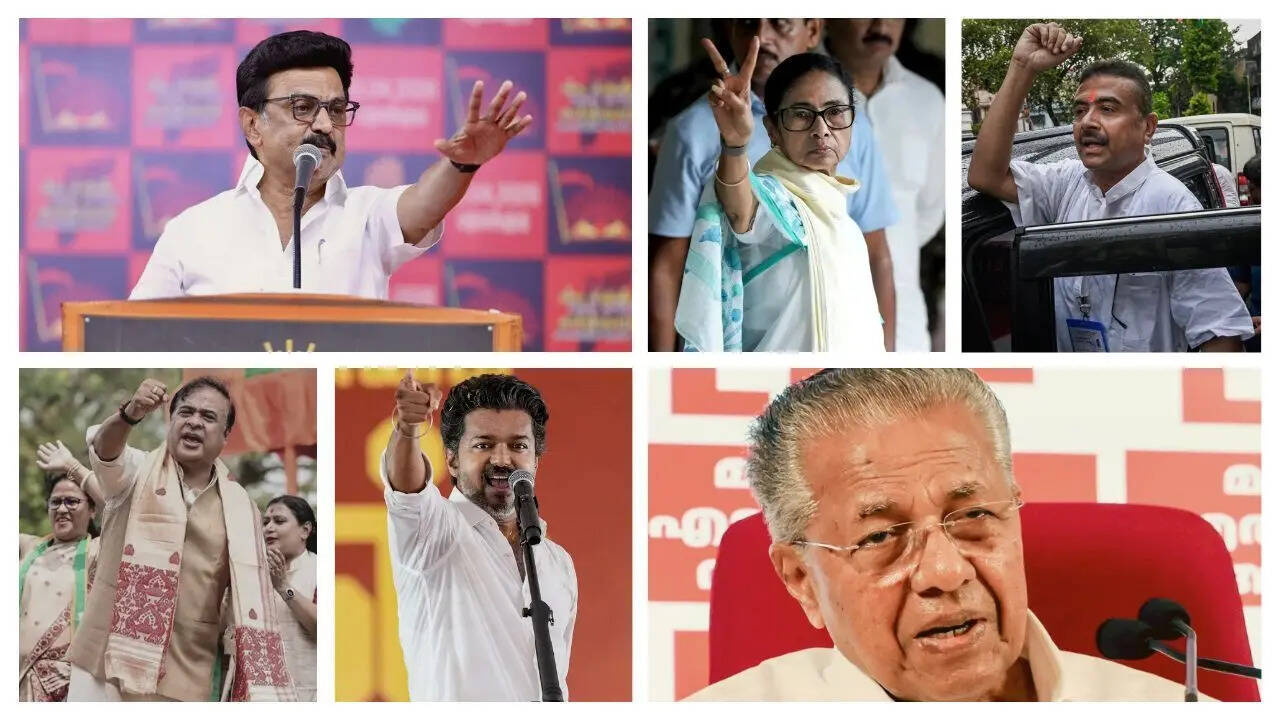
New Delhi: The multi-state electoral verdict on May 4 will be shaped not only by wide swings, but also by a set of constituencies where margins are thin, candidates are high profile and local dynamics are unusually intense. Once counting begins and trends emerge, these seats provide early indications of momentum, coalition cohesion and voter sentiment that could spread across the region. From prestige competition involving chief ministers to testing new entrants in urban battlegrounds, the results from these constituencies will help explain whether power stands or is broken. They also reflect how local issues such as welfare distribution, identity, urban infrastructure and leadership credibility interact with broader political narratives. Keeping a close eye on these seats will provide a clearer read of the decision than just the main seat numbers. This increased relevance can also be gauged from the strong voter participation across various regions, with voter turnout being strong and led by West Bengal’s historic participation of over 92 per cent as well as Tamil Nadu’s turnout in the mid-80s, Kerala’s turnout at over 78 per cent, Assam’s high turnout at almost 90 per cent. PuducherryReflects extraordinary voter mobilization.
Crown vs Challenger: Round 2
In West Bengal, a set of high-visibility contests are likely to shape the narrative early in the day. Bhawanipur remains central, where Chief Minister Mamata Banerjee is defending her long-held bastion against an emerging challenge linked to her ex-protege Suvendu Adhikari and his camp. The seat’s mixed electorate and sharp margins in recent cycles make it a sensitive indicator of urban consolidation for Trinamool. Congress (TMC) and Bharatiya Janata Party (BJP).Nandigram again attracts attention as a prestige battleground linked to the earlier rivalry between Banerjee and Adhikari. Identity, local networks and candidate credibility intersect here, and even a small change can carry symbolic weight beyond the constituency. Noapara, located in the Barrackpore industrial area, reflects the churning among working-class voters and the impact of leadership change. The contest there remains a continuation of efforts to re-establish local leadership.Tollygunge and Rashbehari represent urban Kolkata seats where infrastructure claims and governance assumptions are directly tested. BJP’s efforts to expand its footprint in urban areas are facing pressure from TMC based on development and welfare delivery. Together, these seats will indicate whether the BJP can translate its organizational advantage into sustained urban traction or whether the TMC maintains its lead among urban voters. Moreover, maximum eyes will be on the South 24 Parganas region, which has 31 constituencies, making it electorally decisive in the state. Which will play an important role in determining the outcome of the big battle of Bengal.In the 2021 assembly elections, TMC won 215 out of 294 seats, confirming the scale of dominance that the BJP is attempting to challenge.
Overview of West Bengal Elections
Big upsets and survival tests?
In Assam, the focus is on a set of constituencies that tie the leadership stakes with narrow margins. Jalukbari, which is represented by Chief Minister Himanta Biswa Sarma, is a nod to the urban strength and organizational reach of the ruling coalition. A decisive result in the constituency will strengthen the perception of stability around the current leadership.Jorhat and Nazira are closely watched due to their competitive history and low margins of victory. Jorhat has seen a tight contest between the BJP and the Indian National Congress, which will reveal whether the opposition can translate its presence into seats. Nazira has a legacy dimension associated with the Congress leadership and has made very little difference, which could again prove to be decisive. In the last election, this seat was decided by a margin of just 683 votes, making it one of the closest contests in the state.Barachalla and Golaghat add to the competitive map of the state. Barachala reflects the concerns of rural and semi-urban voters, including agricultural issues and community dynamics, while Golaghat conjures up a larger voter constituency with a history of close contests. The results from these seats will indicate whether the BJP-led alliance can maintain its gains in all areas or whether the Congress can narrow the gap in key areas.
Overview of Assam Elections
In the 2021 election, the BJP-led alliance won 75 out of 126 seats and formed the government with a clear majority.
A new challenger to test the old strongholds?
In Tamil Nadu, key contests bring together leadership, legacy and the entry of a new political force. Kolathur, represented by Chief Minister MK Stalin, is a central test of the ruling party’s urban base. A strong performance will underline the durability of Dravida Munnetra Kazhagam (DMK) support in Chennai.Chepauk Thiruvallikeni has its own weightage with the Deputy Chief Minister Udayanidhi Stalin An attempt is being made to strengthen the party’s position on a seat which has been associated with DMK for a long time. Tiruchirappalli East and Perambur gain prominence due to the presence of Victory and Tamilaga Vetri Kazhagam, who are attempting to disrupt the established alignment. These constituencies will indicate whether a new entrant can convert visibility into electoral attraction.Edappadi K. Edappadi is critical of the All India Anna Dravida Munnetra Kazhagam, represented by Palaniswami. A strong result would indicate that the party has retained a solid base despite recent setbacks. Together, these seats will show whether the state’s political system remains intact or has begun to change with the entry of new actors.In 2021, the DMK-led alliance won 159 seats out of 234, with Stalin’s party securing 133 seats, marking its return to power after a decade.
tamilnadu voting overview
cycle vs continuity
In Kerala, key seats reflect the layered nature of competition shaped by both continuity and challenge. Nemom stands out as a highly competitive suburban constituency where the Left Democratic Front (LDF), the Congress-led United Democratic Front (UDF) and the BJP-led alliance all have a presence. The result here may indicate whether the BJP can maintain relevance in the triangular setting.Thrissur, often described as a politically sensitive urban centre, reflects changes in voter alignment and the impact of recent electoral trends. Vattiyoorkavu and Puthupalli represent opposite dynamics, with urban infrastructure issues on the one hand and heritage-driven loyalty on the other. Puthuppalli, in particular, holds emotional and historical significance for the Congress.
Kerala polling overview
Kony adds a rural and plantation dimension to the mix, where economic concerns and local development issues are prominent. The combined results from these seats will help determine whether Kerala returns to its alternative pattern or whether the current front can buck that trend.
Power, prestige at stake?
In Puducherry, a smaller electoral map still provides a set of decisive contests. Thattanchavady is at the centre, with Chief Minister N. Rangasamy is defending his base against a challenge from a former chief minister. The outcome will impact the continuity of leadership in the Union Territory (UT).
puducherry polling overview
Mannadipet, with its semi-urban and agricultural mix, is known for close margins and could impact the broader outcome. Raj Bhavan reflects the changing political landscape following leadership changes, making it a seat to keep an eye on for realignment. Lospet, with its educated and urban voters, has shown instability in recent cycles, while Mahé brings a different demographic profile that often creates tight competition.Puducherry recorded nearly 90 per cent voter turnout in 2026, the highest in the country for this election cycle.These constituencies together will indicate whether the ruling coalition can maintain its position or whether the opposition can enter a compact but competitive political space.Within these five areas, the identified constituencies combine leadership stakes, competitive histories, and changing voter preferences. Their results will provide early indications about whether power holds, whether the opposition’s efforts will translate into gains and whether new entrants can reshape established equations. As the count progresses, these seats will provide a detailed understanding of the decision, helping to explain not only who wins, but how and why the outcome took shape.


