



Tehran has told Yemen’s Houthi rebels to be ready to close the Bab al-Mandab Strait if the US strikes Iranian power infrastructure – a warning that comes as hostilities escalated in the Gulf this week, bringing commercial shipping through the Hormuz waterway down to a trickle once again.
The signal, if acted on, would open a second front in a war that has already disrupted about a fifth of the world’s oil shipments and pushed Brent crude to around $85 a barrel, up roughly 12% this week. It would draw the Houthis directly into the US-Iran confrontation, and place two of the world’s most heavily used maritime chokepoints simultaneously off-limits to global trade.
US President Donald Trump has repeatedly threatened to hit Iran’s power plants, bridges and desalination facilities unless Tehran ends its attacks on shipping in Hormuz. In a statement carried by Iranian state news agency IRNA, a spokesperson for Iran’s central military command warned on Thursday that if the US targeted Iranian infrastructure, “everything that has remained intact so far due to Iran’s nobility will be smashed to pieces — that is, all the infrastructure in the region”.
Iran’s Islamic Revolutionary Guard Corps issued a parallel warning through IRNA that it could target “all other export corridors that benefit the US and its allies”, adding: “Regional energy exports are either shared by all, or denied to all.”
Also read: Report says Vance received private message from Iran against Kushner and Witkoff; VP refutes claim
A narrow gateway
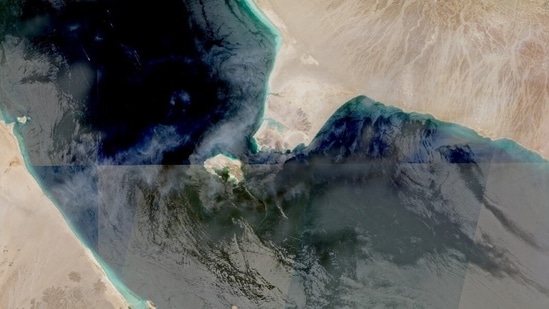
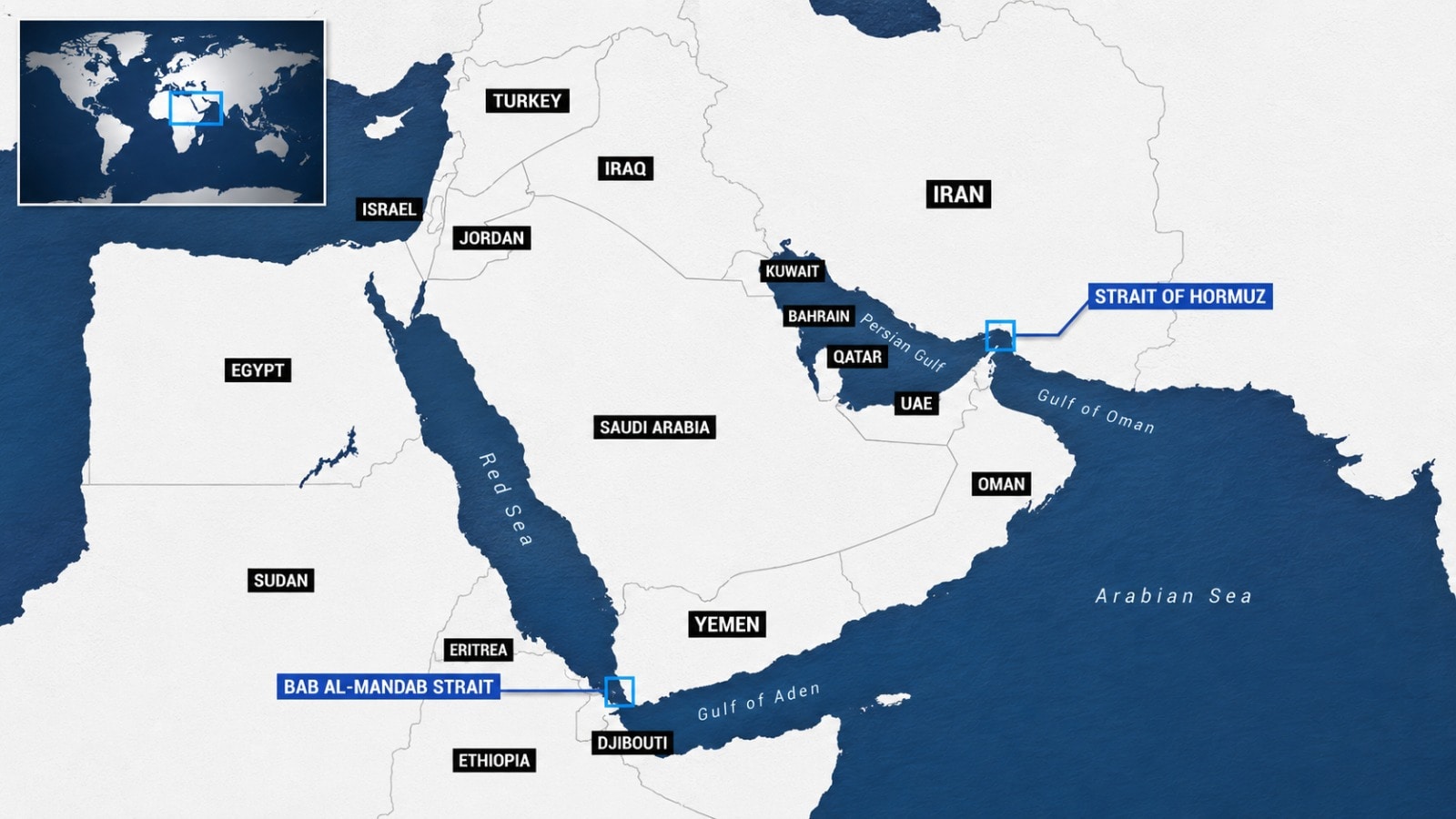
The name itself – Bab al-Mandab, Arabic for ‘Gate of Tears’ – reflects the strait’s treacherous navigation. It is a 32-km-wide strait separating the Arabian Peninsula from the Horn of Africa. It connects the Red Sea with the Gulf of Aden and, through it, the Indian Ocean. The strait is split into two channels by the volcanic island of Perim: a 26-km-wide western channel and a 3-km-wide eastern one, according to the UN Economic and Social Commission for Western Asia.
It is one of the busiest maritime corridors in the world. The Associated Press reported that about 12% of all global trade transits it, most of it moving on to the Suez Canal and Europe.
Before the current escalation, US Energy Information Administration (EIA) data showed that crude oil and petroleum liquids passing through the strait rose from 5.7 million barrels per day in 2020 to 9.3 million in 2023.
That figure collapsed to 4.1 million barrels per day in 2024 as Houthi attacks forced ships to reroute around Africa, and remained near that level through the first quarter of 2025.
How Hormuz’s closure raised the stakes
The war ignited in February changed the calculus sharply. As Iran choked off traffic through Strait of Hormuz — the chokepoint through which about 20 million barrels of oil moved daily in 2025, according to the International Energy Agency — Gulf exporters scrambled for alternative routes to the sea.
Saudi Arabia was best placed to adapt. According to Forbes, it restored full pumping capacity through its East-West pipeline, which runs from its eastern oilfields to the Red Sea port of Yanbu, to its capacity of about 7 million barrels per day. The announcement came only days before the latest escalation. That oil now leaves Yanbu, crosses the Red Sea and exits through the Bab al-Mandab en route to Asian markets, including South Korea and China.
“The importance of Bab al-Mandab has increased specifically amid what’s happening in the Strait of Hormuz. Saudi Arabia managed to re-route some of the volumes…” Noam Raydan, senior fellow at The Washington Institute for Near East Policy, told Time magazine.
The numbers track the shift. Crude oil and condensate flows through the Bab al-Mandab, measured in the narrower crude oil and condensate category, rose from 3.7 million barrels per day rose from 3.7 million barrels per day in the first quarter of 2025 to 5.4 million in the first quarter of 2026, according to the EIA. Liquefied natural gas movement, which had ceased in the second quarter of 2025, resumed and reached 2.9 billion cubic feet per day in the first quarter of 2026.
The Houthi playbook
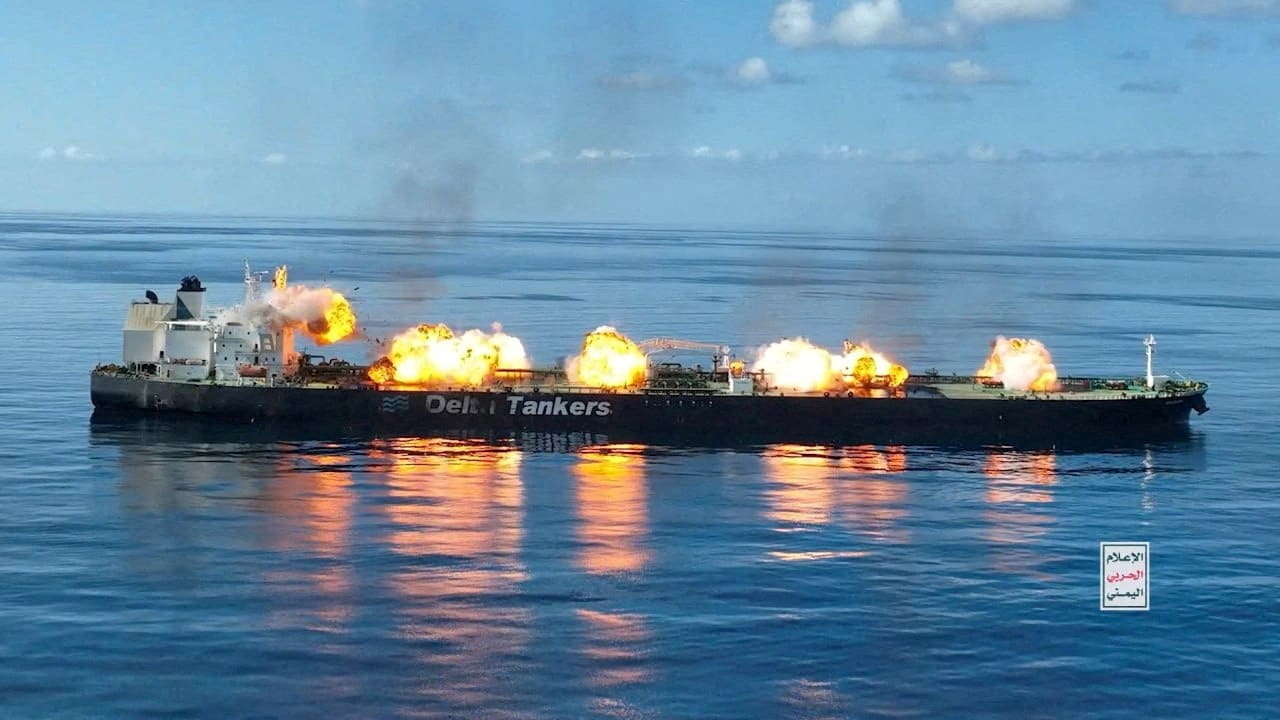
The Houthis have used the strait as leverage before. From November 2023 — a month after Hamas’s attack on Israel — until early 2025, the group attacked more than 100 merchant vessels with missiles and drones in the Red Sea corridor, sinking two ships and killing four sailors, AP reported. The Houthis framed the campaign as solidarity with Palestinians, targeting what they described as Israeli-linked vessels.
The commercial impact was immediate. Container lines began routing ships around the Cape of Good Hope in southern Africa instead of using the Suez Canal, adding roughly two weeks to the Asia-Europe journey. Egypt lost about $6.3 billion in Suez toll revenue in 2024 — a drop of more than 60% from 2023 — according to CyclOpe, a commodities publication.
The Houthis paused their Red Sea attacks after a US-Houthi deal in 2025 and the October 2025 Israel-Hamas ceasefire. This year, they joined the Iran war in March, and in June threatened to resume targeting Israeli-linked ships.
In recent days, they have exchanged airstrikes with Saudi Arabia after accusing Riyadh of bombing the Sana’a airport. Houthi leader Abdul Malik al-Houthi warned in a televised address on Thursday that the group was ready to move “toward a full-scale escalation” if Saudi Arabia continued its strikes.
Mohammed al-Farah, a member of the political bureau of Ansarullah, the Houthi movement, has said a simultaneous closure of both straits could send oil to $200 a barrel — “a dreadful shock”, he said in comments carried by Iran’s state-run Press TV.
Analysts caution against reading the Houthis as a straightforward Iranian proxy.
Analysis from the International Institute for Strategic Studies (IISS) has described the relationship as a partnership in which both sides assert their independence while often aligning on foreign and military objectives. On the Bab al-Mandab, however, the alignment has generally held. One source told Reuters the Houthis have already positioned missiles and drones that could target ships in the Red Sea and were awaiting orders, with members of Iran’s IRGC stationed in Yemen expected to decide the timing.
Also read: Iran’s Chabahar port damaged in US strikes, Hegseth shares collapsing tower’s image
What a dual closure would mean
A simultaneous shutdown of Hormuz and the Bab al-Mandab would leave commercial shipping with essentially one option for moving cargo between Asia and Europe: the long detour around the Cape of Good Hope.
The scale of that rerouting is already visible. According to the International Monetary Fund’s PortWatch platform, which tracks vessel movements using GPS data, commercial traffic around the Cape has more than tripled in three years. Between March 1 and April 24 this year, an average of 20 vessels a day made the passage, up from six in the same period in 2023. Traffic through the Bab al-Mandab over the same window fell from 18 daily transits to five.
Yves Guillo, a supply chain expert at the Paris-based consultancy Efeso, told AFP that transport times between Asia and Europe had already lengthened by about two weeks on average because of Red Sea rerouting, with fuel consumption rising 30% to 50%, and 10% to 20% more ships needed to maintain the same service frequency. The Drewry container freight index showed a 14% year-on-year increase in April in the price of moving a standard 40-foot container.
For India and other South Asian economies, the immediate challenges could be fuel prices and consumer goods. The Bab al-Mandab carries crude, refined petroleum, LNG and liquefied petroleum gas as well as bulk cargo such as grain and steel, and container-ship goods including clothes and toys, Raydan told Time.
Experts said Iran, having demonstrated its ability to hold Hormuz, is signalling it can threaten the alternatives as well. “Iran is willing to go all the way… The message is that not only Hormuz, but Bab al-Mandab, is at risk,” Fawaz Gerges, a West Asia scholar, told Reuters.
Whether the Houthis actually receive and act on the order remains an open question. Abdulaziz Sager, chairman of the Saudi-based Gulf Research Center, said the group retained the capability to disrupt navigation through the Bab al-Mandab but was unlikely to escalate without clear direction from Tehran. Any such move, he added, could invite a broader US military response aimed at degrading Houthi capabilities.


