



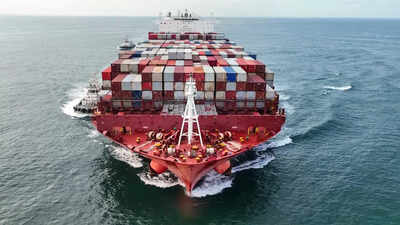
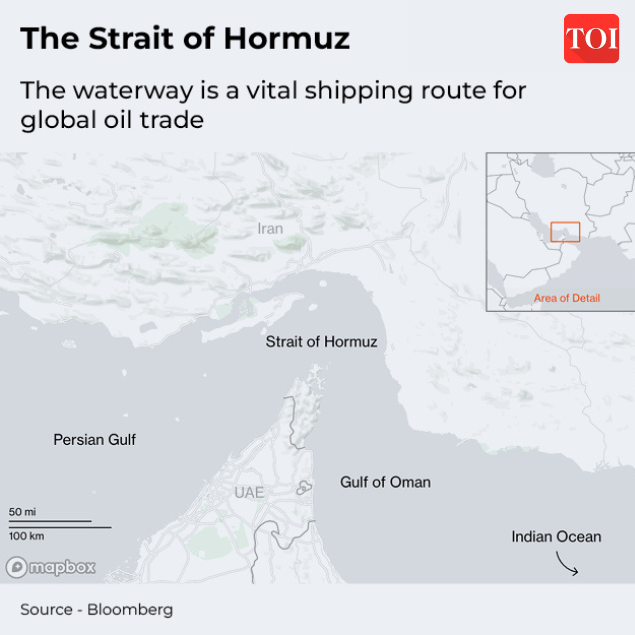
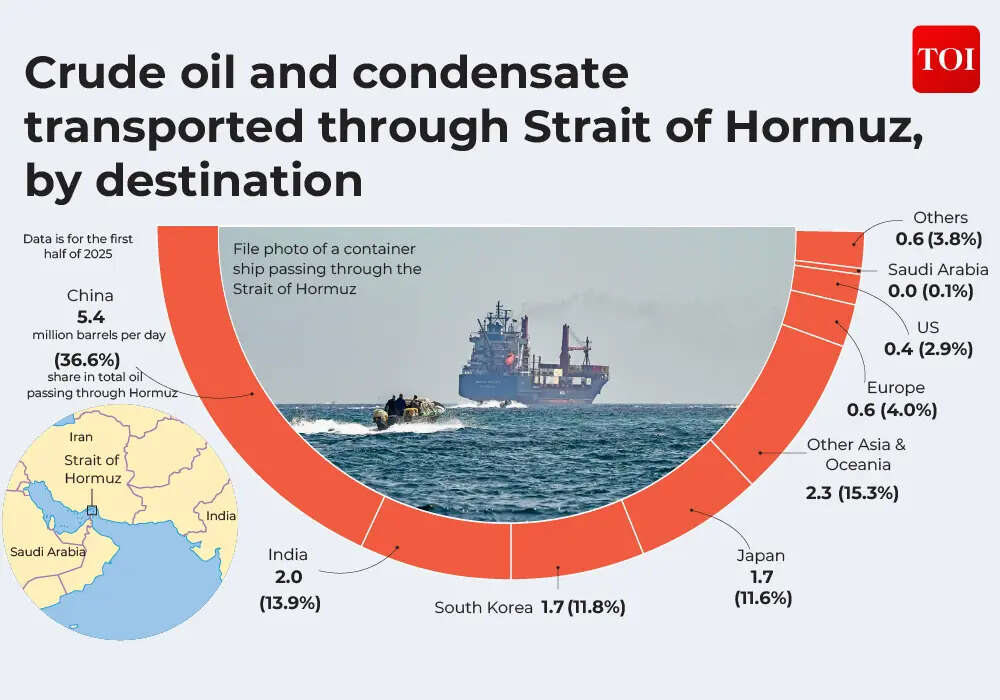
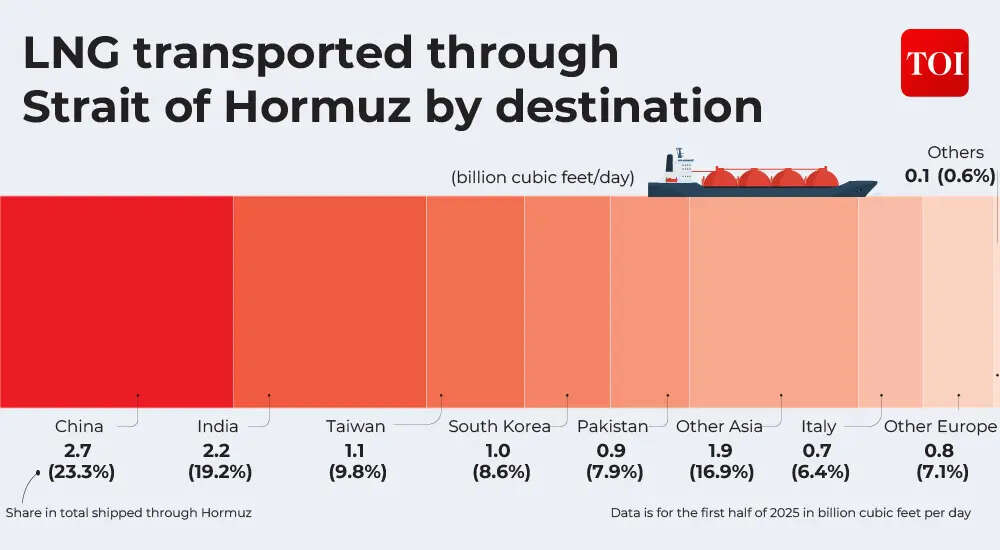
The heat in the Middle East appears to be finally cooling after over 3 months as the US and Iran have reached a tentative agreement to end the war. The conflict rattled energy and financial markets around the world as the Strait of Hormuz, a key route for global oil trade, was disrupted, affecting over 20% of the world’s oil supplies. The focus has now shifted to a key question: when will normal oil flows through the Strait resume? Analysts warn that supplies are unlikely to return to pre-conflict levels immediately, with the recovery process expected to take weeks, if not months. While oil prices fell on Monday following news of the proposed deal, there is uncertainty over how quickly supplies can rebound. Before the conflict, the Strait of Hormuz handled around a fifth of the world’s crude oil shipments. The disruption left hundreds of vessels stranded in the Persian Gulf, while several Gulf producers were forced to scale back output as export routes became constrained.Jotaro Tamura, chief executive of Japan’s Mitsui OSK Lines told Financial Times that shipowners are unlikely to rush back into the Hormuz, until they are convinced that the US-Iran agreement means lasting security. The analyst tolf FT that shipping companies would only return once they are confident that the deal is “material” and the risks associated with the route have genuinely eased.“Given the experiences in the last couple of months, I think it’s reasonable to assume that it may take at least a couple of weeks or if not a month,” Tamura said, commenting on the timeline of the oil flows.Even if the strait is fully reopened, restoring operations will be a gradual process. Tankers will need to enter the Gulf, load cargo and complete long voyages to major Asian buyers, including Japan. To take it in perspective, a round trip to Japan can take between 45 and 50 days. Furthermore, to encourage shipowners to resume transiting through Hormuz, US allies have even proposed deploying warships to escort the shipments.
Why oil won’t start flowing normally overnight
Shipping bottlenecksEven if the Strait of Hormuz reopens immediately, normal operations cannot resume overnight. According to maritime intelligence firm Kpler, around 500 commercial vessels remain inside the Persian Gulf, and they cannot all pass through the narrow waterway at once. Richard Meade, editor-in-chief of Lloyd’s List, said the sector was “not rushing back”, with many viewing mine clearance operations as “prerequisites for safe navigation”. At the same time, shipowners, insurers and captains are expected to proceed carefully even after the waterway reopens. One senior US official said traffic would increase gradually and that it could take up to two weeks for shipping activity to significantly pick up. A return to pre-conflict levels could take even longer, as shipping companies have different risk appetites when deciding whether conditions are safe enough to resume normal operations.Mine clearances underwayIndustry experts say that mine clearance and the restoration of internationally recognised transit lanes are essential before shipping can fully resume. Amena Bakr, head of Middle East energy and OPEC+ insights at Kpler, estimated that clearing mines could take as long as six months. According to a Bloomberg report, the G7 leaders are set to decide on a framework to de-mine the waterway. The process itself remains uncertain, with officials still unclear about the number of mines in the strait or whether any were placed at all.Earlier on Monday, US President Trump said “Ships are starting to go out now, on Friday it’ll be completely opened…They’re doing a little hunting for a couple of mines that they’ve already found, but it’s — essentially ships are starting to go out now.”
What an ‘open’ Strait meansQuestions still remain over what exactly an “open” Strait of Hormuz would look like. Iran has sought the right to collect fees from vessels using the passage and has already charged some ships seeking to leave. While Trump has described the arrangement as a “toll free opening”, Iran has not publicly confirmed this.Torbjorn Soltvedt, principal Middle East analyst at Verisk Maplecroft, said that the period before the agreement is signed allows room for “conflicting statements on the agreement, especially on the extent to which Iran will manage traffic and demand fees”. US and Iranian officials have also offered differing interpretations of the interim agreement, adding to the uncertainty.Any toll arrangement could create complications for shipping firms and financial institutions. The United States and the European Union have designated the Islamic Revolutionary Guard Corps as a terrorist organisation, while the US has sanctioned the entity Iran has identified to collect such fees. Unless those sanctions are amended, companies making payments could face penalties.Legal experts have also argued that allowing Iran to control passage through the strait could conflict with international law governing freedom of under the United Nations Convention on the Law of the Sea.Oil producers face a slow restartThe disruption has affected production as well as transport. Some Middle Eastern producers were forced to halt extraction after running out of storage capacity. Restarting these operations is not always straightforward and can vary significantly by country.
Alan Gelder, senior vice president of refining, chemicals and oil markets at Wood Mackenzie, said Saudi Arabia and the United Arab Emirates may be among the quickest to restore production because they retained access to alternative export routes. Countries such as Iraq, however, could face a much longer recovery. “Places like Iraq could be much more challenged because they’ve had a much bigger shut-in, their fields are more difficult ... it may well take about a year before they get back,” he said.Bakr estimated that restoring production to pre-war levels in some countries could take another three months.Producers want confidence that peace will lastEnergy producers are unlikely to fully resume operations until they are convinced that the Strait of Hormuz will remain open and that the ceasefire will hold. Daniel Sternoff, senior fellow at the Center on Global Energy Policy at Columbia University, said countries would want assurances that the truce would last beyond 30 or 60 days before ramping up output.Claudio Galimberti, chief economist at Rystad Energy, noted that while market sentiment had improved, supply recovery would take much longer. “Sentiment has clearly improved. But sentiment is not the same as supply,” he said. “It will take time for production to ramp back up, for logistics to normalize, and for the risk premium embedded in crude prices to dissipate.”Economists at Capital Economics estimate that energy flows may recover to around 80% of pre-war levels by September.
Escorting ships through Hormuz
As efforts to reopen the Strait gather pace, another question is sailing into focus: who will ensure the world’s most critical oil route is safe for business again? Several US allies have proposed to deploy warships to escort commercial vessels and conduct mine-clearance operations in the passage. The aim is: reassure shipping companies and insurers that the passage is safe, and accelerate the return of global oil and gas supplies disrupted by the conflict.France and the UK have been developing the plans for months. Earlier this March, French President Emmanuel Macron had first proposed escort missions, when the war was still raging. However, speaking at the G7 summit Trump said that extensive support was not necessary as the strait was “going to be open” under the proposed deal. In a joint statement, France, the UK, Germany, Japan, Italy and Canada said they were committed to helping reopen the waterway with “unconditional and unrestricted freedom of navigation”. The countries proposed a “strictly defensive and independent mission” focused on commercial shipping protection and mine clearance.France’s aircraft carrier Charles de Gaulle is already in the region, while countries including the UK, Italy and the Netherlands could quickly contribute assets. Macron said French fighter jets, frigates and the carrier itself could be deployed at short notice if required.The escort proposal is the result of previous operations in the Red Sea, where Western navies protected merchant vessels from attacks by Yemen’s Houthi rebels, according to Reuters. Analysts say that such a mission could provide reassurance to insurers and shipowners, although its importance would diminish if the ceasefire holds.Planning for the initiative has involved dozens of countries, with a meeting convened by France and Britain last month bringing together representatives from 38 nations.


