



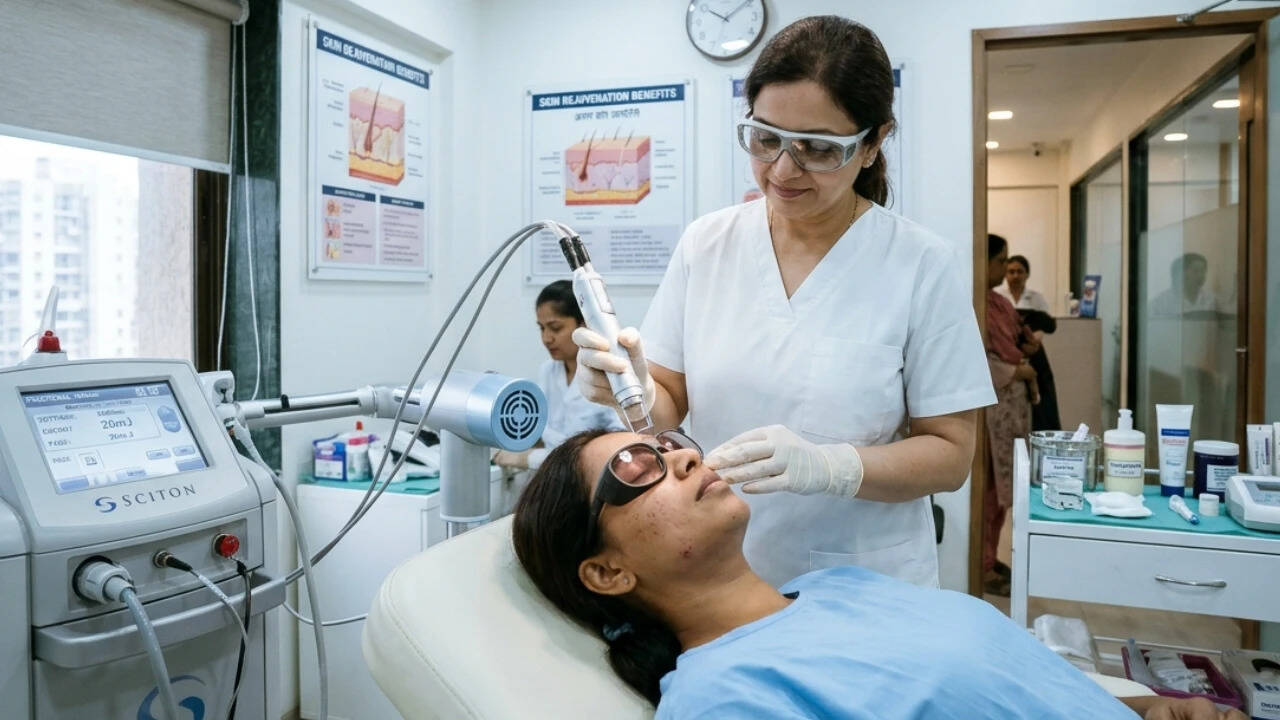
Scroll through Instagram on any given Tuesday, and you are bound to hit the “Glow Up” algorithm. With the dramatic “before-and-after” transitions, an influencer gushing over their new “glass skin” chemical peels, and local clinics promising a “100% guaranteed acne cure,” cosmetic medicine has officially crossed over into pop culture.It feels less like an invasive clinical procedure and more like buying a new pair of sneakers. One click, instant gratification.In India’s hyper-visual, social-media-obsessed culture, looking “filtered” in real life has created a massive boom for cosmetic clinics. But behind the glossy aesthetic lies a wild-west market where non-clinical salon technicians, short-course certificate holders, and non-core medical practitioners are offering everything from laser hair removal to dermal fillers.The reels make the procedures seem cheap and accessible, but the noise creates a great deal of confusion for potential customers and raises risk of botched procedures.To halt this commercial noise and protect patients from predatory marketing, the National Medical Commission (NMC), India’s apex regulator for medical practice, has introduced a strict ethical framework.The goal? Drawing a hard line between legitimate clinical care and commercial hype.
Dermatology vs cosmetology
The biggest source of consumer confusion is the assumption that a “dermatologist” and a “cosmetologist” are the same thing. They aren’t.Confusing the two can leave you with severe skin damage.A dermatologist completes a rigorous eight-and-a-half-year medical training pathway, comprising a Bachelor of Medicine and Bachelor of Surgery (MBBS) degree followed by a three-year Doctor of Medicine (MD) or Diplomate of National Board (DNB) in Dermatology, Venereology, and Leprosy.It also includes comprehensive hands-on training in clinical pathology, complex skin diseases, dermatosurgery, and laser medicine. Similarly, a plastic surgeon undergoes specialized post-doctoral surgical training (MCh or DNB) in reconstructive and aesthetic surgery.On the flip side, “cosmetology” is not a recognized medical specialty or postgraduate qualification under the National Medical Commission (NMC) framework.In practice, the term often describes salon estheticians, technicians, or non-core operators who hold short 3- to 6-month diploma certificates from private, unaccredited institutes.Under the regulatory mandates of the NMC’s ethics, non-core practitioners, non-clinical operators, and salon technicians are strictly prohibited from procedures such as laser resurfacing, deep chemical peels, hair transplants, or injectable dermal fillers.As Dr Tanvi Gupta Arora, dermatology consultant at CK Birla Hospital says, “Earlier, there was no term like ‘cosmetology’ in medical residency. Aesthetic procedures were an integrated part of our clinical curriculum under Dermatosurgery, complete with hands-on surgical training under senior guides.”She adds, “The challenge in India is that regulations were historically lax. Non-clinical entities like salon technicians and short-course diploma holders started performing deep chemical peels, aggressive lasers, and recommending fillers without clinical supervision.”
The NMC rulebook: What changes on your feed
If your favorite clinic’s social media page suddenly looks a lot quieter, blame (or thank) the NMC rules.Now, doctors cannot post promotional “before-and-after” grid shots, transition reels, or retouched result photos on public feeds. Clinical photos are strictly restricted to anonymized, scientific, or educational use. They set clear boundaries on how practitioners can advertise their services, use social media and engage with influencers.Influencer barter crackdown: Free Botox, fillers, or hair transplants given to social media influencers in exchange for “spontaneous” glowing reviews are now outright banned. Doctors cannot solicit or feature patient video testimonials or star-rating screenshots.Killing Superlatives & Guarantees: Phrases like “Best Dermatologist in Delhi,” “No. 1 Plastic Surgeon,” or “100% Glass Skin Guarantee” are illegal. Doctors are also prohibited from claiming non-existent qualifications (like US-style “Board Certified Plastic Surgeon” titles, which do not exist in India).AI & Pay-Per-Lead Bans: AI-generated “synthetic” patient cases, face filters, or synthetic doctor voices are prohibited without explicit disclaimers. Furthermore, clinics cannot pay marketing agencies “per-patient” commissions.As Dr Vivek Gupta, plastic & cosmetic surgery consultant at Madhukar Rainbow Children’s Hospital, Delhi views it, “In a field where social media creates unrealistic expectations, decisions must be guided by clinical suitability rather than promotional claims. Restrictions on promotional photographs and testimonials mean we must adapt our communication strategies.”He also says how he has upgraded the advertising guidelines for his own clinic. “Our clinic now focuses on expert-led public health education rather than promoting individual outcomes,” he says.
Shift in strategy: Before vs after the guidelines
The daily operational shift across Indian aesthetic clinics is stark.In the earlier, largely unregulated aesthetic medicine market described in the draft, clinics relied on visuals that showcased dramatic transformations and could create the impression that similar results were achievable for everyone.Under the NMC-compliant approach, clinics shift towards educational content, such as anatomical diagrams, procedure explainers and skin-science reels.Rather than promoting individual treatment outcomes, these formats help explain medical conditions, how procedures work and what patients should understand before considering treatment.Dr. Vivek Gupta acknowledges that while digital platforms remain an important source of information for people exploring aesthetic options, restricting promotional material presents a distinct communication challenge.“Restrictions on testimonials, promotional photographs, and advertising can make it harder to communicate treatment outcomes and recovery experiences,” he says.However, he maintains that “the solution lies in adapting communication strategies rather than compromising ethical standards. Clearer guidance on distinguishing medical education from commercial promotion would help practitioners remain informative while complying with professional regulations.”He explains that his practice uses digital platforms to discuss common cosmetic concerns, treatment options, recovery expectations, and potential risks, such as acne scars or skin aging, while strictly avoiding exaggerated claims or guaranteed results.“The objective is to build credibility through scientifically accurate information and responsible communication rather than promotional testimonials,” he explains.This strategic overhaul also extends to how doctors manage public interaction on digital platforms. Dr. Tanvi Gupta Arora notes that sponsored endorsements and flashing contact numbers over educational reels are now firmly off-limits.“Under the guidelines, we cannot do sponsored product endorsements or flash clinic phone numbers over educational videos,” she points out, “If I post an educational reel about acne, I turn off comments to prevent direct social media prescribing. We redirect inquiries through proper clinical consultations or telemedicine.”In her experience, this levels the playing field for doctors who built their practice on “clinical labor rather than massive ad budgets.”
Education vs covert marketing
In an era where skincare trends go viral overnight on reels and shorts, the distinction between public health awareness and disguised product placement has grown dangerously blurry.The NMC’s crackdown directly addresses this hidden marketplace by prohibiting barter deals where influencers trade shoutouts for free treatments.Dr Vivek Gupta highlights that the true test of educational content lies in its intent and presentation.“The distinction lies in the information’s purpose and presentation. Public health education helps people understand cosmetic concerns, treatment options, preventive measures, and potential risks,” he explains, “Covert marketing uses educational content to promote a particular procedure or commercial interest. Every communication should prioritise scientific accuracy, balanced information, and patient welfare rather than encouraging people to purchase a specific service or product.“When asked about using non-medical influencers, Dr Gupta reveals he has never relied on them for endorsements.“Aesthetic treatments require individual assessment, and their suitability, risks, and outcomes vary from person to person. Influencers can help raise awareness about skincare, but personal experiences should never be mistaken for medical evidence,” he says, adding that credibility in this field “should ultimately come from clinical expertise and responsible patient care.”Instead of chasing influencer viral loops, his clinic prioritizes expert-led educational content, media interactions, and public awareness initiatives.He asserts, “Trust is also established during consultations, where patients receive realistic expectations, understand potential risks and learn about alternatives. This approach places greater emphasis on clinical credibility than online popularity. In aesthetic care, sustainable trust comes from transparent communication, professional competence and a consistent commitment to patient welfare.”
Performance marketing, DMs, and tele-consult safeguards
The regulatory overhaul doesn’t just stop at Instagram reels; it reshapes the entire digital sales funnel used by modern cosmetic chains.Historically, aesthetic marketing relied heavily on aggressive performance marketing campaigns. Clickbait advertisements proclaiming “Get glass skin in 3 days” or “call now for 50% off hair transplants” were explicitly designed to exploit appearance-related insecurities, feeding directly into pay-per-lead models.Under the new guidelines, performance marketing must be stripped of high-pressure sales tactics, artificial urgency, and guaranteed outcome claims.Dr Vivek Gupta emphasizes that digital visibility must remain factual and consistent with medical ethics requirements.“Campaigns should avoid guaranteed outcomes, misleading claims, patient testimonials used for promotion, and messaging that exploits appearance-related insecurities,” he states, adding that marketing agencies must understand these boundaries.This shift has also forced a total overhaul of digital triage and initial online consultations. In the past, prospective patients could drop a comment under a video or send a direct message (DM) detailing their skin issues, receiving direct prescriptions or treatment quotes from social media managers.Dr Gupta stresses the vital difference between general inquiries and actual consultations, noting, “Digital messages can provide basic information, but individual treatment recommendations require an appropriate clinical assessment.”For tele-consultations, safeguards such as identity verification, informed consent, confidentiality, and proper documentation are essential.“Photographs shared online may not provide sufficient information to determine treatment suitability. Where physical examination or a detailed assessment is necessary, patients should be advised to attend an in-person consultation,” he warns, concluding that “convenience must never override clinical judgement, privacy or patient safety.”
When aesthetics go wrong: The clinical and human cost
When cosmetic procedures are marketed like fast-fashion beauty products, patients pay a heavy price with their physical and financial well-being.Both dermatologists and plastic surgeons frequently find themselves functioning as corrective specialists, tasked with repairing severe damage caused by non-core practitioners or aggressive “assembly-line” cosmetic chains.For instance, in a September 30 order, the Bengaluru urban district consumer disputes redressal commission held a clinic liable for deficiency in service and unfair trade practice after a woman suffered second-degree facial burns during laser hair removal in April.The commission directed the clinic to refund the Rs 1,100 procedure fee with interest, pay Rs 1 lakh in damages and Rs 10,000 in litigation costs, giving it 45 days to comply.Dr Tanvi Gupta Arora highlights how these botched cases unfold in daily practice, pointing out that aggressive commercial chains routinely lure vulnerable patients into spending massive sums on guaranteed outcomes.“Some of these cosmetology chains, what they are doing is they are running these advertisements that ‘we will just cure your pigmentation, you will be 100% free of your pigmentation.’ And people, they fall into the trap and go and spend thousands or lakhs with no result,” Dr Tanvi explains.When these uncalibrated procedures fail, patients are thrown back into the market with damaged skin and exhausted finances.Dr Tanvi notes that treating these complications requires extensive time and care before even touching the patient’s original cosmetic concern.“Sometimes the damages are irreversible. You had so much damage that you now cannot treat it,” she shares, adding: “So you have to further do more procedures. Like sometimes these patients come to me with even worse pigmentation. First I have to spend two to three months correcting that issue, the skin has become thin or it has become burnt, and then we talk about the pigmentation correction.”
How patients can assess practitioners in the post-hype era
The experts map out certain points that a patient could look for to assess the authenticity of the clinic or expert.Verify core medical qualifications: Patients should look for recognised postgraduate qualifications, such as an MD or DNB in dermatology or an MCh or DNB in Plastic Surgery, and verify registration details with the state medical council or NMC register.Dr Vivek Gupta stresses the importance of qualifications and competence: “Plastic surgeons and dermatologists have different areas of expertise, and the procedures offered must align with their respective training and applicable scope of practice. Non-core practitioners must not misrepresent their qualifications or undertake procedures beyond their competence. Patients should be able to verify credentials and understand who is performing a procedure.“Evaluate the consultation: Consultations should offer factual information about diagnosis, risks, alternatives and realistic outcomes, without guarantees or pressure to proceed.Dr Vivek Gupta explains: “Trust is established during consultations, where patients receive realistic expectations, understand potential risks and learn about alternatives. This approach places greater emphasis on clinical credibility than online popularity.”He also cautions against relying on online reviews to judge clinical capability: “Instead of promotional testimonials, patients should focus on recognised qualifications, relevant experience, consultation quality, and transparent discussions about risks, alternatives, and recovery.”Review case examples privately: Instead of public promotional posts, patients can ask to see clinical case records during a consultation to understand the likely scope and outcomes of a procedure.Dr Tanvi Gupta Arora says: “Before and after photos should not be on your social media. You can put it on your website, or if somebody comes to your clinic, then any day they can come to your clinic and then you can show them the before and after pictures or whatever particular procedure they are looking for.”Demand clinical assessment and safety protocols: Patients should ensure that clinics conduct appropriate assessments, use approved devices and injectables, and have emergency procedures to manage adverse reactions. Digital messages and photographs may not be sufficient to determine whether a procedure is suitable.Dr Vivek Gupta emphasises: “Digital messages can provide basic information, but individual treatment recommendations require an appropriate clinical assessment… Photographs shared online may not provide sufficient information to determine treatment suitability. Where physical examination or a detailed assessment is necessary, patients should be advised to attend an in-person consultation. Convenience must never override clinical judgement, privacy or patient safety.“
Putting clinical care ahead of the sales pitch
The NMC guidelines aim to curb predatory marketing, banning influencer barter culture, and restricting invasive procedures strictly to qualified specialists.
Share your thoughts in the comments
Be respectful · TOI community guidelines
For clinics and marketing agencies, this transition demands a total overhaul of digital strategy, swapping sensationalism, clickbait, and artificial transformation grids for transparent, expert-led public education.For patients, the rules offer much-needed protection in a market that has grown dangerously confusing. A cosmetic procedure is not an off-the-rack beauty buy; it is a medical intervention carried out on living human tissue. Ultimately, the new regulatory landscape encourages consumers to value what truly matters when choosing a doctor: prioritizing clinical expertise, authentic qualifications, and patient safety over an algorithm-driven sales pitch.


