Last updated:
It is a community that has historically voted as a block, guided by the legacy and leadership of Matua matriarch Binapani Devi.
Thakurnagar: Matua temple and headquarters of the All India Matua Federation. (Image: News18)
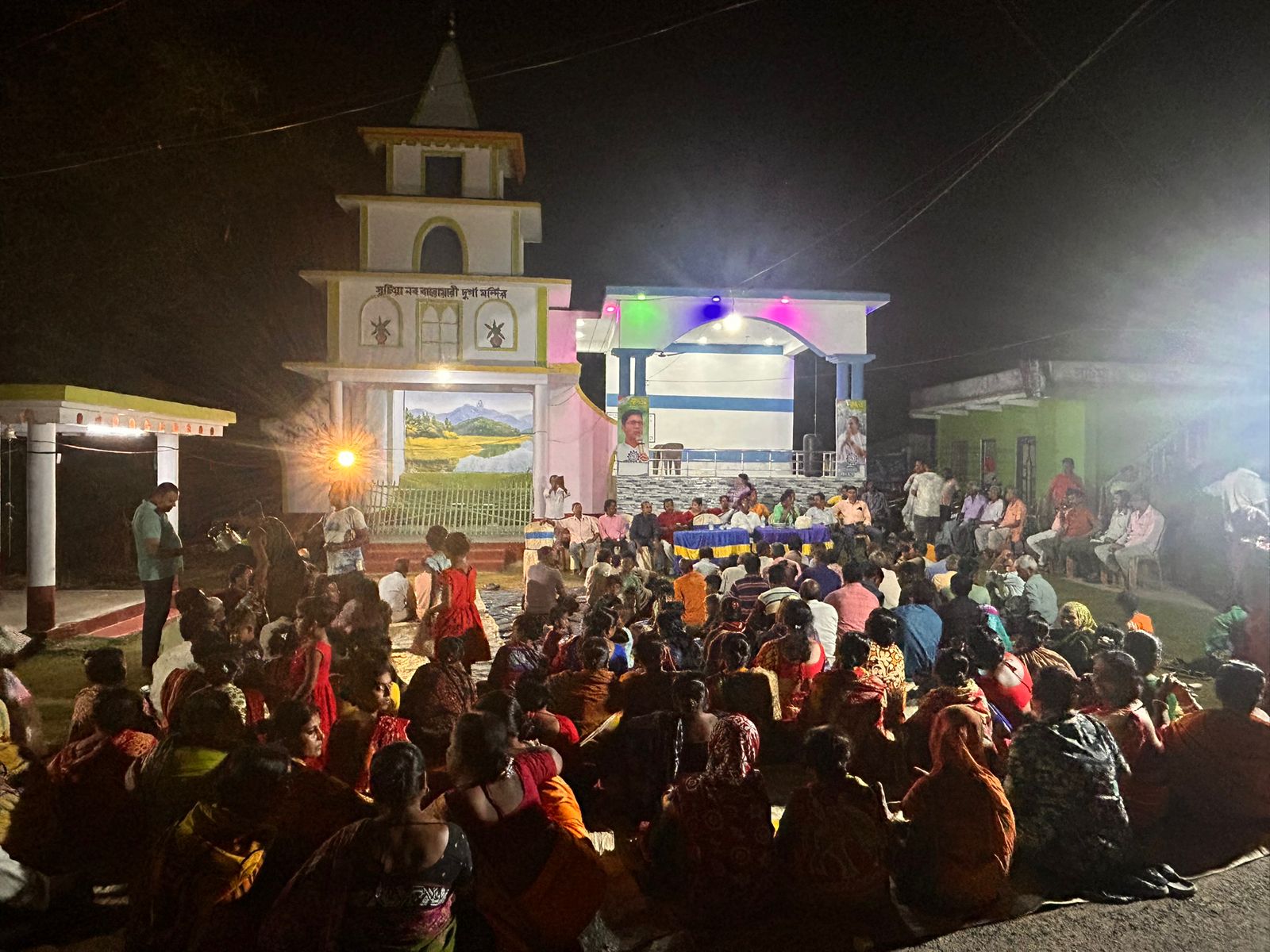
Elections in Matua Garh Thakurnagar (North 24 Parganas) have always been about identity. But in 2026, identity itself feels in danger. The political battle here is no longer just between parties, it is within families, within communities and increasingly within voter lists. Special Intensive Modification (SIR) has triggered mass extinction, and its impact has been intense in the Matua Belt. Booth level conversations are no longer about candidates or campaigns or even the All India Matua Sangh (the apex body of Matuas). They are now about names missing from the rolls, documents under investigation and growing concern over political invisibility.
It is a community that has historically voted as a block, guided by the legacy and leadership of Matua matriarch Binapani Devi. But today that unity is broken. The Matua vote is disintegrating not only politically, but also socially. And at the center of it all is a deep personal competition within the Thakur family.
Fractures are no longer metaphors. The political fight in constituencies like Gaighata and Bagda has turned into a family feud. At the center of this division are three members of the influential Thakur family, aligned with different political forces, each laying claim to the Matua inheritance. What was once a unified voice is now a contest of legacies.
This division has confused the community. For decades, Matua refugees remained united around a shared identity rooted in history and cultural claim. Today, that identity is being pulled in multiple directions by party lines, personal rivalries, and competing narratives of representation. Political parties, sensing the opportunity, have leaned into this divide. Campaigns here are no longer just about governance, they are about who actually represents the Matuas. And increasingly, there is no clear answer to that question on the ground.
However, the Matua community dominates at least 34 assembly seats, while the community plays an influential role in another 24 seats in districts along the international border with Bangladesh. Therefore, electorally, Matua has been important for both the political parties – Trinamool Congress and BJP.
a community divided
Three members of the same family are in the election fray. All India Matua Mahasangh president Subrata Thakur is the BJP candidate from Gaighata constituency. He is also the brother of sitting MLA and MP from Bongaon and Union Minister Shantanu Thakur. The headquarters of Matua federation is located in Gaighata constituency. The SC population in Gaighata constituency is approximately 43.81 per cent to 49.13 per cent. The Matua community, consisting mainly of Namasudras, is the dominant SC group in this belt.
Subrata’s cousin Madhuparna Thakur is the Trinamool Congress candidate from the neighboring seat – Bagda. As per 2011 census and updated assembly records, SCs constitute 53.14 per cent to 54.81 per cent of the total population in Bagda. According to the estimates of political parties, the share of Matua community in the total vote bank in Bagda is more than 40 percent. BJP has fielded Soma Thakur against Madhuparna in Bagda. Soma Thakur is the wife of Union Minister Shantanu Thakur and sister-in-law of Madhuparna. Madhuparna is the daughter of former Trinamool MP Mamata Bala Thakur, another senior member of the Matua family.
A fractured family is the mirror of a fractured community. After the SIR, members of the community who had earlier voted for the BJP in 2021 and also in 2024 and were hoping that their names would be included as citizens under the Citizenship Amendment Act (CAA), now seem to be in a dilemma. Courtesy- Delayed and sluggish implementation of CAA. Community members, who earlier struggled to get their names registered under the CAA, have now had their names removed.
However, Subrata Thakur held the Mamata Banerjee administration responsible for the delay in implementing the CAA. “All the officials engaged in this work are puppets of Mamata Banerjee. They deliberately delayed the process and created confusion,” he told News 18 in Thakurnagar. However, the CAA is technically the responsibility of the central government. “It’s true. The monitoring is in place. And we are trying to speed up the process. No legitimate Matua will lose citizenship,” he said.
Sir jerk
Layered upon this social cleavage is the disruptive power of SIR practice. Large-scale annulments and decisions have changed the electoral landscape, leaving many people uncertain about their participation in the democratic process. The scale of impact in some parts of the Matua belt is higher than the state average. There are reports of missing names, conflicting entries in many pockets and a feeling that the system itself is in flux.
A senior BJP leader who attended the CAA support camp said, “We know that hundreds of local people, who were in the queue to get citizenship under the CAA, have now had their names removed. We have been able to help clarify some of the names which were subject to the decision. We are trying to mobilize our support base and making every possible effort to keep it intact. But this may have some impact on the elections.”
For the BJP, this is being framed as a necessary reform, a purge of the voter rolls that aligns with its broader citizenship narrative. For the Trinamool Congress, this is a direct attack on the refugee communities, many of whom form the backbone of the Matua population. Speaking to News18, Madhuparna Thakur said, “The maximum number of votes were deleted in Bagda constituency, from where I am contesting. Of the nearly 15,000 votes deleted here, around 90 per cent are from Hindus and mainly from the Matua community.”
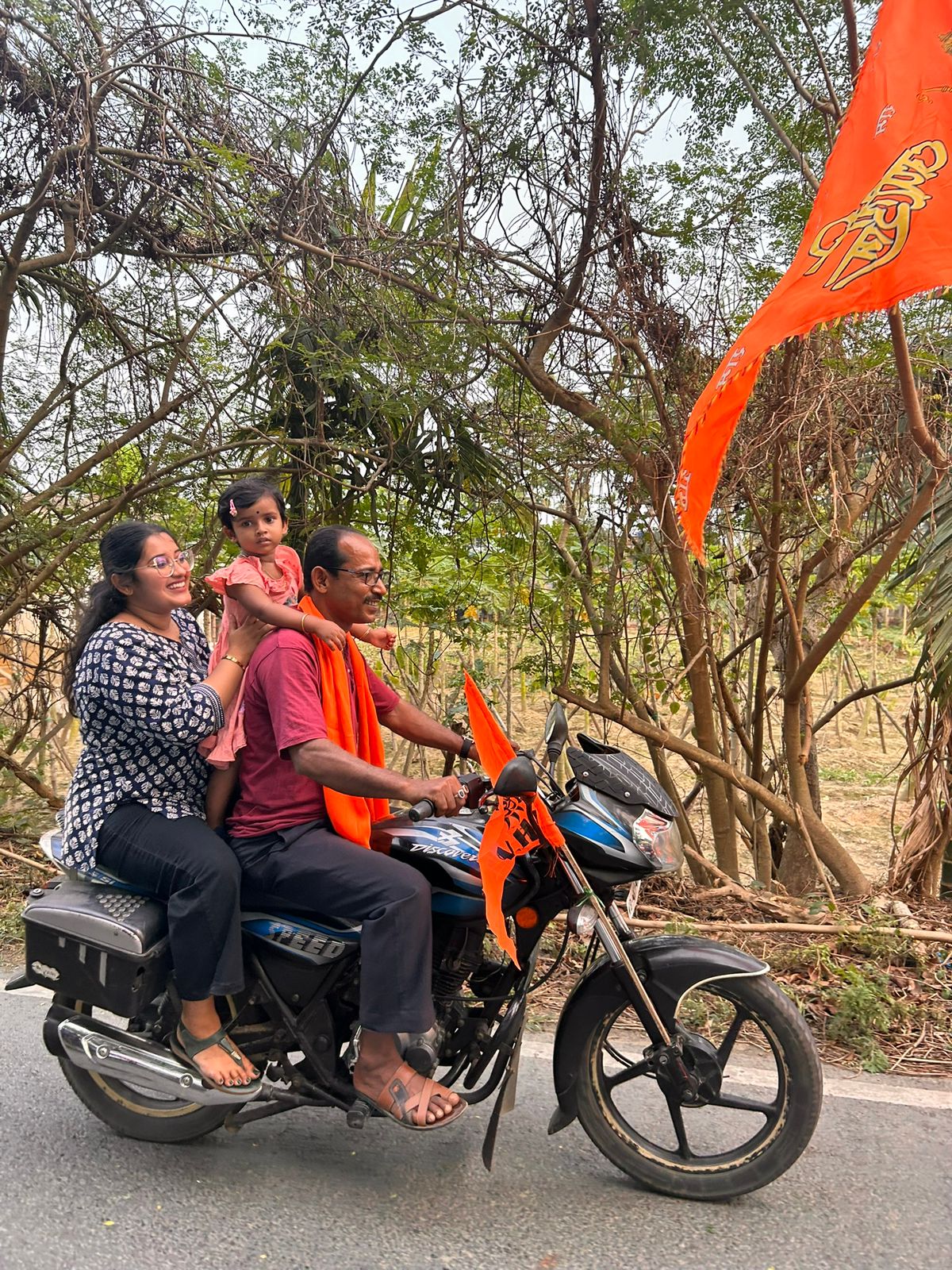
Despite the situation in the border constituencies being sensitive and politically unstable, the BJP is trying to unite Hindus. Ram Navami played an important role during the campaign as the party took out huge processions in the border villages. Even though there is talk of polarization in the city, such a big Ram Navami rally in Bongaon could not have been imagined a few years ago.
Meanwhile, beyond the political framework, the ground reality is stark. Voters are unsure whether they will be able to vote or not. And that uncertainty is reshaping political behavior. The conversation that once centered around development, welfare or even polarization has now been reduced to a single concern, and that is about their survival on paper.
Today the atmosphere in Thakurnagar is not of election enthusiasm but of calm uneasiness. Campaign slogans compete with bureaucratic concerns. Identity, once ensured through voting, now depends on documentation. The Matua belt, long seen as a decisive electoral block, is no longer predictable. It is fragmented, worrying and deeply controversial.
political legacy
Except for occasional squabbles, the Matua people have largely voted as a united block, and shifted allegiance not on ideological but strategic grounds. The roots of this political journey are very deep.
Pramath Ranjan Thakur (PR Thakur), great-grandson of Matua founder Harichand Thakur, was elected to the Constituent Assembly in 1946 with Congress support. He later won the 1962 West Bengal Assembly election as a Congress candidate, became a minister, revived the Matua federation and played an important role in the establishment of Thakurnagar. He became MP from Nabadwip as a candidate of Bangla Congress under the leadership of Ajoy Mukherjee.
Since then, the community’s political representation has largely remained within the Thakur family and has been closely associated with parties and generations across parties and generations, from Manjul Krishna to Mamatabala, Shantanu to Subrata and Soma to Madhuparna Thakur. The Matua vote has thus become increasingly associated with those in power or who are perceived as capable of protecting their refugee status and settlements. Unlike Muslim voters, who are generally attracted to ‘secular’ structures, the Matua calculus is rooted in security and continuity. However, the 2026 elections and the impact of the SIR have disrupted this pattern. For the first time, the community is clearly divided – not just politically, but also over electoral rolls.
April 14, 2026, 10:29 IST
read more