



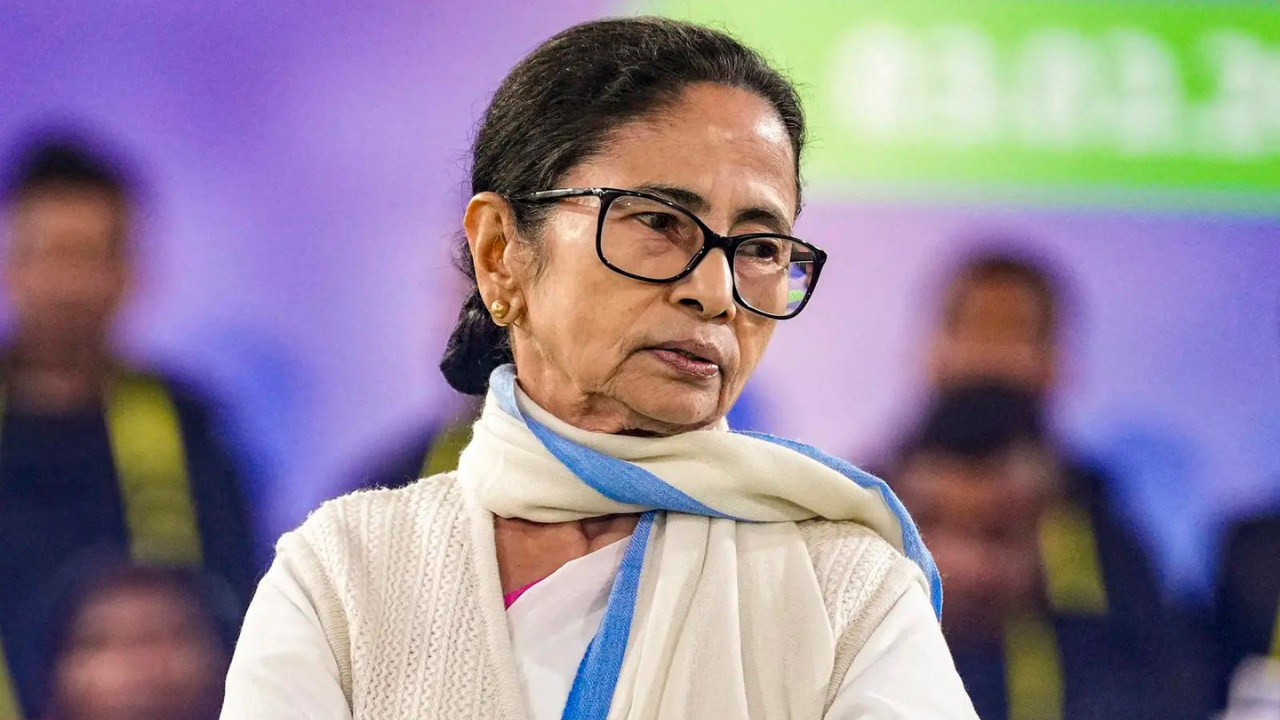
New Delhi: The big fish is stuck in Bengal as the rising tide of BJP has sidelined Mamata “Didi”. The saffron wave did not come just like that, it swept across West Bengal with force and shattered the stronghold that once seemed unshakable.The state which was Didi’s fort for a long time has given 207 seats to the BJP, which comfortably crossed the majority mark and finally turned around. Amit ShahA visionary call of “crossing 200” turned into reality in Bengal. From the initial impressions of the Congress era, to decades of Left dominance Mamata BanerjeeIn his 15-year rule, Bengal has seen its political complexion change dramatically. Red gave way to green and now, apparently, to saffron. This is not just an election result; This is a full scale political brainstorming.as prime minister Narendra Modi Announcement from BJP headquarters “Bangle Poribortan Hoye Geche,” There has indeed been change in Bengal. Dressed in traditional dhoti-Punjabi, the Prime Minister marked the party’s first victory in the state with symbolism as well as significance.The Trinamool Congress was reduced to double digits, which very few people had seriously imagined. In a twist full of political irony, Mamata Banerjee herself suffered a crushing defeat in Bhabanipur at the hands of her former disciple-turned-rival Suvendu Adhikari.If Nandigram in 2021 was the first crackdown, Bhabanipur in 2026 becomes its echo, more acute, sharper and far more consequential.Didi’s fort did not collapse overnight; It was destroyed by the weight of two sharp forces. One was 15 years of fatigue, an anti-incumbency wave that quietly gathered strength before erupting decisively. The second was the Election Commission’s “Special Intensive Revision” (SIR), a controversial but effective practice that cut the voter list by 12%, a number significant enough to change the electoral landscape in a way that would have boosted the BJP’s lead.This time PM Modi did not just taste ‘Jhalmuri’ in Jhargram, he also tasted victory in Bengal.
Bengal: The last frontier finally fell
The steady rise of the saffron party since 2014, as a major challenger to the UPA under Narendra Modi for the first time, had left one last frontier unconquered. Bengal, with its layered political memory and fierce regional identities, stood as the last test in the BJP’s march towards a truly pan-India footprint.On May 4, that border did not just fall, it also opened the doors to the throne of Kolkata.
There were areas where Trinamool Congress was in control. Bleeding slowed in parts of South 24 Parganas, East Burdwan and Howrah. But on the larger map, the tide was unremarkable.From the northern parts, where the BJP dominated almost completely – to North Dinajpur which almost completely wiped out the Trinamool – to the southern stretches of Jhargram, Purulia and East Midnapore, where the ruling party was completely wiped out, the message was clear.Even the margins tell their story: Matigara-Naxalbari gives BJP a massive lead of 1.4 lakh votes, underscoring the scale of the anti-incumbency wave.
Urban change that sealed the decision
However, what really tilted the balance was the silent churning in urban and suburban Bengal. Kolkata and its fringes, from South 24 Parganas in the south to Howrah and the industrial belt of North 24 Parganas, shifted in ways that proved decisive. This was once Trinamool’s comfort zone. This time, it turned into a battlefield that decided its defeat.The cracks were visible in numbers. In 2021, Trinamool had captured 123 of the 142 seats in Kolkata, North and South 24 Parganas, Nadia, Howrah, Hooghly and East Burdwan. In 2026, this number will drop to only 48.In Kolkata itself, the decline was seen in key seats: Rashbehari, Jadavpur, Shyampukur, Jorasanko, Maniktala, while the party lost significant ground in North 24 Parganas, including Barrackpore, Bidhannagar, Dum Dum and Panihati. Howrah also slipped, where high-profile victories like Rudranil Ghosh boosted BJP’s momentum.The capital city and urban areas largely aligned with the BJP, leaving Didi on the sidelines.
Didi: ‘Only candidate’ pitch fails
Throughout the campaign, Mamata Banerjee focused heavily on her 2021 strategy, projecting herself as the “sole candidate” on all 294 seats. But this time the strategy faltered. The high-voltage rhetoric struggled to connect with the ground reality created by fatigue, resentment and changing aspirations. The gap between message and mood became so wide that it was impossible to bridge.This blow was no less than a political earthquake for Mamata, who had made a deep impact at the grassroots level across Bengal. The anti-incumbency wave cut across rural and urban areas alike, eroding Trinamool’s base.Voters spoke of fatigue, of a regime they increasingly viewed as misgovernance, and of a desire for structural change.
‘Poribartan hoye gechhe’
“Bangale poribortan hoye gechhe (change has taken place in West Bengal),” victorious Prime Minister Narendra Modi, dressed in traditional Bengali attire of dhoti-kurta, said in his victory speech at the BJP headquarters here on Monday. He described the party’s first victory in the state as a new dawn in Bengal.“This is a declaration of a bright future for the country,” he said, as the BJP scored a hat-trick of victories in Assam and headed home for another term with its ally AINRC in Puducherry.He appealed to the parties in Bengal to pledge to end the endless cycle of election violence. He said, “There should be talk of revenge and not revenge.”From the BJP headquarters, the PM also recalled his statement after the Bihar victory that as the Ganga flows east, so will the BJP’s journey, adding that the party now rules every state along the course of the river from Gangotri to Ganga Sagar.He said, “Now women will get an environment of security in Bengal and youth will get employment.” He announced that the new government will adopt the Centre’s Ayushman Bharat scheme in its first cabinet meeting. He also promised strict action against infiltrators, cementing a key campaign issue.
Sir: The numbers behind the story
Beyond the rhetoric, the numbers tell a layered story.The Election Commission’s “Special Intensive Revision” (SIR) of the electoral rolls, which resulted in the deletion of approximately 91 lakh names – emerged as a significant factor.
In 169 constituencies where deletions were more than 25,000 voters, BJP’s numbers increased dramatically from 41 in 2021 to nearly 100 in 2026, while Trinamool’s dominance declined. Even in seats with fewer deletions, the BJP’s growth was evident, with its numbers more than tripling.Meanwhile, the opposition scene witnessed a slight revival. The Congress bounced back with two seats in Malda, the Left Front bounced back with one seat in Murshidabad, and the ISF retained Bhangar, giving the assembly a more diverse palette than the 2021 binary contest.
Change in mood of voters
From welfare assurances to job creation, law-and-order narratives to identity politics, the BJP crafted a pitch that reached out to all sections – while Trinamool’s once reliable social alliance showed signs of strain.There was a clear change in perception also. For years, many voters continued to differentiate between Didi’s personal image and the actions of her party cadre. By 2026, that distinction had blurred. The gap between the leadership’s intentions and grassroots experience became difficult to ignore, leading a section of voters to seek an alternative.Even before the formal campaign began, signs of change were visible in glimpses of political confrontation, moments that signaled a shifting balance of power. By the time PM Modi sharpened his message with a call for “Chun-Chun ke account will be taken”, the momentum had clearly changed.
What next for Bengal?
Now, with victory assured, the focus has shifted to government formation. PM Modi is likely to hold important meetings with Amit Shah and the BJP leadership in New Delhi to finalize the Chief Minister and Cabinet. The party’s “collective leadership” strategy during the campaign leaves the option open with an emphasis on a Bengal-based leader.Names from different generations, seasoned personalities and emerging faces alike are in contention as the BJP balances experience, representation and internal dynamics. Inputs from central observers and state leaders will shape the final decision, with the possibility of a deputy chief minister also being considered.For the BJP, this is more than just a victory, it is the culmination of a long quest. For Bengal, it marks another dramatic turn in a political journey that has never been short of turmoil. And as saffron takes over party offices and celebration gives way to governance, the real test begins: translating a historic mandate into a durable new dispensation.


