



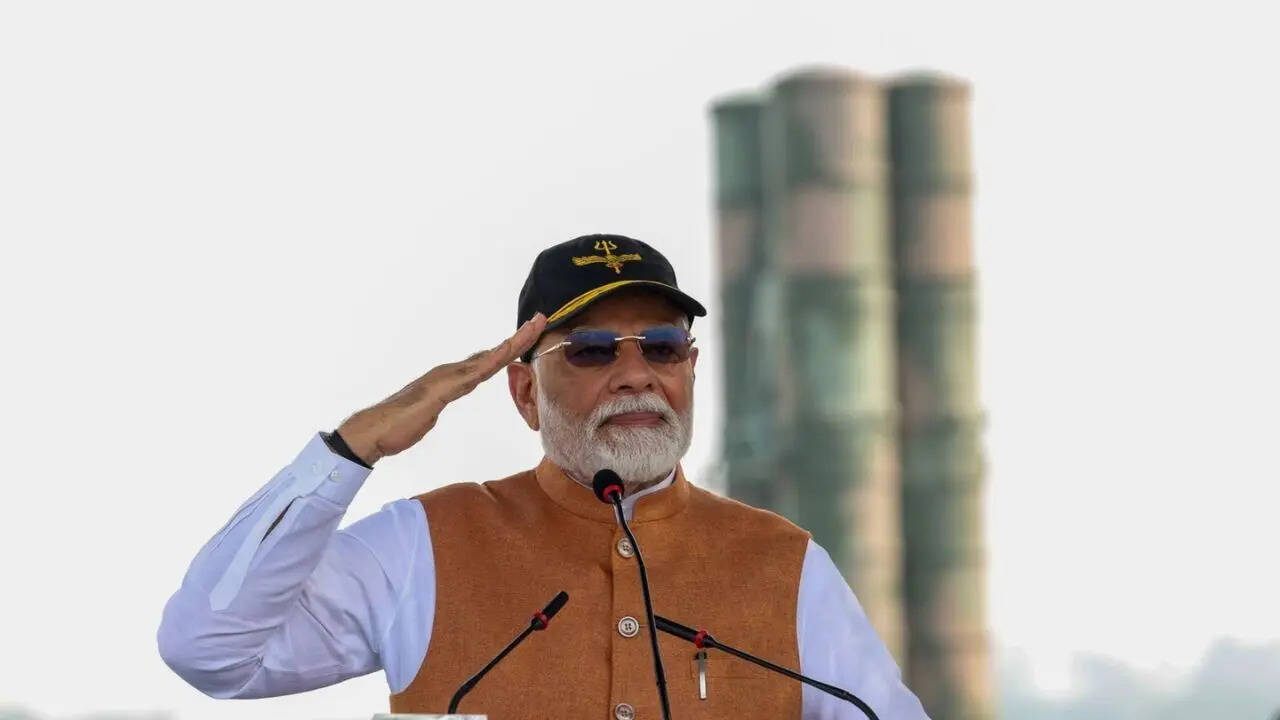
New Delhi: You can choose your friends, but not your neighbours. In the case of India, the neighbor it inherited after partition PakistanA country with which its relations since independence have been defined by war, distrust and frequent conflicts.Whenever the two countries have engaged in direct military confrontation, the result has been largely the same: India has emerged on top.From the first Kashmir war in 1947 to the battlefields of 1965, the creation of Bangladesh in 1971 and the Kargil heights in 1999, Pakistan has repeatedly found itself on the losing end.Yet, after setbacks in conventional warfare, Islamabad continued what India has long described as a strategy of proxy conflict, marked by its long-denied but widely documented links with terrorist groups operating in Pakistan’s Kashmir.India is today celebrating yet another military victory after the April 22 terror attack in Kashmir last year in which Pakistan-backed terrorists killed 26 civilians.New Delhi launched precision strikes targeting terrorist camps inside Pakistan, leading to a full-scale military standoff between the two nuclear-armed neighbours.But how close did this region come to the brink?how it startedThe chain of events began with Pakistan military chief Asim Munir endorsing the “two-nation theory”, citing differences between Hindus and Muslims in “every possible aspect of life”, which led to the creation of Pakistan.Just days before the Pahalgam attack, Munir reminded a gathering of overseas Pakistanis that cultural, religious and civilizational divergence from Hindus was the cause of Pakistan.Munir said, “You have to tell the story of Pakistan to your children so that they do not forget that our ancestors thought that we were different from Hindus in every possible aspect of life.”And then came the old slogan: Kashmir is Pakistan’s “jugular vein”.pahalgam attackJust days later, Pahalgam’s Baisarn Valley witnessed one of the deadliest terrorist attacks on Indian soil in recent memory.On April 22, 2025, terrorists belonging to The Resistance Front (TRF), a proxy of Pakistan-based Lashkar-e-Taiba, entered a civilian area and reportedly separated victims on the basis of religion.Within hours, officials confirmed that 26 civilians had been killed in what security establishment sources described as a coordinated terrorist attack targeting civilians in a highly pedestrianized tourist area.Security forces immediately launched a search operation in the surrounding forest areas and the area was sealed. Tourists were turned away from nearby routes as emergency protocols were activated across South Kashmir.‘India will identify, trace and punish every terrorist and their supporters’A day later, during a rally in Madhubani, Bihar, Prime Minister Narendra Modi vowed action. “India will identify, trace and punish every terrorist and their supporters,” he said.Speaking in Hindi about the Jammu and Kashmir attack, Modi suddenly switched to English and announced, “Today, from the soil of Bihar, I say this to the entire world: India will identify, trace and punish every terrorist and their supporters. We will chase them to the ends of the earth.”The rare shift towards English was clearly not for Indians, but for the world.Meanwhile, India also downgrades diplomatic ties with Pakistan, suspends Indus waterspact, the Attari-Wagah border was sealed, Pakistani diplomats were declared non-essential and visas for Pakistani citizens were suspended. India also conducted naval missile tests and large-scale Indian Air Force exercises.For Pakistan, the Indus River system is seen more as a “jugular vein” than Kashmir, as its waters are vital to agriculture in the politically influential provinces of Punjab and Sindh.Pakistan retaliated diplomatically by suspending visas for Indians, closing its airspace to Indian-operated aircraft, freezing trade and suspending the Simla Agreement.This made it clear that the possibility of a military confrontation between the two nuclear-armed neighbors was increasing.Operation SindoorGiving the armed forces a free hand to respond to the Indian threat, PM Modi told the three service chiefs: “Wahan pe goli chalega, toh yahan se gola chalega – if they open fire, we respond with mortar shells.” The clear summary was to step up every time and give an appropriate response to the terrorists and their state sponsors.
In the early hours of 7 May, India launched Operation Sindoor, targeting nine terrorist camps in Pakistan and Pakistan-occupied Kashmir. The tri-service operation conducted from Indian soil targeted camps associated with Lashkar-e-Taiba (LeT), Jaish-e-Mohammed (JeM) and Hizbul Mujahideen.The key goals identified were:
- Markaz Tayyaba in Muridke is linked to Lashkar-e-Tayyaba operations
- Markaz Subhan Allah in Bahawalpur is considered a major center of Jaish-e-Mohammed.
- Syedna Bilal and Shawai Nala Camp in Muzaffarabad
- Sarjal Camp in Tehra Kalan
- Mahmuna Zoya in Sialkot is linked to Hizbul Mujahideen
The operation lasted just a few minutes, but its impact spanned four tense days of military standoff between the two nuclear-armed neighbours. Defense Minister Rajnath Singh said that more than 100 terrorists were killed during Operation Sindoor.
Pakistan’s nuclear hoaxAfter the first round of attacks, US Vice President JD Vance reached out to PM Modi on May 9 and informed him that Pakistan was going to dramatically escalate the conflict, potentially turning it into a full-scale war.India remained steadfast. PM Modi told Vance that India’s retaliatory action would be “much stronger, stronger and more devastating”. He emphasized this in his address to the nation and made it clear that “India will not tolerate any nuclear blackmail and will strike decisively without discriminating between states sponsoring terrorism and masterminds of terrorism”.Pakistan’s retaliatory actionThe next day, Pakistan launched drone strikes and heavy shelling along the Line of Control (LoC).
Pakistan also attempted multiple airspace violations along India’s western border and launched around 300-400 drones at 36 locations targeting military infrastructure, killing 16 civilians in Jammu and Kashmir.However, the forces intercepted and neutralized several drones using both kinetic and non-kinetic systems.Pakistan attempted to attack Indian Air Force bases in Awantipora, Srinagar and Uttarlai as well as army installations in Jammu, Amritsar, Jalandhar, Bathinda and Chandigarh.India’s multilayered air defense network, led by the S-400 Triumph missile system, intercepted the attacks.On May 9, India launched a major counter-attack and destroyed a Chinese-origin HQ-9 surface-to-air missile and radar system in Lahore.
Other locations targeted include Rawalpindi, Gujranwala, Attock, Bahawalpur, Miyano and areas near Karachi.The attacks convinced Pakistan that the war would only lead to losses.Both Pakistan PM Shehbaz Sharif and Army Chief Munir reportedly spoke to US Secretary of State Marco Rubio and asked Washington to intervene and stand up to India.He categorically claimed that if a full-scale war broke out, Pakistan would be forced to use all available options**, which he indicated could also include nuclear weapons.navy shut downMeanwhile, the Indian Navy was fully deployed in the Arabian Sea. Vice Admiral AN Pramod later said that the Indian Navy immediately deployed its carrier battle group to the North Arabian Sea in full combat readiness, in what he called a “decisive and deterrent posture”.He said, “Following the cowardly attacks on innocent tourists in Pahalgam, Jammu and Kashmir by Pakistani sponsored terrorists on 22 April, the Indian Navy’s carrier battle group, surface forces, submarines and aviation assets were immediately deployed at sea in full combat readiness.”“We tested and refined tactics and procedures at sea during multiple weapons firing in the Arabian Sea within 96 hours of the terrorist attack,” he said.Pramod also noted that Pakistan’s naval and air units were forced to adopt a largely defensive stance, retreating towards ports or remaining close to the coastline, activities which were constantly monitored by the Indian Army.“Our forces remained deployed in the North Arabian Sea in a decisive and deterrent posture with full readiness and capability to strike at selected targets at sea and on land, including Karachi, at any time we choose,” he said.ceasefireAfter four days, the Directors General of Military Operations (DGMOs) of the two countries agreed to halt all military activities on land, air and sea. Foreign Secretary Vikram Misri said Pakistan’s DGMO contacted his Indian counterpart at 3.35 pm on May 10, following which both sides agreed to stop all firing and military operations from 5 pm IST.During the confrontation, the armed forces caused significant damage to Pakistani military assets. DGMO Lieutenant General Rajiv Ghai said that 35-40 Pakistani army personnel were killed.India-Pakistan relations have long been defined by cycles of tension that have repeatedly driven both neighbors to the brink. With none of the major disputes fully resolved, the relationship remains vulnerable to renewed hostilities.India and Pakistan may go through a period of confrontation and uneasy peace. But with the growing asymmetry in economic power, diplomatic leverage and military capability, the balance in future crises appears increasingly tilted in favor of India.


