Thursday, October 1, 2026
Home Blog Page 1044

Why 300 Million Users See Binance as Crypto Infrastructure?

0
Why 300 Million Users See Binance as Crypto Infrastructure?


In the fast-moving world of global finance, labels often fail to keep pace with reality. For the most part of a decade, “crypto exchange” was the standard term used to describe any platform where digital assets changed hands. But as we move into 2026, that definition becomes more and more narrow. For 300 million users Now having registered on the platform, Binance has evolved into something much more structured. It has become a fundamental set of rails – a global infrastructure – on which the crypto economy depends for liquidity, security, and real-world utility.

With 300 million users, Binance turns into the major crypto ecosystem player. (Binance)

This transformation from a simple trading hub to a part of sovereign infrastructure is not simply a matter of corporate growth; This is a reflection of where the “plumbing” of the industry really lives. Reaching a milestone of 300 million users is a huge vote of confidence in the underlying systems that keep the digital economy moving. In a joint year-end address, Binance co-CEOs Yi He and Richard Teng said “We saw that the number of movements behind us had increased so much that we had to hold our breath: 300 million.“ Confirming that as the ecosystem matures, Binance will continue to be the “road builder” for the next wave of global adoption.

Liquidity: the lifeblood of global markets

To understand why infrastructure matters, one can look at the human body as an analogy. In this scenario, liquidity is the lifeblood – capital that must flow to keep markets healthy and functional. But blood alone is not enough; To ensure that capital reaches every corner of the world, the body requires a strong network of arteries, veins and capillaries. Binance has spent years building these digital arteries.

The scale of this liquidity has been documented in the latest ecosystem reports. In 2025 alone, Binance saw trading volume of $34 trillion, contributing to an all-time volume of $145 trillion. For the individual user, these metrics focus on performance reliability. This means that whether a participant is trading one of 490 spot assets or using 1,889 trading pairs, the depth of the platform is designed to handle high volume transactions with minimal slippage. This depth is the reason the platform has become the central port for the entire industry.

A security system designed for flexibility

A global grid is only as useful as its ability to remain secure under pressure. Just as a modern city protects its power and water lines from interference, the crypto world needs a vigilant “immune system” to fend off bad actors. At Binance, security is not a secondary feature; It is a functional core of the infrastructure stack.

The impact of these defensive systems is measurable and significant. according to Binance 2025 Year End ReportInternal risk management and monitoring prevented potential losses of approximately $6.69 billion 5.4 million users In 2025. This was not the result of chance, but a sophisticated blend of AI-powered monitoring and human expertise working around the clock.

Beyond prevention, the platform’s security team played an active role in recovery, helping 50,000 victims recover $11.7 million in lost or stolen assets last year. By reducing direct exposure across key illicit fund categories by 96% since 2023, the platform is demonstrating that as an ecosystem scales, its ability to protect its users can and should grow with it. This proactive defense is a primary reason why the global community continues to prefer this infrastructure over less-protected alternatives.

Architecture of Verifiable Trust

In traditional finance, users often have to take the health of an institution on trust. In the digital asset space, Binance pioneered the “verify, don’t trust” model through its Proof of Reserve (PoR) system. This is a technical pillar of the infrastructure that ensures that transparency is automated rather than requested.

As of early 2026, the PoR system confirmed that the platform held $162.8 billion in user assets, with all user funds backed at a 1:1 ratio. This means that for every unit of currency deposited by a user, the platform reserves at least the same amount. To provide an additional layer of protection against extreme market events, the platform maintains $1 billion Secured Asset Fund for Users (SAFU). The fund acts as a dedicated insurance reserve, providing a level of protection that sets a benchmark for the entire industry.

From Chart to Checkout: The Rise of PayFi

For crypto to reach its full potential, it needs to move beyond a line on charts and become a functional tool for everyday life. This is the goal of “PayFi” – the intersection of programmable payments and finance. Binance is building rails that allow digital assets to be used at the checkout counter as easily as they are used in a trading account.

Binance Pay has been the central driver of this change. In 2025, the payments service saw its user base grow 30% year-on-year, supported by a merchant network that now includes 20 million businesses worldwide. By supporting over 800 payment methods and maintaining over 100 fiat ramps, the platform has lowered the barrier between local cash and the digital economy.

This ecosystem also provides users with ways to put their assets to work. In 2025, Binance Earn Suite distributed $1.2 billion in rewards to participants. By offering these tools, the platform ensures that digital assets are not merely speculative, but serve as a functional component of modern financial life.

Education: social pillar of infrastructure

A global grid is only as effective as the people who know how to use it safely. Recognizing this, Binance has invested heavily in “social infrastructure” through its educational initiatives. Binance Academy provides free, high-quality and localized blockchain education in dozens of languages ​​to millions of learners.

In 2025, the platform’s community teams organized more than 1,000 local events – from university workshops to community meetings – are reaching 3.7 million participants. This commitment to knowledge ensures that as the “next billion” users enter the sector, they do so with a clear understanding of the technology and the risks involved. As Co-CEO Yi He said, “Together, we bring diverse perspectives and are confident in leading the future of the industry during this critical time, as we responsibly expand our global presence and drive sustainable innovation while always keeping our users at the center.”

Compliance as a functional requirement

As the digital asset industry matures, it must align with global regulatory standards to ensure long-term sustainability. Binance Transforms to a Compliance-First Organization, Building a World-Class Team 1,500 professionals are dedicated to AML (Anti-Money Laundering) and KYC (Know Your Customer) protocols.

In 2025, the platform invested $200+ million in its compliance program, and this investment has enabled the platform to secure over 20 regulatory approvals and registrations globally, including ADGM’s historic full authorization from the Financial Services Regulatory Authority (FSRA). By proving that high-growth infrastructure can co-exist with rigorous oversight, the platform is paving the way for widespread institutional and retail adoption.

Strategic Outlook to 2026: “Risk Reboot”

as per latest Binance Research OutlookThe remainder of 2026 will be defined by a “risk reboot.” The industry is moving away from the speculative hype of previous cycles and toward a period of adoption-led growth. This phase is characterized by a focus on real-world utility, tokenized assets, and more robust Web3 search tools.

By integrating deep liquidity, institutional-grade security and localized payments rails into a single, cohesive operating stack, Binance is no longer just a participant in the crypto market, it is the ground on which the market stands. For 300 million people, this infrastructure is key to determining the future of money.

Risk Warning: Digital asset prices can be volatile. The value of your investment may go up or down and you may not get back the amount invested. You are solely responsible for your investment decisions and Binance is not liable for any losses you suffer. This article is not financial advice. VDA products and NFTs are unregulated and can be extremely risky. There may be no regulatory recourse for any losses arising from such transactions. For more information see terms of use And risk warning.

Advertiser Details:

binance.com

contact: https://www.binance.com/en/chat

Note to Reader: Readers are advised that crypto products and NFTs are unregulated and involve significant risks. There may be no regulatory recourse for losses arising from such transactions.

Hindustan Times/HTDS shall not be responsible or liable, in any manner, for the content of articles, advertisements, including views expressed, opinions, announcements, declarations or affirmations, and is free from any legal action or enforceable claims. This content is for informational and awareness purposes only and does not constitute financial advice.


Ritika Chauhan responds to backlash amid Anurag Dobhal controversy

0
Ritika Chauhan responds to backlash amid Anurag Dobhal controversy


Ritika Chauhan responds to backlash amid Anurag Dobhal controversy

Anurag Dobhal’s wife, Ritika Chauhan, has spoken out amid ongoing controversy, addressing allegations and online criticism directed at her and her in-laws. In a recent statement, she expressed concern over what she described as a growing wave of “misunderstanding” and negative perception surrounding their family.

Ritika Chauhan pens an emotional note

Ritika clarified that much of what is being circulated online does not reflect reality. She stated that both she and her in-laws are being unfairly judged based on incomplete or misleading narratives. According to her, the situation has been blown out of proportion, with several claims lacking proper context.

Opening up about the emotional toll, Ritika shared that the constant scrutiny has been difficult for the family. She emphasised that they have always tried to maintain dignity and respect in their conduct, but recent developments have painted a different picture in the public eye. She urged people to refrain from jumping to conclusions without knowing the full story.

Addressing the issue of negative publicity, Ritika hinted at the possibility of targeted campaigns aimed at damaging their image. She suggested that certain narratives being pushed online could be part of a deliberate attempt to misrepresent them. While she did not directly name anyone, her comments pointed towards concerns about how quickly misinformation can spread on social media.

Accuses negative PR

Ritika also spoke about the importance of communication and understanding during such situations. She said that rather than engaging in online arguments, she prefers to address matters calmly and with clarity. Her response reflects an attempt to de-escalate the situation and focus on resolving misunderstandings.

Meanwhile, the controversy surrounding Anurag Dobhal has continued to generate attention, with fans and critics actively discussing the developments. Ritika’s statement appears to be an effort to present her side of the story and bring a more balanced perspective to the ongoing discourse.

Despite the criticism, she maintained that their intention has never been to hurt anyone. Instead, she hopes that people will look at the situation with empathy and avoid forming opinions based solely on circulating rumours.

As the situation unfolds, Ritika Chauhan’s response highlights the challenges of dealing with public scrutiny in the digital age, where narratives can quickly spiral and impact personal lives.


Max Verstappen tells reporter to ‘get out’ at press conference

0
Max Verstappen tells reporter to ‘get out’ at press conference


Max Verstappen tells reporter to ‘get out’ at press conference

Max Verstappen sparked a verbal confrontation ahead of the Japanese Grand Prix on Thursday when he refused to start his press conference until a British journalist left the room. The Red Bull star sat down to speak to reporters at the team`s hospitality suite in Suzuka, but then said, “I`m not speaking before he`s leaving”, and gestured at Giles Richards, a journalist from the Guardian newspaper. Richards asked Verstappen if his demand was because of a question he had asked the driver last season, to which the four-time world champion replied “yes” and told him to “get out”. 

He left and Verstappen continued with the press conference. Richards later told AFP that the incident stemmed from a question he had asked Verstappen after the Dutchman missed out on a fifth world title to Lando Norris, by two points, at the Abu Dhabi Grand Prix in December. The question centred on the impact of a penalty that Verstappen had picked up for ramming Mercedes driver George Russell at the Spanish Grand Prix in June. Richards subsequently wrote in the Guardian that he was “deeply disappointed” to have been ejected from the news conference. 

“In more than a decade of covering the sport I have interviewed Verstappen perhaps a dozen times, all of them friendly and good humoured,” he said. “His outstanding talent garnered praise and admiration in those articles, criticism by contrast has been minimal and only when warranted.” Richards insisted that reporting as honestly and fairly as possible was his “single overarching aim”. “I still admire Verstappen and I hope we can enjoy a better relationship going forward,” he said. “Sometimes, difficult, awkward questions have to be asked. That`s the job that comes with the privilege.”

This story has been sourced from a third party syndicated feed, agencies. Mid-day accepts no responsibility or liability for its dependability, trustworthiness, reliability and data of the text. Mid-day management/mid-day.com reserves the sole right to alter, delete or remove (without notice) the content in its absolute discretion for any reason whatsoever


2026 Tamil Nadu Assembly election will be a close battle, says P. Chidambaram

0
2026 Tamil Nadu Assembly election will be a close battle, says P. Chidambaram


The upcoming 2026 Tamil Nadu Legislative Assembly election will be a close contest between two strong fronts and not a one sided battle like the 2024 Indian General Election, according to veteran Congress leader and former Union Minister P. Chidambaram. In an interview with The Hindu at his Pycrofts Garden Road residence in Chennai on Friday (March 27, 2026), he also disagreed with the broad proposition of the Dravida Munnetra Kazhagam (DMK) and the All India Anna Dravida Munnetra Kazhagam (AIADMK) that the people of Tamil Nadu will never agree to a coalition government. Excerpts:

In 2006, you had hailed the DMK manifesto as the “hero of the elections”. Can I say this time you are the hero of the DMK-Congress alliance, because, it looks, but for your intervention, the two parties could have drifted?

I am afraid no, my role is exaggerated. The Congress president asked me to meet the DMK president and Chief Minister (M.K. Stalin) and try to tie up the loose ends. I met him once. And then they agreed late in the evening.

Congress leader Rahul Gandhi shared a brotherly bond with Mr. Stalin. Yet strains emerged during the alliance talks. What went wrong?

I would not attribute it to Mr. Rahul Gandhi. There were some strains in the early rounds of talks that could have been avoided. But that is all behind us. We have an amicable agreement and we will contest the elections together. I think the role of each one, need not be discussed now.

Some of the older allies of the Secular Progressive Alliance are unhappy over the seat allocation, when the Congress tally has increased and DMDK got 10 seats. Will this affect ground level coordination? Shouldn’t Mr. Stalin have been less rigid with loyal allies?

There is always some dissatisfaction all round. In a marriage, the bride side and the bride groom side will have always some dissatisfaction. As long as there is general satisfaction and some points of dissatisfaction, it means that the alliance has been negotiated correctly. I think the addition of new parties to the alliance imposed limitations on the DMK and its leader. And the admitted self confessed growth of each party increases their aspirations. Their aspirations and limitations have to find a meeting point. (As far as) the Congress is concerned, we found a meeting point at 28 and I think other leaders have also found meeting points and I saw statements by Communist Party of India, Communist Party of India (Marxist). They have no after event dissatisfaction.

But when leaders publicly express dissatisfaction, the cadres could get impacted…

No, it won’t affect the grassroot coordination at all because the cadres of all parties have (in a) united voice told me and told others that we should conclude the negotiations quickly and can start the campaign. In fact, they are waiting for the campaign to start. So the cadres are not divided at all.

In my travel last week and the year before that I have met DMK, Congress, and Viduthalai Chiruthaigal Katchi workers. They all said, please conclude the negotiations quickly so that we can start the work. So the cadres have been ready for the last three months. Leaders may have had some differences, but all that has been ironed out.

Mr. Stalin is framing this elections as a fight between Tamil Nadu and New Delhi. Do you endorse this? And would such a narrative work in an Assembly election?

That’s entirely correct. You see, the puppet is the AIADMK, the puppeteer is the Bharatiya Janata Party. All the rest don’t count. Unfortunately, in an Assembly election, instead of calling the shots, the AIADMK has ceded the ground and the leadership and the direction to the BJP.

Now, the BJP is determined to pass several bills which have caused great dissatisfaction throughout the country. The IBC Amendment Bill, FCRA Amendment Bill, CAPF Amendment Bill. All these have a great impact on the whole country. When we campaign, we will expose the serious consequences of these bills. But the AIADMK doesn’t say a word in Parliament and outside. Which means it is going along with everything that the BJP is doing. The AIADMK seems to be under pressure or compulsion to toe the line.

So it is not a fight between the INDIA bloc and the AIADMK bloc. It’s really a fight between the Secular Progressive Alliance and the BJP. You will find that the main issues in this election are the ways in which BJP is injecting, imposing its Hindutva majoritarian agenda on the people of India, especially Tamil Nadu.

But AIADMK leader Edappadi K. Palaniswami is asserting he is the boss of the NDA in Tamil Nadu. He appeared to be in command in allotment of seats and constituencies to allies…

He himself went to Delhi to meet the BJP leadership and seal the deal.

So Mr. Palaniswami is not in command?

He is in command of the AIADMK, but he is not in command of the election. He is not in command of the strategy, is not in command of the issues that will be discussed in the election. You wait until the issues unfold. He will look up to the BJP to defend those issues. What is his position on the IBC Amendment Bill or FCRA Amendment Bill?

With the entry of actor Vijay’s Tamilaga Vettri Kazhagam as a potentially strong disruptor, some are not ruling out the likelihood of a hung Assembly. Do you agree? I am asking because in the 2006 elections, when M. Karunanidhi and J. Jayalalithaa were around, the entry of Vijayakanth’s Desiya Murpokku Dravida Kazhagam had reduced the victory numbers of the DMK to below 100.

See, Mr. Vijay is not Mr. MGR or Mr. Vijayakanth. He is a popular actor but his fan club may not convert to voters. He will get votes, but will he get seats? I have spoken to hundreds of party workers. The uniform opinion is Mr. Vijay may get about 7 to 8% votes. One or two people say it may go up to 12%.

Now as the campaign progresses and as the election date nears, this 12% has no way of increasing. I will tell you why. It’s simple common sense. If I have three candidates, DMK, AIADMK or Congress, a BJP, I will realise as a voter very early that Mr. Vijay can’t win. In a three cornered contest, you must have at least 37% to get seats. In a four cornered contest, maybe 32% is sufficient. In a direct contest, you must have at least 43 to 45% to win. But Mr. Vijay’s party is well below the threshold. He won’t win seats. He may win if he contests in one constituency, but the people will start talking “he’s a losing candidate.” And losing candidates don’t return to the constituency. It is the number of seats Mr. Vijay wins which will lead to a hung Assembly. But if he wins zero to three seats, it won’t make a difference.

Wouldn’t he spoil the victory prospects of DMK and AIADMK?

No, the votes will be broadly divided into the AIADMK alliance and the DMK alliance. I am confident the DMK bloc will get a majority.

Mr. Stalin and Mr. Palaniswami have ruled out sharing power with allies. Is this stand right, especially when they both need allies to win elections and they had at different points shared power at the Centre?

It’s premature to talk about sharing power. The DMK and the AIADMK have reiterated their known positions. Other parties have stated their known positions that “we would like sharing of power”. So both sides have not said anything new or revolutionary. They have stated, they have iterated, their known positions and after the elections, things will happen.

But their argument is the people of Tamil Nadu will not accept a coalition agreement. Do you agree?

I don’t agree with the broad proposition that the people of Tamil Nadu will never agree to a coalition government. If it becomes necessary, since the people want a government, they don’t want another election in two months, they will accept the reality. I don’t think these broad statements are true for all time. Maybe this election it may be true. But not for all time. How can I predict what will happen 20 years later?

Do you foresee the possibility of coalition government in Tamil Nadu in the near future?

See, as long as there are two major parties, the chances of a coalition government are low. It is only when a third party becomes nearly equal to the first two parties, three strong parties, then there is a possibility of a coalition election. I am talking normative, as a rule, not with particular reference to Tamil Nadu. Maharashtra for example, there were four parties and four parties. So necessarily Mr. Devendra Fadnavis has to have a coalition. But here at the moment, there are only two dominant parties and the Congress is the third, but a little behind.

The Opposition’s main accusation against the DMK government is that law and order has deteriorated, women safety is a big concern, and availability of drugs is on the rise. Your views…

This has some element of truth. But this is a nationwide problem. I read the North Indian papers in Delhi everyday. Two pages are only about crime, burglary, sexual violence, road rage. The drug problem, the sexual violence, gender violence, is all over India. If you talk about it in general terms, it will appear that Tamil Nadu is the worst. That’s not correct. You have to take the NCRB data and you will have to see state by state. But that does not take away from the fact that whichever government is formed in Tamil Nadu must control the drug menace, must sensitise young men and boys that gender violence is the worst kind of violence and sensitise the police and train them to be more effective in controlling law and order. I have noticed in the CAPF the personnel are periodically withdrawn from duty and sent to the battalion headquarters for training and rest and recuperation. I intend to propose to the next government, I hope the DMK government, that the the police force must be withdrawn for one month in a year and sent to Battalion headquarters for rest, recuperation and training. Which means you will have to recruit one twelfth more police force, but that can be recruited.

How would you rate Mr. Stalin’s administration?

You see, you go by economic metrics, we are the fastest growing state in India. Number two, there is a bumper crop, which means they have paid attention to agriculture, irrigation, water, fertiliser, electricity. It has paid dividends. Third, we have massive outside external investment, FDI as well as from other states. See, I have got renovation and repair work in my house. Every worker is from UP, Bihar and Jharkhand. Why are Tamil young men not coming for construction work? I am not saying there is no unemployment but they have better paying jobs and jobs which give them more dignity. I think our education system has improved considerably.

Election manifestos are increasingly being dominated by promises of welfare benefits and direct cash transfer. As a former Union Finance Minister, don’t you think these are fiscally imprudent measures against the backdrop of increasing debt burden?

See, the debt burden is exaggerated. The debt burden is relevant only if you can’t finance the debt. The national debt increases year after year. But if the GDP and the GSDP increases and the revenues increase, your state’s own income increases and you are able to finance the debt, that’s okay. You must look at the fiscal deficit as a proportion of the GSDP. Tamil Nadu compares favourably with every other state.

On freebies, I have a philosophy. I believe in universal basic income (UBI). You can’t tell the poor people you wait for the next generation, your grandchildren will be better. Now you can decide what proportion of the state’s income must be given as UBI. It can be divided into different heads. Free bus travel has brought large externalities. Economists will know that a social benefit, which has economic externalities is good. The free breakfast scheme too is part of UBI. I think it’s manageable, it’s viable.

They say the real hero in an election is the cash delivered at the doorsteps of voters…

See, I have contested and won seven elections. I have never given money to voters. In fact, in the last parliamentary election no party in Sivaganga gave money to the voters. Giving money to the voters doesn’t decide an election. If a voter takes money, he takes it from both sides and then he will exercise his choice. It is like the old saying, “A judge took bribe from both sides and decided fairly.” But money must be given to get the party workers moving.

But senior politicians say “we don’t want to contest in elections because it has become very expensive”….

That is true. The elections have become expensive. The unrealistic target of ceilings fixed by the Election Commission of India is a joke. EC knows nobody adheres to the ceiling. But then there are ways in which we can legally circumvent the ceiling. If the party spends, there is no ceiling.

What’s your prediction for the Tamil Nadu election?

It will be a close election because the parties are arrayed in two strong fronts. The entry of the BJP under Mr. Modi (Prime Minister) and Mr. Shah (Home Minister) has injected a certain element which I can’t describe openly. But they will use every device, every tactic to win the election, to influence the election and to win it if possible. It will be a close battle. I have warned my party men. It will be close battle, but we will win. It will not be a completely one sided battle like the 2024 parliamentary action. The AIADMK lost the deposit in seven seats. That’s unheard of for the AIADMK.

The AIADMK workers realise they have got a mountain to climb. The DMK workers realise they are on the top of the mountain and they should not allow them to be dragged down. The Congress is confident where it is strong. But I think the ultimate result will be that the DMK alliance will have a comfortable majority and the DMK will form the government.


‘I broke down alone’: Rajshri Deshpande on Breast cancer diagnosis

0
‘I broke down alone’: Rajshri Deshpande on Breast cancer diagnosis


‘I broke down alone’: Rajshri Deshpande on Breast cancer diagnosis

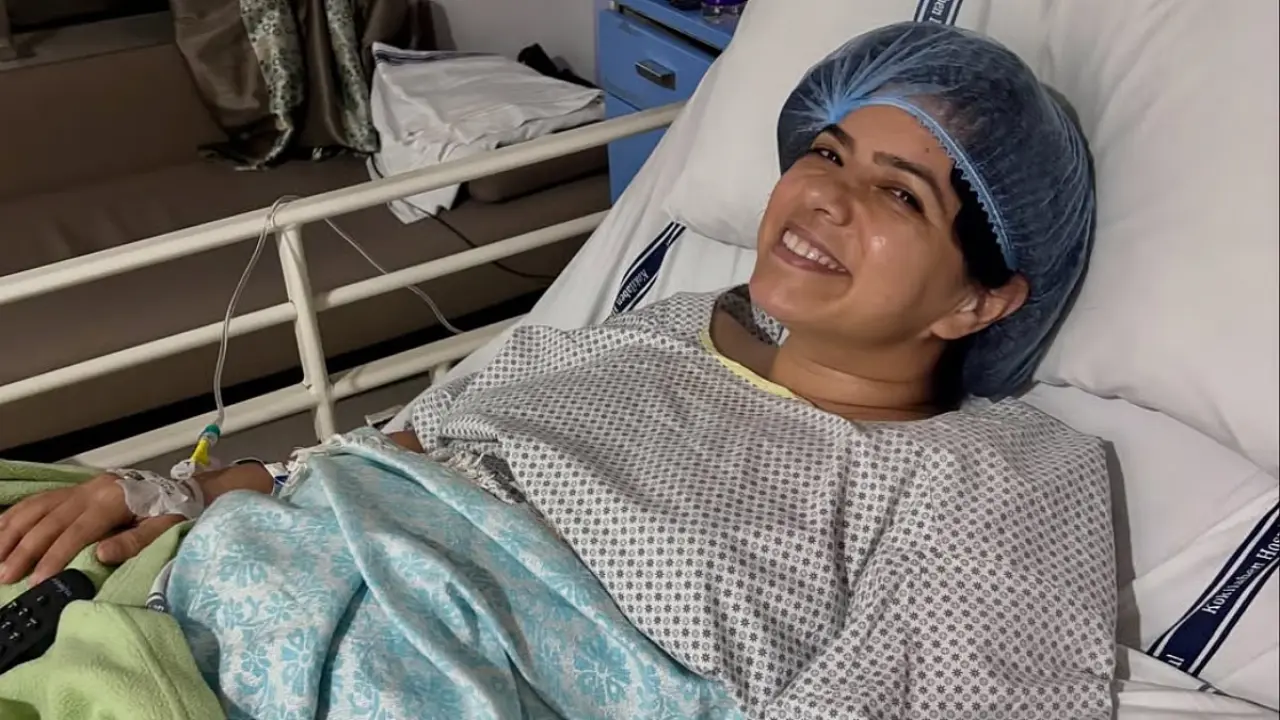
Rajshri Deshpande recently opened up about one of the most difficult phases of her life her battle with breast cancer revealing the emotional toll it took on her even before she began treatment.

In a candid conversation, the actor recalled the moment she learned about her diagnosis and how it left her shattered. She admitted that the mental impact was overwhelming, saying she broke down alone while trying to process the news. The emotional weight of the situation, she shared, was far more difficult to handle than she had expected.

Rajshri Deshpande gets candid about her diagnosis

Rajshri revealed that although she has often portrayed strong characters on screen, facing a real-life crisis of this magnitude was entirely different. “The mental pain was unbearable,” she confessed, highlighting how the diagnosis brought a wave of fear, uncertainty, and vulnerability.

The actor was diagnosed with early-stage breast cancer, which was detected during a routine check-up something she now emphasises as crucial. She underwent surgery soon after and is currently on the road to recovery. Despite the medical procedures, she shared that it was the emotional struggle that affected her the most in the initial days.

Opening up about the stigma surrounding cancer, Rajshri pointed out how people often react with fear or sympathy in ways that can feel isolating. She stressed the need to normalise conversations around the illness, saying that the “C-word” continues to carry an unnecessary taboo.

On breaking down after the diagnosis

She also spoke about how her perspective on life has shifted since the diagnosis. The experience, while painful, has made her more aware of her health and the importance of early detection. Rajshri now hopes to use her journey to encourage others, especially women, to prioritise regular check-ups and not ignore warning signs.

The actor expressed gratitude for the support she received from her family, friends, and medical team, which helped her navigate the challenging period. She described her recovery as a gradual process, both physically and emotionally, and emphasised the importance of resilience during such times.

Through her candid revelations, Rajshri Deshpande has not only shared her personal battle but also sparked an important conversation about awareness, early detection, and the emotional realities of dealing with cancer.


Nepal’s youngest premier sworn in after releasing new rap song about unity | News

0
Nepal’s youngest premier sworn in after releasing new rap song about unity | News


Balendra Shah, 35, and his three-year-old Rastriya Swatantra Party won a landslide after Gen-Z protests toppled the former government.

Balendra Shah, Nepal’s youngest prime minister, has been sworn in after his party’s landslide election victory following protests led by young people that toppled the government in September.

A rapper-turned politician, Shah was appointed prime minister by President Ram Chandra Paudel on Friday, after his three-year-old Rastriya Swatantra Party (RSP) won 182 seats in the 275-member parliament in the March 5 vote, the first election since anticorruption Gen Z-led protests in which 76 people were killed.

Recommended Stories

list of 4 itemsend of list

The 35-year-old wore black trousers, a matching jacket, his signature black Nepali cloth cap and sunglasses as he was sworn in at the President House, in the presence of diplomats and senior government officials.

A day earlier, the new premier, better known as Balen, released his first public statement since the historic vote with a rap song shared on social media.

“Nepal is not scared this time, the heart is full of red blood … Laughter and happiness will reach every household this time,” Shah raps in the song titled Jay Mahakaali (Victory to Goddess Mahakali).

His music video, which features visuals of large crowds cheering him during his election campaign, has racked up nearly three million views.

“The strength of unity is my national power,” his lyrics continue.

Rastriya Swatantra Party (RSP) leader Balendra Shah (2R) takes oath as prime minister during a swearing-in ceremony in Kathmandu on March 27, 2026.
Rastriya Swatantra Party (RSP) leader Balendra Shah (2R) takes oath as prime minister [AFP]

A former mayor of the capital, Kathmandu, Shah is Nepal’s first Madhesi premier – people of the southern plains bordering India – to lead the Himalayan nation.

China extended its congratulations to Nepal on the swearing-in of Shah, the Chinese Ministry of Foreign Affairs said on Friday, adding it will support its Himalayan neighbour in safeguarding its independence, sovereignty and territorial integrity.

Protests had raged over a lack of jobs and endemic corruption in the country of 30 million, where a fifth of the population lives in poverty and an estimated 1,500 people leave the country daily for work abroad.

Although he did not directly participate in the protests, Shah publicly expressed support for the largely Generation Z demonstrators who led the movement.

Political instability has been an uphill challenge for Nepal, with 32 governments taking office since 1990 and none of them completing a five-year term.

The Nepali Congress party, the country’s oldest party, became a distant second group in parliament with just 38 seats. The Communist Party of Nepal (Unified Marxist-Leninist) of KP Sharma Oli, who was forced to resign after the Gen Z unrest, controls 25 members.

Former Chief Justice Sushila Karki led the nation through the interim period up to the parliamentary election.


Delhi Capitals receive firm instructions on Prithvi Shaw after batter admits he’s using IPL 2026 to make India comeback

0
Delhi Capitals receive firm instructions on Prithvi Shaw after batter admits he’s using IPL 2026 to make India comeback


Former India all-rounder Irfan Pathan has backed KL Rahul to once again get the job done with the bulk of runs while also showing confidence in Prithvi Shaw’s skills to prove a point in the upcoming season. Rahul is under pressure to make a mark and make a claim in India’s T20I set-up after being left out for almost three to four years. He last played for India in the 2022 T20 World Cup and has since been out of the scheme of things.

Prithvi Shaw is back in Delhi Capitals after they signed him in the mini auction. (DC-X)

He has been under the scanner for his strike rate in the shortest format for a long time, but he did try to make some amends with it by playing a bit aggressively last season, where he scored 539 runs in 13 matches at an average of 53.90, with a strike rate of 149.72, which included a century and three fifties.

Pathan has backed Rahul as a consistent run-getter in the IPL, praising his ability to deliver match-winning starts regardless of strike rate.

“KL Rahul is the safest bank to score 500 runs every season. He will always score runs and is capable of giving good starts consistently. He is undoubtedly one of the best players in this league. It’s just that we sometimes talk about his strike rate, but as long as you win the match, you don’t need to focus much on that,” Pathan said on his YouTube channel.

Meanwhile, the all-rounder has picked Prithvi Shaw to be Rahul’s opening partner this season after his impressive Syed Mushtaq Ali Trophy season with the new team Maharashtra.

“They got him at a very good price. He shifted to Maharashtra from Mumbai in domestic cricket. He was the highest run-scorer for Maharashtra in the Syed Mushtaq Ali Trophy. Yes, he didn’t score in the Vijay Hazare Trophy, but he seems to be in good form. I think those hungry players who went unsold last year always come with a point to prove. Prithvi Shaw will come to prove a point.” Pathan added.

Also Read – Mumbai Indians owner Nita Ambani fails to recognise Rohit Sharma after batting great’s unbelievable transformation

The out-of-favour Indian batter has already stated that he is giving his 200 per cent to prove himself in the IPL and make a comeback into the Indian team.

“Give Prithvi Shaw clarity”

Pathan further weighed in on Delhi Capitals’ selection dilemma, urging the management to back Shaw with a clear role despite strong competition from in-form youngster Abhishek Porel.

“The hungry players who have gotten dropped are very excited, but along with that, they also put a lot of pressure on themselves to perform. This pressure always leads you towards failure. They have the option of Abhishek Porel, who has performed really well whenever he has gotten chances. He has contributed with quick 20s and 30s so far. But I think they should go with Prithvi Shaw and give him clarity about his role,” he elaborated.


A ‘talk’ near Karnataka’s Kali River led experts to a frog no one knew about. india news

0
A ‘talk’ near Karnataka’s Kali River led experts to a frog no one knew about. india news


Last updated:

What made the black night frog difficult to identify was its similarity to existing species. This discovery was not limited to academic work only but was done by those working on the ground.

The black night frog has so far been documented only in the Castle Rock area and is closely associated with the stream ecosystem. (In picture: Black night frog, female and male. Image credit: Ramesh Budiger

On a rain-filled evening near Castle Rock in Karnataka’s Uttara Kannada district, a slow, repetitive sound echoes in the forest. It blends into the background, indistinguishable from the countless other calls that define the Western Ghats.

No one paid attention to this for years. It was so familiar, yet unmistakable. Turns out it was actually pretty unique.

A new species of frog has now been named. Nyctibatrachus kali or black night frog has been formally described from the Central Western Ghats. The discovery adds to a region already recognized as one of the world’s most important biodiversity hotspots, and reminds that even well-studied ecosystems retain secrets.

A search in time of fall

Globally, more than 9,000 species of amphibians are known today. India has 474 of them, representing about 5.3% of the world’s amphibian diversity. Yet, nearly two out of every five amphibian species are at risk of extinction due to habitat loss, climate change, and disease.

In this background, discoveries like the black night frog have deep significance. Over the past 25 years, India has documented 256 new amphibian species, an average rate of about 10 per year. Each new species contributes to the understanding of the country’s ecological history and biodiversity.

A sound in the rain that gave birth to a new species in Karnataka

One day, during heavy rains in the forests of Uttara Kannada, CR Naik, Deputy Range Forest Officer (DRFO), Ankola Range, heard something that made him stop.

He recalls, “While riding my bike in heavy rain, I heard a familiar ‘talk’ sound. Out of curiosity, I turned back and waited. After some time, another sound was repeated.” “I happily went out in the pouring rain, waited, recorded its sound on my mobile and sent it to Professor Gururaja.”

At first the sound did not seem unusual. “After hearing the sound, he said, ‘It sounds like a croaking frog,'” says Naik. But what happened next would change this perception. “In the following days, when the team discovered through molecular analysis and acoustics that it was a new frog, I was surprised, delighted, and proud.”

when the familiar becomes new

To the research team, the frog initially appeared to be something already known.

“Initially when CR Naik sent me the recording of the frog based on my previous observations of Kathleen’s Night Frog, I thought it was the Kumbhara Night Frog,” says Professor Gururaja KV, Professor at Srishti Manipal Institute of Art, Design and Technology, MAHE. “However, acoustic and molecular analysis revealed that it is a new species of frog.”

That moment of improvement from hypothesis to evidence defined the discovery.

Streams near Castlerock where the black night frog is found. Image Credit: Gururaja KV

Professor Gururaja points out the unusual mix of field staff and researchers behind the discovery, saying, “It is interesting to note that citizen scientists are part of this discovery, and we have a long way to go in this direction because conservation requires collaboration of people, practice and policy.”

A species hidden in plain sight

Identifying the black night frog was difficult because of how similar it was to existing species.

“The new species Nyctibatrachus kali is morphologically cryptic but differs from all the existing 34 species in advertisement calls and genetics,” explains Arvind CK, a PhD scholar at Manipal Institute of Technology, Bengaluru.

He added, “This sound is similar to the sound of wood being chopped and is similar in sound to the sounds of other species in the N. sanctipalustris group.”

The difference is in the details. “Similar to other species in the group, N. kali also has two distinct advertisement calls, where one is a low-frequency call and the other is a high-frequency call. Both types of calls are different from other species,” he says.

A discovery built on field observation

This discovery was not limited to academic work only. It was shaped by those who worked the land.

Ramesh Budiger, Beat Forester, Yellapur Range, recalls early observations: “Learning about the sounds of frogs, their reproduction and their habitat, Professor Gururaja’s study team came to Castle Rock in 2021. On that occasion, when they were taken to a new place, they heard a frog croaking. They asked us to observe it, saying it could be the Kumbhara Night Frog.”

Over time, something bigger grew from that observation. “Later, we saw them at four places, and learned about their reproduction, we were extremely happy and proud. I was surprised when I learned that it was a ‘new frog’,” he says.

a species that is endemic to its habitat

The black night frog has so far been documented only in the Castle Rock area and is closely associated with the stream ecosystem.

“This species is currently documented only from Castle Rock, and is a stream-dwelling species,” says Arvind CK. “The conservation of N. kali and its habitat is very important and fragile. Stream networks and other stream-associated species are key here.”

more than a discovery

The finding also highlights the role of cooperation in conservation.

“I am extremely happy to note that the frontline staff of our forest department have played a very important role in the identification of this new species,” says Kumar Pushkar, IFS, Principal Chief Conservator of Forests (Wildlife).

listen carefully

At its core, the discovery of Nyctibatrachus kali Started with a moment of meditation. As Naik says, “We hope and want that we develop interest and inclination to listen to the forest as well as to see it.”

In a place as rich as the Western Ghats, sometimes that’s all it takes – to stop, listen and realize that what seems familiar may actually be completely new.

news India A ‘talk’ near Karnataka’s Kali River led experts to a frog no one knew about
Disclaimer: Comments represent the views of users, not of News18. Please keep discussions respectful and constructive. Abusive, defamatory, or illegal comments will be removed. News18 may disable any comments at its discretion. By posting you agree with us terms of use And Privacy Policy.

stay ahead, read fast

Scan the QR code to download the News18 app and enjoy a seamless news experience anytime, anywhere.


The Voice of Hind Rajab: Opposition urge I&B Minister to mediate in censor delay

0
The Voice of Hind Rajab: Opposition urge I&B Minister to mediate in censor delay


The Voice of Hind Rajab: Opposition urge I&B Minister to mediate in censor delay

Several opposition members of parliament have written to Union Minister of Information and Broadcasting, Ashwini Vaishnaw, seeking his intervention after the Central Board of Film Certification reportedly declined certification to the Oscar-nominated film The Voice of Hind Rajab in an oral communication.

Opposition members urge Minister Ashwini Vaishnaw to intervene

In a letter, the ministers said, “We, the undersigned Members of Parliament, write to express our deep concern regarding reports that the Central Board of Film Certification has orally declined certification to the internationally acclaimed film The Voice of Hind Rajab, thereby effectively preventing its public exhibition in India. We earnestly seek your good self`s urgent personal intervention in this matter that bears significant implications for artistic freedom, institutional credibility and India`s standing as a society committed to democratic values and cultural openness.”

“The film is an internationally recognized and Oscar-nominated work based on the real-life killing of a young Palestinian child during the 2024 Gaza conflict. The film has received wide critical attention globally, reflecting its engagement with a subject of contemporary humanitarian concern. However, reports indicate that the distributor in India has been orally informed that certification may not be granted. Such an approach raises serious concerns as to whether considerations extraneous to the statutory framework governing film certification have influenced the decision-making process. The screening of a film is an exercise of artistic expression protected within the constitutional framework and cannot be made contingent upon perceived diplomatic relationships,” they added.

“It is widely acknowledged that the above-mentioned film addresses issues of contemporary global relevance. Disagreement with the perspective presented in a film cannot, by itself, constitute a valid ground for restricting public exhibition. India`s democratic strength lies in its confidence to permit diverse narratives to be examined and debated in the public sphere. Reliance on considerations beyond the statutory parameters for certification, including perceived geopolitical sensitivities, would create an undesirable precedent inconsistent with the constitutional guarantee of freedom of expression,” the letter read.

“India`s civilizational ethos has long embraced plurality of thought and artistic interpretation. Engagement with complex or uncomfortable subjects has never diminished the strength of our democracy; rather, it has enriched public discourse and strengthened democratic resilience. The present issue therefore, transcends an individual film and touches upon India`s constitutional commitment to freedom of expression as well as the credibility of its regulatory institutions in the global cultural sphere. In this background, we earnestly urge the Government to issue urgent directions to the CBFC to ensure that the film is examined strictly in accordance with the constitutional principles governing freedom of expression, and that certification is granted at the earliest possible opportunity. India`s democratic strength lies in its abiding faith that ideas, narratives, and artistic expressions must be tested in the open marketplace of ideas, rather than suppressed by prior restraint,” it concluded.

About The Voice of Hind Rajab

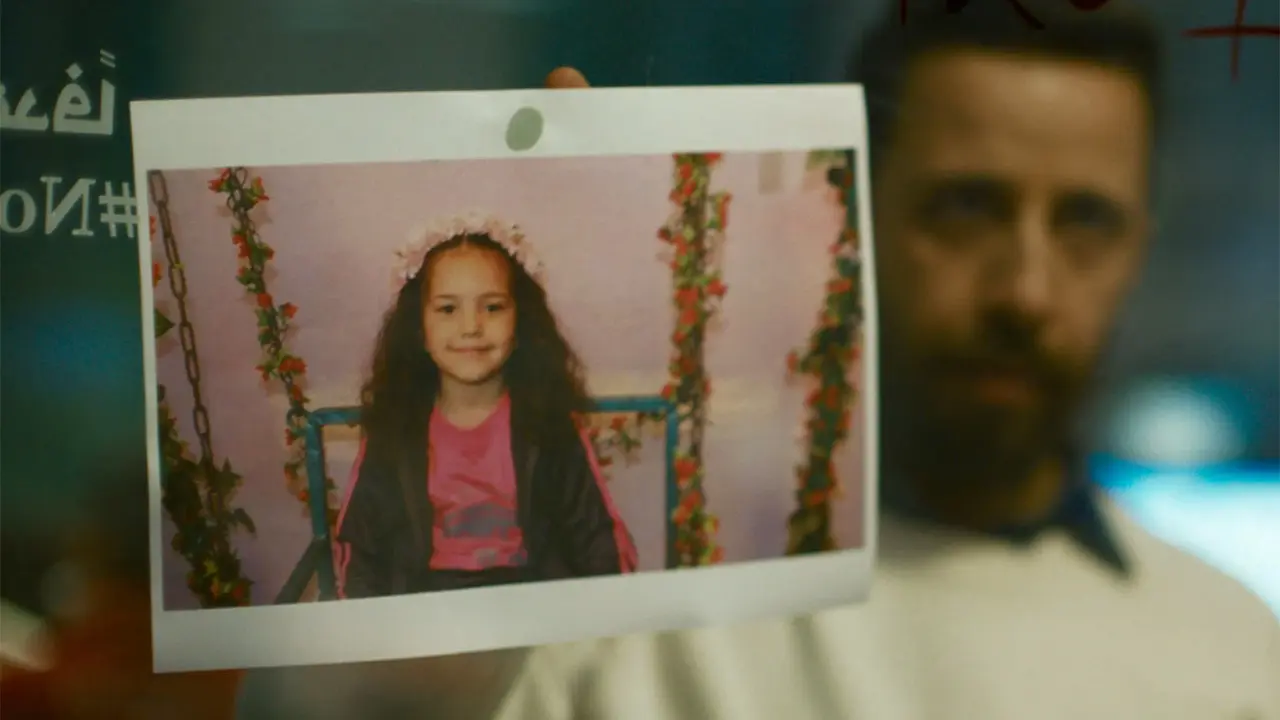
The Voice of Hind Rajab is a 2025 docudrama produced as a Tunisian-French-Palestinian collaboration. The film tells the story of a young 6-year-old Palestinian girl, Hind Rajab, who was brutally shot over 355 times by Israeli army officers in Gaza in 2024, along with six of her family members.

Hind was fleeing the city with her relatives. Audio recordings of calls between Hind and emergency call operators suggest that she was the only one left alive in the car, hiding from Israeli forces. Her pleas for someone to rescue her ended when the phone line was cut amid the sound of more gunfire. The ambulance set to rescue Hind was also bombed by Israeli forces, and the paramedics were killed.

 Lately, several reports surfaced online alleging that the CBFC blocked the film`s release in India.

Speaking with Variety, the film`s local distributor Manoj Nandwana revealed that the film was submitted for certification in February, aiming for a release before the Oscar season. The initial release date was set for March 6, allowing Indian audiences more than a week to view the film before it competed in the Best Foreign Film category at the Oscars. However, the film was not approved by the CBFC for a theatrical release, allegedly owing to fears that it would “break up” ties between India and Israel.

“I told them: the India-Israel relationship is so strong that it`s idiotic to think this movie will break it,” Nadawana added, further noting that The Voice of Hind Rajab has been released in the U.S., U.K., Italy, France and many other countries that have a relationship with Israel.”

The Voice of Hind Rajab is directed by Kaouther Ben Hania.


Indian Oil buys first Iranian LPG since 2018 as shortage worsens| Business News

0
Indian Oil buys first Iranian LPG since 2018 as shortage worsens| Business News


Indian Oil Corp. has bought LPG from Iran for the first time in almost eight years, according to people familiar with the matter, as India scrambles to tider over an LPG shortage spurred by the Iran war.

Indian Oil will share the LPG shipment from Iran with its state-owned peers BPCL and HPCL. (Reuters)

The refiner will share the shipment with its state-owned peers Bharat Petroleum Corp Ltd. and Hindustan Petroleum Corp Ltd., said the people, who asked not to be named due to the sensitivity of the trade.

Indian Oil last bought LPG from Iran in June 2018, according to data intelligence firm Kpler, which said the current cargo is about 43,000 tons of butane and propane.

That amount would only be enough to meet half a day’s demand in India, where LPG is commonly used as a cooking fuel. The country imports about two-thirds of its supplies, and 90% of that comes from West Asia, largely through the Strait of Hormuz that’s been effectively blocked since the start of the Iran war.

The LPG shortage seen some Indians being forced to cook with firewood, and have led to fights in lines to get LPG cylinders. New Delhi has curtailed supplies to commercial users such as hotels and restaurants and invoked emergency measures to accelerate the development of natural gas pipelines.

It’s the first Indian purchase of energy from Iran since the US issued a temporary waiver earlier this month allowing the country to buy crude oil or petroleum products from the Islamic Republic. The market has been watching for signs of potential buyers for Iranian cargoes that were long considered out of reach due to harsh US sanctions.

The people familiar didn’t provide any further details on the cargo or the vessel that’s carrying it. However, ship-tracking data from Kpler shows LPG carrier Sea Bird is transporting Iranian LPG and signalling it will arrive at India’s Mangalore port on Thursday.

The ship had previously signalled its intention to head to China, as it passed through the strait on 17 March, before turning off its transponder signals. It then reappeared in the Arabian Sea a few days later, sailing east, even though its destination was Dubai in the opposite direction.

India is also in the final stages of negotiations for the safe passage of two more LPG cargoes through Hormuz. The vessels Green Asha and Green Sanvi are contracted by BPCL.

Indian Oil, BPCL and HPCL didn’t reply to emails seeking comment. Reuters reported earlier that India had bought its first LPG cargo from Iran in years.