Meghan Markle and Prince Harry are diving into something new with an OTT giant: a scripted drama series all about polo. The announcement comes right after reports that their relationship with the streaming giant is a bit rocky. Still, they’re not slowing down.Here’s all we know about what’s going on with their latest project, their deal, and the drama behind the scenes.
A polo drama: What’s the project about?
First, let’s talk about the new show. Per People, Meghan and Harry will co-produce a series set in Wellington, Florida, which is famous for its equestrian scene. According to Deadline, the story centers on two rival polo teams and the complicated families behind them. It’s supposed to have plenty of drama, both on and off the field. If you remember, Harry already dipped his toes into the polo world with his documentary series ‘Polo’, though that one didn’t exactly break streaming records when it landed on the streaming platform.Harry’s no stranger to polo; he’s played for years, mostly for charity. This time, though, he and Meghan are teaming up with Archewell Productions (their company), plus Josh Schwartz and Stephanie Savage of Fake Empire, to try out scripted TV.This isn’t the only thing they’ve got with the streaming giant. Last year, Meghan and Harry extended their partnership with a multi-year, first-look deal through Archewell. That includes film and TV adaptations like ‘The Wedding Date’ (from Jasmine Guillory’s book) and ‘Meet Me at the Lake’ (from Carley Fortune’s novel), which now even has a director attached.
Meghan and Harry’s ‘strained’ relationship with Netflix
Now, about the rumors about trouble between the Sussexes and the OTT giant: just a few days before this new show announcement, a Variety report claimed things were tense. There have been some hiccups, as Meghan’s lifestyle brand, ‘As Ever’, had a brief partnership with the streaming giant that fizzled out, reportedly losing money and leaving a bunch of unsold products. And not all their content has been a hit. ‘Polo’ didn’t really catch on, leading some to wonder how strong their long-term partnership with the streaming giant really is.Variety also reported that the OTT platform felt blindsided when Harry and Meghan sat down for their big Oprah interview in 2021 and later when Harry’s memoir, Spare, dropped in 2023. However, representatives for both sides have pushed back, saying the reports aren’t true, and Netflix’s Chief Content Officer, Bela Bajaria, brushed off the drama, telling people not to believe everything they read.
The Sussex’s OTT run
Since signing their big deal in 2020, Meghan and Harry have mostly stuck to documentaries and lifestyle shows. Their biggest hit so far is ‘Harry & Meghan’, the docuseries from 2022, which gave viewers a close look at their relationship, wedding, and their decision to step away from royal life. They also released ‘Heart of Invictus’, ‘Live to Lead’, and ‘Polo’. Next up was ‘With Love, Meghan’, a lifestyle and cooking show set for 2025.However, until now, scripted drama was missing from their resume. This new series could be a real game-changer, letting them branch out and possibly cementing their place in streaming platform’s lineup.As for ‘As Ever’, the OTT giant and the brand officially parted ways earlier this month. The brand claimed that it was growing fast and ready to go solo. A spokesperson told People, “We have experienced meaningful and rapid growth, and as ever, is now ready to stand on its own. We have an exciting year ahead and can’t wait to share more.”Another source close to the brand added, “It’s a really exciting time for As ever, and Meghan is building with her team and enjoying the creative fulfillment that comes with creating a brand that’s so close to the life she authentically lives. This year is really about establishing the brand and scaling it.”
IndiGo has warned that the Iran war, and the consequent surge in crude oil prices, is set to weigh on travel demand during the summer season, even as airlines pass on higher expenses to passengers.
To mitigate the squeeze on margins, IndiGo began levying a fuel surcharge ranging from ₹425 to ₹2,300 on 14 March. (Reuters)
The budget carrier, which enjoys over 60% market share in India, signalled that its international summer schedule remains fluid. Domestically, it’s still recovering from significant operational disruptions that forced a scale-back in December.
“There is a very material escalation in operating costs, with fuel and forex-related costs expected to continue to increase substantially,” an IndiGo spokesperson said in a statement on Tuesday.
IndiGo warnings come even as an escalating Iran war continues to rattle global crude oil markets and complicates flight paths. The aviation industry is grappling with a “triple threat” of elevated fuel prices, soaring insurance premiums, and logistical complexity from airspace closures. For Indian carriers, aviation turbine fuel typically accounts for approximately 40% of operating expenses.
To mitigate the squeeze on margins, IndiGo began levying a fuel surcharge ranging from ₹425 to ₹2,300 on 14 March. Peers including Air India, Air India Express, and Akasa Air, have followed suit with similar levies.
“This and other fare increases required will have an effect on demand,” the IndiGo spokesperson said, adding that the airline will “recalibrate capacity accordingly” based on how the geopolitical situation evolves.
On Tuesday, shares of IndiGo operator InterGlobe Aviation Ltd. rose 5.18% to ₹4151.15 apiece on the BSE even as the benchmark Sensex ended the day 1.89% higher at 74,068.45 points.
NEW DELHI: As IPL 2026 nears, a major off-field development has taken centre stage, with Rajasthan Royals, the champions of the inaugural edition of the Indian Premier League (IPL), being acquired for a massive $1.63 billion by a consortium led by US-based entrepreneur Kal Somani. Despite the scale of the deal, the ownership transition will only come into effect after the conclusion of the 2026 season, meaning the current structure will remain in place for now.Somani is not new to the franchise, having been a minority investor since 2021.
Watch
Is this India’s best white-ball team? Nikhil Chopra on 2027 ODI World Cup
With this latest move, he is set to take full control, significantly raising the franchise’s global valuation. Known for his strong presence in the American tech industry, Somani heads companies like IntraEdge, Truyo & Truyo.AI, and Academia and has gradually expanded his interests into the sports world through investments and ownership roles.What makes this acquisition particularly noteworthy is the high-profile backing behind Somani’s consortium. Among the key names is Rob Walton, heir to the Walmart fortune and owner of the NFL’s Denver Broncos, widely regarded as one of the wealthiest sports owners in the United States. The group also includes the Hamp family, led by Sheila Ford Hamp, who owns the Detroit Lions and is part of the Ford Motor Company legacy. Somani has long expressed confidence in the IPL’s future. Speaking about his earlier investment in 2021, he had said, “We see huge potential with this investment, and we are excited for the future of the IPL”. His continued commitment underlines a broader belief in the league’s rapid growth.
Singer-rapper Badshah once again sparked social media chatter after pictures of his wedding to actor Isha Rikhi surfaced online. The pictures of the newlywed couple were shared by Isha’s mother, Poonam Rikhi, on March 24. The two of them have not confirmed their marriage officially yet, and social media is abuzz with speculation about the singer’s personal life. (Also read: Badshah marries Isha Rikhi six years after divorce from Jasmine Masih? Video of pheras, varmala surfaces online)
Isha Rikhi tied the knot with Badshah in an intimate ceremony.
Who is Isha Rikhi?
Isha Rikhi is a model and actor who has worked predominantly in the Punjabi film industry. She made a guest appearance in the Punjabi film Jatt and Juliet, which was a huge box-office success. She then made her screen debut in 2013 with the Punjabi film Jatt Boys Putt Jattan De, with Sippy Gill.
In an interview with Punjab 2000, she had shared that she was not interested in acting before entering the industry. “I was never interested in acting before, my dad has always been quite supportive and he always wanted to see me as a model. I was given a chance for acting and I am now very fascinated by this field,” she said.
Some of her other films include Happy Go Lucky, What the Jatt!! and Desi Munde. Isha made her Bollywood debut with the film Nawabzaade, alongside Raghav Juyal and Punit Pathak. Varun Dhawan, Shraddha Kapoor and Badshah had special appearances in that film.
In the last few years, Isha has established herself in the industry by starring in some of the biggest Punjabi films, such as Happy Go Lucky and Ardaas and has featured in Punjabi music videos.
Who is Badshah’s first wife?
Badshah was previously married to Jasmine Masih. She maintained a low profile and stayed away from the media spotlight. They got married in 2012 and were together for several years before separating in 2022. The two have a daughter named Jessemy Grace Masih Singh, born in January 2017. In an interview with HT from 2018, Badshah had said that before the birth of his baby girl, he didn’t really like kids.
Is Badshah married again?
Meanwhile, on March 24, Isha Rikhi’s mother, Poonam Rikhi, sparked buzz around Badshah’s personal life when she took to Instagram to share a series of pictures that seemingly hint at the couple’s wedding. The two exchanged varmala in the presence of close family members and friends. Isha wore a vibrant red bridal outfit adorned with intricate gold embroidery. She also had traditional jewellery, including a maang tikka, and mehendi on her hands. In the caption, Poonam wrote, “God bless you @isharikhi @badboyshah.”
Former Arsenal and Chelsea star Jorginho was left fuming on Saturday after his 11-year-old daughter Ada was berated by US pop sensation Chappell Roan’s security guard at a hotel in Brazil.
The Euro 2020 winner with Italy explained on Instagram: “She [Ada] simply walked past the singer’s table, looked to confirm it was her, smiled, and went back to sit with her mum. [Then] a security guard came over and began speaking in an extremely aggressive manner to both my wife and my daughter, saying that she shouldn’t allow my daughter to ‘disrespect’ or ‘harass’ other people.”
Jorginho’s daughter Ada. Pic/Jorginho’s Instagram
Jorginho added that the situation left his daughter in tears, and slammed Roan saying she should understand fans “are the ones who build all this [her fame].”
Following the incident and the subsequent social media backlash, Roan put out an apology video on Instagram.
“I did not ask the security guard to go up and talk to them. I do not hate people who are fans of my music. I am sorry to the mother and child,” Roan said
Miley Cyrus revisited her Hannah Montana days as the show completed 20 years. The popular Disney series featured several surprise cameos over the years, including one by Selena Gomez, who played Mikayla Skeech. For the anniversary special episode, Miley received a surprise visit from Selena. Her brief entry left fans nostalgic about the good old Disney days. During the episode, the duo also spoke about the earlier appearances Selena made on the show.
Selena Gomez surprises Miley Cyrus
Both Selena and Miley began their careers with Disney shows. Apart from her brief appearance in Hannah Montana, Selena headlined her own Disney series, Wizards of Waverly Place, where she played teenage wizard Alex Russo.
Selena’s appearance in the reunion special had been kept under wraps. Watching the scene now, it appears that Miley herself was unaware of the surprise entry. In the episode, Selena walked in wearing a red T-shirt and blue denims, with her hair neatly tied in a bun. She stepped onto the recreated Hannah Montana sets and looked around in awe.
Why Emily Osment skipped reunion special?
In an Instagram video, Emily who played Miley`s best friend Lilly revealed that she wouldn`t be able to attend the premiere because she was busy filming her series George & Mandy`s First Marriage. However, the 34-year-old still wanted to celebrate Hannah Montana`s milestone anniversary, as per eonline.
“I wanted to say hello and thank you to everybody that has stuck by us for all these years,” she said. “So grateful that you guys all still love this show. I`m so proud to be a part of it.”
Indeed, Emily shared how meaningful the experience was for her, writing in the caption, “Hannah Montana changed my life, it gave me a lifelong respect for this medium of comedy, it taught me discipline, patience, timing and respect working in an adult space so young.”
“I can`t tell you what your sweet messages mean to me and how lucky I feel to have been apart of this once in a generation goliath of a television show,” she continued. “Thank you for letting me into your living rooms and I hope to still be there many years from now.”
About Hannah Montana
Hannah Montana was originally premiered in 2006 and ran across four seasons until 2011. The show received much love from the audience, becoming a fan favourite among the kids and teenagers. It even won four Emmy nominations for Outstanding Children`s Program.
`Hannah Montana` followed the tale of Miley Stewart – a teenager from Malibu, California, who doubles as the famous pop singer Hannah Montana. The show even spawned a film titled Hannah Montana: The Movie, which came out in theatres in April 2009.
The Strait of Hormuz is the central artery of the global energy system. About 20–21 million barrels per day (bpd) of crude oil passed through this narrow passage, which is about one-fifth of global petroleum consumption. Moreover, about 25-30 percent of global LNG trade passes through the same route.
India’s strategic petroleum reserves currently cover about 9-10 days of consumption. Even after including commercial inventory, which could theoretically provide an additional buffer of 64.5 days, the total buffer remains below that of China. (Bloomberg)
For emerging economies like India, the implications of closing the Strait of Hormuz are immediate and serious. India imports about 85 percent of its crude oil needs, of which about 40 percent comes from the Middle East. This creates a structural dependency on a single chokepoint. Unlike diverse energy systems, India’s supply chain has limited redundancy.
According to the International Energy Agency (IEA) oil market report Published March 12, 2026 Global oil supply is projected to fall by at least 8 million bpd in March alone due to production shutdowns across the Gulf. This is the largest supply disruption in the history of the modern oil market. Continued disruptions in crude oil supply could lead to significant increases in crude oil prices. At oil at $130 and above, the macroeconomic impact becomes systemic for India.
The first means of transmission is inflation. Energy costs are directly involved in transportation, logistics, and manufacturing. In India, where supply chains remain cost sensitive, higher fuel prices quickly translate into higher food and core inflation. This will push the consumer price index well above the RBI’s target range, leading to a halt or reversal of any easing cycle.
The second channel is fiscal. The Indian government has historically used fuel taxes as a shock absorber. During rising crude oil prices, excise duty is often reduced to control inflation. This comes at a fiscal cost. Therefore, a prolonged oil shock will affect government revenues and also increase expenditure pressure.
The third channel is development. Higher energy prices act as a tax on consumption. Household spending has weakened, corporate margins have come under pressure and capital expenditure decisions are being delayed. Emerging markets are particularly vulnerable to such shocks because they lack the financial buffers available to developed economies.
What changes this from a cyclical challenge to a structural risk is the duration. Small disruptions can be managed. Global strategic petroleum reserves may be released. IEA can coordinate supply responses. Demand may adjust on margin.
However, data suggests that these mechanisms are inadequate for longer-term disruptions. IEA countries collectively have more than 1 billion barrels of emergency reserves, but the coordinated release could supply only 2-4 million bpd on a temporary basis. This is worthwhile for short-term shocks, but inadequate if a significant portion of the 20 million bpd flowing from Hormuz is disrupted for weeks or months.
OPEC’s spare capacity, estimated at 3-4 million bpd, provides limited relief. More importantly, this additional capacity also depends on shipping routes that are themselves constrained by the same chokepoints or limited bypass infrastructure. Saudi Arabia and the United Arab Emirates maintain partial bypass pipelines, but their combined capacity cannot completely overcome the disruption. Countries like Iraq, Kuwait and Qatar have no viable alternative.
In other words, there is very little slack in the system. For India, this lack of flexibility translates directly into insecurity. The situation becomes even more worrying in comparison to China. Over the past decade, China has systematically built up strategic petroleum reserves. Estimates suggest that China’s combined strategic and commercial reserves could cover 90 to 100 days of imports, as it holds an estimated 1.2 to 1.3 billion barrels of total crude oil. Additionally, China has diversified its supply base to Russia, Central Asia, Africa and Latin America.
India’s situation is quite weak. India’s strategic petroleum reserves currently cover about 9-10 days of consumption. Even after including commercial inventories, which could theoretically provide an additional buffer of 64.5 days, the total buffer remains below that of China. According to a recent government report, the country has more than 250 million barrels of crude oil and petroleum products. The combined reserves provide a buffer of 7-8 weeks in the country’s energy supply chain.
If the Strait of Hormuz faces disruption for a few days or a few weeks, India can manage through inventory drawdown, policy adjustment and short-term market intervention. However, if the disruption extends to late April and beyond, the situation changes fundamentally.
At that time, India would be facing the double whammy of high prices as well as limited physical supply. Refineries may face shortage of feedstock. There may be a reduction in fuel availability. The government may be forced to implement demand management measures. Inflation will rise sharply and the rupee may come under sustained pressure. Financial markets have already begun to price in macro volatility.
In contrast, China will have more room for maneuver. Large reserves allow it to smooth out supply disruptions. Diversified sourcing reduces dependence on Hormuz. State control over energy infrastructure enables more coordinated responses. These benefits are lacking in India.
Vulnerability is not just about crude oil. It is spread across the entire energy complex. In 2025, the Gulf is expected to export approximately 3.3 million bpd of refined products and 1.5 million bpd of LPG. These flows are now seriously disrupted. Refining capacity in the region has already been reduced by more than 3 million barrels per day due to the strikes and logistics disruptions.
India consumes about 1.1 to 1.2 million bpd of LPG, a large portion of which is imported from the Gulf. More than 45 percent of Middle Eastern LPG exports are directed to India, primarily for domestic consumption. Unlike industrial fuels, LPG consumption in India is linked to basic domestic needs like cooking. The ability to replace or reduce this consumption in the short term is limited. At the same time, LPG storage capacity in India is minimum. Supply chains are designed for continuous flow rather than storage. This creates a delicate balance.
There is another avenue of risk that is often underappreciated: LNG. Qatar exports about 75–80 million tonnes of LNG per year, most of which passes through Hormuz. The disruption will therefore not only impact oil markets, but also global gas markets.
For India, which is increasing its dependence on LNG for power generation and industrial use, this creates an additional layer of vulnerability. Higher LNG prices will impact power costs, fertilizer production and industrial input prices. This has increased the shock of inflation. Combined effect is a multi-layer stress phenomenon. Oil prices increased. Gas prices increased. Inflation increases. Growth slows down. Both fiscal and monetary policy are constrained.
For India, a short disruption is manageable. Medium-term disruption is painful. Prolonged disruption is destabilizing. We must remember that the oil shock of the 1970s was one of the main factors contributing to the emergency declared by Indira Gandhi in 1975. This is why the timeline matters more than the event. If the crisis extends beyond the end of April, India will find itself in a precarious situation where its limited reserves, high import dependence and constrained policy flexibility will translate into a full-scale supply shock.
The uncomfortable reality is that India is not adequately prepared for such a scenario. Emerging economies that import oil will bear the greatest burden from the closure of the Strait of Hormuz. Among them, India stands out due to its dependence on imported energy from the conflict zone and limited buffer capacity.
The Indian government’s good relations with Russia will help ease the situation. As of March 2026, Russia remains India’s largest crude oil supplier, with its share reaching 33 percent in mid-2025. Recent reports suggest Indian refineries are increasing purchases, with about 33 million barrels of Russian crude due to arrive in March 2026 after US rebates. Although Russian oil will provide some relief to India, it may not be enough in the event of a prolonged conflict.
The Iran crisis has exposed India’s energy vulnerabilities with unusual clarity. If this conflict continues, it could cause significant economic damage to India. Disruptions in the Strait of Hormuz cause energy shocks that weigh on domestic inflation, growth and financial stability. If the disruption continues beyond a limit, it will have a devastating impact on our economy and markets.
Smirn Bhandari is an investment manager and equity analyst with a keen interest in geopolitics, financial markets and global power dynamics. He has written articles in leading publications including Firstpost, Swarajya, The Wire, Newslaundry and The Quint. His writing focuses on the intersection of economics and geopolitics. The views expressed are personal.
This image is used for representation purpose only (AI-generated)
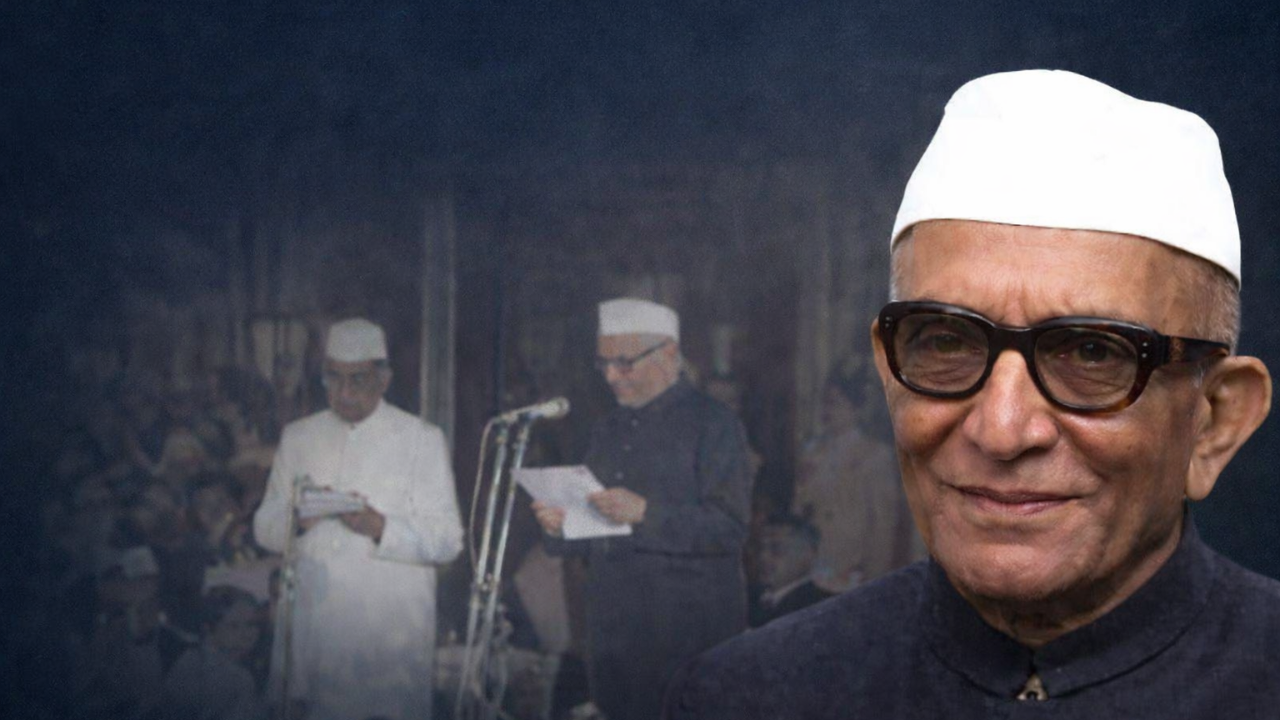
On a cool March morning in 1977, inside the stately halls of Rashtrapati Bhavan, a brief swearing-in ceremony lasting barely three minutes changed the course of Indian politics.When 81-year-old Morarji Desai was sworn in as the country’s first non-Congress Prime Minister on March 24, 1977, it was not just a change of power, it was the first real disruption of a system that had remained largely unchanged since independence.The oath was administered by the then acting President BD Jatti.
At first glance, the ritual seemed routine, a formal transfer of power to the presidential residence. But behind its brevity lies a historic change, the end of almost decades of Congress dominance, the post-Emergency political reckoning and the beginning of coalition politics at the Centre.
1977 elections: the vote that changed everything
The general elections of 1977 were unlike any election held in India since independence.In the months before the vote, four major opposition factions – Samajwadi, Jan Sangh, Bharatiya Lok Dal (BLD), and Congress (O) came together. Janata Party.This unprecedented unity was driven by a common goal: to challenge the Congress rule under then Prime Minister Indira Gandhi and end the Emergency.The campaign gained momentum from widespread anger over the Emergency – which included forced sterilization campaigns, slum demolitions, arrests of political opponents, and press censorship.Perhaps for the first time, voters in rural and urban India were not just participating – they were abstaining.The result was decisive. Of the 542 seats, the Janata Party won 295 seats, while the Congress was reduced to 154, losing more than 200 seats compared to the last election.
.
Morarji Desai emerged as the unanimous choice to lead the new government.A veteran of the independence movement, Desai served as Chief Minister of Bombay (1952–1957) and Deputy Prime Minister (1967–1969).At 81, he became the oldest person to hold office as Prime Minister, a symbol of continuity at a moment of disruption.
Morarji Desai: Experienced politician sitting at the top
Morarji Desai’s rise was shaped by political currents as well as personal convictions.Born in 1896, he resigned from government service in 1930 to join the independence movement led by Mahatma Gandhi.
He was sent to jail several times and later played important roles in the Congress.During the Emergency, Desai was arrested on June 26, 1975 and spent several months in solitary confinement.His return from political prisoner to prime minister in 1977 reflects the larger story of the reset.He consistently argued that no one should be above the law, including the Prime Minister.“One must act in life according to the truth and one’s faith,” he had said – a line that defined both his politics and his moment.
.
Desai was later awarded the Bharat Ratna in 1991 and Pakistan’s Nishan-e-Pakistan in 1990.
Understanding the 1977 transition: What scholars say
The extraordinary change in Indian politics in 1977 did not happen suddenly. Political scientists and historians have long studied how and why India’s democracy, which appeared intact for decades, suddenly changed.Rajni Kothari: Congress SystemRajni Kothari was among the first scholars to describe the post-independence political system in India as the “Congress system”. in its original work congress system in indiaKothari points out that Indian politics in the 1950s and early 1960s was not dominated by any one party in a simple sense, but by a system in which the Congress functioned as the center of political life.Kothari argued that the Congress system contained a unique internal mechanism of political competition. Opposition parties existed, but played roles similar to pressure groups; There was very little chance of him coming to power directly. Myron Weiner: elections, emergency and democratic reformsIn his influential 1977 analysis, political scientist Myron Weiner examined the parliamentary elections that abruptly ended Congress. Weiner portrayed the 1977 election as a moment when Indian democracy corrected itself following the authoritarian precedent set during the Emergency.Weiner highlights that the Emergency was expected to strengthen Indira Gandhi’s authority. Between 1975 and 1977, the central government under Gandhiji suspended fundamental rights, imposed press censorship and used the state machinery to suppress dissent. Instead, the polls produced resounding congressional disapproval:
Many opposition parties united in Janata Party
Opposition leaders, many of whom have recently been released from jail, launched a nationwide campaign
Voters gave clear majority to Janta alliance
Yogendra Yadav: The era of four party systemBuilding on the work of scholars such as Kothari and others who have tracked Indian politics over decades, Yogendra Yadav has contributed to the understanding of how Indian party systems evolved through distinct stages. Yadav’s framework identifies four broad party-system eras in post-independence India:
First-party system (1952–1967): dominance of congress system
Second-party system (1967–1989): Congress maintains central position amid growing challenges, resulting in brief public intervention
Third-party systems (1989–2014): Marked by coalition politics and fragmented national competition
Fourth-party systems (since 2014): Characteristics of BJP’s dominance
Rift, Emergency and restoration of Congress
Rift between Morarji Desai and Indira GandhiThe conflict between Morarji Desai and Indira Gandhi was one of the defining power struggles in post-independence India.It began after the succession battle following the death of Lal Bahadur Shastri in 1966, when the party’s traditionalist leadership, the Congress syndicate, supported Gandhi over Desai.Desai, a senior leader and believer in conservative economic and administrative principles, represented the old faction, while Gandhi adopted a new, populist approach that consistently challenged the status quo.Tensions increased further in 1969 when Gandhiji removed Desai from the Finance Ministry. At this moment the Congress split into Congress (R), led by Gandhiji, and Congress (O), an organizational faction led by Desai and other senior leaders. Ideologically, the two leaders diverged sharply: Gandhi embraced socialist measures, including the nationalization of fourteen major banks, while Desai favored limited government intervention. Emergency: The dark chapter of democracyThe Emergency (1975–1977) was the climax of the political conflict between Gandhi and Desai. Following the Allahabad High Court’s decision to invalidate his election to the Lok Sabha, Gandhi imposed a nationwide emergency for 21 months, citing threats to national stability. Opposition leaders, including Desai, were arrested and kept in solitary confinement. During this period, the government took sweeping measures that increased its control over political and social life. Yet, the Emergency also created an unprecedented anti-Congress wave, prompting opposition parties to unite under the Janata Party banner.
.
Upon his release in early 1977, Morarji Desai became the face of this coalition, campaigning across the country and taking advantage of public dissatisfaction with authoritarian rule. The general elections of 1977 ultimately gave a decisive verdict in favor of Desai. Restoration of Congress: Return of Indira GandhiHowever, the Janata Party’s tenure proved unstable. Internal divisions, factionalism, and lack of united rule weakened its ability to govern effectively. Meanwhile, Indira Gandhi, although out of power, gradually regained her political base. His resurgence was marked by significant victories in the state assembly elections of Karnataka and Andhra Pradesh.Gandhi’s victory demonstrated his enduring appeal among the rural poor, minorities and women. The general elections of 1980 cemented his comeback. Gandhi’s party won a landslide majority by securing 353 seats out of 529, while the Janata Party’s seat share dropped to 41.
Could 1977 happen again?
The 1977 election remains the most striking example of a united opposition defeating a major ruling party at the national level.Ahead of the 2024 Lok Sabha elections, opposition parties attempted a similar consolidation under the Bharat Alliance.Despite coordination between more than two dozen parties, the BJP returned to power.Nearly five decades after Desai was sworn in, the country has again entered a phase of dominance, this time with the BJP raising a familiar question: Can a fragmented opposition repeat the unity of 1977?History offers both hope and caution. While 1977 proved that electoral waves can topple a strong regime, it also showed that it is not just victory but cohesion that determines longevity.1977 was a reminder that democratic systems can be reset, but only if voters, opposition forces, and institutions unite in a single moment.
The buzz around Ranveer Singh-starrer Dhurandhar 2 refuses to slow down! Almost a week after its release, the high-octane spy thriller is continuing to dominate the box office and set new records. Directed by Aditya Dhar, the film has quickly become one of the most-talked-about releases. It has received rave reviews from viewers, critics and celebrities, but a certain section of people have criticised it for showing pro-establishment propaganda.
Background actor shares his negative experience on set
Amid the phenomenal success, Sushant Charak, an aspiring actor from Mumbai, has shared his negative experience from the shoot that left a bitter impact on him. The actor appeared in the film briefly as part of a crowd scene and took to Instagram to open up about his experience. The video has since gone viral.
He revealed that he bagged the role immediately after he arrived in Mumbai in 2025. Barely a week into the city, he received a casting call for Dhurandhar: The Revenge, which was his first brush with a big-budget production.
He shared that he was brimming with hope and excitement when he stepped onto the set, eager to witness stars like Ranveer Singh and Arjun Rampal in action. However, his hopes were soon dashed when he experienced an uncomfortable situation.
Recalling the incident, the actor revealed that the shoot environment became extremely hot. Unable to bear the heat, he slightly adjusted an air conditioner towards himself, but a crew member immediately intervened and told him that the cooling was reserved only for “bade artists” (lead actors), not background performers. The remark made him feel humiliated and belittled.
The actor tried standing his ground and saying that basic comforts like cool air should be for everyone, but to no avail. He then told the crew member that one day, when he becomes a successful actor, he hopes to be treated differently.
Reflecting on the experience, he said it opened his eyes to the struggles newcomers often face in the industry. Choosing an optimistic outlook, he quoted the film`s dialogue, “Hausla, Indhan, Badla,” suggesting that setbacks can become stepping stones and summing up his mindset.
Dhurandhar 2 crosses Rs 850 crore
While Mondays are often dull days for films and their box office collections, as the numbers drop drastically, it wasn`t the case for Dhurandhar: The Revenge. The first working day of the week had no impact on the film`s collections, which have now crossed the Rs 850 crore mark worldwide. Leave alone slowing down, the Ranveer Singh-starrer went on to register the biggest Monday in Indian cinema history.
On Monday, the spy thriller was expected to see a drop, as films normally do. However, Dhurandhar 2 managed to limit that dip to just 43%. On Monday, the film collected another Rs 65 crore net in India. On Monday, it added USD 2.5 million to its kitty internationally. It earned Rs 100 crore worldwide on Monday.









-1774350220665_d.png?w=696&resize=696,0&ssl=1 "Dhurandhar 2: Background actor shares humiliating experience on set")
-1774350220665_d.png "Dhurandhar 2: Background actor shares humiliating experience on set")
