


Weight-loss drug prices are falling in the US – but can the example be repeated?
The cutthroat battle for the US weight-loss drug market

PSL deals another shock; Dasun Shanaka to cancel contract and join Rajasthan Royals as Sam Curran’s replacement: Report

Rajasthan Royals are set to make a late squad adjustment ahead of IPL 2026, with Sri Lanka all-rounder Dasun Shanaka emerging as the frontrunner to replace the injured Sam Curran. The development comes as a significant early setback for RR, who had built a key part of their balance around Curran’s dual ability with bat and ball.

Curran, who joined Rajasthan in a high-profile move, has been ruled out with a groin injury just days before the start of the season. His absence left a noticeable gap in the side’s structure – particularly in terms of batting depth and seam-bowling options through the middle overs. Rajasthan have moved quickly, and Shanaka now appears set to step into that role, with the deal nearing completion.
While Shanaka may not have the same IPL pedigree as Sam Curran, he offers a skill set that aligns closely with what Rajasthan need at this stage. A proven international captain for Sri Lanka, he brings middle-order power-hitting, the ability to chip in with medium pace, and leadership experience under pressure. For a team looking to maintain flexibility across departments, that versatility becomes crucial. A report by the Times of India claims that the deal is in its final stages, with only the NOC to be given by the Sri Lanka Cricket and some paperwork related to his PSL contract left.
IPL call pulls Shanaka away from PSL stint
What adds an extra dimension to this move is Shanaka’s decision to prioritise the IPL over the Pakistan Super League. The Sri Lankan all-rounder had been associated with Lahore Qalandars for PSL 2026, but has now opted to switch to Rajasthan Royals instead. It is another instance this season of a player choosing the IPL when schedules overlap, underlining the league’s continued pull in the global T20 landscape.
From Rajasthan’s perspective, the urgency of the situation is clear. With their opening fixture scheduled for March 30 against Chennai Super Kings in Guwahati, there is little time for experimentation. The team required a ready-made overseas option who could slot into the squad immediately without disrupting the overall combination.
Whether Dasun Shanaka walks straight into the playing XI will depend on Rajasthan’s preferred overseas mix, especially with multiple all-round options already in the setup. However, as a replacement signing, he offers a low-risk, functional solution to a sudden problem.
In the larger picture, this is more than just a late injury replacement. It reflects both the Rajasthan Royals’ need to quickly stabilise their squad ahead of a demanding season and the IPL’s ongoing dominance in attracting global talent. For now, the focus will remain on how effectively Shanaka can fill the void left by Curran – and whether RR can absorb the early disruption without losing momentum.
The Iranian Prisons Where Bombs Are Threatening Dissidents and Americans

Lindsay Foreman was hunched over the landline in Ward 7 of Tehran’s Evin prison, telling her son Joe that the U.S.-Israeli bombing campaign had started. Warplanes had been circling above the Iranian capital all morning and the rumble of explosions had sent prisoners scurrying beneath their metal-framed bunks.
“It’s begun,” said the British mother of two, arrested a year ago on a motorcycle trip with her husband for espionage charges she denies.
Kajal Aggarwal praises Aditya Dhar's 'Dhurandhar: The Revenge'

New Delhi, Actor Kajal Aggarwal called Aditya Dhar’s latest directorial “Dhurandhar: The Revenge” a “cinematic ecstasy” and praised the performances of Ranveer Singh and R Madhavan in the film.

Released on March 19, the film is a sequel to Dhar’s 2025 directorial “Dhurandhar’ and also features Arjun Rampal, Sanjay Dutt, Sara Arjun and Rakesh Bedi, who are reprising their roles.
The film earned over ₹43 crore from paid previews on March 18, taking its total to ₹102.55 crore on the opening day, according to estimates by trade tracking website Sacnilk. The total worldwide box office collection of the film has already crossed the mark of ₹600 crore.
Aggarwal shared a note on her Instagram story on Sunday and also lauded performances by Sara Arjun, Yami Gautam, and music composer Shashwat Sachdev.
“‘Dhurandhar. The Revenge’. Take a moment… let it truly sink in. @ranveersingh , I’m still not over what you’ve done here. The emotion, the intensity, the ease, the sincerity… and the sheer hard work behind it all. Your passion bleeds through every frame. Jaskirat and Hamza will stay with us for a long, long time. Truly, a legend of our times in motion. @actormaddy sir , that quiet strength, that calm authority… especially in the final moments, you stirred something deeply patriotic and powerful,” she wrote.
“@adityadharfilms , this is cinematic ecstasy, pro max. If Part 1 was unforgettable, Part 2 leaves us with so much to feel, process, and admire. You’ve raised the bar. @yamigautam, what a delight to see you. Effortless, luminous, and impactful as ever. @saraarjunn , loved your portrayal of Yalina, you are incredibly charming! @shashwatology , your music doesn’t just support the film, it lives within it. From soul-stirring melodies, nostalgic classic remixes and Punjabi folk in part 1, to an even more elevated soundscape this time… outstanding,” she added.
The actor concluded by congratulating the entire team of the film and said it’s the experience, which stays. “Congratulations to the entire team and @officialjiostudios for delivering such phenomenal cinema. Thank you for this experience – it stays,” she said
Produced by Jyoti Deshpande and Lokesh Dhar, the film released in Hindi, Telugu, Tamil, Kannada and Malayalam languages.
This article was generated from an automated news agency feed without modifications to text.
Gold prices crash: Yellow metal registers worst weekly fall in 40 years, what should investors do?


As tensions in the Middle East stretch into their fourth week, shockwaves are now being felt across global markets and gold is no exception. The precious metal has taken a sharp hit, tumbling to its steepest weekly fall in nearly four decades, with prices reaching $4,354 per ounce.The fall marks a swift retreat from levels of around $5,200 per ounce seen on March 13, highlighting the speed and scale of the correction. The metal had earlier surged to an all-time high of $5,595.51 before losing momentum.The sharp decline is raising concerns about gold’s traditional safe-haven status. Market participants note that despite ongoing geopolitical tensions, the yellow metal has struggled to hold its appeal, with broader financial factors taking centre stage.Gold prices fallAccording to a report by The Wall Street Journal, the recent decline may open up opportunities for long-term investors looking to enter the market at lower levels.Priyanka Sachdeva told WSJ “this correction is a golden opportunity for staggered entry by long-term buyers,” she said.The report added that a sustained move below $4,400 per ounce has brought the 200-day moving average of $4,154 per ounce into view as a potential support level before any stabilisation.Data from ICE showed spot gold trading 2.0% lower at $4,400.44 per ounce, after touching an intraday low of $4,320.08, its weakest level since early January.The downturn has also been linked to expectations of liquidity-driven selling in global markets amid the ongoing Middle East conflict. Gold proceeds with a ‘cautious tone’Ole Hansen, Saxo Bank’s Head of Commodity Strategy, told WSJ that there is speculation some economies may need to raise liquidity, which could include selling gold.“While not a confirmed driver, it adds to the more cautious tone,” he said.He further noted that gold’s inability to rally despite geopolitical tensions suggests other factors are currently dominating market behaviour.“Gold’s failure to rally despite geopolitical stress highlights the current dominance of higher real yields, a firmer dollar and position adjustment over its traditional safe-haven role,” he said.Analysts broadly indicate that while the correction has been sharp, the current price levels may still present selective buying opportunities for investors with a long-term perspective, even as short-term volatility continues.(Disclaimer: Recommendations and views on the stock market, other asset classes or personal finance management tips given by experts are their own. These opinions do not represent the views of The Times of India)
Taylor Frankie Paul’s turbulent love life


Taylor Frankie Paul’s love life has played out in public for years, well before she was cast as ‘The Bachelorette.’ Her journey began when she married Tate Paul in 2016 at the age of 22, quickly starting a family that would grow to include two children, Indy and Ocean. Their relationship attracted attention after Paul openly talked about their “soft‑swinging” arrangement, a setup where they agreed to explore intimacy with others in a controlled way.Over time, Paul admitted that she had crossed the boundaries she and Tate had set, which added pressure to an already fragile dynamic. By 2022, the couple had separated, and Tate filed for divorce, marking the end of their first major partnership. For Paul, that chapter was a mix of motherhood, self‑discovery, and the early stirrings of a life lived in front of cameras.
A turbulent romance with Dakota Mortensen
After the split from Tate, Taylor Frankie Paul’s romantic life took a dramatic turn with Dakota Mortensen, a reality‑TV personality who later appeared alongside her on The Secret Lives of Mormon Wives. Their relationship quickly became one of the show’s central storylines, full of passion, trust issues, and fiery arguments.In February 2023, that tension erupted in a very public way when Paul was arrested following a physical altercation with Mortensen. Part of the incident was captured by the show’s cameras, and footage later sparked a wave of backlash and debate about domestic violence, consent, and accountability. She faced charges including assault, criminal mischief, and domestic violence in the presence of a child, ultimately pleading guilty to aggravated assault and accepting a no‑contact agreement with Mortensen as part of her plea deal.
Trying to build a family amid the chaos
Despite the legal fallout and the intense public scrutiny, Taylor and Dakota stayed together for several months. They later expanded their family, welcoming a son named Ever True in March 2024, a moment that highlighted both the chaos and the genuine emotional bond they shared. Their relationship continued to be a roller‑coaster, marked by cheating rumors, multiple breakups, and brief reconciliations, which kept fans and critics watching their every move.By 2025, Paul confirmed on the Call Her Daddy podcast that the relationship was over, even as some reports suggested they still had emotional ties. Shortly afterward, she was named the lead of The Bachelorette, a role that would have framed her as a woman ready for a fresh start in love.
A complicated present and uncertain future
The announcement of her Bachelorette season overlapped with renewed attention on her past, particularly the 2023 altercation and the conditions of her plea deal. As the controversy grew, ABC ultimately decided not to move forward with her season, leaving her story in an unfinished, open‑ended chapter.
A love life under constant scrutiny
Today, Taylor Frankie Paul’s relationship timeline reads less like a tidy arc and more like a collision of family, desire, and public judgment. Through marriage, divorce, arrests, reconciliations, and the birth of a third child, one thread remains clear: her life has always been about trying to balance love, loyalty, and the pressure of being watched


Ran 15 when asked for 12: Hardik on grind behind his rise

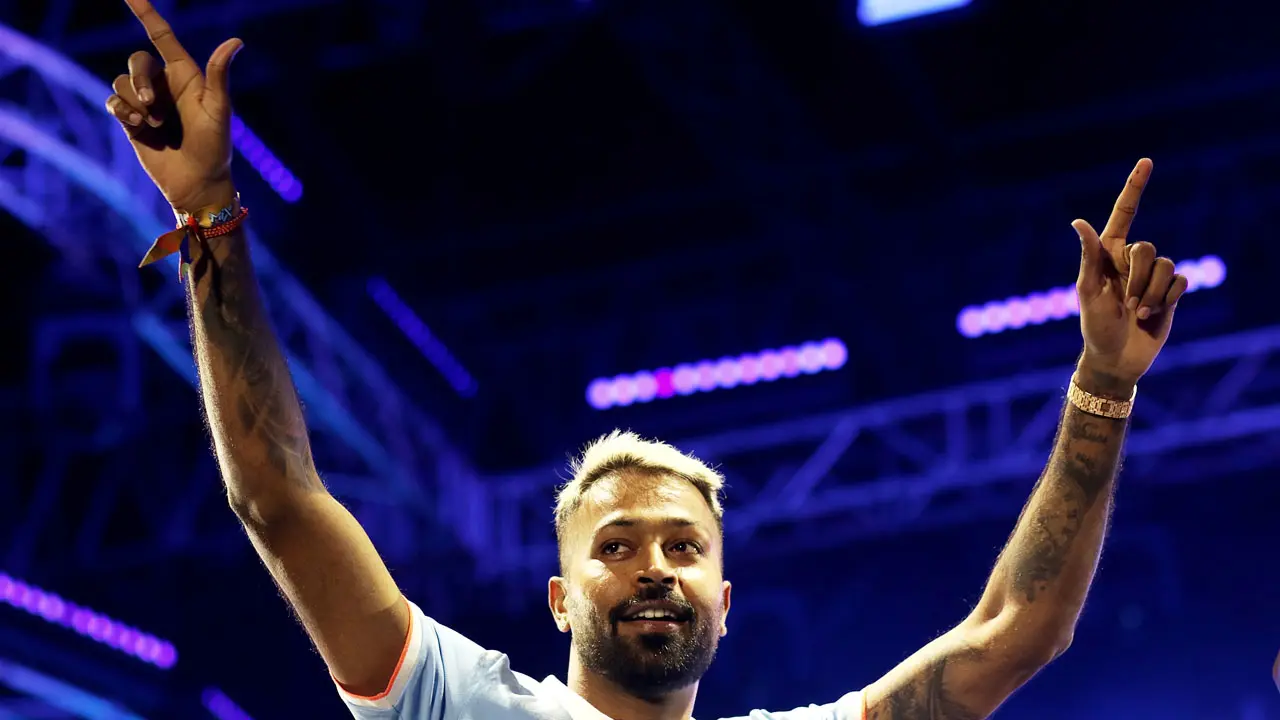
India all-rounder Hardik Pandya on Sunday said he began his career as a “pure batter” and credited hard work and a willingness to go the extra mile for his rise as one of the country`s most valuable cricketers. From his Ranji Trophy debut in 2013 to breaking into the Indian Premier League in 2015, when Mumbai Indians won their second title, Pandya has come a long way, going on to play key roles in India`s T20 World Cup triumphs in 2024 and 2026.
“I was just a pure batter who batted all his 17-19 years of young age… I only knew one thing, if you tell people to run 12 rounds, I ran 15 rounds. So from there out of the blue, someone sees me and one year later I play Ranji Trophy,” said the 32-year-old at an MI promotional event here. Widely regarded as a genuine two-in-one player in limited-overs cricket, Pandya`s ability to deliver with both bat and ball and as a finisher and a wicket-taking option has made him indispensable.
He played a decisive role in India`s 2024 T20 World Cup triumph, removing Heinrich Klaasen and David Miller in the final. Pandya credited MI`s scouting system for spotting his potential early and underlined his belief in relentless hard work and self-improvement. “Playing a Ranji game, they haven`t come to see me but they were able to identify that I had something special. That shows the talent MI scouting has, that is what MI scouting does.
“I had to adapt, I had no idea to look after my body, I had no idea. No matter how much someone will push, I know how to work hard… Duniya upar se neeche ho jaye (Even if the world turns upside down) I always believed in hard work. I always tell this to the youngsters,” he said. The five-time champions are chasing a record sixth IPL title, having last lifted the trophy in 2020. MI endured a mixed run in recent seasons, finishing bottom in 2024 and losing to eventual runners-up Punjab Kings in the playoffs last year.
“Ultimate dream is to win IPL for the sixth time for our Paltan. MI already has such amazing legacy MI fans are the team`s heartbeat. The junoon, the passion when I first played, I want that. “Play the best kind of cricket that MI and Hardik Pandya have ever played, that`s the legacy I want to be for MI and win trophies as many as possible,” he said.
On the absence of five stars on the jersey despite their title count, Pandya quipped: “Honest answer is we want to win as many possible. Fortunate that we`ve won five already so if we keep on putting it then there would not be any space left.” Emphasising his bond with the franchise`s supporters, he added: “I play for this love, the kind of love I get every time I play here is the added motivation. We`re very grateful to them.” Mumbai Indians will open their campaign against Kolkata Knight Riders at home on March 29.
This story has been sourced from a third party syndicated feed, agencies. Mid-day accepts no responsibility or liability for its dependability, trustworthiness, reliability and data of the text. Mid-day management/mid-day.com reserves the sole right to alter, delete or remove (without notice) the content in its absolute discretion for any reason whatsoever
Ekta Kapoor jokes about criticism of AI usage in Naagin 7: `No budget`

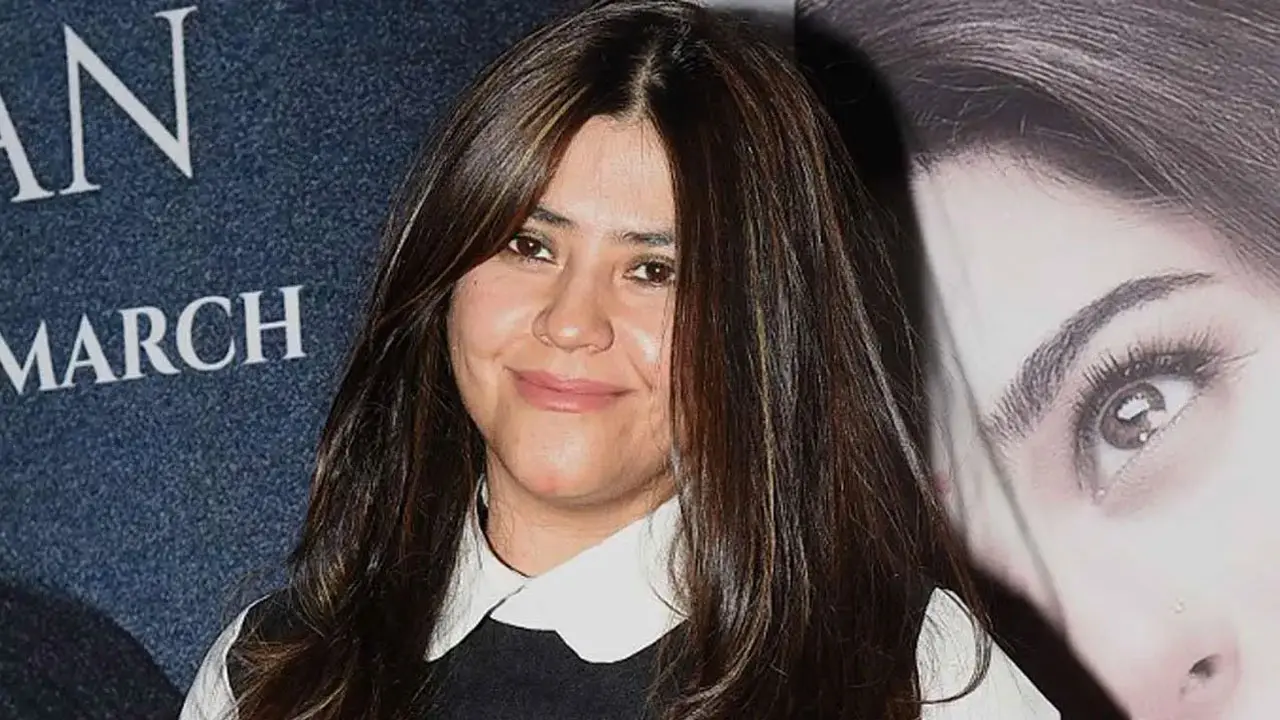
Producer Ekta Kapoor has finally reacted to criticism surrounding the use of AI (artificial intelligence)in her show Naagin 7, starring Priyanka Chahar Choudhary as the lead.
Addressing the backlash, Ekta took to her social media account, and in her signature wit, said, “I am getting so much hate for my A.I. episodes.”
Further switching the camera to her team, she quipped, ‘These are the people… I’m innocent… Dragon, plane… with no budget.”
The producer further admitted, “No, It`s me actually. I wanted it all.”
Talking about Naagin 7, the show has been facing criticism online since the past few months, with many users expressing disappointment over the extra usage of AI in important sequences.
One user wrote on social media, “AI slop ruined the faceoff between dragon & naagin and then she went into the water for few seconds I mean what the hell was that.”
Another post read, “Well done Ekta on Naagin7 maintaining TRPs. Just a suggestion, the show will be more enjoyable & tolerable visually if you limit the snake and snake transformation to VFX. Please do not use AI for anything related to Naagin. It just does not look good at all.”
A fan of Naagin also stated, “Dear EktaaRKapoor mam being a Naagin fan since very long, I would like to request you please stop misusing AI, Keep it natural.”
Another comment read, “Naagin has genuinely lost its charm. why are literally all of the scenes ai?? waited 3 years for this bs? couldnt even put effort into Naagin7. (sic)”
The criticism comes amid the social media backlash around the use of AI in the show, where fans called it `overused’.
Naagin 7, that is the seventh installment of Ekta Kapoor`s popular Naagin franchise, stars Priyanka Chahar Choudhary and Namik Paul in the lead.
This story has been sourced from a third party syndicated feed, agencies. Mid-day accepts no responsibility or liability for its dependability, trustworthiness, reliability and data of the text. Mid-day management/mid-day.com reserves the sole right to alter, delete or remove (without notice) the content in its absolute discretion for any reason whatsoever
Immense damage seen in Iran’s streets after air strikes | US-Israel war on Iran

Videos show the aftermath of strikes in Iran, as search teams recover bodies from rubble. Residents are using torches to look for loved ones, as air raids appear to have knocked out power in some parts. Iran’s health ministry says more than 1,500 people have been killed during the US and Israel’s war.
Published On 23 Mar 2026
