Tuesday, September 29, 2026
Home Blog Page 1144

Karan Johar admits to ‘Dhurandhar FOMO’, says he hasn’t watched the film yet

0
Karan Johar admits to ‘Dhurandhar FOMO’, says he hasn’t watched the film yet


Filmmaker Karan Johar is clearly feeling the buzz around Ranveer Singh’s Dhurandhar 2, even from afar. He admitted to experiencing major “Dhurandhar FOMO,” revealing that he hasn’t been able to catch the film yet, but the chatter surrounding it has only heightened his curiosity and excitement.

Karan Johar shared that he is yet to watch Dhurandhar 2.

Karan Johar on Dhurandhar 2

On Sunday, Karan took to Instagram Stories to address the buzz surrounding Dhurandhar 2, which has been directed by Aditya Dhar. He shared that he is currently shooting at a remote location without access to a cinema, which has kept him away from watching the much-discussed release.

The filmmaker added that he is proud to see people from the film fraternity come out and support the film.

Karan wrote, “I am filming in a location that has no access to a cinema and am suffering from FOMO! DHURANDHAR FOMO. I can’t wait to watch it and am so proud of so many members of our fraternity who are coming out and supporting and loving the film… it’s so heartening to see the united love for an INDIAN FILM! @adityadharfilms @officialjiostudios @ranveersingh.”

Dhurandhar was set in Lyari, Karachi, an area known for its history of gang wars and violent turf battles. It revolved around covert intelligence operations in the background of geopolitical and terror events like the Kandahar plane hijack, the 2001 Parliament Attack and the 26/11 Mumbai attacks.

The sequel, titled Dhurandhar: The Revenge, charts the rise of Ranveer Singh’s character, Hamza Ali Mazari, in the Karachi underworld, while also delving into his origins as Jaskirat Singh Rangi, tracing the journey of the young man who eventually becomes a covert operative. It also stars R Madhavan, Rakesh Bedi, Sara Arjun, and Arjun Rampal. Released on March 19, the film has already crossed ₹369 crore in India.

Dhurandhar 2 has left celebrities divided, with many lauding Aditya and Ranveer for making the film, while others criticising it. Mahesh Babu called the film ‘spectacular’ while Allu Arjun wrote that the film is ‘patriotism with swag’. Anupam Kher called the film outstanding, slamming people who called it a propaganda vehicle.

More about Karan Johar

On the work front, Karan’s recent production, Tu Meri Main Tera Main Tera Tu Meri, starring Ananya Panday and Kartik Aaryan, failed to impress audiences. The filmmaker now has Nagzilla, starring Kartik, and Chand Mera Dil, featuring Lakshya and Ananya Panday, in the pipeline. Nagzilla is a supernatural high-fantasy comedy-drama backed by Dharma Productions and directed by Mrighdeep Singh Lamba. The film is scheduled for release in August this year. Chand Mera Dil, on the other hand, is a romantic drama slated to release on May 8, 2026.


Beyond the diagnosis: Rethinking Down syndrome in a more inclusive world india news

0
Beyond the diagnosis: Rethinking Down syndrome in a more inclusive world india news


Every year on March 21 the world celebrates World Down Syndrome Day, a date that reflects the nature of the condition it represents. The symbolism of 3/21 refers to the presence of three copies of chromosome 21, a genetic variation that shapes the lives of millions of people around the world.Down syndrome, or trisomy 21, is the most common chromosomal condition worldwide. This occurs when a person has an extra copy of chromosome 21, resulting in each cell having 47 chromosomes instead of the normal 46, affecting aspects of physical growth, cognitive development, and social skill development. It is present from the moment of conception and occurs sporadically, meaning it is not caused by anything the parents did before or during pregnancy. Only a small portion of cases, about 1%, are hereditary, usually due to translocation, where genetic material is passed from parent to child.According to the Down Syndrome Federation of India, it affects about one in every 800 to 1,000 live births in India, that is, about 30,000 children every year.Yet, while its biology is relatively well understood, the story of Down syndrome is not defined by chromosomes alone. It is shaped by access to care, early intervention, inclusion and, perhaps most importantly, how society wants to see it.

What is Down syndrome?

understanding genetics

In about 95% of cases, Down syndrome is caused by nondisjunction, a process that occurs when two copies of chromosome 21 fail to separate during egg or sperm formation, resulting in a fertilized egg having three copies of chromosome 21 instead of two (trisomy 21). That is the main reason.However, there are two less common forms: mosaic And Transfer.Mosaic Down Syndrome – Here, the nondisjunction event occurs after fertilization in one of the early cell divisions. As a result, only a proportion of cells carry the extra chromosome. The degree of mosaicism can affect the severity of physical and cognitive symptoms, often making them less pronounced than with full trisomy 21.Translocation Down Syndrome – In this form, an extra copy of chromosome 21 attaches to another chromosome (often chromosome 14). Unlike nondisjunction, this form can sometimes be inherited from a parent who carries a balanced translocation, meaning the parents have no extra chromosomal material and may be unaffected.

3 forms of Down syndrome

Although less common, both forms highlight an important reality that Down syndrome is not the same.Recognizing early symptoms and confirming the diagnosisIn infancy, early symptoms are often present in the form of developmental delays or certain physical characteristics.“Early symptoms of Down syndrome in infants may include certain physical features and developmental delays, such as slowed head control or delayed responses to stimuli,” explains. Dr. Manish MittalSenior Consultant-Pediatrician.However, these signals may overlap with specific developmental variations.He says, “A definitive diagnosis cannot rely on observation alone. Genetic testing is necessary to confirm the condition.”Doctors usually confirm the diagnosis through karyotype testing, which is a chromosome analysis performed on a blood sample. During pregnancy, screening methods such as ultrasound markers and maternal blood tests may indicate the possibility, followed by confirmatory procedures such as amniocentesis or chorionic villus sampling (CVS).“Early detection, along with timely medical evaluation and intervention, plays a vital role in ensuring better health and developmental outcomes,” says Dr. Mittal.

.

Physical characteristics and developmental differences

Down syndrome is associated with a variety of physical characteristics, although not all individuals will exhibit all of these characteristics.Common characteristics may include a flat face, small head, flat nose, upward-slanting eyes, a small mouth with a relatively large tongue, and generally low muscle tone. Individuals may also have small, drooping ears, short stature, wide hands with a deep crease on the palm, a bent fifth finger, and a noticeable gap between the toes. An increase in joint flexibility is also often observed.Along with these physical symptoms, developmental delays are also common, such as mild to moderate intellectual disability.“Children with Down syndrome are delayed in achieving their motor and cognitive milestones,” says Dr. Ratna Dua PuriChairman, Institute of Medical Genetics and Genomics, Sir Ganga Ram Hospital.

.

However, she emphasizes that these delays should not be seen as limitations. “Children with Down syndrome are able to achieve all the major milestones in life and are increasingly participating in a wide variety of activities. “However, these children can do everything in life. They will walk, they can go to school and now they are doing different activities,” says Dr Ratna.Thus, it is important to recognize that developmental delays in individuals with Down syndrome should not be considered an absolute developmental limitation to their potential as the pace of development may vary, but progress is still made.Although some individuals do not achieve higher education, many attend school and acquire life skills, and increasingly find employment opportunities.

Critical Window: Why early intervention matters

Prenatal screening methods, including ultrasound markers and maternal blood testing, can help identify the possibility of Down syndrome during pregnancy, allowing families to better understand the condition and prepare for prompt care and support.Early intervention plays a decisive role in shaping the outcomes.“This involves helping their muscle tone so they can sit, stand and hold their head up,” explains Dr. Puri. “It is also important to help them develop language and communication.”Therapies such as occupational therapy, physical therapy and speech therapy are the backbone of this support, often provided through specialized child development centers that bring together multidisciplinary care.But these structured sessions are only part of the process.“These are just one-hour sessions. Parents get to incorporate what they learn into their daily interactions with the child in a fun and engaging way. “That’s what leads to the best results,” she says.She also emphasizes reducing passive screen exposure and encouraging direct engagement, talking, playing and stimulating the child’s senses.It is in these everyday moments that growth accelerates. united nations It is also emphasized that access to adequate health care, early intervention programmes, inclusive education and appropriate research is important for the growth and development of individuals with Down syndrome.

Pregnancy, fertility and recurrence

One of the most common misconceptions about Down syndrome relates to maternal age. While the likelihood increases with age, the broader picture is more complex.A significant proportion of children with Down syndrome, about 85%, are born to mothers under the age of 35, mainly because more children are born in this age group.In families who already have a child with Down syndrome, the chances of having another child with the condition are slightly higher than the general population, in addition to the baseline risk associated with maternal age.Reproductive patterns also vary among individuals with Down syndrome. Men with Down syndrome usually have a low sperm count and may experience infertility as a result. However, women can have regular menstrual cycles and can conceive and carry a pregnancy to term, making proper counseling and health care guidance essential.

Health Considerations Throughout the Lifespan

Individuals with Down syndrome may face a variety of related health conditions, especially if not monitored early.Congenital heart defects are the most common, often requiring medical or surgical management in infancy. Thyroid disorders, especially hypothyroidism, are also frequently seen. Loss of hearing and vision, frequent infections, and low muscle tone can further affect early development.The risk profile evolves as a person ages. They are more likely to develop cataracts and other visual problems, as well as obesity, diabetes and metabolic syndrome. Mental health concerns, including depression, may emerge, especially during life transitions.The risk of early-onset dementia also increases, with symptoms similar to Alzheimer’s disease. In many cases, early signs may first appear as subtle changes in behavior rather than just memory, making close observation necessary.Additionally, individuals with Down syndrome have a lower risk of some conditions that occur in the general population, including atherosclerosis and some solid tumor cancers.With continued medical care and monitoring, many individuals today live longer, healthier lives, with life expectancy now increasing to approximately 60 years and beyond.

Education, transition and adulthood

The education landscape is constantly evolving. Increasingly, children with Down syndrome are included in mainstream classes on the basis of individual abilities, sometimes partially, often completely.Many complete schooling, pursue vocational training, and, in some cases, engage in post-secondary education.As they enter adulthood, new challenges and opportunities arise. Some individuals move into supported housing or independent living arrangements, pursue employment, and form social relationships.However, this change requires careful support. What determines these outcomes is not just ability, but access to early support and inclusive environments.

Education and inclusion in society

The conversation about Down syndrome is rapidly shifting from care to inclusion.Children today are part of classrooms, playgrounds and communities. Adults are entering workplaces, contributing in a variety of fields and building independent lives.Yet, true inclusion is not just about access, it is about perception.Special teacher Ritika explains that many societal beliefs underestimate what individuals with Down syndrome are capable of achieving.She reflects this perspective beautifully, “If the world could see my students the way I do, we would shift our focus from their limitations to their incredible strengths. We will celebrate their resilience, creativity and infectious enthusiasm. Inclusion will no longer be an obligation but a natural choice, as they are valuable contributors to society.My students will be asked not only about their situation, but also about their dreams, their ideas, and their passions. We will learn from their unique methods of problem-solving, their ability to find joy in ordinary moments, and their deep capacity for empathy and love. Ultimately, we will realize that inclusion is not a favor; It is a mutual enrichment”, she adds.

.

As the conversation about Down syndrome continues to grow, the change that is needed is not just in awareness, but also in action and acceptance. Inclusion must move beyond policy to everyday practice in education, health care, workplaces and communities. Ultimately, the question is not what individuals with Down syndrome can achieve, but rather whether society is prepared to create the supportive conditions that allow them to reach their full potential and truly support and accept them for who they are.



RCB star Virat Kohli laughs off claims he sought charter flights to London for IPL 2026 season

0
RCB star Virat Kohli laughs off claims he sought charter flights to London for IPL 2026 season


Former captain Virat Kohli took to social media on Sunday, March 22 to laugh off rumours claiming he had demanded charter flights during the IPL 2026 season to travel between London and Bengaluru. Kohli dismissed the speculation with two emojis on his Instagram story.

The very fact that Kohli chose to respond to the rumours suggests he was unimpressed by the speculative and baseless nature of the claims. One such post even alleged that the star cricketer had asked the Royal Challengers Bengaluru franchise for chartered planes so he could travel to London and return to India if the gap between two IPL matches exceeded three days.

Kohli recently returned to India from London and joined the RCB training camp in Bengaluru ahead of the IPL 2026 opener at the M Chinnaswamy Stadium. RCB, the defending champions, will take on SunRisers Hyderabad in the season opener on March 28.

Screengrab from Virat Kohli’s Instagram story

Rumours surrounding Kohli’s trips to London are not new. His decision to make London his primary residence during off-season periods has sparked debate about the boundaries between a superstar’s private life and public obligations. Kohli, who recently welcomed his second child, has increasingly sought the anonymity of the UK capital, where he is often seen carrying out routine activities – such as grocery shopping or walking in public parks – without the overwhelming fan attention he faces in India. For the former captain, the move is reportedly a conscious effort to provide a “normal” upbringing for his children, away from the relentless spotlight at home.

However, the shift has not gone down well with a section of the cricketing community. Critics on social media, along with several former players, have questioned the optics of a national icon spending extended periods abroad. The narrative around commitment has taken centre stage, with detractors suggesting that his prolonged stays overseas risk creating a disconnect between the domestic circuit and the fans who fuelled his rise.

– Ends

Published By:

Akshay Ramesh

Published On:

Mar 22, 2026 14:27 IST


Hidden gems of IPL 2026: 10 uncapped players who can decide the fate of their team

0
Hidden gems of IPL 2026: 10 uncapped players who can decide the fate of their team


The biggest names in an IPL team usually need no introduction. They come with price tags, prestige and clearly marked roles. The more interesting question, every season, sits a layer beneath that: which lesser-known player already has substantial credentials, even if he starts the tournament outside the spotlight.

Kartik Sharma for CSK and Mangesh Yadav for RCB. (X Images)

This is not a search for the most famous uncapped young player, nor is it a random roll call of bench players. The idea is even more intense than that: identify a lesser-discussed name in each team who has already shown something solid: a strong domestic spike, a role the team may need, or a skill that could quickly become relevant, and then evaluate how realistic his path into the XI really is. In a tournament where combinations can change in a week, and a bad stretch can force a rethink, these are often the players who quietly become important.

Chennai Super Kings: Karthik Sharma

Kartik Sharma is included in this conversation because he is more than just an auction issue. Price may have brought him into the limelight, but the real attraction is his white-ball record. He scored plenty of runs in the Vijay Hazare Trophy, hitting sixes for fun and looked like a keeper-batsman with real range and pace. This is the kind of profile that naturally attracts Chennai’s attention.

Challenge is an immediate opportunity. Chennai Super Kings Karthik has enough batting and wicketkeeping options to start the season outside the first-choice XI. If Chennai wants more Indian batting punch, or if one of the existing options goes cold, their route looks more like a tactical opening than a straight selection call. Even though he spends most of 2026 waiting in the wings, he still feels like a real hidden gem as Chennai doesn’t make such a big investment in an uncapped player without seeing a bigger long-term role.

Delhi Capitals: Sahil Parakh

Sahil Parakh fits this brief as he combines the pedigree with recent attacking evidence, yet remains out of the main IPL conversation. He already has age-group credentials, has scored prominently at the youth level, and has shown enough T20 intent in domestic franchise cricket to be seen as more than just a promising name.

Traffic is the issue in Delhi. His batting options mean that Sahil is unlikely to start the season in the preferred XI. When the Indian middle-order needs fresh energy, or when Delhi want to shake things up in a bad spell, he looks like the batsman they turn to. This really strengthens the case for them being a hidden gem. These are often players who start on the bench and then suddenly become central as the season begins to test the team’s depth.

Gujarat Titans: Kumar Kushagra

Kumar Kushgra The Titans’ pick as he has decent T20 ability. He has a high volume of runs recently, strong strike-rate evidence and the added value of being a wicketkeeper-batsman, which always adds to the team’s flexibility. This makes it more than just a reserved name.

Still, his path to the XI has not been straightforward. Gujarat’s batting corps is already full of established names, so Kushagra is unlikely to break into the team from the first game. His opportunity probably comes when the batting mix requires a structural change or if the team wants an Indian keeper-batsman option to unlock another combination. Even if he doesn’t get many games this season, he will remain a hidden gem as his domestic trendlines already suggest that he is too good to remain hidden for long.

Kolkata Knight Riders: Tejashwi Singh

Tejasvi Singh is a reasonable deep-cut pick. He’s not a polished, widely discussed prospect, but his numbers point to a very useful T20 attribute: serious boundary-hitting power. His performances in the Delhi Premier League were exactly the kind that franchises pay attention to.

However, opportunity in Kolkata is a different thing. KKR There is no shortage of batting options and Tejashwi is unlikely to start the season in the playing eleven. He feels like a player who comes into the frame when Kolkata wants extra lower-order aggression, or when one of their Indian batting options fails to hold its own. Even if his playing time is limited, the hidden gem argument remains intact. Players who hit quick sixes like this can insert themselves into conversations very quickly.

Lucknow Super Giants: Mukul Chaudhary

Mukul Chaudhary made this list because his evidence, although small in sample, is sharp and relevant. He has the kind of finishing numbers that matter in T20 cricket: fast runs, a high strike rate and the ability to change the course of the target in a short period of time. That profile is always valuable.

He may not start as the first-choice player, as Lucknow has several established batting options. But of the names in this piece, Mukul feels closest to the beginning of the actual season. If lsg If the Indians want more batting punch in the middle or lower order, he can come into the frame quite early. And even if chances are limited, the reason he remains a hidden gem is simple: clean finishing skill is rare, and players who show it consistently don’t stay in the shadows for long.

Mumbai Indians: Danish Malewar

Danish Malevar is a slightly different kind of hidden gem. He is here not because of the T20 noise but because his heavy domestic work indicates real batting quality. Big first-class runs don’t guarantee IPL success, but they tell you a lot about a batsman’s temperament, mannerisms and innings-making ability.

Of course, Mumbai is one of the toughest teams to crack as a batsman. The Danish is unlikely to start IPL 2026 with his strongest XI unless injury or a dip in batting forces a rethink. At present he seems more like Vikas. But this does not weaken the election. This is exactly the type of move strong franchises make when they believe the base quality is already in place and success can come later.

Punjab Kings: Vishal Nishad

Vishal Nishad is one of the raw names in this list, but not without proof. The attraction here is obvious: he is a young leg-spinner, has shown signs of taking early wickets, and that alone makes him interesting in a T20 ecosystem that is always on the lookout for a new wrist-spinner.

They are unlikely to start the season with Punjab’s best XI, but Punjab are also a team where the bowling combination can change rapidly if results go badly. This gives Vishal a more realistic experimental path than anywhere else. Even though he has hardly played this year, he is still counted as a hidden gem as teams never stop looking for the next aggressive leg spinner who can become the point of difference.

Rajasthan Royals – Brijesh Sharma

Brijesh Sharma is very Rajasthan A dilemma of sorts – low in publicity, but no less in evidence. His recent T20 returns show enough wicket-taking quality to show that he is not just making up team numbers. Rajasthan have made a habit of identifying lesser-known players before they become popular and Brijesh fits that mould.

His immediate path to the XI is narrow as Rajasthan’s first-choice pace formation is likely to start ahead of him. So he looks more like depth, injury cover or a tactical option than a starter. But it’s still good enough for a hidden gem label. The point isn’t that he’s guaranteed games. It’s that he already has enough to become relevant when the seam slot opens up.

Also read: Kolkata Knight Riders SWOT analysis and best possible XI: Good enough for the playoffs, or too unbalanced to survive?

Royal Challengers Bangalore: Mangesh Yadav

Mangesh Yadav could be the strongest bowling hidden gem in the region. He comes with current wicket-taking form, strong domestic white-ball pace and the kind of profile that would make a franchise smart to land him. That’s not just an optimistic punt; There is real evidence behind the enthusiasm.

More importantly, his path to the XI looks plausible. rcb Indians are always wary of pace support options, and Mangesh looks closer to real contention than many others on this list. He may still not start the season at the primary level, but he feels like he could get games relatively early if Bengaluru need fresh energy or if one of their fellow seamers performs poorly. Even limited opportunities will be enough to show why he belongs in this category.

Sunrisers Hyderabad: Smaran Ravichandran

Smaran Ravichandran Based on net domestic weight this is probably the strongest batting option here. He has scored huge runs, done so across formats, and maintained it with the kind of consistency that shows his rise is no fluke. This makes it more than just an interesting name; This makes him a serious batting prospect.

Complexity is the context of the squad. Sunrisers already have enough established batting names, so Smaran probably won’t start the season in the playing eleven. He is likely to open only if form dips, injuries arise, or the team wants a calm Indian batting option to steady things. Even if that window doesn’t open immediately, it’s still a hidden gem because the body of work is already too strong to ignore. He may not own IPL 2026 from day one, but he looks exactly the kind of player who can make a point sooner or later.

What links these names together is not certain. This is urgency. Some like Mangesh Yadav and Mukul Chaudhary feel relatively close to the start of the actual IPL 2026. Others like Karthik Sharma, Kumar Kushagra and Smaran Ravichandran may need to turn the season in their favor before their chances arise. And some people may spend most of this year waiting.

But hidden gems often appear that way, before everyone even notices them. No obvious stars. Not empty publicity. There’s just enough evidence to suggest players will be ready for it when the spotlight moves on.


Screen Awards full list of nominations: Dhurandhar leads with 24 nods; Saiyaara, Homebound in strong contention

0
Screen Awards full list of nominations: Dhurandhar leads with 24 nods; Saiyaara, Homebound in strong contention


The Screen Academy has unveiled the full list of nominees for the Chetak Screen Awards. The awards ceremony is scheduled to take place on April 5 in Mumbai and will honour the best of Hindi cinema and OTT content from 2025. This year’s nominations span across 31 categories, recognising excellence in performances, direction, music, writing and technical crafts.

Dhurandhar, Saiyaara and Homebound lead the nominations of Screen Awards.

Leading the race is Aditya Dhar’s Dhurandhar, which has secured an impressive 24 nominations. Close behind is Mohit Suri’s Saiyaara, which featured newcomers Ahan Panday and Aneet Padda, earning 17 nominations. Meanwhile, Neeraj Ghaywan’s critically acclaimed Homebound has bagged 15 nominations.

Here’s a look at the complete list of nominations-

Chhaava

Deva

Dhurandhar

Jaat

Best Actor (Female)

Triptii Dimri – Dhadak 2

Yami Gautam Dhar – Haq

Sonal Madhushankar – Humans in the Loop

Konkona Sen Sharma – Metro… In Dino

Monika Panwar – Nishaanchi

Radhika Apte – Sister Midnight

Kriti Sanon – Tere Ishk Mein

Best Actor (Female) – OTT Film

Fatima Sana Shaikh – Aap Jaisa Koi

Sanya Malhotra – Mrs

Radhika Apte – Saali Mohabbat

Saba Azad – Songs of Paradise

Mia Maelzer – Stolen

The Great Shamsuddin Family – Farida Jalal

Shreya Chaudhry – The Mehta Boys

Best Actor (Male)

Vicky Kaushal – Chhaava

Siddhant Chaturvedi – Dhadak 2

Ranveer Singh – Dhurandhar

Vishal Jethwa – Homebound

Ishaan Khatter – Homebound

Manoj Bajpayee – Jugnuma: The Fable

Adarsh Gourav – Superboys Of Malegaon

Best Actor (Male) – OTT film

Manoj Bajpayee – Inspector Zende

Abhishek Bachchan – Kaalidhar Laapata

Nawazuddin Siddiqui – Raat Akeli Hai The Bansal Murders

Abhishek Banerjee – Stolen

Shubham Vardhan – Stolen

Best Actor in a Supporting Role (Female)

Divya Dutta – Chhaava

Sheeba Chadha – Haq

Shalini Vatsa – Homebound

Dolly Ahluwalia – Sitaare Zameen Par

Manjiri Pupala – Superboys Of Malegaon

Best Actor in a Supporting Role (Male)

Akshaye Khanna – Dhurandhar

Rakesh Bedi – Dhurandhar

Naseeruddin Shah – Gustaakh Ishq

Saurabh Shukla – Jolly LLB 3

Deepak Dobriyal – Jugnuma: The Fable

Best Background Score

Chhaava

Dhurandhar

Haq

Homebound

Saiyaara

Best Choreography

Ui Amma – Azaad

Bhasad Macha – Deva

Shararat – Dhurandhar

Panwadi Song – Sunny Sanskari Ki Tulsi Kumari

Dilbar Ki Aankhon Ka – Thamma

Best Cinematography

Dhurandhar

Homebound

Humans in the Loop

Jugnuma: The Fable

Superboys of Malegaon

Dhurandhar

Gustaakh Ishq

Homebound

Superboys of Malegaon

Haq

Homebound

Jolly LLB 3

Superboys of Malegaon

Best Director

Laxman Ramchandra Utekar – Chhaava

Aditya Dhar – Dhurandhar

Suparn S Varma – Haq

Neeraj Ghaywan – Homebound

The Fable Raam Reddy – Jugnuma

Mohit Suri – Saiyaara

Reema Kagti – Superboys Of Malegaon

Best Director – OTT film

Aarti Kadav – Mrs

Honey Trehan – Raat Akeli Hai – The Bansal Murders

Karan Tejpal – Stolen

Anusha Rizvi – The Great Shamsuddin Family

Boman Irani – The Mehta Boys

Haq

Homebound

Saiyaara

Superboys of Malegaon

Dhurandhar

Haq

Homebound

Saiyaara

Sitaare Zameen Par

Superboys Of Malegaon

Chaava

Best Film for Gender Sensitivity

Dhadak 2

Haq

Humans in the Loop

Mrs

The Great Shamsuddin Family

Best Film Writing (Story & Screenplay)

Dhurandhar

Haq

Homebound

Humans in the Loop

Superboys of Malegaon

Best Hairstyling & Make-Up

Chhaava

Dhurandhar

Emergency

Homebound

Superboys of Malegaon

Best Lyrics

Gehra Hua – Dhurandhar

Ul Julool Ishq – Gustaakh Ishq

Yaar Mere – Homebound

Saiyaara Title Track – Saiyaara

Bande – Superboys of Malegaon

Raat Akeli Hai – The Bansal Murders

Stolen

The Great Shamsuddin Family

The Mehta Boys

Best Playback Singer (Female)

Shararat – Dhurandhar

Qayde Se – Metro… In Dino

Saiyaara Title Track – Saiyaara

Barbaad – Saiyaara

Humsafar – Saiyaara

Best Playback Singer (Male)

Dhurandhar Title Track – Dhurandhar

Gehra Hua – Dhurandhar

Saiyaara Title Track – Saiyaara

Dhun – Saiyaara

Barbaad – Saiyaara

Best Production Design

Chhaava

Dhurandhar

Gustaakh Ishq

Homebound

Superboys of Malegaon

Haq

Chapter 2

Best Script – OTT film

Mrs

Raat Akeli Hai – The Bansal Murders

Songs of Paradise

Stolen

The Mehta Boys

Best Song

Dhurandhar Title Track – Dhurandhar

Gehra Hua – Dhurandhar

Saiyaara Title Track – Saiyaara

Barbaad – Saiyaara

Humsafar – Saiyaara

Dhurandhar

Homebound

Humans in the Loop

Saiyaara

Best Special Effects

120 Bahadur

Chhaava

Dhurandhar

Jugnuma: The Fable

Thamma

Breakthrough Debut Director

Shazia Iqbal – Dhadak 2

Dibakar Das Roy – Dilli Dark

Aranya Sahay – Humans in the Loop

Karan Singh Tyagi – Kesari Chapter 2

Karan Kandhari – Sister Midnight

Breakthrough New Actor (Female)

Rasha Thadani – Azaad

Sara Arjun – Dhurandhar

Ridhima Singh – Humans in the Loop

Aneet Padda – Saiyaara

Shubhangi Dutt – Tanvi the Great

Breakthrough New Actor (Male)

Mohit Agarwal – Agra

Aaman Devgan – Azaad

Samuel Abiola Robinson – Dilli Dark

Aaishvary Thackeray – Nishaanchi

Ahaan Panday – Saiyaara


​Blue Saree Brigade: Women at the center of India’s water systems india news

0
​Blue Saree Brigade: Women at the center of India’s water systems india news


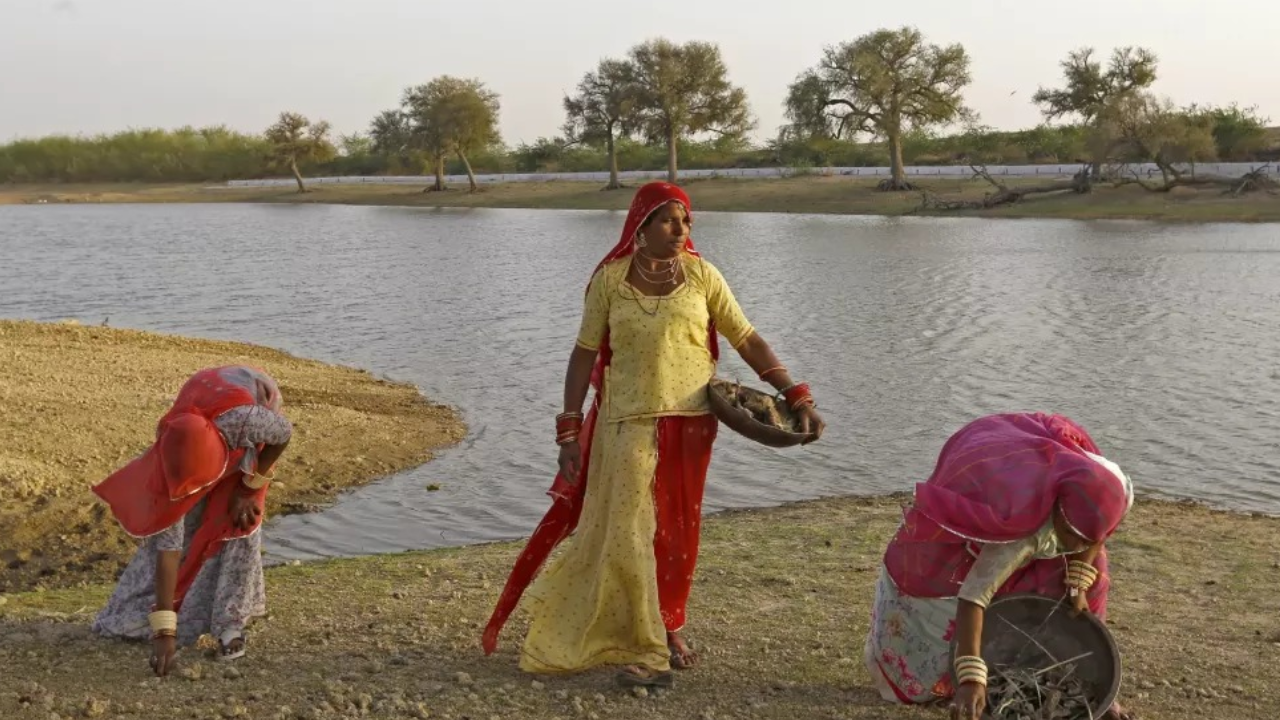
World Water Day 2026: How India’s Jal Sahelis are leading the way (Image credit: UNICEF)

In the dry plains of Bundelkhand, one of India’s most water-scarce regions, a woman wakes up before sunrise. She does not go towards the well. She goes to a meeting. Jal Saheli – translated as “Jal Mitra” – she is part of a network of about 1,530 women from 321 villages who have spent the last decade digging check dams, reviving ancient ponds, repairing hand pumps and organizing councils on groundwater. They are mostly illiterate. They are completely unavoidable.This World Water Day, the United Nations has made its message clear: the global water crisis is, at its core, a gender crisis – and its solution runs through women. The 2026 campaign, themed “Water and Gender: Where Water Flows, Equity Grows,” calls for a transformative, rights-based approach where women have equal voice, leadership and opportunity in water decision-making. Across India, quietly and without much ceremony, that change is already underway.

Jal Saheli Movement

When there was no rain in Bundelkhand for the thirteenth time, Shirkunwar Rajput, the woman who headed the Pani Panchayat in Udguwan (Lalitpur), did not wait for the government. She gathered the women of her village and said something that was eventually carved into stone on a check dam: “In Bundelkhand, fetching water is entirely a woman’s or girl’s job. Therefore, women have the first right on water resources,” as quoted by Mongabay.Jal Saheli movement was established in 2005 from Madhogarh of Jalaun. Uttar PradeshGrown from that conviction. As of 2024, about 1,530 Jal Saheli were active in 321 villages in the states of Uttar Pradesh and Madhya Pradesh. Dressed in simple blue sarees, these women, aged between 18 and 70, have built over a hundred check dams, revived traditional ponds, installed new hand pumps and built soak pits that reduce waste water.Its impact has not only affected agriculture but also domestic life. Before Jal Saheli’s intervention, farmers in some of these villages could grow only one crop of wheat per year. Since then it has become possible to obtain two to three annual crops with assured irrigation. Groundwater recharge from check dams has brought back working wells in communities where children shared one pump among 1,200 people.Working with the NGO Parmarth Samaj Sevi Sansthan, Welthungerhilfe trained these women volunteers in water resource planning, water level monitoring and conservation techniques before sending them back to their villages as experts. The model has since attracted the attention of government departments in Uttar Pradesh and Madhya Pradesh, both of which have expressed interest in scaling it up to 5,000 villages.

Underground Governance: Atal Ground Water Scheme

India’s aquifers are in crisis. The Central Ground Water Board recently classified 256 districts as water-stressed by 2020, and the country’s average per capita water availability is projected to decline rapidly by 2050. Against this backdrop, the Government of India launched the Atal Ground Water Scheme (Atal Jal) in 2020 – Rs. The ₹6,000 crore ($756 million) scheme, co-financed by the World Bank, targets 8,562 gram panchayats in seven water-stressed states: Gujarat, HaryanaKarnataka, Madhya Pradesh, Maharashtra, Rajasthan and Uttar Pradesh.What makes Atal Jal unique is not just its budget but its politics. Under the scheme, it is mandatory that at least 33 per cent of members in Village Water and Sanitation Committees (VWSC) should be women. In practice, representation has gone even further: women now hold on average 44 percent of the seats in the scheme’s gram panchayats. Importantly, 33 percent of women hold real decision-making positions within water user associations – presidents, vice-presidents, secretaries and treasurers.According to the scheme’s own data, the results are significant: 670,802 hectares of area has been covered under demand-side water efficiency activities, saving an estimated 1,716 million cubic meters of water through micro-irrigation, crop diversification and rainwater harvesting. 642 million cubic meters of groundwater has been recharged through the construction of 77,052 structures. Approximately Rs. per beneficiary. Nearly 30 million people have benefited at a cost of Rs. 2,627.In Haryana, the scheme has taken a distinctly feminine face through the character of Jal Saheli – a local resource person, usually a woman from a self-help group, who is trained to conduct water quality testing, transmit groundwater data to communities and advocate for efficient irrigation practices. In Rajasthan’s Phalodi district, Jal Saheli working under UNICEF and NGO Unnati revived a centuries-old village pond, earning Rs. 1.5 million in MNREGA allocation as well as community funds.

Bhubaneswar ‘Collar Club’

The water revolution in India is not happening only in fields and check dams. This is also happening through smartphones in urban slums.Between January 2023 and December 2024, the Center for Advocacy and Research (CFAR), supported by the Australian Government’s Water Fund for Women, piloted a landmark urban WASH initiative in 215 informal settlements in Bhubaneswar, Odisha. At its core was a “caller club”: trained community members who would register and escalate water, sanitation and hygiene-related complaints on behalf of residents through the Janhit-Vani Interactive Voice Response System (IVRS).Community members made a total of 18,750 calls over a two-year period. Women led the effort, attending to 10,419 calls – and providing the majority of feedback, with 5,610 calls specifically on water-related issues. Of the 8,517 water-related complaints recorded, 4,550 (53.4 percent) were formally resolved, benefiting 8,696 people. Sanitation complaints fared even better: 4,783 (70.7 percent) of 6,767 issues reported were resolved, and the resolution rate for sanitation complaints was 98.4 percent.Urban local bodies, the Public Health Engineering Department and Watco responded positively to online complaints, working with communities to resolve issues and educate residents on infrastructure maintenance. The project also funded climate-resilient infrastructure upgrades in 126 settlements: elevated toilets to prevent monsoon flooding, stormwater drainage, and solar-powered water filtration plants – all designed with input from the women who use them.Lakshmipriya Lenka, president of the Slum Development Association in Bhubaneswar, was among the voices who put this feedback loop into action. Her leadership exemplifies what the UN Women 2026 World Water Day campaign demands: not just access to water, but agency over it.

proof of women leadership

The case for the centrality of women in water governance is not just moral – it is empirical. A landmark study on India’s panchayats cited by UN Women found that the number of drinking water projects in areas with local councils led by women was 62 percent higher than those led by men. Research on 44 water projects in Asia and Africa cited by the World Resources Institute found that when women helped shape water policies and institutions, communities used water more sustainably and equitably.Yet structural barriers remain significant. Less than 50 countries globally have laws or policies that specifically address women’s participation in water resources management. In India, the national water policies of 1987, 2002 and 2012 consistently sidelined women – the policies were largely drafted by men who did not traditionally carry water home. It is only because of schemes like Jal Jeevan Mission and Atal Groundwater Scheme and grassroots pressure from movements like Jal Saheli that this mistake has started to be rectified.

The economic case is equally compelling. In India alone, the productivity loss due to women’s water-harvesting duties is approximately Rs. is estimated to be equal to. 10 billion – or about $160 billion, about 4.7 percent of GDP. Every tap close to home, every check dam that holds monsoon water during March, translates into hours returned to women: for school, for work, for leisure, for leadership.Chandrakant Kumbhani, Chief Operating Officer, Community Development, Ambuja Foundation, underlines this change: “Water resources development is one of the most powerful drivers of women empowerment in rural India. But real change happens when women move from being beneficiaries to becoming decision-makers – involved in planning, managing and operating water systems at the village level. This participation builds confidence, visibility and leadership, enabling them to influence not only water-related decisions, but broader community priorities. As climate pressures increase, this role becomes even more important. “Women’s participation strengthens how communities plan and manage water resources, making systems more adaptive and sustainable.”

a movement in the stone

The check dams of Bundelkhand are full of inscriptions. In the local dialect, concretely, they read: “Women have the first right over water resources.” This is not poetry. A declaration that the women who suffer most from scarcity have earned the right to steward abundance.Jal Saheli leader Leela Khatoon described the work of reviving the village pond. “The pond is a lifeline for the villagers, especially during the heat, drought and low rainfall. We worked on cleaning the pond using both manual labor and excavation,” he told UNICEF proudly. “Some desilting work was done under MNREGA. We discussed with the village head and villagers to ensure sustainable water supply.“All across India – from the slums of Bhubaneswar to the gram panchayats of Rajasthan, from the over-exploited aquifers of Haryana to the drought-stricken plateaus of Madhya Pradesh – women like Devwati Sharma are doing the technical, political and physical labor of water governance. They are holding meetings, registering complaints, repairing infrastructure, and teaching water literacy to communities that the formal sector has not yet reached.The UN slogan this World Water Day is: “Where water flows, equality thrives.” In India, women who have kept their hands to the ground for years already know this to be true. The question now is whether the world’s governments, donors and institutions will incorporate it into their policies – with the same tenacity that a water friend chisels into stone.


Dhurandhar 2: Fans catch cameraman reflection in fight scene

0
Dhurandhar 2: Fans catch cameraman reflection in fight scene


‘Dhurandhar 2’: Fans catch cameraman reflection in Ranveer Singh fight scene, peak detailing goes viral
Aditya Dhar’s ‘Dhurandhar: The Revenge’ lauds scale but draws propaganda flak. Fans spot cameraman reflection in Ranveer Singh’s Hamza vs. Pinda (drug cartel foe) clash. Viral clip sparks fake/AI debates; some cite Nolan. Film crushes Rs 300cr in 3 days.

Aditya Dhar‘s ‘Dhurandhar: The Revenge’, released in theaters on March 18, continues to spark widespread discussion. It has garnered acclaim for its ambitious production and compelling story, but a vocal group of viewers calls it out as propagandistic and too nationalistic. Recently, sharp-eyed audiences have uncovered a new element that’s intensifying the film’s hot-button debates.

‘Dhurandhar 2’ fight scene breakdown

An intense fight between two central figures, Hamza (Ranveer Singh) and his old friend Pinda, lies at the heart of the buzz. The sequence depicts the pair, now enemies, clashing head-on. Pinda, tied to a Pakistan-based drug cartel, squares off against Hamza, who’s covertly posing as Jaskirat.Though the scene aims for high tension and emotion, it’s not only the drama grabbing eyes. Keen fans spotted what looks like a cameraman’s reflection in a mirror amid the action—a slip-up probably not meant for the final cut.The clip exploded on social media, igniting viewer arguments. Some call it a real production blunder, others suspect a digital glitch or edited footage. A handful of users guessed at the man’s identity, with theories pointing to cinematographer Vikas Nowlakha.Dhurandhar: The Revenge Movie Review

‘Dhurandhar 2’ fan theories emerge

However, plenty remain unconvinced about the footage’s reality. Doubting its genuineness, a commenter said, “Fake picture hai AI generated hai wo actual me cameraman nahi dikhta usme”. One remarked, “That’s inspired by Dark night, Nolan also mistakly forget to remove camera man in this scene. Peak detailing.” Someone else observed, “There was a scene with a gunfire, but no sound effect too lol.”

‘Dhurandhar 2’ plot and box office hit

Aditya Dhar’s ‘Dhurandhar 2’ blends sequel and backstory, following Ranveer’s Hamza Ali Mazari (aka Jaskirat Singh Rangi) on a high-stakes quest to crush a terror outfit aimed at India. It stars Arjun Rampal, R. Madhavan, Sanjay Dutt, Sara Arjun, and Rakesh Bedi in pivotal parts. Out since March 19, the movie has resonated hugely, smashing past Rs 300 crore net in India after just three days.


Iran war: What’s happening on day 23 of US-Israel attacks? | Explainer News

0
Iran war: What’s happening on day 23 of US-Israel attacks? | Explainer News


Trump threatens to hit Iranian energy sites if the Strait of Hormuz is not reopened within 48 hours; Tehran vows to retaliate.

United States President Donald Trump has threatened to “obliterate” Iran’s power plants if Tehran does not fully reopen the Strait of Hormuz within two days, as Israel launched new attacks on Tehran, with explosions reported in the east of the city.

Meanwhile, Iranian retaliatory attacks on Israel and regional countries have continued, with nearly 100 people injured in Iranian missile strikes on towns near an Israeli nuclear facility.

Israel had a “very difficult evening in the battle for our future”, said Prime Minister Benjamin Netanyahu after Iranian strikes hit the towns of Arad and Dimona.

Here is what you should know as the US-Israeli war on Iran enters day 23:

Iran
People look at a destroyed building in Tehran following an attack on March 21, 2026 [Alaa al-Marjani/Reuters]

In Iran

  • Israel launched new attacks on Tehran on Sunday, with explosions reported in the east of the city, following Iranian missile attacks on southern Israel.
  • Iran’s military threatened to attack all energy infrastructure linked to the US and Israel in the Middle East if its power plants are targeted, after Trump threatened new attacks.
  • The Iranian military announced intercepting a US-Israeli armed drone in the skies over Tehran before it could carry out any combat operations, according to the Tasnim news agency.
  • The Islamic Revolutionary Guard Corps (IRGC) claimed on Saturday its air defences shot down an Israeli fighter in Iranian airspace, the third such incident reported during the war. Israel did not confirm this.
  • Iran’s Atomic Energy Organisation said Israel and the US targeted the country’s Natanz nuclear site on Saturday in “criminal attacks”. Tehran also informed the International Atomic Energy Agency (IAEA) about the attack, which confirmed no unusual radiation leak.
  • Iran’s President Masoud Pezeshkian called on the BRICS alliance, currently chaired by India, to “play an independent role in halting aggressions against Iran”. He also proposed establishing a regional security framework of West Asian countries.
  • Iran’s state broadcaster noted the death toll from the US-Israeli attacks has now topped 1,500, according to the Ministry of Health, and at least 20,984 people were injured, with seven hospitals evacuated and 36 ambulances damaged.

In the Gulf

  • Saudi Arabia intercepted nearly 60 drones from Iran, officials said, a majority of them targeting the country’s Eastern province, which houses the country’s energy facilities and resources.
  • The Ministry of Defence also said three ballistic missiles were launched towards Riyadh province. It said it intercepted one of those, while the others fell in an uninhabited area.
  • Saudi Arabia declared many of the Iranian diplomatic staff, including its military attache, persona non grata, ordering them to leave the country within 24 hours, after Qatar did the same on Wednesday.
  • In Bahrain, Iranian missiles targeted US bases after Iran’s state broadcaster claimed earlier attacks on al-Minhad base in the United Arab Emirates and Ali al-Salem airbase in Kuwait, which host US and British forces.
  • Bahrain’s military said its air defences shot down 143 missiles and 242 drones fired by Iran during the war.
  • Qatar’s Ministry of Defence noted a search operation after one of its helicopters suffered a technical malfunction during a routine duty and crashed in the regional waters.
US President Donald Trump waves while boarding Air Force One at Joint Base Andrews in Maryland on March 20, 2026, before departing for his Mar-a-Lago residence in Florida, where he will spend the weekend.
US President Donald Trump waves while boarding Air Force One at Joint Base Andrews in Maryland on March 20, 2026 [AFP]

In the US

  • Trump threatened to attack Iran’s energy sites in a post on Truth Social. “If Iran doesn’t FULLY OPEN, WITHOUT THREAT, the Strait of Hormuz, within 48 HOURS from this exact point in time, the United States of America will hit and obliterate their various POWER PLANTS, STARTING WITH THE BIGGEST ONE FIRST!” he wrote.
  • Trump claimed that the US is “weeks ahead of schedule” in its war on Iran and reiterated that Washington is not looking to make a deal with Iran, because “their leadership is gone, their navy and air force are dead, they have absolutely no defense”.
  • Trump repeated that Iran wants “to make a deal”; however, Iranian leaders have denied such earlier assertions.
  • Admiral Brad Cooper, commander of the US Central Command, says the US military has dropped multiple 5,000-pound (2,270kg) bombs on an underground facility along Iran’s coast that it used to store antiship cruise missiles, mobile missile launchers and other equipment, thus undermining its ability to threaten the Strait of Hormuz.
An Israeli Orthodox Jew inspects the site of an Iranian missile strike in Arad on March 22, 2026.
An Israeli Orthodox Jew inspects the site of an Iranian missile attack in Arad on March 22, 2026 [AFP]

In Israel

  • Iranian missile attacks broke through Israeli defences in the south of the country, making direct impacts in the cities of Dimona and Arad, wounding some 100 people. The IRGC said it targeted Israeli military installations and security centres in the cities of Arad, Dimona, Eilat, Beersheba and Kiryat Gat in its most recent missile salvo. Tehran claimed more than 200 people were killed in the attacks; Israel reported no deaths.
  • PM Netanyahu said he is “strengthening the emergency and rescue forces currently operating in the field” after the Iranian attack in southern Israel.
  • The IAEA said it is aware of reports of a missile impact in the Israeli city of Dimona, adding that there are no indications of damage to the nuclear research centre in Negev.
  • Israel’s Ministry of Education cancelled all in-person classes across the country for Sunday and Monday. Israel’s Home Front Command banned gatherings of more than 50 people in the country’s south until Tuesday.
  • Israel’s military says it struck more than 200 sites in Iran and Lebanon over the weekend, targeting missile launchers, air defence systems and military bases.
  • Israeli military spokesman said Israel’s air defence systems were activated during the attacks, but failed to intercept some of the missiles, even though they were not “special or unfamiliar”. The spokesman said the military would investigate and “learn from” the incidents.
  • Israel’s Ministry of Health said at least 4,292 injured people have been brought to hospitals since the start of the war.

In Iraq and Lebanon

  • Hezbollah said it fired a barrage of rockets at Israeli soldiers patrolling in southern Lebanon. Two Israeli reservists were wounded in another Hezbollah mortar attack in northern Israel.
  • The Islamic Resistance in Iraq said it carried out 21 attacks against US bases across the country and the region in the past 24 hours.
  • Three drones were intercepted near Erbil airport, resulting in a fire in the vicinity. Another drone crashed in the al-Sayyidah area, southwest of the capital, Baghdad, with four people injured.
STRAIT OF HORMUZ - 17 JANUARY 2026 : A satellite view of Qeshm Island in Hormozgan Province, Iran, within the Strait of Hormuz region on January 17, 2026. (Photo by Gallo Images/Orbital Horizon/Copernicus Sentinel Data 2026)
A satellite view of Qeshm Island in Hormozgan province, Iran, within the Strait of Hormuz region on January 17, 2026 [Gallo Images/Orbital Horizon/Copernicus Sentinel Data 2026]

On the Strait of Hormuz

  • The UAE, Bahrain, the United Kingdom, France and Germany issued a joint statement, condemning what they described as Iran’s attacks on commercial vessels and civilian infrastructure in the Gulf.
  • The statement accused Iran of the “de facto closure” of the Strait of Hormuz and called for an immediate halt to threats, mine-laying, and drone and missile attacks.

Joint US-UK Diego Garcia base

  • The UK accused Iran of launching ballistic missiles at the joint US-UK Diego Garcia base in the Indian Ocean, but said the attack was unsuccessful.
  • A senior Iranian official told Al Jazeera that Iran was not responsible for the missile attacks on Diego Garcia.
  • Diego Garcia, which is about 4,000km (2,500 miles) from Iranian territory, is one of the two bases the UK has allowed the US to use for “defensive operations” in the war against Iran.


Manvar wins mid-day Trophy

0
Manvar wins mid-day Trophy


Manvar wins mid-day Trophy

Manvar, trained by PS Chouhan, posted a decisive victory in the mid-day Trophy on Saturday at the Mahalaxmi racetrack. Jockey P Trevor, astride Manvar, quickly sensed the pace, set by the Pesi Shroff-trained Renoir (C Umesh up), was too hot, and decided to stay in the rear.

Rounding the final turn, Trevor manoeuvred his way skillfully between horses and rather suddenly emerged alongside Savage Peacock (A Sandesh up) who was getting ready to challenge Renoir. With a decisive surge in the final 100m, Trevor passed Renoir, and easily kept Savage Peacock at bay as he crossed the wire. 

The trainer-jockey pair of PS Chouhan and P Trevor, who began the day with the mid-day Trophy, also went on to win two more races — Vegatha (Hindu Trophy) and Desert Classic (Times Of India trophy) to finish the day with a treble. Veteran trainer MK Jadhav and jockey NS Parmar scored a double with Beast Mode (Racing pulse.in Trophy) & Key West (Race Mirror Trophy).


Dhurandhar 2 box office day 3: Earns more than Rs 500 crores

0
Dhurandhar 2 box office day 3: Earns more than Rs 500 crores


Dhurandhar 2 box office day 3: Earns more than Rs 500 crores

Dhurandhar: The Revenge, starring Ranveer Singh and directed by Aditya Dhar, is creating waves at the box office with its extraordinary performance. Within just three days of its release, the film has crossed the Rs 500 crore mark worldwide, making it one of the fastest grossing Indian films in recent times.

Ranveer Singh`s Dhurandhar 2 enters Rs 500 crore club

Released on March 19, the action packed spy thriller opened to massive numbers and continued to gain momentum over its first weekend. The film saw a sharp rise in collections on day three, fuelled by strong word of mouth and heavy footfall in theatres. This surge helped it comfortably enter the Rs 500 crore club in record time.

The film’s impressive run can be credited to several factors, including the success and recall value of its first installment, strong advance bookings, and immense audience curiosity. Even before hitting theatres, the film had generated significant revenue through paid previews, reflecting the scale of anticipation surrounding the project.

Featuring an ensemble cast that includes Sanjay Dutt, Arjun Rampal, R Madhavan, and Rakesh Bedi alongside Ranveer Singh, the film has received praise for its gripping storyline, high octane action sequences, and grand cinematic scale. Both audiences and critics have responded positively, further boosting its collections.

Surpasses records of these Bollywood hits

The timing of the release has also played a crucial role in its success. Arriving during festive occasions like Ugadi and Gudi Padwa, the film benefited from increased theatre turnout across regions. Due to overwhelming demand, several cinemas introduced additional late night and early morning shows to accommodate viewers.

What makes the achievement even more remarkable is that the film has reportedly surpassed the opening weekend collections of several major Bollywood releases, including War, Dunki, and Tiger 3. This milestone highlights the film’s dominance and widespread appeal among audiences.

With such a strong start, trade experts believe Dhurandhar: The Revenge is likely to maintain its momentum in the coming days. Its record breaking opening not only marks a major success for the team but also signals a boost for the Hindi film industry.

As the film continues its impressive run, all eyes are now on its long term performance and whether it can set new benchmarks at the box office.