Tuesday, September 29, 2026
Home Blog Page 1157

Pathan drops bold MI over CSK call in greatest franchise debate, cites massive India impact: ‘How do you achieve that?’

0
Pathan drops bold MI over CSK call in greatest franchise debate, cites massive India impact: ‘How do you achieve that?’


The debate over the most successful franchise in IPL history has rarely settled, with Mumbai Indians and Chennai Super Kings leading the conversation. Both sides have lifted the trophy five times, setting the benchmark for consistency and dominance in the league. Their rivalry has been one of the defining features of the IPL, often likened to football’s El Clasico for its intensity and high stakes.

Irfan Pathan hails MI’s legacy, picks them over CSK as IPL’s greatest franchise (BCCI/IPL)

MI were the first to reach the five-title mark, establishing their dominance during a golden run. CSK, despite serving a two-year suspension, fought their way back and eventually equalled that record by clinching their fifth title in 2023, adding another chapter to this storied rivalry.

Former India all-rounder Irfan Pathan further added to the debate, explaining how CSK and MI dominated in different phases, making it difficult to separate the two when it comes to picking the greatest side in IPL history.

“On picking a side between CSK and MI as the greatest team in the IPL, this will always be debatable,” Pathan said on a JioStar. “CSK started winning the IPL title from 2010 onwards. They won back-to-back titles in 2010 and 2011 and were the first team to do so. But when Mumbai Indians started winning from 2013, they kept winning after every alternate year. Then they won the IPL trophy back-to-back in 2019 and 2020,” he added.

Also Read – Pujara warns of ‘fired-up’ Shubman Gill in IPL 2026 after T20 World Cup snub: ‘If he has a good season, he’ll…’

Pathan then shifted focus to MI, highlighting their strong contribution to Indian cricket and pointing out how, despite having a title-worthy squad last season, they fell short of converting it into a championship run.

“What I like about Mumbai is their contribution to Indian cricket. The number of match winners they have produced for the Indian team is absolutely tremendous. How do you achieve that? First, you make your franchise big. Second, you deliver results with the team you have. Even now, Mumbai Indians had a great squad last season that could have easily won the trophy, but they couldn’t for different reasons,” he said.

“CSK don’t have four Indian captains, Mumbai Indians do”

He went on to underline MI’s role in shaping Indian cricket, noting that several of their players have gone on to captain the national side. He added that the franchise has consistently backed and produced exciting young talent who later went on to play for India, something he feels hasn’t quite been matched by CSK.

“CSK don’t have four Indian captains, Mumbai Indians do. In that respect, assembling a team and contributing to a bigger cause, I think Mumbai Indians are the greatest IPL team. I know CSK will always say they are also the greatest, having won five trophies too. There is no doubt. There will always be a debate and it is a fair debate. But I think Mumbai Indians take the edge because they have given so many wonderful cricketers and young talents to Indian cricket,” Pathan concluded.


Nora Fatehi’s work permit in India in trouble after the ‘Sarke Chunar’ controversy?

0
Nora Fatehi’s work permit in India in trouble after the ‘Sarke Chunar’ controversy?


Is Nora Fatehi’s work permit in India in trouble after the ‘Sarke Chunar’ controversy? Lawyers approach Ministry of Home Affairs

Actress Nora Fatehi has been in the news after her latest track ‘Sarke Chunar’ sparked a controversy and was eventually banned. The Hindi version of this song from the Kannada film ‘KD Devil’ was criticised over its alleged ‘double-meaning’ lyrics. The situation has escalated further now, with a group of ten lawyers reportedly approaching the Ministry of Home Affairs, demanding cancellation of Nora’s work permit and her deportation from India.As per reports, the complaint has also been forwarded to several key authorities, including the Ministry of Information and Broadcasting, the Central Board of Film Certification, the Ministry of Electronics and Information Technology, and the National Commission for Women, underscoring the seriousness of the issue.

Watch

‘Sarke Chunar Teri Sarke’ Divides Internet As Nora Fatehi Faces Backlash

In their petition, the lawyers have alleged that the song is obscene, sexually suggestive, and offensive to public morality as well as the dignity of women. They further argued that Nora has misused her privilege to work in India by associating with such content. Referring to provisions under the Foreigners Act, 1946, they stated that the government holds the authority to act against foreign nationals whose actions may disrupt public decency or order. They also cited the Passport (Entry into India) Act, 1920, along with other legal provisions.The plea additionally claims that the song violates multiple laws, including sections of the Bharatiya Nyaya Sanhita, the Indecent Representation of Women (Prohibition) Act, 1986, and the Information Technology Act, 2000.Beyond the legal framework, the lawyers argued that such portrayals contribute to obscenity, promote the objectification of women, and reinforce problematic societal narratives.Earlier, responding to the backlash, Nora had stated that she was unaware of the meaning of the lyrics, as she had performed the song in Kannada. She also claimed that a translated version was used without her consent. The actress took to her social media and clarified in a video, “I shot this song three years ago in Kannada. When I shot this song, I said yes to it because it was part of a big film and also alongside Sanjay Dutt, who would say no to it. It was a remake of what I thought was ‘Nayak Nahi Khalnayak Hoon Main.'”She further revealed that she had no role in the Hindi adaptation and was unaware of the changes made later. “When they translated this song, nothing seemed inappropriate or vulgar to me, but I do not understand Kannada, so I rely on whatever they say to me. Whatever they have done right now, dubbing it in Hindi and the lyrics, they did not take any permission or approval from me. I had no idea about it,” she added.The actor also recalled her reaction when she attended the song’s launch event, where she first noticed certain issues. “When I attended the launch, I saw the Kannada version, and I had a major issue because they used unflattering photos in the lyrical video. They also used an AI photo of Sanjay and me. I was very irritated at the event when I saw all that. However, I kept my calm,” Nora continued.It was when she saw the Hindi version that she was left shocked. “I was conflicted with what I saw. When I saw the Hindi version, I knew it would get backlash. I told the director that this was not okay, and I dissociated myself from the project. I did not promote it anywhere. I told the director my image and reputation are on the line.”Speaking more broadly about the limitations faced by performers, she said, “The thing with us artists is that we do not have power, we have little power and control. Thankfully, in Bollywood, many have respected my work. However, there are certain industries that do not care about my opinion. But because of the backlash, they had to take it down, and I am thankful.”However, the petitioners dismissed her clarification, calling it an afterthought. They maintained that performers cannot take credit and remuneration for a project while distancing themselves from its content. The lawyers also asserted that the involvement of AI tools does not absolve individuals of responsibility.Adding to the controversy, the Muslim Personal Darul Ifta in Aligarh issued a fatwa against the actress after the song sparked outrage online. The body reportedly deemed the content objectionable and contrary to Islamic principles.Amid mounting criticism, the Union government on Wednesday confirmed that the song has been banned. Union Minister for Information and Broadcasting Ashwini Vaishnaw announced the decision in the Lok Sabha while responding to a query raised by Samajwadi Party MP Anand Bhadouria.


TOISA 2025: A grand roll call of excellence in Indian sports | More sports News

0
TOISA 2025: A grand roll call of excellence in Indian sports | More sports News


TOISA 2025: A grand roll call of excellence in Indian sports

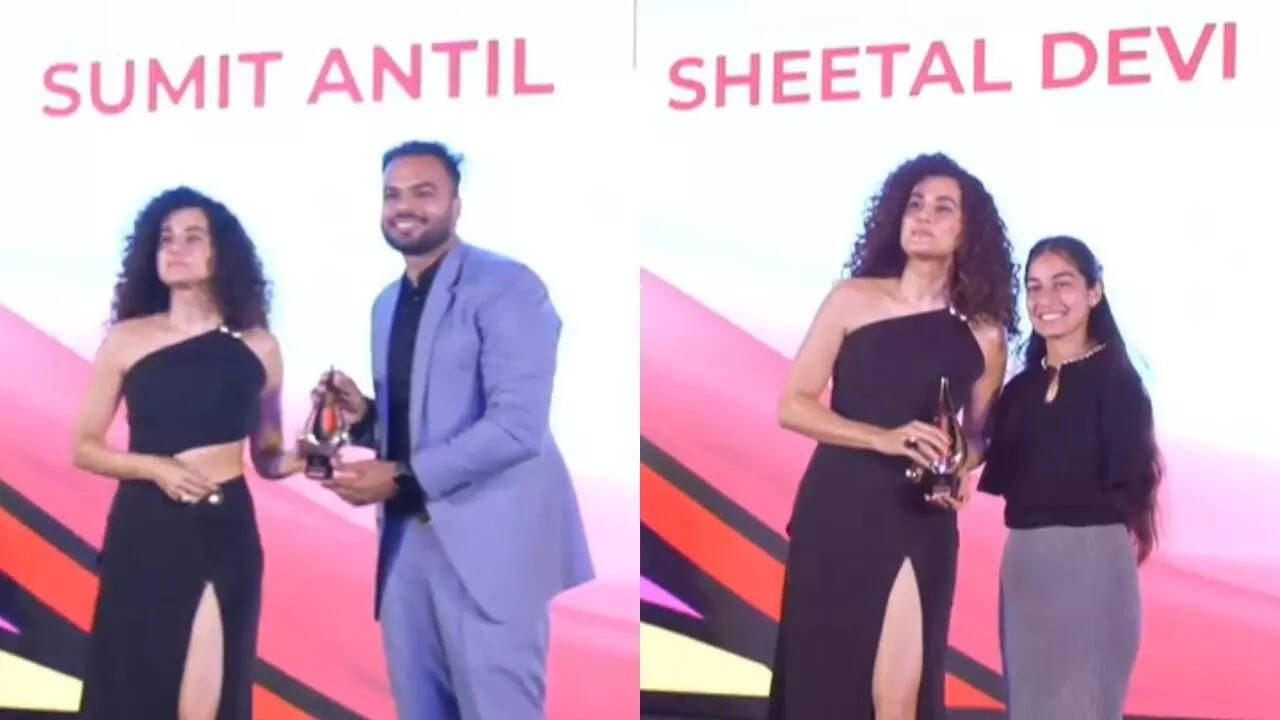
LUCKNOW: The Times of India Sports Awards (TOISA) 2025 brought together the biggest names and defining performances under one roof, honouring a year of achievement while offering a glimpse of what lies ahead. It was an evening that moved quickly, honoured widely, and showcased where Indian sport stands today.Smriti Mandhana led the Sportsperson of the Year honours in the female category, her season marked by authority and consistency. Alongside her, shooter Samrat Rana was recognised in the male category after creating history last year by becoming the first Indian world champion in the 10m air pistol – a defining breakthrough in his career.India’s sporting excellence in 2025 panned across disciplines. Nowhere was that more evident than in the Para Sportspersons of the Year: Sheetal Devi and Sumit Antil.Sheetal Devi’s rise has been defined by historic breakthroughs and medal-winning consistency. A world champion and Paralympic medallist, she has dominated compound archery while also breaking barriers, even earning selection in an able-bodied international squad, a first for an Indian para archer.

Sheetal Devi and Sumit Antil crowned ‘Para Sportspersons of the Year’

Sheetal Devi and Sumit Antil crowned ‘Para Sportspersons of the Year’

Sumit Antil, meanwhile, continues to set the benchmark in para athletics. A multiple-time Paralympic champion and world record holder, he added to his dominance with gold at the World Para Athletics Championships, consistently staying ahead of the field.From there, the ceremony gathered pace with a glittering roll call of the creme de la creme of Indian sports. The Indian women’s cricket team swept team honours, underlining a phase of dominance, while the Board of Control for Cricket in India was named Federation of the Year.“Once again, I would like to thank The Times of India for organising these awards. It is wonderful to see so many talented individuals here. Their achievements are truly extraordinary, and it is important that they are recognised,” said Rajiv Shukla, the BCCI vice-president while receiving the award on behalf of the board.Divya Deshmukh, named Emerging Sportsperson of the Year, signalled a new generation ready for the global stage, while Leander Paes was honoured as Mentor of the Year.

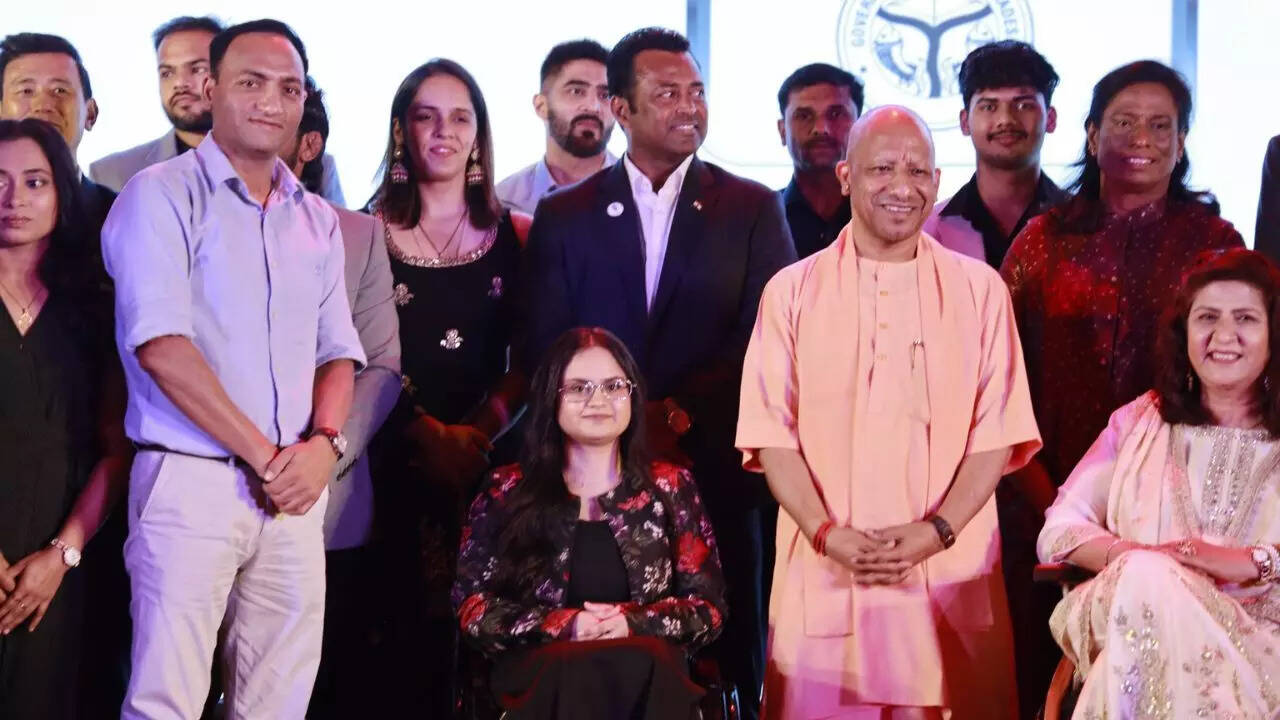
Yogi Adityanath at TOISA 2025

Yogi Adityanath at TOISA 2025

Uttar Pradesh Chief Minister Yogi Adityanath bestowed the top honours at the glittering ceremony held at The Centrum in Lucknow.Yet, TOISA 2025 was as much about messaging as it was about recognition. As chief guest, Adityanath laid out a clear policy direction, emphasising the need to build sport from the grassroots up.“We are working to ensure that every district becomes a centre of sporting activity, where facilities, coaching and opportunities are accessible to all. From village-level competitions to international platforms, our aim is to create a seamless pathway for athletes,” he said.He also highlighted the state’s progress in developing sports infrastructure. “Over the past 11–12 years, a sports culture has developed in the country. Inspired by Prime Minister Narendra Modi, we have taken this forward in Uttar Pradesh since 2017,” he added.“On behalf of the Uttar Pradesh government, I once again welcome all of you. I thank The Times of India Group… for organising this wonderful platform that recognises excellence and inspires the next generation,” he concluded.Among other major winners, Amol Muzumdar was named Coach of the Year for guiding the women’s team to a historic ICC ODI World Cup title, while Subhash Rana won Para Coach of the Year.Shubman Gill and Deepti Sharma were named Cricketers of the Year, while Neeraj Chopra and Rupal Chaudhary took Track & Field honours.

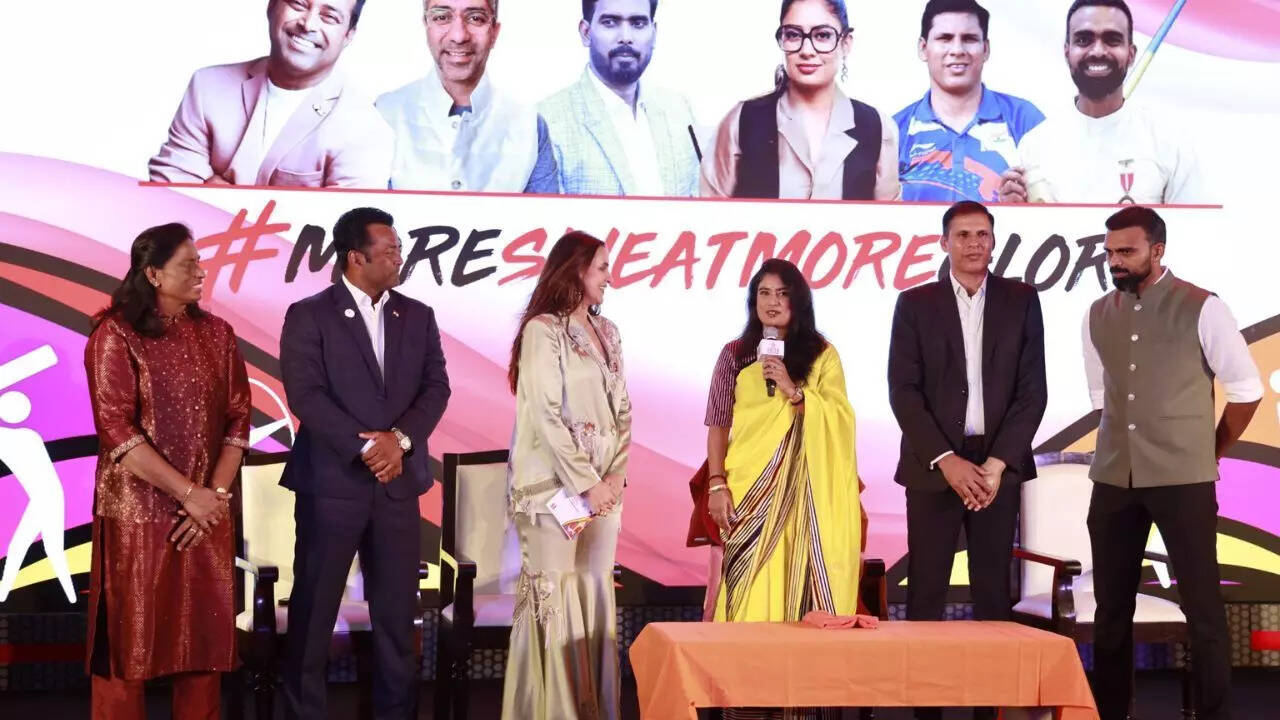
Superstars at TOISA 2025

Superstars at TOISA 2025

The evening also reflected on the legacy. Mithali Raj and PR Sreejesh were honoured with Lifetime Achievement awards, celebrating careers that shaped Indian sport’s global identity. The forward gaze came from Devendra Jhajharia, who spoke of a 50-medal target at the LA 2028 Paralympics; not as ambition, but as expectation.The tone, however, had been set at the very start. In his keynote, Prasad Sanyal, Group Business Head of TOI, Indiatimes, and WhatsHot, captured the essence of the evening: “More sweat, more glory – that is the journey Indian sport continues to embrace.”This was the eighth edition of TOISA, celebrating the journeys and achievements of India’s finest athletes across more than 45 sporting categories, covering performances from January 1 to December 31, 2025, a year that once again showcased Indian sport’s growing depth, consistency, and ambition.TOISA 2025 Winners List: Samrat Rana, Smriti Mandhana bag top honours; Sheetal Devi wins female Para Sportsperson of the Year

Banner Insert


Eid 2026: Saba Pataudi prepares gifts for Ibrahim Ali Khan, Jeh and others

0
Eid 2026: Saba Pataudi prepares gifts for Ibrahim Ali Khan, Jeh and others


Eid 2026: Saba Pataudi prepares gifts for Ibrahim Ali Khan, Jeh and others

Bollywood star Kareena Kapoor Khan’s sister-in-law, Saba Pataudi, is all geared up to give Eidi to Jeh, Taimur and other Pataudi babies on account of Eid on the 21st of March. Saba, on her social media account, gave fans a glimpse into the family’s warm and festive celebrations.

Sharing a heartfelt moment on social media, Saba posted a picture featuring neatly arranged envelopes, each labelled for the Pataudi munchkins in the family. Saba shared the picture. With the caption “All the munchkins Eidi!!”.

In another post, Saba also extended festive wishes to everyone, sharing a warm “Eid Mubarak” with her followers.

Talking about the Pataudi family’s younger generation, it includes Taimur Ali Khan and Jeh Ali Khan, children of Saif Ali Khan and Kareena Kapoor Khan. The elder Pataudi kids Sara Ali Khan and Ibrahim Ali Khan are Saif’s children with his former wife Amrita Singh, while Inaaya Naumi Kemmu is the daughter of Soha Ali Khan and actor Kunal Kemmu.

While Soha, Saif and Saba hail from a Muslim family, their extended family beautifully reflects cultural harmony. Kareena Kapoor Khan and Kunal Kemmu come from Hindu backgrounds, and the entire family comes together to celebrate every festival from Diwali to Eid.

In the month of February, Soha had joined the Mahashivratri celebrations at her in-laws house. The actress was also seen making Puris for the Prasad on the festival. Both Soha and Kunal also make sure to make their daughter Inaaya participate in all the festivals.

This story has been sourced from a third party syndicated feed, agencies. Mid-day accepts no responsibility or liability for its dependability, trustworthiness, reliability and data of the text. Mid-day management/mid-day.com reserves the sole right to alter, delete or remove (without notice) the content in its absolute discretion for any reason whatsoever


Frustrated Laxman Sivaramakrishnan quits as commentator

0
Frustrated Laxman Sivaramakrishnan quits as commentator


Frustrated Laxman Sivaramakrishnan quits as commentator

Former India leg-spinner and veteran cricket expert Laxman Sivaramakrishnan on Friday announced his retirement from the BCCI commentary panel, citing lack of opportunities to conduct toss and presentation ceremonies as reasons to end his broadcasting career.

Sivaramakrishnan, who created ripples with his big, booming leg-spinners, googlies and and top spins as a 17-year-old in the early 1980s, expressed his frustration in a series of tweets, which suggested deep-seated dissatisfaction with his job.

“I am retiring from commentary for BCCI,” Sivaramakrishnan wrote on his `X` handle. “If I have not been used for TOSSES and PRESENTATION for 23 years and new comers come in do pitch report Tosses Presentation even when Shastri was coaching, what do you think could be the reason. “How does a company owning BCCI rights go down? Any guesses.

“My retirement is nothing great. But a story of tv production unfolds. Soon you will see the bigger picture,” he tweeted. Also when a user suggested if his skin colour was an issue, Sivaramakrishnan replied, “You are right. Colour Discrimination.”

Sivaramakrishnan, 60, was known for expressing his views candidly for more than two decades inside the commentary box. Fondly known as Siva, he played nine Tests and 16 ODIs for India between 1983 and 1986, years after which he began his commentary career in 2000. He also served as a player representative on the ICC Cricket Committee. Although he went wicket-less in this first Test match, he later became famous for his match-winning 12-wicket haul against England in 1984.

Sivaramakrishnan was also a key player in India`s victorious 1985 Benson & Hedges World Championship triumph in Australia under the great Sunil Gavaskar`s captaincy. He played a crucial role, including in the final against Pakistan where he helped restrict them to 176/9, contributing to India`s 8-wicket win. He was the leading wicket-taker in that tournament, a huge thing for a spinner back then considering the conditions Down Under.

This story has been sourced from a third party syndicated feed, agencies. Mid-day accepts no responsibility or liability for its dependability, trustworthiness, reliability and data of the text. Mid-day management/mid-day.com reserves the sole right to alter, delete or remove (without notice) the content in its absolute discretion for any reason whatsoever


Pentagon restrictions on press violate First Amendment, judge rules

0
Pentagon restrictions on press violate First Amendment, judge rules


The Department of Defense had required reporters to agree to certain rules on what information they could gather in order to maintain access to the Pentagon.


The door India left ajar: Economic ties with China see a calibrated reset with easing of FDI rules – explained

0
The door India left ajar: Economic ties with China see a calibrated reset with easing of FDI rules – explained


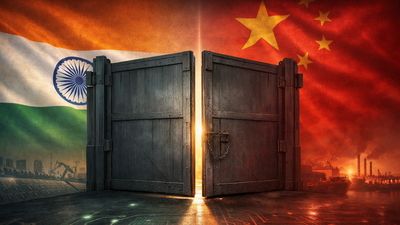
The door India left ajar:  Economic ties with China see a calibrated reset with easing of FDI rules - explained

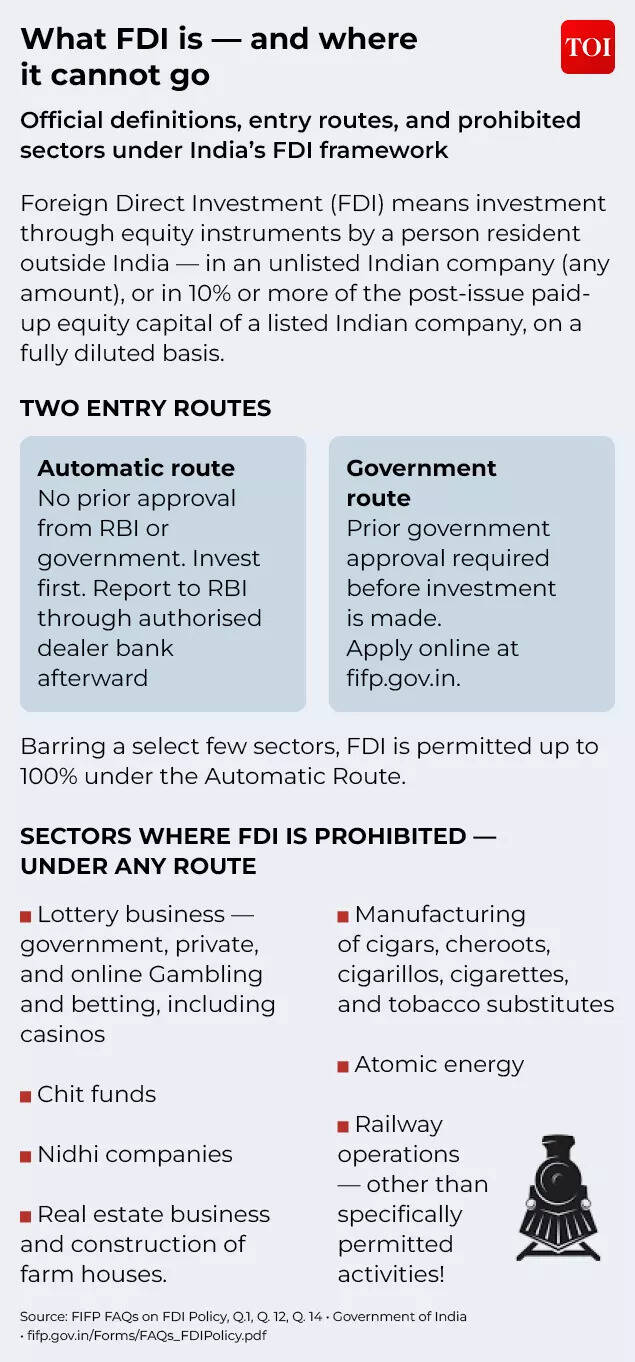
NEW DELHI: Nearly six years after India tightened scrutiny of foreign direct investment from countries sharing land borders, the government has initiated a recalibration of the framework governing such investments, allowing minority ownership structures routed through overseas entities to access the automatic route while retaining approval requirements for direct investments from neighbouring jurisdictions.The Union Cabinet on March 10, 2026 has approved an amendment to the policy that amends Press Note 3 of 2020 – the directive that had required any investment linked, however small, to a land-bordering country to pass through mandatory government approval – has been revised. The revision, labelled Press Note 2 of the 2026 Series, defines a threshold, introduces a time-bound approval window, and corrects several unintended consequences that had been frustrating Indian companies, foreign funds, and overseas professionals for nearly half a decade.

Watch

Diplomacy In New Avatar: Why Vikram Doraiswami Picked Chinese Name Wei Jiameng As India’s New Envoy

What the Cabinet actually decided

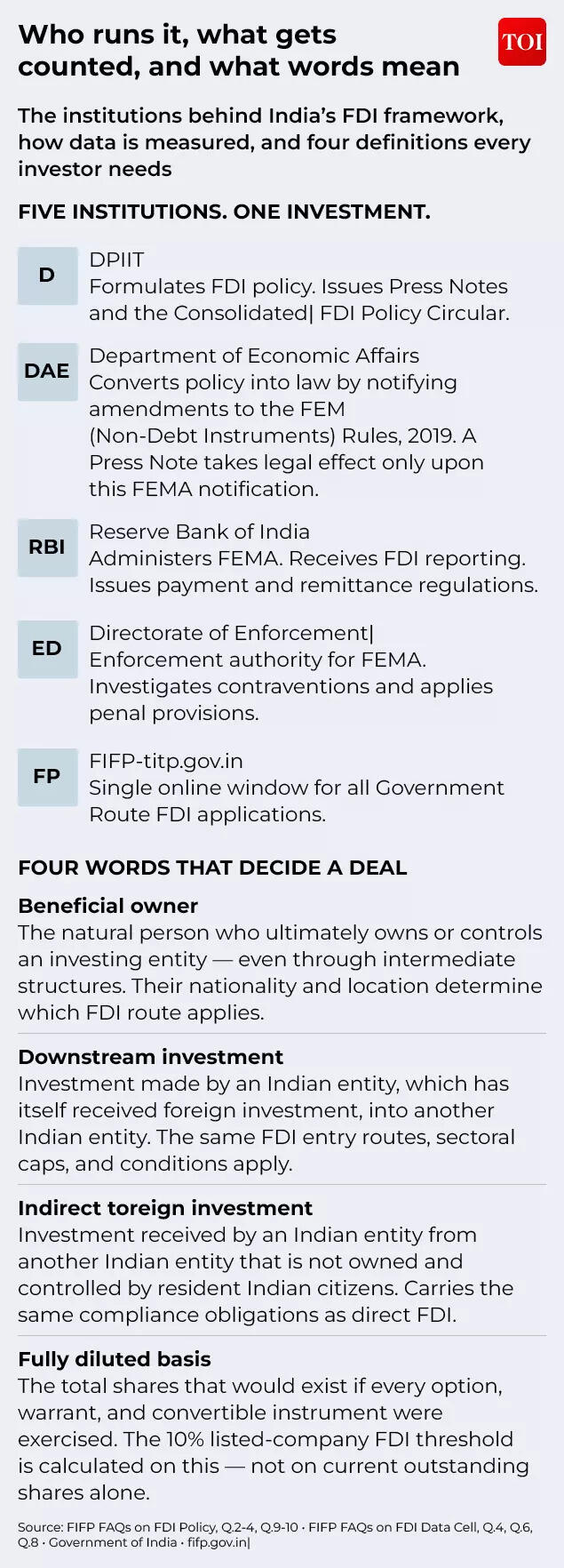
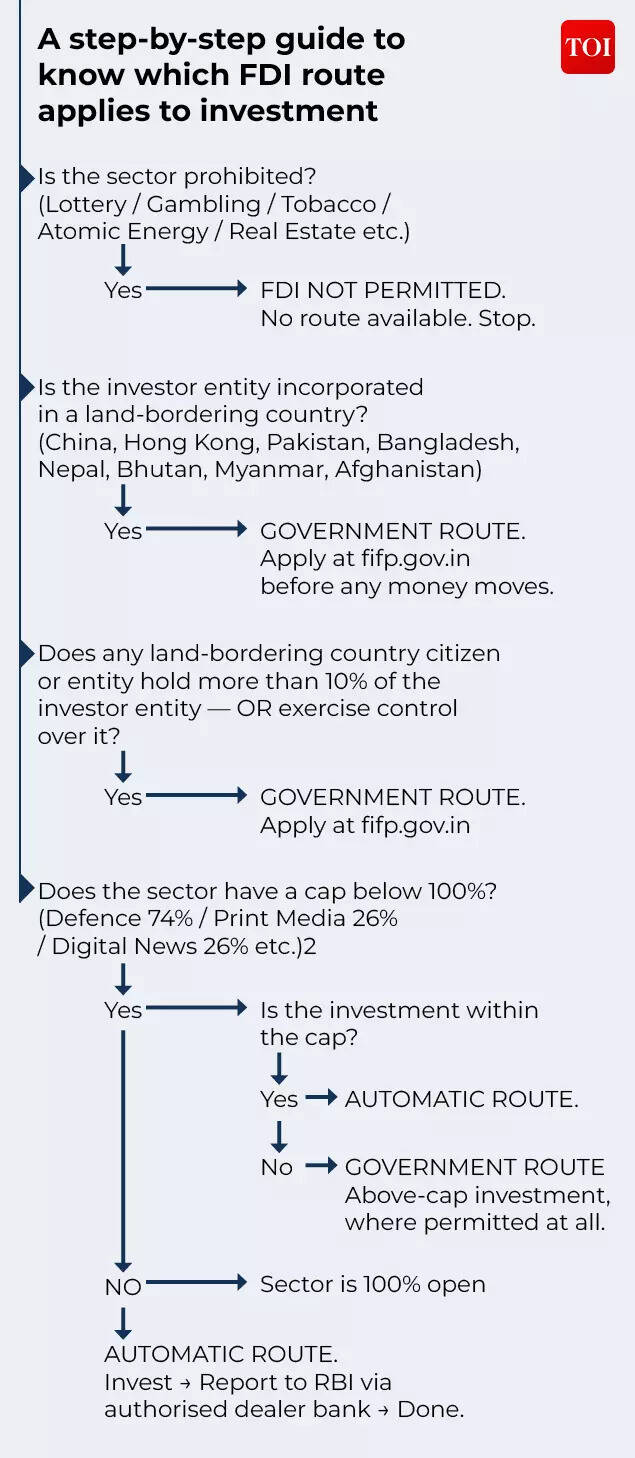
The Department for Promotion of Industry and Internal Trade (DPIIT) notified Press Note No. 2 (2026 Series) announcing two specific changes. The first is the incorporation of a definition of ‘Beneficial Owner’ –a term that Press Note 3 had used but left undefined, creating the interpretational fog that had complicated deals across the investment community for years. The new definition borrows from the Prevention of Money Laundering Rules, 2005. The threshold it establishes: investors with non-controlling beneficial ownership of up to 10 per cent from land-bordering countries may invest through the automatic route, subject to applicable sectoral caps and conditions. The 10 per cent figure comes from anti-money laundering regulations already used by banks to identify natural persons behind an investing entity.

-

The second change is a 60-day processing window for investment proposals in specified manufacturing sectors. The sectors are capital goods, electronic capital goods, electronic components, and polysilicon and ingot-wafer manufacturing. The condition is clear: majority shareholding and control of the Indian investee company must remain with resident Indian citizens or Indian entities owned and controlled by resident Indian citizens at all times.The amendment also corrects what lawyers and compliance professionals had long flagged as a drafting overreach in the 2020 directive. The original Press Note 3 contained the phrase ‘situated in’ –meaning that anyone physically located in a land-bordering country, regardless of their citizenship, was swept into the government approval requirement. An NRI with an Indian passport posted to a company’s Shanghai office found it difficult to hold ESOPs in an Indian startup. A US citizen living in Hong Kong found restrictions in directly investing in an Indian entity. These were never the intent of the 2020 policy. Press Note 2 removes that phrase, releasing a class of investors and employees who had been caught in the net by accident, not design.

-

Atul Pandey, Partner at Khaitan & Co, who advises on cross-border investments, described the amendment as “less a wholesale liberalisation and more a move from blanket caution to a more workable risk-based framework.” He said the biggest benefit is that it removes the “overhang that Press Note 3 had created for minority and non-strategic capital, especially where global funds, venture capital, and private equity structures had incidental exposure to land-border jurisdictions.”In his assessment, Pandey told TOI, “The revisions are material because the policy now gives companies a more familiar and objectively understood benchmark for determining beneficial ownership instead of the earlier ambiguity that often led to inconsistent positions from banks, investors, and regulators.”But he added a measured caution: “Compliance is not frictionless yet: automatic-route cases still involve reporting to DPIIT, the 60-day window is limited to specified sectors, and implementation will ultimately depend on how the notified FEMA framework and authorised dealer banks apply these rules in practice.”

Decline in Chinese FDI, expansion in bilateral trade

Between April 2000 and December 2025, China accounts for 0.32 per cent of cumulative FDI equity inflows into India – $2.51 billion of the $776.76 billion India received from 160 countries. It ranks 23rd among all investor nations, according to the DPIIT Fact Sheet updated to December 2025.The split around Press Note 3 tells the real story. In the two decades before PN3, Chinese FDI equity into India was $2.4 billion –0.45 per cent of the $522 billion India received. After PN3, it fell to $67.35 million between 2021 and 2024 – just 0.034 per cent of inflows in those four years. Year on year: $163.8 million in FY2019-20; $42.3 million in FY2023-24; $2.7 million in FY2024-25, according to CII blog. Trade is heading the other way. India’s trade deficit with China crossed the $100 billion mark for the first time during April–February FY2025-26. Commerce ministry data showed the gap widened to about $102 billion from $91.1 billion a year earlier, with imports rising over 15% to nearly $120 billion despite exports increasing around 38% to $17.5 billion. Earlier, India’s deficit with China has widened from $85 billion in FY2023-24 to $99.2 billion in FY2024-25 – imports up 11.52 per cent to $113.45 billion, exports down 14.5 per cent to $14.25 billion. Eight dollars spent in China for every one earned there. In April-January 2025-26, exports recovered 38.37 per cent to $15.88 billion; imports rose 13.82 per cent to $108.18 billion; deficit: $92.3 billion

The problem that needed solving

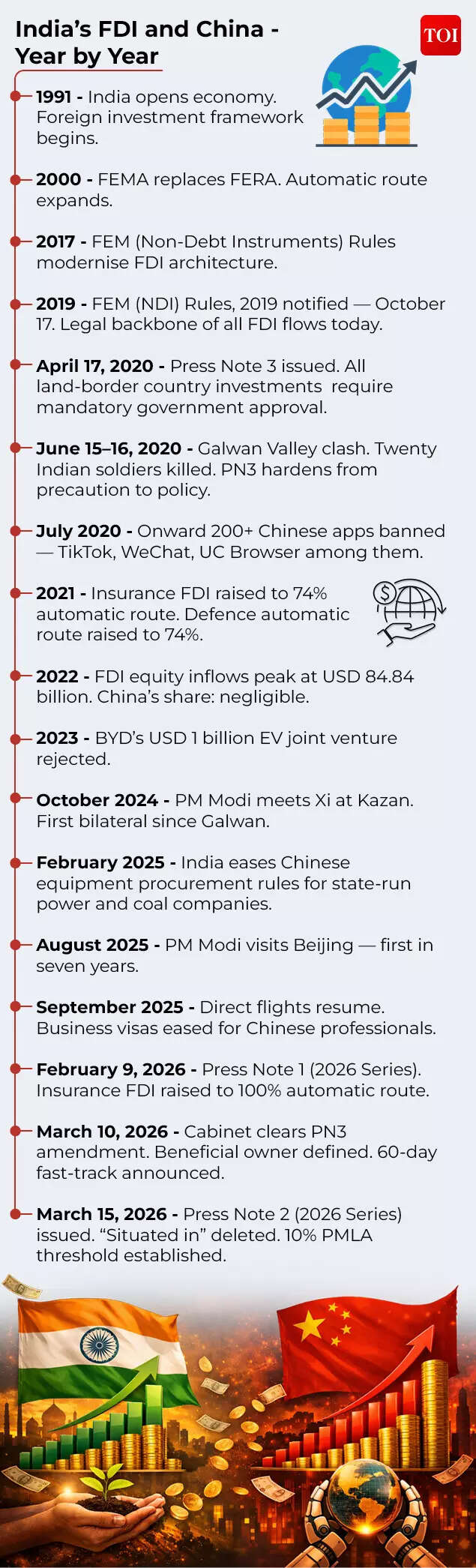
Press Note 3was introduced on April 17, 2020, under circumstances that were both specific and urgent. Equity valuations in India, as across the world, had collapsed under the shock of the Covid-19 pandemic. The government’s stated purpose was to prevent “opportunistic takeoversor acquisitions of Indian companies” during a period of acute financial vulnerability. The directive applied to seven countries sharing land borders with India: China, Bangladesh, Pakistan, Bhutan, Nepal, Myanmar, and Afghanistan. The practical target, given the economic and political context, was unambiguous.

-

Three weeks later, in June 2020, Indian and Chinese soldiers fought in the Galwan Valley. Any prospect of an early reversal of the investment curbs evaporated. India banned several Chinese mobile applications, including TikTok, WeChat, and Alibaba’s UC Browser. A 2023 proposalby BYD to invest $1 billion in an electric vehicle joint venture was declined, as reported by news agency Reuters in a report dated July 22, 2023.However, the 2020 directive did not in effect end up distinguishing between a Chinese state enterprise seeking a controlling stake in an Indian defence supplier and a Singapore-based pension fund with a handful of Chinese limited partners holding 3 per cent of its capital. Both, under the literal reading of PN3, required mandatory government approval for any investment in India. The processing time –with clearances needed from the ministries of Home Affairs, External Affairs, and DPIIT – ran to months, sometimes over a year.

The compliance questions that remain

Yashojit Mitra, Partner at Economic Laws Practice, who specialises in cross-border structuring, welcomed the clarity on beneficial ownership while flagging that the reform is “a mixed bag’ in operational terms. The PMLA-aligned definition “at least clarifies that the PMLA definitions and thresholds will be applicable and to that extent reduces ambiguity for multinational funds with complex shareholding structures,” he told TOI. But he cautioned that the Press Note 2 “continues to emphasise indirect ownership and control and the ability to exercise ultimate effective control over the investee entity — provisions that can be widely interpreted.”On the multi-layer compliance requirement introduced under Para 3.1.1(c) of the new directive, Mitra noted that it “will need detailed legal and structural analysis before an investor decides to make the investment.” He also raised a practical concern: the reporting requirement introduced under Para 3.1.1(d)(ii) “has no finalised format, and therefore operational challenges, if any, on that will also need to be considered.” Most significantly, he pointed out that the Press Note2 ‘is to be effective from the date of the FEMA notification, which is not yet notified‘ – meaning the amendment has been announced but is not yet legally operative as of writing this report. Until the Foreign Exchange Management Act’s Non-Debt Instruments Rules are amended by the Reserve Bank, the existing PN3 framework technically continues.

The manufacturing signal

The sectoral specificity of the 60-day fast-track is the clearest signal of the reform’s strategic intent. The four categories — capital goods, electronic capital goods, electronic components, and polysilicon and ingot-wafer manufacturing — are not chosen at random. Each is a segment in which India’s manufacturing ambitions are directly constrained by its dependence on Chinese supply chains.India’s Production-Linked Incentive programme has committed tens of thousands of crores to build domestic capacity in electronics, solar energy, and advanced manufacturing. But PLI-backed factories for smartphone components, solar modules, and battery components sometimes depend on Chinese equipment, Chinese technical expertise, and in some cases, Chinese joint-venture partners. The tougher process to bring in Chinese minority capital and technology partnership was, by industry consensus, a structural handicap.Neha Aggarwal, Partner at Deloitte India, said the liberalisation “is to incentivise investments from private equity funds who were impacted with approval requirements and uncertainty of the outcomes.” She added that it “will also incentivise joint ventures with Indian businesses in some strategic sectors,” while noting that ‘the impact is dependent on stronger JV commitments.‘ On a compliance related query to TOI, her assessment was direct, the revised framework “gives more investor confidence.”Pandey of Khaitan & Co went further, arguing that the impact on manufacturing and technology ‘could be particularly meaningful.’ He noted that for technology and deep-tech businesses specifically, “The clearer beneficial ownership test should make it easier for offshore fund structures and startup investors to assess whether a deal can proceed automatically or needs approval, which in turn should support funding velocity and cross-border collaborations.”Several Chinese companies are keen to invest via the joint-venture route, but the government has been going slow due to lack of policy clarity on beneficial ownership. The cabinet decision is expected to clear the air for investors as well as the bureaucracy.

-

Industry representatives are upbeat. “Aligning the definition of beneficial ownership with the PMLA threshold of a 10% controlling stake provides investors with a clearer and more predictable compliance framework, which should boost confidence, particularly among PE and VC funds,” said Sunil Kumar, a partner at consulting firm EY India, quoted TOI.

What has not changed

The boundaries of the reform are as important as its contents, and the government went out of its way to make clear where they lie. Joint Secretary in the Department for Promotion of Industry and Internal Trade (DPIIT), Jai Prakash Shivahare, told reporters on March 11: ‘All the restrictions for investors from land bordering countries are still applicable. There is no relaxation so far as entities or investors in LBCs are concerned. This relaxation is only for entities in non-LBCs and having beneficial owners from LBCs below 10 per cent and non-controlling stake.’In plain terms, a company headquartered and controlled from China that wishes to directly invest in an Indian firm must still seek government approval through the existing process. Direct investments by Chinese-controlled entities into Indian companies continue to require government approval and are not eligible for the automatic route under the revised framework. The relaxation primarily benefits global investment vehicles with small, non-controlling Chinese exposure, rather than Chinese enterprises seeking controlling stakes or joint ventures. However, for certain sectors mentioned before in this article, there is an expedited mechanism for clearances.Shardul S. Shroff, Executive Chairman of Shardul Amarchand Mangaldas & Co, welcomed the 60-day mechanism but cautioned that its real-world reach may be narrower than it appears: ‘The benefit will apply only where the majority shareholding and control of the Indian investee entity remain with domestic entities at all times. Given this stringent requirement, the expedited route may have limited applicability.’ His colleague Rudra Kumar Pandey told PTI the 10 per cent exemption introduces ‘a pragmatic threshold’ but the exemption is available only where the investing entity is “not controlled by persons from land-bordering countries.”India’s Industry body CII Director General Chandrajit Banerjee noted that India’s recalibration of its approach to Chinese investments marks an important moment in the evolution of India-China economic ties, adding “PN3 signals a pragmatic attempt to balance India’s strategic and security considerations with the economic opportunities that carefully structured investment from China could bring.”

A recalibration, not a reconciliation

The March 10 decision sits within a broader diplomatic trajectory. Prime Minister Modi met Chinese President Xi Jinping on the sidelines of the BRICS summit in Kazan in October 2024 — the first such bilateral meeting since Galwan. He visited Beijing in August 2025 for the first time in seven years. India and China have since resumed direct flights and eased visa procedures for Chinese business professionals. Restrictions on Chinese equipment procurement for state-run power and coal companies were also relaxed, according to a Reuters report in February 2026.The global trade context has added its own pressure. The tariff confrontation between the United States and China that intensified through 2025 has prompted a rethink in New Delhi about supply-chain strategy. An India overly dependent on any single economic partner –including the United States –is strategically vulnerable. A calibrated engagement with Chinese capital, on India’s terms and within India’s manufacturing priorities, fits a foreign policy posture that has always favoured strategic autonomy over alignment.Qian Feng, director of the Research Department at Tsinghua University’s National Strategy Institute, framed the change in this context, as quoted by state-run Global Times, arguing that the previous policy had “severely hampered the Make in India initiative” and that the revision ‘will boost the Make in India campaign.” For now, policymakers appear to be signalling a gradual transition from broad precautionary restrictions introduced during a period of crisis towards a more targeted risk-based framework designed to support long-term industrial growth while retaining strategic caution.



Sreeleela almost quit films due to trolling, Raashii Khanna says she fears it: ‘Would cry, they write for clickbait’

0
Sreeleela almost quit films due to trolling, Raashii Khanna says she fears it: ‘Would cry, they write for clickbait’


Actors Sreeleela and Raashii Khanna recently sat down for a chat with anchor Suma as part of the promotions for their Ugadi release, Ustaad Bhagat Singh, with Pawan Kalyan. When the anchor asked them whether trolling on social media affects them, Sreeleela revealed that she almost quit acting over it, while Raashii commented that it has only gotten worse over time.

Sreeleela and Raashii Khanna both admitted to being affected by trolling.

Sreeleela and Raashii Khanna on facing trolls

Suma asked Sreeleela and Raashii if they are scared of being trolled. “I did when I first started in this industry,” replied Sreeleela, adding, “I used to feel so bad about it, I would cry. I even told my mother, I don’t think I’ll be able to do this. Should I go back to school or college? I was so sensitive, but now I’m immune to it.”

Raashii chimed in and said, “I feel it a little bit now, because the trolling has gotten intense. I think they pass judgment without really knowing the truth. I have a problem with that. The character I’ve built for so long, I just fear that…” Sreeleela, however, stated that she believes people now have more intellect than they once did.

“But I feel like people today have an intellect of their own. So, even when they see negativity, they think a little,” she said as Raashii underlined her point, adding, “People write anything just for clickbait though.”

About Sreeleela and Raashii Khanna

Sreeleela, who ventured into cinema with the 2019 Kannada film Kiss, might not have quit acting, but she completed her education nonetheless. The actor recently graduated with an MBBS degree, and videos and photos from the ceremony were widely shared online. She completed her studies while starring in Telugu films such as Bhagavanth Kesari and Guntur Kaaram. Sreeleela was last seen in Ustaad Bhagat Singh and will soon star in Dhanush’s next in Tamil, as well as debut in Bollywood with a yet-to-be-titled Anurag Basu film starring Kartik Aaryan.

Raashii, who debuted in 2013 with the Hindi film Madras Cafe, found fame in Telugu cinema with films such as Oohalu Gusagusalade, Supreme and Hyper. After Ustaad Bhagat Singh, the actor has Season 2 of the Raj & DK Prime Video series Farzi lined up. She also has Rowdy and Co in Tamil, apart from Talaakhon Mein Ek, Bridge, and a yet-to-be-titled Anees Bazmee film in Hindi set for release. She starred in advertisements before venturing into films.


‘IPL 2026 is likely to be MS Dhoni’s last’: Former CSK star makes big prediction | Cricket News

0
‘IPL 2026 is likely to be MS Dhoni’s last’: Former CSK star makes big prediction | Cricket News


'IPL 2026 is likely to be MS Dhoni's last': Former CSK star makes big prediction

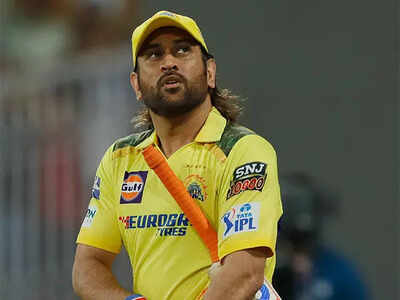
The future of MS Dhoni in the IPL has once again become a major talking point after former India cricketer Robin Uthappa suggested that IPL 2026 could mark the end of Dhoni’s illustrious career with Chennai Super Kings. Speaking on JioHotstar’s TATA IPL: Out or Out of the Park, Uthappa offered a detailed perspective on Dhoni’s evolving role, leadership transition within CSK, and what the upcoming season could mean for the franchise icon.According to Uthappa, Dhoni’s role in the upcoming season is expected to evolve significantly. Rather than being a central on-field figure, he could take a step back and operate more as a guide for Ruturaj as Captain.“I don’t think CSK should hand over the leadership duties to Sanju Samson. You have to give Ruturaj Gaikwad time to settle as captain. He has been leading the team since 2024. No matter what people say, he is coming out of the shadow of MS Dhoni. You want him to come out completely and stand in his own light. You want to see what he can produce. You want him to lead the team when MS is not playing and stand on his own, without that overwhelming feeling of always being under that energy. So I think you can see Dhoni being a little more hands-off,” Uthappa said Uthappa made a bold and emotional prediction about Dhoni’s future, indicating that the 2026 season could be his farewell. The statement has immediately sparked conversations among fans, as Dhoni, one of the greatest captains in IPL history edges closer to the final phase of his playing career.“IPL 2026 is likely to be his last year in the yellow jersey. I see him playing more of a mentor-cum-player role this year. I don’t see him batting at number seven. I see him batting at number eight. Knowing that he is on his way out, he wants to wean himself out. I think he will do that. Only then will we see the true potential of Ruturaj Gaikwad as captain. Give him a few years. If it doesn’t work, you always have Sanju Samson in the team to handle the captaincy duties.” Robin on dhoni’s role in CSK

MS Dhoni in IPL 2025

MS Dhoni’s IPL 2025 season was a mix of evolving responsibility, flashes of brilliance, and growing questions about his role in a transitioning Chennai Super Kings setup. Dhoni entered IPL 2025 primarily as a finisher and wicketkeeper, with reduced batting responsibility compared to his prime years. However, his role changed mid-season when captain Ruturaj Gaikwad was ruled out due to injury, forcing Dhoni to step back into leadership duties.As captain, Dhoni was responsible for guiding a struggling CSK side through a difficult campaign, balancing leadership with his limited batting role lower down the order. Dhoni mostly batted in the lower order (No. 7 or below), often coming in during the final overs. His role was not to build innings but to provide quick cameos and finish games.

Wicketkeeping Excellence Continues

Even at 43, Dhoni continued to shine behind the stumps. He achieved a historic milestone by becoming the first wicketkeeper to reach 200 dismissals in IPL history, reinforcing his legacy as one of the greatest keepers in the league. However, with the inclusion of Sanju Samson wicket-keeping duties might be handed over to him.

Banner Insert


Farah Khan asked Javed Akhtar to translate Gulzar's lyrics of 'Satrangi Re'

0
Farah Khan asked Javed Akhtar to translate Gulzar's lyrics of 'Satrangi Re'


Farah Khan asked Javed Akhtar to translate Gulzar's lyrics of 'Satrangi Re': 'Mani Ratnam did not know Hindi'

Mani Ratnam’s Dil Se remains iconic not just for its powerful narrative but also for its unforgettable music, composed by AR Rahman. Among its standout tracks was ‘Satrangi Re’, choreographed by Farah Khan and featuring Shah Rukh Khan alongside Manisha Koirala. While the song became visually and musically memorable, Farah revealed that bringing it to life wasn’t without its challenges, especially when it came to understanding the lyrics written by Gulzar.In a recent conversation with Ranveer Allahbadia, Farah shared that the team was shooting in Ladakh when she struggled to grasp the meaning of the song. To decode it, she turned to her uncle, veteran writer Javed Akhtar. She said, “I did not understand the meaning of this song because Gulzar sahab had written some difficult words in it. You will not believe that I had to call Javed Akhtar to ask him to translate Gulzar’s lyrics for me. On top of that Mani Ratnam did not know Hindi, the cameraman didn’t know Hindi, AR Rahman (the composer) didn’t know Hindi. So from Ladakh, I was calling Javed uncle to understand the lyrics of the song. Javed Uncle asked, ‘Yeh kya likha hai? Yeh kisne likha hai? (Who has written this?).”She also revealed a fun twist years later, when she worked with Javed Akhtar again for Om Shanti Om. Wanting a quirky, over-the-top track for “Dard-E-Disco”, she asked him to channel Gulzar’s poetic style in a deliberately nonsensical way. “After that, when we were doing ‘Dard-E-Disco’, I told Javed uncle that I want a nonsensical song, but I want it in Gulzar sahab’s way. In 5 minutes, Javed uncle wrote that song.” The track was sung by Sukhwinder Singh, composed by Vishal–Shekhar, and choreographed by Farah herself. Notably, Javed Akhtar’s first wife Honey Irani is Farah’s aunt, which explains their close bond.Earlier, speaking on the Take 2 podcast, Farah had also recalled how even Mani Ratnam was puzzled by the deeper meaning of ‘Satrangi Re’. She said, “The funniest part was Gulzar sahab had written this part of the song that described the seven stages of love. Mani sir doesn’t know Hindi, so he was asking us. We couldn’t understand what’s written, so I used to call up Javed uncle and say, ‘Ye kya likha hai, mujhe explain karo’ (Please explain what’s written to me). ‘Halka-halka uns hua.’ What’s uns (affection)?,” recalled Farah.