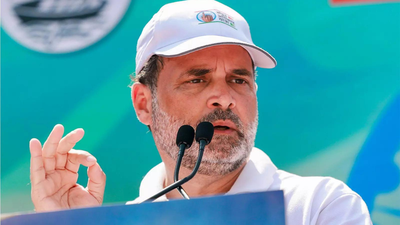
As they prepare for their IPL championship defence, star batsman Virat Kohli advised his Royal Challengers Bengaluru teammates on Saturday to “switch on” themselves and not squander a single minute at the training sessions.
During the team`s first practice at the M Chinnaswamy Stadium, Kohli emphasised the importance of keeping up the level of energy that won them the championship the previous year.
“We worked really hard over the last two to three seasons to achieve what we did last year, and it`s only going to get tougher because other teams are going to come hard at us,” Kohli said.
“We don`t waste these days. We stay ahead. So, switch on now. Let`s not waste even a minute of any session that we are a part of. We must give our 120 per cent for these two and a half months.” Kohli added.
Andy Flower happy with the RCB squad
Andy Flower, the head coach, was pleased with the team put together following the auction, stating that the team had improved in important areas.
“We had an interesting auction and I think we`ve improved our squad, to be quite frank. We`ve brought in some great new additions. Integrating them into the RCB way alongside established players led by Virat and Rajat is an exciting part of building this team,” Flower said.
Flower emphasised the importance of being the current champions and stated that the team would welcome the challenge rather than focus on previous achievements.
“There is one difference this year, we`ve got a star on our shirt. That`s a very proud feeling for all RCB fans. But that season is gone. Now we have a new challenge ahead, and it`s an exciting one. We`re here to win this year`s IPL,” he added.
Flower also pointed to the advantage of beginning their campaign at home.
“Our first game is here at Chinnaswamy, which is a fantastic opportunity for us to build momentum early and be welcomed by our home fans. The outfield is looking superb, lush, green and beautiful,” he said.
RCB will open their IPL 2026 campaign against Sunrisers Hyderabad on March 28 at the M Chinnaswamy Stadium. RCB added Venkatesh Iyer, Mangesh Yadav, Jordan Cox, Vicky Ostwal and Satvik Deswal to their squad at the auction.
Manish Malhotra‘s mother, Sudarshan Malhotra, passed away on Thursday, March 19, 2026. She was 93. The funeral was held at the Santacruz Hindi Crematorium in Mumbai on March 20, 2026. Now, a prayer meeting has been organized at Taj Lands End today, which several celebs attended.Bollywood celebs arrive for Manish Malhotra’s mother’s prayer meetA prayer meeting was organized in the loving memory of Manish Malhotra’s mother, Sudarshan Malhotra. Celebs like Ajay Devgn, Kajol, Bobby Deol, Twinkle Khanna, Urmila Matondkar, Gauahar Khan, Meezan Jaffrey, Anu Malik, Madhoo, Sayani Gupta, David Dhawan, Rohit Dhawan, Sophie Choudry, Shaina NC, Anil Thadani, Armaan Malik, Freddy Daruwala, Radhika Merchant Ambani, Zarina Wahab, Kunal Rawal, and more attended the prayer meet in Mumbai.
Manish Malhotra’s mother’s funeralOn March 20, several Bollywood celebs arrived to pay their last respects at the crematorium in Mumbai. Celebs like Karan Johar, Urmila Matondkar, Ronit Roy, Alvira Khan Agnihotri, Khushi Kapoor with Orry, Jackky Bhagnani, Rakul Preet Singh, Vijay Varma, Divyendu Sharma, Saiyami Kher, Sophie Choudry, Karan Tacker, David Dhawan, Rohit Dhawan, Fatima Sana Shaikh, Freddy Daruwala, and more were seen entering the cremation venue.B’town celebs visit Manish Malhotra’s houseMeanwhile, on March 19, after the news of Manish Malhotra’s mother’s demise, many celebs from the Hindi film industry arrived at his residence late at night.Celebrities like Aishwarya Rai Bachchan, Abhishek Bachchan, Kiara Advani, Sidharth Malhotra, Karan Johar, Karisma Kapoor, Raveena Tandon, Urmila Matondkar, Ananya Panday, Sanjay Kapoor, Shanaya Kapoor, Ronit Roy, Alvira Khan, Shah Rukh Khan’s manager Pooja Dadlani, Varun Dhawan, Arjun Kapoor, Sonali Bendre, and Nushrratt Bharuccha visited Manish Malhotra’s residence to offer condolences.For those unaware, Manish Malhotra shared a close bond with his mother and often called her his source of inspiration. Manish Malhotra shared a post on his Instagram after his mother’s death. Sharing a picture of his late mother, he wrote, “Love and miss you forever,” followed by a red heart and folded hands emoji.
NEW DELHI: Leader of opposition in Lok Sabha Rahul Gandhi slammed the BJP-ruled central government over falling rupee and called it “clear signs” that inflation was inevitable. He criticised the Centre’s “empty rhetoric” as the country faces economic restrain due to LPG shortage amid West Asia crisis. He claimed that petrol, diesel, and LPG prices would be hiked after state elections.“The rupee weakening against the dollar and heading towards 100, coupled with a sharp rise in industrial fuel prices—these aren’t just numbers; they’re clear signs of the inflation to come,” Rahul said in a post on X.“The government may call it “normal”, but the reality is: Production and transport will get more expensive; MSMEs will be hit the hardest; the prices of everyday items will go up; FII money will flow out even faster, putting more pressure on the share market” he added.“In other words, it’s bound to have a direct and profound impact on every family’s pocket. And it’s only a matter of time—after the elections, the prices of petrol, diesel, and LPG will be hiked too. The Modi government has neither direction nor strategy—just empty rhetoric. The question isn’t what the government is saying—it’s what’s left on your plate,” he said.Rajya Sabha MP Kapil Sibal added to the concerns and said that Iran’s retaliation would destroy India’s economy “because we are dependent on gas, LPG, and crude oil from there, and it will take years to restore these resources…” “The whole argument that is sought to be made is that we are reliant on the US for our trade… But the fact of the matter is, no trade can perish, and no manufacturing can take place in the country without energy. Where does our energy come from? It comes from the Middle East through the Strait of Hormuz… What leverage will we be left with if our energy resources are depleted… I request the government and the PM that this is not the time to remain silent. Iran’s retaliation for petroleum and gas resources in the Gulf will ultimately destroy our economy because we are dependent on gas, LPG, and crude oil from there, and it will take years to restore these resources,” he said.The rupee plunged to a record low of 93.71 on Friday, tumbling 108 paise from its previous close of 92.63, its steepest single-day fall in four years. The sharp decline comes amid growing concerns that oil prices could remain above $100 for an extended period, as the widening West Asia conflict increasingly targets key energy infrastructure in the region.
Irfan Pathan picks MI as greatest team (Image Credit: ANI)
Former India left-arm pacer Irfan Pathan said Mumbai Indians (MI) hold the edge over Chennai Super Kings (CSK) in the debate over the greatest Indian Premier League (IPL) team, citing the former’s role in contributing to giving match-winners to the Indian team.
MI vs CSK debate: Pathan picks his side
“On picking the side between CSK and MI as the greatest team in the IPL, this will always be debatable. CSK started winning the IPL title from 2010 onwards. They won back-to-back titles in 2010 and 2011 and were the first team to do so. But when MI started winning from 2013, they kept winning after every alternate year. Then they won the IPL trophy back-to-back in 2019 & 2020,” Irfan Pathan said.
“MI have given more match-winners to India”
“But what I like about MI is their contribution to Indian cricket. The number of match winners they have produced for the Indian team is absolutely tremendous. How do you achieve that? First, you make your franchise big. Second, you deliver results with the team you have. Even now, MI had a great squad last season that could have easily won the trophy, but they couldn’t for different reasons,” Pathan added. “CSK don’t have four Indian captains, MI do. In that respect, assembling a team and contributing to a bigger cause, I think MI are the greatest IPL team. I know CSK will always say they are also the greatest, having won five trophies too. There is no doubt. There will always be a debate and it is a fair debate. But I think MI take the edge because they have given so many wonderful cricketers and young talents to Indian cricket,” said Pathan on JioStar.
Vaibhav Sooryavanshi faces crucial IPL 2026 season
He also spoke about how the 2026 IPL season would become a crucial learning phase for teenaged batting sensation Vaibhav Sooryavanshi. The left-hander became the fastest Indian batter to hit a century in the IPL in just 35 balls last year and was retained by Rajasthan Royals (RR) ahead of IPL 2026.Sooryavanshi is also coming on the back of being Player of the Tournament and Player of the Final in the 2026 Men’s U19 World Cup won by India. “This season of the IPL for Vaibhav Suryavanshi will be a learning one. He has played in the tournament last year, he has played domestic cricket, and he is playing cricket in all formats everywhere.“He played in the Under-19 World Cup, he has taken part in the Ranji Trophy with Bihar, and he has scored runs everywhere. In white-ball cricket and red-ball cricket, everyone is taking note of him. Bowlers are doing the same. Since he has played so much cricket since his IPL debut last year, other players are watching his videos and analysing his weaknesses,” he said.
Opposition bowlers set to target weaknesses
Pathan signed off by saying it would be interesting to see if Sooryavanshi upgrades his game when the opposition bowlers target his weak areas. “So he needs to find a way to upgrade his game and work on his weaknesses. He has slammed centuries with ease in all forms of cricket. When you do that consistently, not just in IPL but in domestic cricket, Under-19 cricket and emerging matches, your confidence keeps going higher.“This IPL season, all bowlers will be ready with their strategies and Vaibhav will be looking to prove a point. He can do that by slamming another hundred in the IPL. When he scores runs consistently this season, that is when we can say Vaibhav Suryavanshi has upgraded his game.”
Amid the ongoing success of Dhurandhar 2, actress and BJP MP Kangana Ranaut recently reviewed the film, praising the director Aditya Dhar. Shae shared that filmmakers are often bigger than superstar actors and that they do not get enough credit. While Kangana heaped praises on Dhar, fans noticed that she skipped mentioning the film`s cast, including Ranveer Singh, R Madhavan, Arjun Rampal, Sanjay Dutt, Rakesh Bedi and Sara Arjun.
Kangana Calls reviews Dhurandhar 2
On Saturday, March 21, Kangana took to her Instagram story to share her views. She penned a note that read, “The best thing about Dhurandhar success is that Aditya Dhar is a superstar director is established, Hollywood superstar directors are always bigger than superstar actors. Eg: Spielberg, Tarantino, Nolan. We never give our film makers enough respect or credit. They are over worked, underpaid and bullied by superstars as a result of that I never meet any young person insider/ outsider who dreams of becoming a film maker or director of photography or any other technician.” (sic)
Kangana further wrote that everyone claims to be talented, though they only want to be actors. Referring to Aditya, she added that here is a superstar filmmaker shining brighter than any hero. She further stated that many youngsters watching his story today will aspire to be like him and take the film industry to greater heights, saying, “Here is a super star Him maker shinning brighter than any hero. Today so many youngsters are watching his story who will aspire to be like him and take film industry to greater hights!!”
The Emergency actress ended her note with, “Salutations sir adityadharfilms.”
About Dhurandhar 2
Directed by Aditya Dhar, Dhurandhar 2 is an espionage action thriller starring Ranveer Singh, Akshaye Khanna, R. Madhavan, Arjun Rampal, Sanjay Dutt and Sara Arjun. The first part of the film, released in theatres on December 5 last year, turned out to be a blockbuster hit.
Dhurandhar franchise is said to be inspired by real-life events, focusing on geopolitical tensions and covert operations carried out by India`s R&AW. The film particularly highlights Operation Lyari, a crackdown by the Pakistani government targeting gangs and criminal networks in Karachi`s Lyari area.
Even as Dhurandhar: The Revenge continues its strong run in theatres, drawing praise from audiences and industry names like Ram Gopal Varma and Rakesh Roshan, not everyone is impressed. Kannada actor and former politician Ramya has emerged as one of the film’s sharpest critics, taking to X to share a scathing review that has quickly sparked debate online.
Dhurandhar 2
A ‘complete propaganda’, says Ramya
Ramya did not hold back as she questioned both the film’s content and its execution. She wrote, “Just watched Dhurandhar 2 and wow! What a masterclass in how to turn something promising into an endurance test. It’s like reading a textbook of the most boring subject with never-ending chapters and at some point, your brain just gives up and starts laughing out of sheer despair at the atrocity unfolding in front of you. If you really want to watch it, do yourself a favor—don’t waste your time or money in a theatre. This is strictly ‘pause, scroll phone, question life choices’ content—best consumed on a streaming platform where escape is just a click away.”
She further criticised the film’s technical aspects, adding, “Direction, dialogues, editing, background score, acting—all consistently subpar. It genuinely feels like no one told them there was a March 19 release deadline approaching. Or worse, they knew and still said, ‘haan perfect hai, bhej do.’ In Dhurandhar (Part 1), people were hooting, clapping, vibing. There was energy. There was engagement. This one—the audience was having none of it. You could feel the collective disappointment in the theatre.”
Taking aim at Ranveer Singh’s performance, she remarked, “Also, to everyone saying it’s Ranveer carrying the film—what exactly is he carrying? Because all I could see was his hair. In the first part, his hair had personality, presence, character. In this one, it’s just there. In the way. Of everything. Blocking scenes. Possibly eligible for a supporting role nomination.”
Violence and ‘jingoism’ under fire
Ramya also flagged the film’s violence, writing, “And the violence!!! This isn’t a movie, it’s basically a visual handbook (one that absolutely should not exist) on how creatively violent you can get with literally any object lying around. Syringe? Used. Spanner? Used. Knives, spiked balls, machetes, reapers, chains, guns, bombs, bazookas, shutters—you name it, they’ve weaponized it.”
She added, “The director seems to be in a constant competition with himself: ‘How do I make the next scene more violent/comical than the last?’ And it just keeps escalating to the point where it stops being shocking and starts being hilarious. You chop off both legs, soak a torso in kerosene, and the guy is still delivering dialogues like he’s mid-TED Talk. Medical science, zindabad. Forget Oscar, Nobel Prize incoming.”
She concluded, “Long story short: Dhurandhar 2 is a HUGE disappointment. Snoozefest/comedy at best. If Part 1 made you cheer, this one will make you question why Dhurandhar 2, why? Ranveer, you’re better than this. Aditya Dhar—jingoism and propaganda is so passé. Get over it.”
Her remarks come amid a broader conversation around the film, which has also been labelled “propaganda” by a section of viewers.
Industry and political reactions grow
Actor Prakash Raj also weighed in, posting on X, “Me… bahut door from Dhurandhar… are you? Just asking!” In another post, he appeared to take a dig at actors such as Allu Arjun, Jr NTR, Mahesh Babu, and Vijay Deverakonda, writing, “Signs of obligations are spreading South too.”
The criticism has extended beyond the film industry. Waris Pathan, spokesperson for All India Majlis-e-Ittehadul Muslimeen, called for a ban, stating, “There are some cheap people who spread hatred and lies just to make a few rupees. They don’t know how to make anything else. They are using real-world examples like demonetisation, even though everybody knows the truth about how people stood in lines. Make films for entertainment or to show real history. Make films to make people happy, not to spread hatred. The government should ban such films. Make a film on the Epstein Files or other topics. If you’ve made it against Pakistan, show it in Pakistan then. Why are you causing issues here?”
Box office remains strong
Despite the backlash, Dhurandhar: The Revenge, continues to perform well commercially. The Ranveer Singh-starrer has reportedly earned ₹330 crore worldwide, with a domestic net collection of ₹240.29 crore. Released in multiple languages, the film is expected to see further growth as its Tamil, Telugu, and Kannada versions roll out across markets.
Liverpool forward Federico Chiesa has been called up by Italy for the first time in almost two years for the upcoming World Cup playoffs, with the Azzurri desperate to avoid missing a third consecutive edition.
Italy coach Gennaro Gattuso named a 28-man squad on Friday. The four-time World Cup champion needs to beat Northern Ireland in the playoffs on Thursday in Bergamo and then Wales or Bosnia and Herzegovina away – five days later – to avoid going at least 16 years without playing a match at soccer`s biggest event.
Chiesa, who helped Italy win the European Championship in 2021, made the last of his 51 international appearances at Euro 2024, in the loss to Switzerland in the round of 16.
He left Juventus for Liverpool in August 2024 but has struggled for playing time, making just one Premier League start this season. Chiesa had begun his career at Fiorentina.
The 28-year-old forward has established himself as a fan favorite at Liverpool due to his high-energy workrate and passionate attitude.
Cagliari defender Marco Palestra was named in the Italy squad for the first time. Atalanta defender Giorgio Scalvini and Roma midfielder Niccolo Pisilli return after almost two-year absences.
Italy was eliminated in the playoffs by Sweden before the 2018 World Cup and by North Macedonia in 2022.
This story has been sourced from a third party syndicated feed, agencies. Mid-day accepts no responsibility or liability for its dependability, trustworthiness, reliability and data of the text. Mid-day management/mid-day.com reserves the sole right to alter, delete or remove (without notice) the content in its absolute discretion for any reason whatsoever
Call your agents. Or even better, code them—using super simple sentences like this one.
Call your agents. Or even better, code them—using super simple sentences like this one.
AI assistants that can handle work and everyday personal tasks, all operated by fast English-language commands that require zero coding knowledge, are increasingly defining phase two of the AI boom.
AI tools like Anthropic’s Cloud Code, Cursor, and OpenAI’s Codex can now write and debug software, opening up huge new sources of revenue. This success is pushing their creators toward a bigger ambition: to automate our entire lives.
“ChatGPT started out as something that could answer questions, but the long-term vision has always been to be a super-helper that can really help you get things done,” said Nick Turley, head of ChatGPT at OpenAI.
What started as a way to autocomplete code quickly evolved into semi-autonomous AI bots, or “agents,” that can work for hours with little human supervision. We can ask a bot to create presentations for work, coordinate family schedules, and pick March Madness brackets while it learns our personal preferences, no coding required.
“For me, coding is a kind of new literacy, but fortunately, learning to code now is much easier than learning to read, because you don’t have to practice, the tool just does it for you,” said Boris Cherny, who leads cloud code at Anthropic. “But I don’t want it to end. It’s going to be too disruptive.”
The shift has permanently changed the lives of coders and fueled a selloff in the $1 trillion market as investors and executives consider the technology’s potential to reshape industries including finance, legal and healthcare. AI has already been blamed for thousands of job cuts.
For OpenAI and Anthropic, winning the market for non-coders is the next frontier, especially as both companies are competing initial public offering That could come as soon as the end of this year.
“When you think about the future of knowledge work, it’s a multi-trillion dollar opportunity for companies,” said Dennis Dresser, chief revenue officer of OpenAI and former CEO of Slack. “It’s almost like if you can think it, or describe what you want, you can create it.”
In Silicon Valley, AI agents have already become a way of life.
Anthropic’s Cowork tool is active, being used to analyze financial documents here.Codex, OpenAI’s AI coding assistant, creates a game.
Venture capitalist Tomasz Tunguz uses them to create charts, blog posts, and presentations. At one point, their spending on AI reached $100,000 per year. This went towards subscriptions to AI tools from Google, Anthropic and OpenAI, as well as fees for accessing their models directly through application programming interfaces or APIs.
“I’ll book travel, I’ll research vacations, I’ll read newspapers, all my email goes through it, my grocery shopping goes through it, music recommendations — I’m not reading magazines anymore — whatever questions I have, anything I want to know goes through the AI,” Tunguz said.
Other users talk about creating a dashboard to track their kid’s baseball stats, or automating the process of signing kids up for camps and daycare. Anthropic’s new features designed for non-technical tasks The target market for these devices is simply “anyone who needs to work on their computer,” said Felix Rieseberg, head of engineering at Cowork.
Rieseberg became a first-time father in January and has used Cowork to track and analyze a large folder of medical records. They’ve also used it to apply for mortgages and compile expense reports.
Theory Ventures founder Tunguz estimates that agents could generate $36 billion in annual consumer revenue in the near future, an amount that would represent a staggering growth rate from about a year ago. But he says this is just the beginning – the real money will come from lucrative enterprise contracts, a much bigger market opportunity than chatbots.
Anthropic and OpenAI charge around $200 monthly for the most expensive tier of their AI tools. In February, Anthropic said that Cloud Code was generating $2.5 billion in annual revenue. OpenAI declined to disclose Codex revenues.
Venture capitalist Tomasz Tunguz uses AI agents to create charts, blog posts, and presentations. Their spending on AI reached a point
Venture capitalist Tomasz Tunguz uses AI agents to create charts, blog posts, and presentations. At one point, their spending on AI reached $100,000 per year.
Like many power users, Tunguz uses tools to organize the work of multiple agents simultaneously.
“If I use a chatbot, I’m having a one-on-one conversation with the AI, but if I use something like Cowork, I can have 15 to 50 conversations with the AI simultaneously and that means they sell me a lot of inference,” Tunguz said, referring to the AI processing power required to run these systems. “That means more business for these companies.”
A lot of difficulties will need to be overcome to convince millions of new users to adopt agents concerns. People are losing sleep over the idea that using these tools means inadvertently training a model to replace them, or that they represent the beginning of widespread job losses and eventual economic collapse.
There are also concerns about the safety and security of these systems, for example Violence and self-harm People involving chatbots have become more common and stories are circulating about agents going rogue and deleting files. Letting AI complete the work for you often means giving it free rein over your data. And it can feel like taking care of a fleet of agents who are constantly making messes.
The coding war, which set the stage for phase two of the AI boom, has been going on for years behind the scenes, with multiple AI companies competing to win over software developers and influential early adopters.
One of the most important companies among them is Cursor, a small startup that played a big role in starting the coding war in 2023 by launching a tool that made it faster and easier to code. The cursor works with most AI models, meaning a user can tap Anthropic one day and OpenAI the next, or other models being produced around the world.
Michael runs TrueCursor, a startup that makes coding faster and easier.
Insiders Cursors became a Silicon Valley darling by ushering in the “vibe-coding” era – basically allowing non-engineers to build software, apps, or websites without knowing how to write a line of C or Python. Nvidia CEO Jensen Huang has called it his “favorite” AI tool.
Last Value $29.3 billionCursor has grown to nearly 400 people and recently surpassed $2 billion in annual revenue, doubling in a three-month period. Despite recent
The reason there remains hope is that both OpenAI and Anthropic are subsidizing the cost of use on their platforms. They’re charging far less than the cost of running the AI, just as Uber and Lyft once did when they offered rides for just a few dollars in a race to drive each other out of the market.
Working with an AI agent, especially one that can work for hours non-stop, can be very expensive. Cursor charges through subscription tiers with usage limits. To lure customers, Anthropic and OpenAI are offering power users higher token limits like a $1000 price inside a $200 per month plan.
Recently, Cursor has expanded from a focus on coding more broadly to “helping developers create a factory that makes their own software,” said Michael Truell, the startup’s young, red-haired leader. Written on X.
A Cursor spokesman declined to comment.
Boris Cherny leads cloud code at Anthropic.
Not long ago, Boris Cherny was living a very quiet life in Nara, Japan, where he worked remotely for Meta and loved writing code from Starbucks while watching the city’s famous deer wander outside.
Cloud Code began as his side project in late 2024 after joining Anthropic. “I started making products for myself,” Cherney said.
Cloud Code was released in early 2025 and developers praised it, claiming that it is more capable and reliable than cursors, and is capable of running autonomous agents rather than serving as a coding co-pilot that requires constant human input.
The tool went viral in November when, just before Thanksgiving, Anthropic released an updated model of the cloud that made the tool even more powerful. In December, it spread beyond software engineers and began growing rapidly.
gfx
Some users said they were “Cloud-pilledOr on “Cloud Benders”. They wore hats embroidered with the product’s crab mascot and stopped Cherney on the street for selfies or autographs. Suddenly, developers weren’t writing any code, they were writing Management of multiple agents simultaneously.
Demand for OpenAI’s codecs increased this winter when the company introduced its latest model, which has far better coding capabilities than its predecessors. Over the past 30 days, OpenAI has seen a “fundamental shift” in the way businesses use AI, said Dresser, OpenAI’s revenue chief, who called it a “wildfire moment.”
Codex has more than two million weekly active users, OpenAI said. The Journal said the company is finalizing a strategy to shift focus toward coding and business users, leaving behind projects that pull unnecessary focus. informed.
Traffic has increased eightfold in the past two months, requiring ever-more computing power to be brought online.
“Development is challenging,” said Thibault Sotiaux, head of Codex, who helped create the product, a day after an unexpected surge in users in mid-March caused technical problems for Codex. “We have to set up new data centers. We’re investing in making things more efficient and enhancing the underlying infrastructure.”
To keep top users happy, AI companies are treating them like VIPs, responding to their complaints faster on social media, or even treating them to alcohol.
When OpenAI was debating how to make its models’ personality more “fun”, Codex product lead Alexander Embiricos saw a power user arguing on X that the models should really be more concise and concise. Feedback helped the company decide to give users the option of personas, he said.
Anthropic co-founder Ben Mann and others at the company have organized events for power users. Over Chinese food in Seoul’s Gangnam district in December, coders shared ideas with Anthropic executives about how to make agents more trustworthy.
Sigrid Jin, an AI startup activist who attended the Seoul dinner, said she spent 25 billion Cloud Code tokens last year alone. At the time, usage limits were loose, allowing early enthusiasts access to tens of billions of tokens at very low costs.
Despite his countless hours with cloud code, Jin is not loyal to any AI lab. The tools available have different strengths and weaknesses, he said. Codex is better at reasoning, while cloud code produces cleaner, more shareable code.
Jin flew to San Francisco for Cloud Code’s first birthday party in February, where attendees waited in line to compare notes with Cherney. The crowd included a Belgian cardiologist who built an app to help patients get care, and a California lawyer who built a tool to automate building permit approvals using cloud code.
“It was basically like a shared party,” Jin said. “There were lawyers, doctors, dentists. They didn’t have software engineering backgrounds.”
Japan edges tournament hosts Australia 1-0 in the Women’s Asian Cup final to claim third title in four editions.
Published On 21 Mar 202621 Mar 2026
Maika Hamano scored the only goal as a formidable Japan battled past Australia to clinch a third Women’s Asian Cup title in front of a record-breaking 74,357 fans in Sydney.
The Tottenham star hit a stunning long-range strike in the 17th minute at Stadium Australia to break Australian hearts and add to their continental crowns from 2014 and 2018.
Recommended Stories
list of 4 itemsend of list
Those finals were also against Australia and ended 1-0.
The edge-of-the-seat decider culminated a landmark tournament with more than 350,000 fans through the turnstiles, reinforcing the growth in popularity of the women’s game.
This was about six times as many as the previous tournament record set in 2010 in China, with the final setting a new attendance record for a single game in tournament history.
The Asian Cup doubled as qualifying for the World Cup in Brazil next year, with Australia, Japan, South Korea, China, North Korea and the Philippines all punching their tickets.
The Japanese team, stacked with English-based players, was invincible in their run to the final, fluid across the park, and defending well, steamrolling everyone in front of them.
While Australia proved a much tougher test, nothing could stop them as they accumulated 29 goals and conceded just one through their six tournament games to reinforce their status as Asia’s number one team.
Japan named an unchanged lineup from their 4-1 semifinal thumping of South Korea.
Australia made one change to the team that beat defending champions China 2-1 in the last four with Wini Heatley preferred in central defence to Clare Hunt.
The hosts were composed at the start, looking to dictate the game, and Caitlin Foord should have scored on 11 minutes when Mary Fowler threaded a pass through inside the box.
But the unmarked Arsenal striker sent her shot straight into the arms of Japan keeper Ayaka Yamashita to miss a golden opportunity.
It proved costly with Japan breaking the deadlock six minutes later when Tottenham midfielder Hamano collected the ball outside the penalty area and unleashed a 25-yard rocket that found the top corner.
Foord had another chance when she pounced on a sloppy clearance from Yamashita, but failed to find the target from a tight angle, then scuffed another wide just before the break.
Japan were always a threat, and West Ham’s Riko Ueki went close twice in as many minutes soon after the restart.
With the game on a knife-edge, Australia threw everything they had at Japan in a desperate attempt to find an equaliser as the crowd noise reached fever pitch.
Alanna Kennedy almost pulled off a late equaliser in the 88th minute, but despite intense pressure, Japan were rock solid and absorbed the threat to cling on for the win.
After watching Aditya Dhar’s Dhurandhar: The Revenge, fans were eager to know who would be playing the role of Bade Sahab, whom everyone in the film refers to. The film eventually revealed that it is Danish Iqbal. In a recent interview with Zoom, Danish spoke about Ranveer Singh’s reaction to his transformation into Bade Sahab (Dawood Ibrahim) and described him as a lovely and cordial person.
Ranveer Singh as Jaskirat in Dhurandhar The Revenge.
Danish Iqbal reveals Ranveer Singh’s reaction to his transformation into Bade Sahab
Danish revealed that it took eight to nine hours to transform into Bade Sahab. He said, “Everyone used to say Ranveer is full of energy. But when I first met him, he was so cordial and warm. When that scene was being shot, he saw me, and everyone on set was like, ‘Oh my God, what is this?’ Before the make-up, he saw me. Then he saw me after make-up, and they were all like, ‘Ye kya ho gaya?’ They are professional actors. They know what is required to carry this much make-up.”
He further spoke about Ranveer as a co-star and said, “He was very cooperative. And after every take, he used to come to me and say, ‘Brilliant, sir’. So, there is one ‘brilliant’ which you just say for the heck of saying it. But then you can actually feel that this appreciation and warmth—he means it. He is such a lovely and cordial person.”
About Danish Iqbal and Dhurandhar: The Revenge
Danish is a well-known name in theatre and film circles. The actor rose to fame with his role as Dilshad Mirza in Maharani Season 2 and has been part of shows like Aranyak, Sankalp and Aakhri Sach, as well as films like Haq and Bhakshak. He essays the role of Bade Sahab (absconding Indian gangster Dawood Ibrahim), a supremo pulling strings from the shadows and influencing everyone from the ISI to SP Chaudhary Aslam.
Dhurandhar: The Revenge shows how Ranveer Singh’s character, Hamza Ali Mazari, aka Jaskirat Singh Rangi, becomes the kingpin of Lyari while completing his mission to dismantle the terror network and underworld in Pakistan. The film also explores the reason behind him becoming an Indian spy.
The film, which also stars Arjun Rampal, Rakesh Bedi, R. Madhavan, Sanjay Dutt and others in key roles, ensured a strong opening by collecting ₹145 crore domestically and ₹240 crore worldwide on its first day. The first instalment collected ₹1,300 crore globally, so expectations from the sequel remain high.



-1774083872694_d.png?w=696&resize=696,0&ssl=1 "IPL 2026: Virat Kohli urges RCB teammates to switch on for the new season")
-1774083872694_d.png "IPL 2026: Virat Kohli urges RCB teammates to switch on for the new season")